.jpeg)

Pro Gear Advisers
•866-498-7882
Five Essential Mics for Your Home Studio

Legendary studios are usually renowned for the variety and depth of their microphone cabinets. From prized vintage RCA and Neumann mics to modified boutique models to inexpensive workhorses, engineers working in these big recording facilities have access to near-limitless ways to capture extraordinary source sounds.
The typical home studio—not so much.
Unless you’re descended from royalty, have a family member who launched a multi-million dollar tech startup or have committed almost every dollar of your salary to microphone acquisition, it’s impossible to compete with the mic collections of studios such as Abbey Road (London), Capitol Studios (Los Angeles) and Blackbird Studios (Nashville).
But that doesn’t mean you just give up—abandoning your home-recording aspirations for a hobby in needlepoint. In fact, you may be just a few microphones away from having what you need to create stunning tracks.
Table of Contents
Why Are So Many Microphone Lists Always the Same?
Fair question. Time for some truth telling. A few of the microphones on our list are admittedly obvious choices that have been listed, reviewed and profiled in countless articles by scores of recording magazines and pro-audio content providers for many years. So, there’s that.
But they are popular choices for a reason—they do the job.
However, to avoid any redundant-data dissatisfaction—or evade protestations of, “Yeah, thanks for the same-old picks that aren’t giving me anything original or thought-provoking”—we’ve included alternative options for each essential mic, as well as a “one mic for everything” pick for the truly brave and/or unconventional.
These alternate mic choices aren’t pulled from thin air. I’ve used most of them in pro studio situations where I couldn’t find what I needed, or I purposefully chose to do something different and/or outright bizarre. (I’ve indicated where I offered a selection from research and counsel, rather than personal experience.)
I’ve arranged our five must-have mics into five mic types—small-diaphragm dynamic, large-diaphragm dynamic, small-diaphragm condenser, large-diaphragm condenser and ribbon—because a home studio engineer/producer can get a lot of mileage from having one of each. As always, experimentation is fun and productive, so feel free to mix, match, delete or go your own way regarding any of our microphone suggestions.
Five Essential Home Studio Mics
|
Mic |
Type |
Polar Pattern |
Frequency Range |
Maximum SPL |
Price* |
|
Dynamic |
Cardioid |
40Hz–15kHz |
150-190dB |
$109 |
|
|
Dynamic |
Cardioid |
50Hz–15kHz |
150-190dB |
$109 |
|
|
Dynamic |
Cardioid |
30Hz–17kHz |
160dB |
$449 |
|
|
Condenser |
Nine selectable |
20Hz–20kHz |
158dB |
$1,299 |
|
|
Condenser |
Cardioid |
20Hz–20kHz |
138dB |
$899 |
|
|
Ribbon |
Figure-8 |
30Hz–15kHz |
135dB |
$1,599 |
Pricing as of October 2026*
Shure SM57 and Shure SM58
Why They’re Essential: They are respected, trusted and omnipresent multi-use mics that won’t let you down. Ever.
Things to Consider:
-
Small-diaphragm dynamic mics
-
Tough as the essences of Superman and Supergirl, the Hulk, Thor and Wonder Woman beamed into a combat tank version of KITT (from Knight Rider).
-
Work great in studio and live-performance applications

Shop Now: Shure SM58 Dynamic Handheld Vocal Microphone
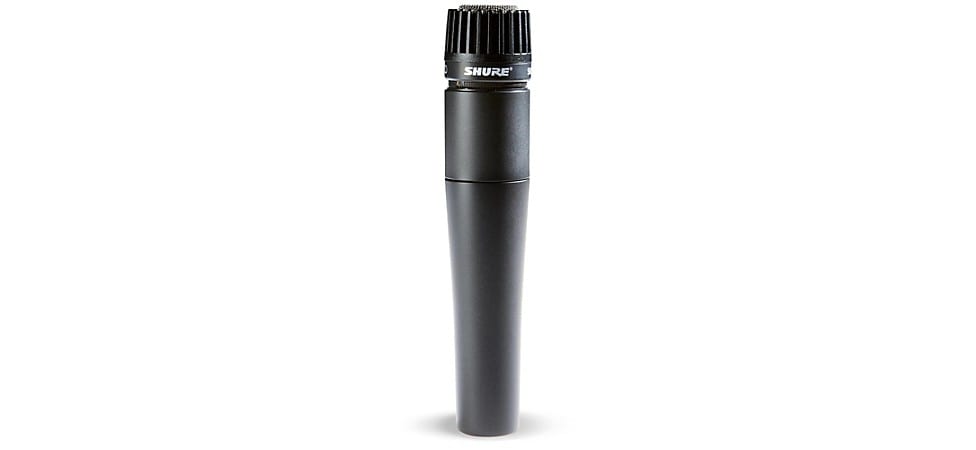
You’ll find the Shure SM57 and Shure SM58 in studios big and small virtually everywhere. The SM57 (released in 1965) and SM58 (introduced in 1966) are the definition of “studio standard” mics because, between them, they can capture excellent sounds from lead and background vocals, guitar amps, drums and percussion, horns, strings and just about anything else. They are inexpensive, meaning the “acquisition cost per studio application” is off the hook. Given the obvious benefits, these are perfect home and pro studio microphones—which is why they consistently make every “best mic” list.
Shop Now: Shure SM57 Dynamic Instrument Microphone
Nonconformist Choices: If you want a tighter pattern for a 57-type dynamic, the supercardioid sE Electronics V7 X offers a narrower front pickup angle than the cardioid SM57, and it also delivers excellent rejection of ambient sound. I’ve used the V7 X when I wanted a tad less signal bleed from the hi-hats into a snare mic, as well as if a lead vocalist is doing a simultaneous take with background vocalists (on separate mics) behind or to the side of them.I’ve found the Audix OM3 to be a good alternate choice for lead vocals—especially if a singer’s voice simply isn’t vibing with an SM58 for some reason. The OM3 is a hypercardioid, so like the supercardiod V7 X, it focuses on the vocal while ignoring most room sounds. It works great for male and female vocalists, and the mic’s 50Hz–18kHz frequency response presents taut lows and airy highs.
Budget Pivot: I worked with a band whose female vocalist liked singing through a Sterling Audio P2, and it sounded just fine—clear and punchy without any harsh mids. It’s a good alternative to a bona fide SM58 that can also be used for tracking instruments.
Sennheiser MD 421-II
Why It’s Essential: It’s a versatile mic that can record anything from guitar amps and vocals to snares, toms and kick drums. The five-position bass roll-off is pure genius.
Things to Consider:
-
Large-diaphragm dynamic—yes, large diaphragms are not limited to condenser mics.
-
Handles super high sound pressure levels without flinching
-
Inscrutably awful slide-on clip can fail during handling and drop the mic (in a bad way)
Shop Now: Sennheiser MD 421-II Large-Diaphragm Dynamic Microphone
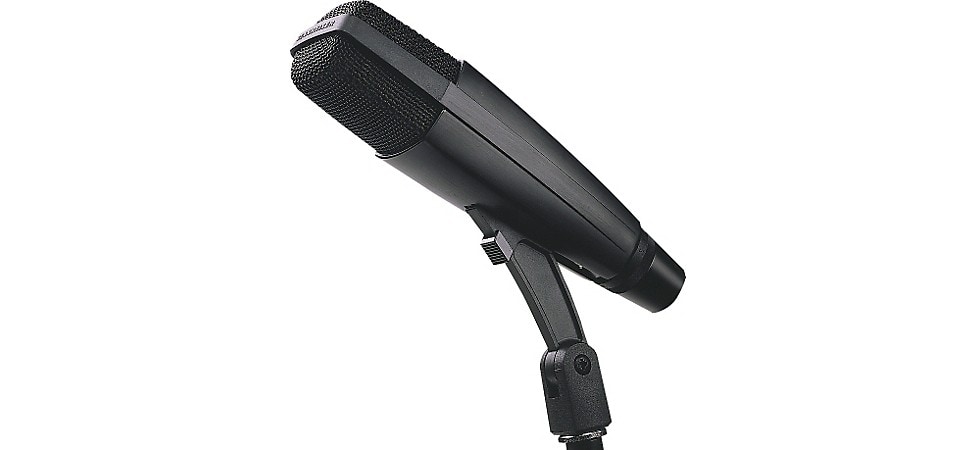
Introduced in 1960, the Sennheiser MD 421-II is another iconic microphone that appears in heaps of recommended mic lists. For the typical home studio with a limited mic selection, the MD 421-II is a good companion to Shure SM57/SM58 small-diaphragm dynamics, as its 30Hz–17kHz frequency response can cover more lows and highs than the 57 and 58 crew. In big studios, I love MD 421-IIs on rack toms, but I don’t often record drum kits at home unless my wife and the two punk rock pups allow me to use the living room. Confined to my office/personal studio, the MD 421-II is fabulous for recording cajons, acoustic basses, baritone guitars, cellos and gravelly vocals (a la Tom Waits or Beth Hart).
Nonconformist Choice: The Shure SM7B is a large-diaphragm dynamic bruiser that doesn’t recoil from loud sounds. Its maximum sound pressure level is rated at an impressive 180dB. (Dynamic mics typically don’t provide general maximum SPL specs, because thanks to their design, if there is distortion, it tends to be frequency dependent.) The SM7B can handle guitar amps, “more” cowbell and other cacophony that might get you evicted from your home studio space. Also renowned as a warm, dulcet-toned mic, the SM7B can make even the edgiest singers sound like a duet between Sade and Frank Sinatra.
Budget Pivot: The Audio-Technica AT2040 may be marketed primarily as a podcast mic, but forget about that—this heavy-duty dynamic should handle recording drums, guitar and bass amps and more. With a frequency response of 80Hz–16kHz, the AT2040 doesn’t offer the more extensive sonic spectrums of the MD 421-II (30Hz–17kHz) or the SM7B (50Hz–20kHz), but it does capture warm, smooth and organic tones, and its hypercardioid polar pattern delivers excellent signal rejection from the back and sides of the mic. (Note: I have not used the AT2040 myself, but it comes recommended by users and online reviews—although it can require significant gain from your audio interface or preamp.)
AKG C414 XLS
Why It’s Essential: It’s a versatile, full-bandwidth condenser with powerful signal-crafting features and multiple polar patterns.
Things to Consider:
-
Large-diaphragm condenser
-
Nine selectable polar patterns
-
Requires phantom power

Shop Now: AKG C414 XLII Reference Multi-Pattern Condenser Microphone
First released in 1971, AKG C414 series microphones have been some of my favorite microphones for years. They are “all-rounders” that I tend to use on just about everything. The AKG C414 XLS (which debuted in 2009) has a clear, coherent and slightly bright quality that can float above dense mix textures without sounding harsh or brittle. I love it on lead and background vocals, acoustic guitar, saxophone and as a room mic. I don’t initially reach for a C414 when miking guitar amps, but it can be an inspiring choice when you don’t want a conventional Shure SM57 against speaker cone sound. The C414 XLS’s versatility is a boon for home recording musicians looking for as many sonic options as possible from a limited number of mics. Boasting nine polar selectable patterns, three attenuation levels and three bass-cut filters, it’s a mic that covers a lot of ground.
Nonconformist Choice: If you want a large-diaphragm condenser that offers a different sound—actually, make that multiple sounds—the Slate Digital VMS ML-1 Modeling Microphone can “sound shift” into virtual emulations of famous condensers, vintage tube mics and even dynamic models. While I don’t have any recording experience with the VMS ML-1, I’m pretty sure that when I built Sound & Vision Studios, San Francisco in 1983, if I could have bought one microphone capable of morphing into Neumanns, TELEFUNKENs and other coveted microphones, I would have gone for it.
Budget Pivot: I reviewed the first-generation RØDE NT-1 in the 1990s when Electronic Musician was transitioning from a computer music publication to an evangelical home studio magazine. It was an impressive mic for the price back then, and the RØDE NT-1 5th Generation is even more of a value with its hybrid XLR/USB output and built-in audio interface.
Neumann KM 184
Why It’s Essential: It’s a meticulously crafted mic that reacts swiftly to sound, capturing nuances with stunning accuracy.
Things to Consider:
-
Small-diaphragm cardioid condenser
-
Transformer-less circuitry
-
Requires phantom power
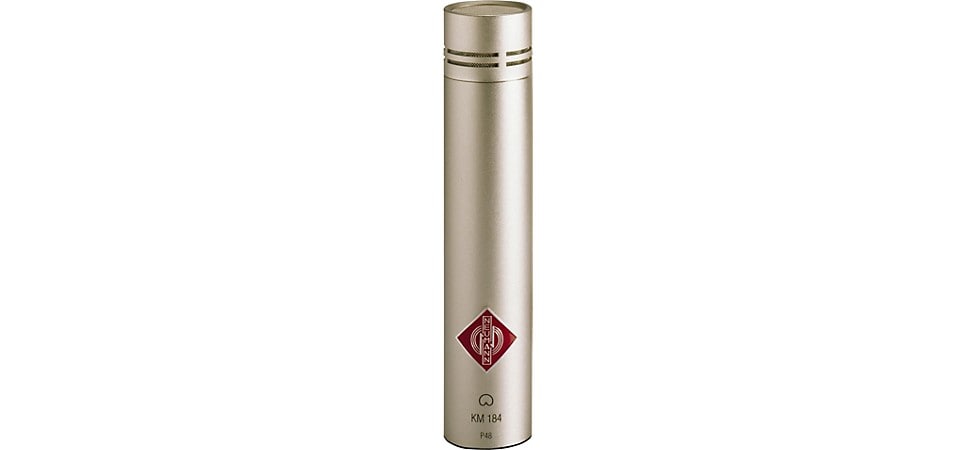
Shop Now: Neumann KM 184 Small-Diaphragm Condenser Microphone
I rely on a pair of Neumann KM 184 mics to deliver amazing results when recording source sounds in stereo, such as drum overheads, acoustic guitars, acoustic pianos, strings and background vocalists. The level of detail is superb and dimensional, while simultaneously sounding organic and natural—a major benefit when recording cymbals that might be too bright or close-miked acoustic guitars exhibiting edgy midrange timbres. They’re also fabulous for capturing stereo room recordings when I’m looking for ensemble-style tracks “sitting” in acoustic environments, such as strings in the kitchen, vocals in a tiled bathroom and a saxophone outside in the backyard.
Nonconformist Choice: A pair of AKG C451 condensers were what I used as drum overheads when Sound & Vision first started booking clients. The shimmer on cymbals was incredible, but the C451 set also captured a punchy resonance from toms and a vibrant snap from snares. The AKG C451 B is somewhat brighter than the vintage-voiced original, and it features a cardioid polar pattern, transformer-less output, attenuation pads and a high-pass filter.
Budget Pivot: The sE Electronics E7 set gives you matched pair of small-diaphragm condensers for one super nice price.
Royer R-121
Why It’s Essential: It adds a whole new aural perspective and sonic flavor to your recordings.
Things to Consider:
-
Ribbon microphone
-
Offset ribbon technology means you can flip the mic around for a brighter sound
-
135dB maximum sound pressure level means this ribbon is robust—no fear when recording drums and loud guitar amps

Shop Now: Royer R-121 Ribbon Microphone
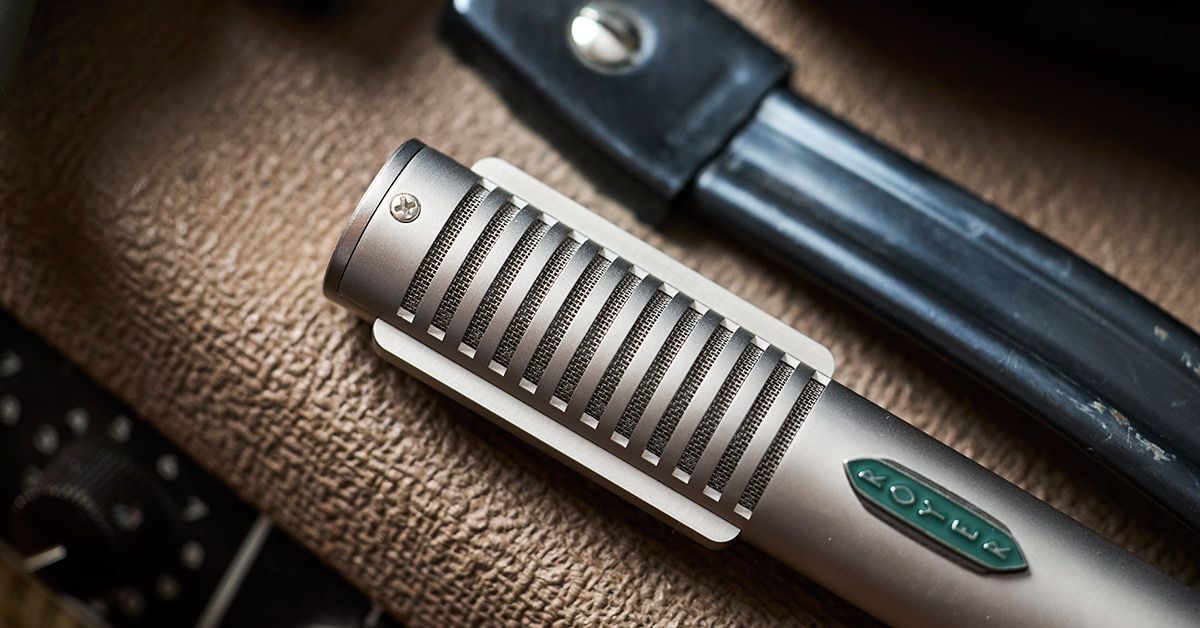
If you’re a recording geek like me, adding a ribbon mic to your collection is compulsory. The organic, unhyped, warm and accurate personality of ribbons is inspiring and fun to add to your home studio trick bag. The Royer R-121 has been my go-to ribbon since Royer’s enthusiastic cofounder John Jennings let me use one on a few sessions during the mic’s initial press tour in 1998. (I never gave it back, purchasing it after my review in Guitar Player was published.) The cinematic dimension and natural “realness” the R-121 captures is almost like being able to plug your ears directly into a recording device. The sound is so compelling on practically everything you put it in front of that I often must stop myself from using the R-121 all the time. (A practice that would defeat the advantage of a varied mic collection.) When managing to be judicious in my use of the R-121, I love it on guitar amps, acoustic guitars, pianos, percussion, group background vocals and as a room mic—usually positioned six feet in front of a drum kit at the height of the rack tom(s), or ten feet away from the players in an ensemble.
Nonconformist Choice: Near the end of writing this article, the Warm Audio Fen-tone was recommended as an option, and I rushed to a local studio that had one available to try it out. With a 20Hz–17kHz frequency range compared to the Royer R-121’s 30Hz–15kHz specs, the Fen-tone offers slightly expanded lows and highs. In addition, it has an interesting and versatile preamp switch that lets you choose between vintage mode (do not use phantom power on this setting) and active mode (a +26dB signal boost that requires phantom power). I loved the clarity and headroom of active mode on whispered vocals and a small-bodied, parlor-style acoustic guitar. Vintage mode delivered sparkling and articulate tones for my Reverend Reeves Gabrels Dirtbike electric guitar plugged into a VOX AC15.
Budget Pivot: Admittedly, I haven’t done a session with the sE Electronics Voodoo VR1, but it has four very cool reasons to recommend it: [1] I dig every other sE Electronics mic I have recorded with; [2] According to Sound on Sound, it delivers similar-sonics-on-a-budget as the company’s collaboration with audio maestro Rupert Neve on its RNR1 ribbon; [3] Renowned session guitarist (Chris Cornell, Jewel, Linda Perry) and popular YouTube reviewer Pete Thorn loves it on guitar amps (“very natural and warm with a smooth and extended top end”); [4] It offers a 20Hz–18kHz frequency range and has a maximum sound pressure level spec of 135dB.
One Mic for Everything
Now that we’ve detailed the sonic beauty and production smarts of assembling a five-model mic cabinet for your home studio, let’s pivot. Drastically.
If you’re a fearless explorer of the recording arts who eagerly absorbs unique techniques and applications, why not try using just one microphone for your home studio productions?
The idea comes from multiple platinum record award-winning engineer/producer John Cuniberti. His popular OneMic Recording Series on YouTube is proof of what can be done with minimal gear, good ears, savvy studio chops, and willing and talented artists. The technique revolves around a stereo mic that can be configured as a Blumlein pair (two matched bidirectional mics positioned 90 degrees from each other and occupying the same physical space, resulting in an extraordinarily faithful stereo image).
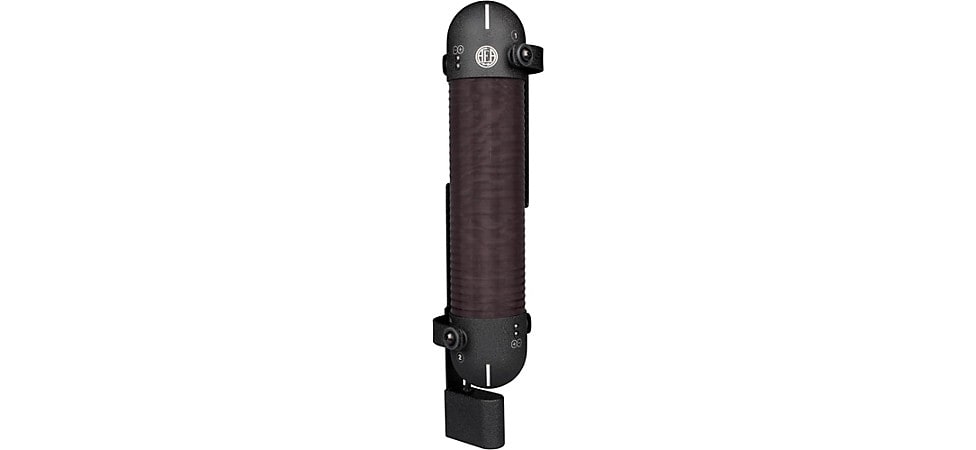
Shop Now: AEA R88 MK2 Dual-Ribbon Stereo Studio Microphone
For his OneMic sessions, Cuniberti uses an AEA R88, which already has the Blumlein system built into the mic. Whether you’re into the one-mic-for-all concept or not, I recommend you check out Cuniberti and his OneMic videos. He is a magnificent engineer, producer, studio designer, mastering engineer and gear maker (the original Reamp box).
Microphone Research Library
Guitar Center’s Riffs Blog has a vast number of excellent resources on all things gear, audio production, live performance and artistry. Home recording musicians can access product guides and deep dives on mics with just a click. The list below provides direct links to our most popular microphone-focused editorial pieces:
Enrich Your Mic Collection
When I’ve been lucky enough to work in famous studios or interview their staff for publications such as Guitar Player, Mix, Electronic Musician and others, it absolutely took my breath away to see all of the vintage and high-end microphones just waiting to be positioned in front of an instrument or vocalist. But I’ve also co-owned smaller commercial studios where my mic budget was limited to models costing under $2,000 each. And, although I still cut tracks in pro studios from time to time, my recording life today is centered around a laptop sitting on my dining room table and one or two decent mics.
But whether you have access to a bounty of high-end mics or not, it's important to note that nothing should prevent creators from creating.
The producers I hang out with in the San Francisco Bay Area have made excellent-sounding tracks with a few affordable mics, and they’ve done the same when they’ve had the advantage of dipping into a well-populated, professional microphone cabinet. Although it’s a wonderful thing to dream about extensive mic collections, a constructive personal ethos should revolve around using what you have to get the best (or beautifully strange) sound possible and never give up simply because you don’t have, say, a TELEFUNKEN ELA M 251T tube condenser at your command.
Also remember that, in addition to this article and all of the others listed in our “Microphone Research Library,” you can get some personal microphone guidance from one of our Guitar Center Gear Advisers. These knowledgeable consultants will help you get the right microphones for your home studio projects.
Written By: Michael Molenda
Michael Molenda is a content strategist, editor and writer for Guitar Center, where he has worked since 2022. He is the longest-serving Editor in Chief of Guitar Player (1997-2018), and former Editorial Director of Bass Player, EQ, Keyboard, Electronic Musician, Gig and Modern Drummer. A guitarist, drummer, bassist and producer, Mike co-owned three pro recording studios in San Francisco, and performs with Surf Monster and The Trouble With Monkeys.
Recently Added to Buying Guides
Be the first to know about exclusive offers, tips and more.

866-498-7882 English
877-687-5402 Español