.jpeg)

Pro Gear Advisers
•866-498-7882
Shure SM57 vs. SM58—What's the Difference?
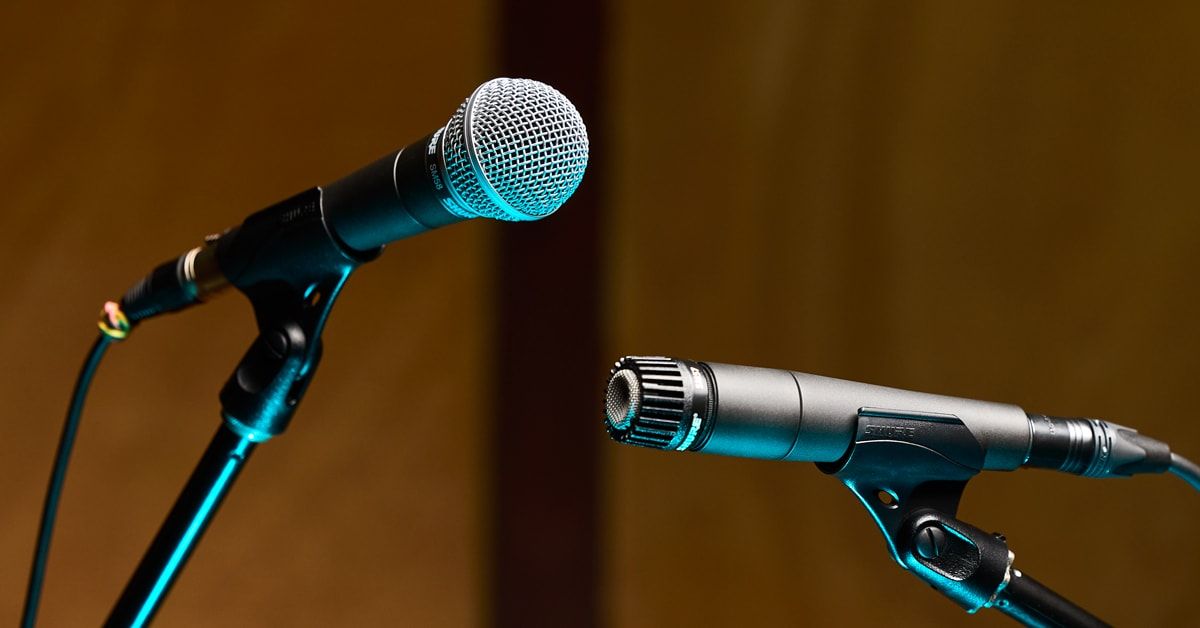

Conventional wisdom has assigned the similarly designed Shure SM57 and SM58 microphones for distinctly different jobs. But while one is called a vocal microphone, and the other is considered an instrument mic, these two siblings are actually pretty slippery when it comes to explicit designations.
For example, I once interviewed producer/engineer Brendan O’Brien for Electronic Musician about the recording of Blood Sugar Sex Magik by the Red Hot Chili Peppers.
I wasn’t prepared when he shared his drum miking technique for the album.
O’Brien said he would reach blindly into a microphone chest during some sessions, and whichever mic he laid his hands on would be the one he would use to record the track at hand. This is how a Shure SM57 was selected for RHCP drummer Chad Smith’s kick drum.
At the time, it was a strange and unexpected thing to hear. Shure SM57s were typically used to record guitar amps, snares, rack toms and the like, while larger-diaphragm dynamic mics—and even some condensers—were favored to document kick drums. Of course, the kick drum sound on Blood Sugar Sex Magik is certainly propulsive and groove-o-licious—a testament to not just O’Brien’s virtuoso engineering smarts, but also an affirmation of the versatility of the SM57.
But what if O’Brien’s fingers had grasped a Shure SM58 instead? Would the kick drum sound have been much the same?
Let’s answer this question with an SM57 vs. SM58 cage match to expose the advantages, obstacles and variations of each microphone.
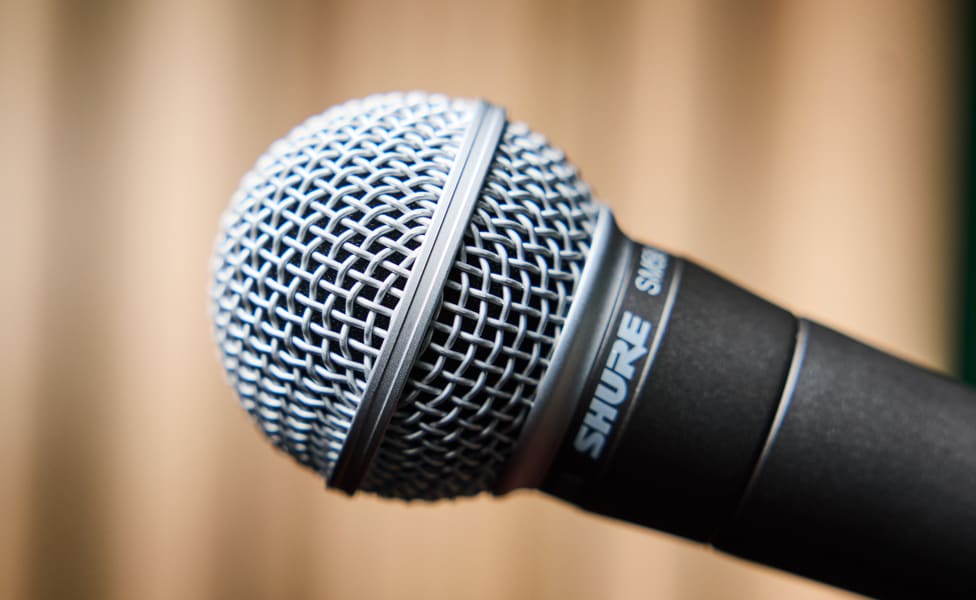
Pictured: Shure SM58 Capsule
Table of Contents
- A Two-Minute History of the Shure SM57 and SM58
- Comparing the Shure SM57 and SM58
- Specification Chart for the Shure SM57 and SM58
- How Are the SM57 and SM58 Alike?
- How Are the Shure SM57 and SM58 Different?
- What If I Used a Shure SM57 on Vocals?
- What If I Used a Shure SM58 for Instruments?
- If 57 were 58 (Apologies to Jimi Hendrix ...)
A Two-Minute History of the Shure SM57 and SM58
Unless you’ve been trapped in a forgotten timeline of the Marvel Comics Multiverse, you’re aware the Shure SM58 is the number-one live-vocal microphone of all time. You should also know that the Shure SM57 is revered as the go-to instrument microphone. Family members with different jobs? Not so fast.
Both mics share DNA with a microphone capsule unveiled in 1939. That year, Shure’s Unidyne technology made it possible for the company to release the Model 55, which was the planet’s first single-element, unidirectional mic (“Goodbye Feedback,” proclaimed a Shure ad from 1940).
From that foundation, Shure engineer—and classical music lover—Ernie Seeler developed the Unidyne III capsule in 1960. Further improvements to the capsule led to the creation of the SM (Studio Microphone) Series that birthed the SM57 in 1965, the SM58 in 1966 and the SM7 broadcast mic in 1973. [Read about the Shure SM7 here.]
Comparing the Shure SM57 and SM58
Now that you know the SM57 and SM58 share the same capsule, you may be asking yourself, “Wow, are these the exact same microphones with different model numbers?”
They are not.
But the primary difference between the two mics is literally a very small thing—the grille. However, the two distinctive grille designs impose separate acoustic environments that affect each microphone’s sonic performance.
The SM58 includes a ball grille with a built-in pop filter to combat vocal plosives (the “pops” caused by a surge of energy when pronouncing sounds such as “p” and “b”). On the other hand, the SM57 does not need a ball grille or pop filter to capture instrumental sounds, so it is instead outfitted with an integrated resonator/grille structure attached to the cartridge itself.
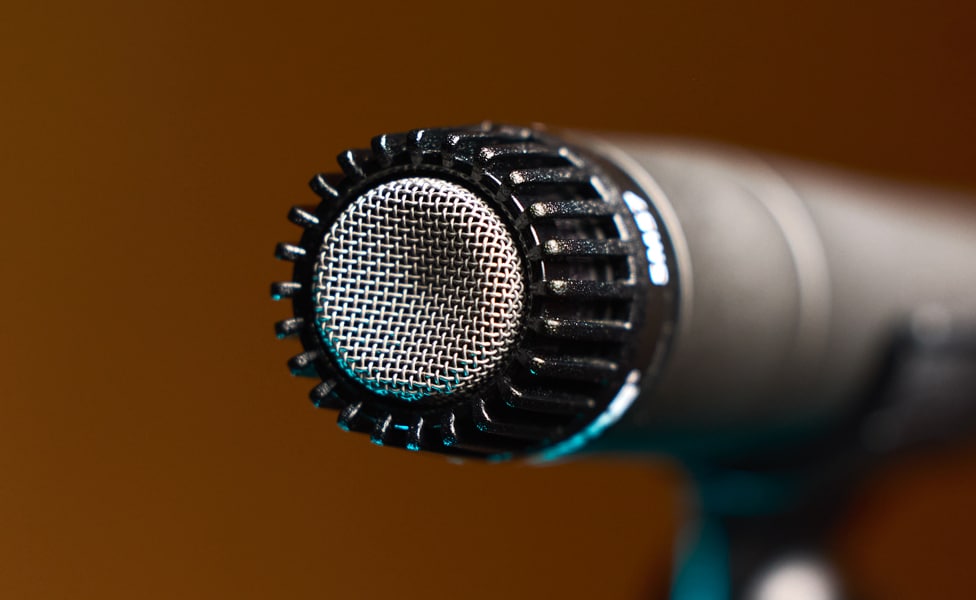
Pictured: Shure SM57 Capsule
One strange aspect of this little contest is that the SM57—not the SM58—has been the official microphone of the White House Communications Agency since 1965. For decades, external windscreens have been affixed to the outside of White House SM57s to combat plosives from presidents and other government officials as they speak to the nation and the world.
Let’s take a peek under the hood to see how those two different grilles affect each mic’s performance.
Specification Chart for the Shure SM57 and SM58
| Model | Shure SM57 | Shure SM58 |
|
Type |
Dynamic | Dynamic |
|
Polar Pattern |
Cardioid | Cardioid |
|
Frequency Response |
40Hz-15kHz | 50Hz-15kHz |
|
Presence Boost |
3kHz-6kHz | 2kHz-6kHz |
|
Maximum SPL (frequency dependent) |
150dB-190dB | 150dB-190dB |
|
Sensitivity @ 1kHz |
-54.5dBV/Pa | -54.5dBV/Pa |
|
Output Impedance |
310Ω | 300Ω |
|
Weight |
0.625lb | 0.72lb |
How Are the SM57 and SM58 Alike?
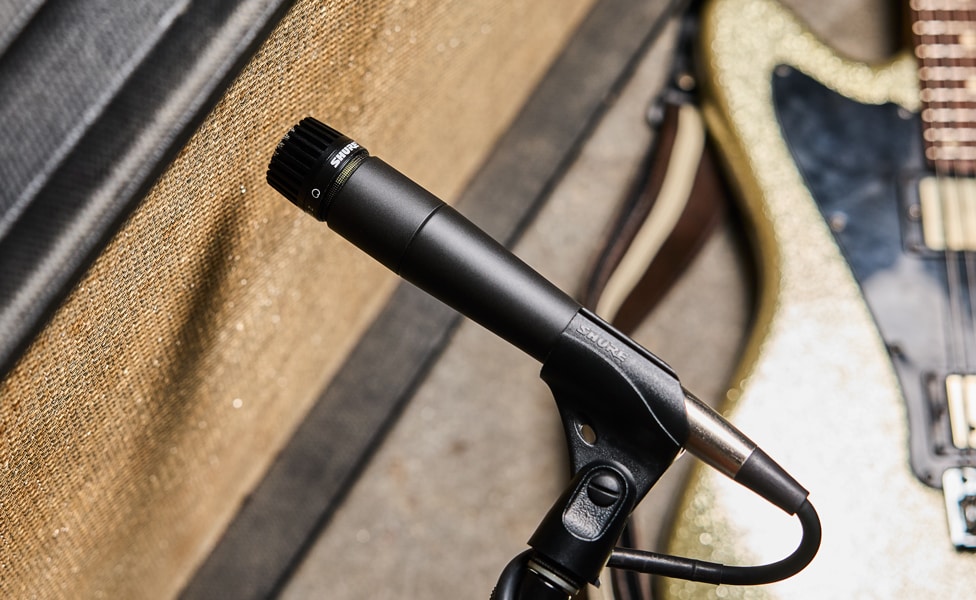
Pictured: Shure SM57 Miking Guitar Speaker Cabinet
These siblings are both dynamic mics with cardioid polar patterns. Other shared characteristics include:
• They are (virtually) indestructible. I’ve personally—though not usually “on purpose”—dropped and/or kicked SM57s and SM58s off tall stages onto concrete floors, rolled heavy road cases over them, had them slip out of my hands into the muck at outdoor festivals and even thrown them in the general direction of wannabe thieves to “distract” them from scampering off with music gear. I’m sure we’ve all witnessed battered and sometimes bloodied grilles and mic handles that looked as if they were munched on by rapid hyenas. These tough customers always seem to work just fine no matter what punishment they take. It’s astounding.
• They aren’t afraid of LOUD. The SM57 and SM58 can handle sound pressure levels from 150dB up to 190dB—basically from a shotgun blast to the roar of a NASA rocket launch. (Note: the pain threshold for sound is approximately 130dB.)
• They both have bass roll-offs. The SM57 rolls off bass under 40Hz, and the SM58 drops the lows after 50Hz.
• They are not power mad. You don’t need phantom power to use an SM57 or SM58.
• There is no either/or. Each mic works fantastically for recording studio and live-performance applications.
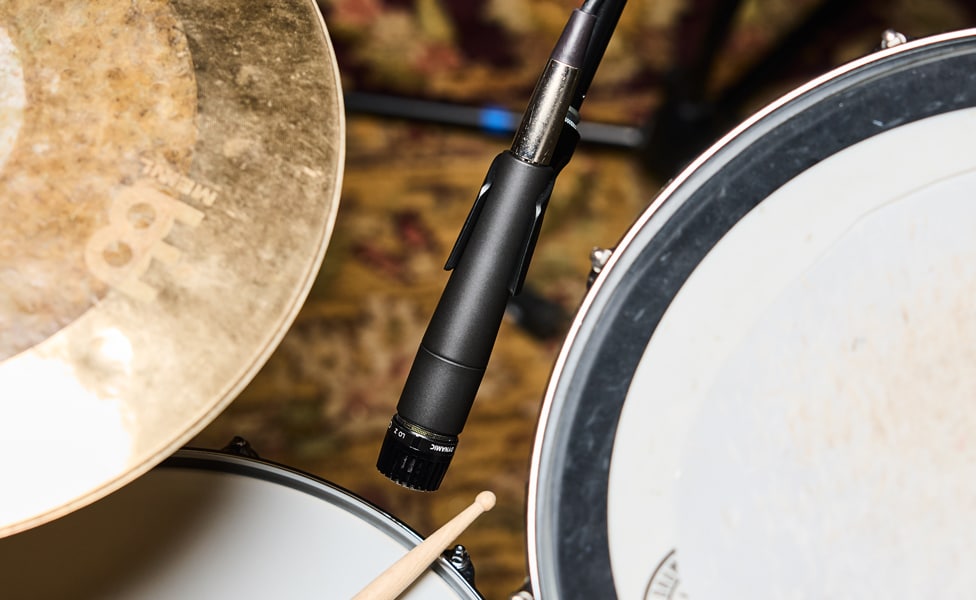
Pictured: Shure SM57 Miking Snare Drum
How Are the Shure SM57 and SM58 Different?
There are three main traits to consider before positioning an SM57 or SM58 in front of a source sound.
Cardioid Polar Pattern. As we mentioned earlier, both models are cardioid. However, the capsule of the SM57 is smack-dab against the grille. As a result, its cardioid polar pattern can focus tightly on the source sound and aggressively reject off-axis sounds—especially as you position the 57 closer to whatever you’re miking (say, a speaker in a guitar cabinet or the top head of a snare drum). Due to its spherical grille, the mic capsule of the SM58 has some airspace between the capsule and grille. The 58’s cardioid pattern will still smack down off-axis sounds, but due to the fact you can’t position the capsule directly against the source sound, you may hear wisps of signal bleed. This isn’t a factor when using an SM58 to record vocals, as many singers typically lock their lips to the grille, negating much of any sound except the voice.
Frequency Range: Both mics cover up to 15kHz, which is really all you need unless you’re tracking the siren songs of malevolent mermaids or documenting guitar amps powered by galactic particles. However, the 10dB difference in the low frequencies does have an impact. The SM57 can capture sounds down to 40Hz, which lets in some added warmth and rumble when miking instruments, as compared to the SM58, which cuts off around 50Hz to guard against vocal plosives.
Presence Boost. The SM58 has a presence boost from around 2kHz up to about 7kHz—a range of midrange emphasis that helps vocals stand out nicely in dense live and studio mixes. The presence boost of the SM57 doesn’t materialize until 3kHz and then diminishes beyond 6kHz. Like the SM58, the 57’s midrange boost is designed to ensure guitars, snare drums and other instruments bust through the sonic spectrum.
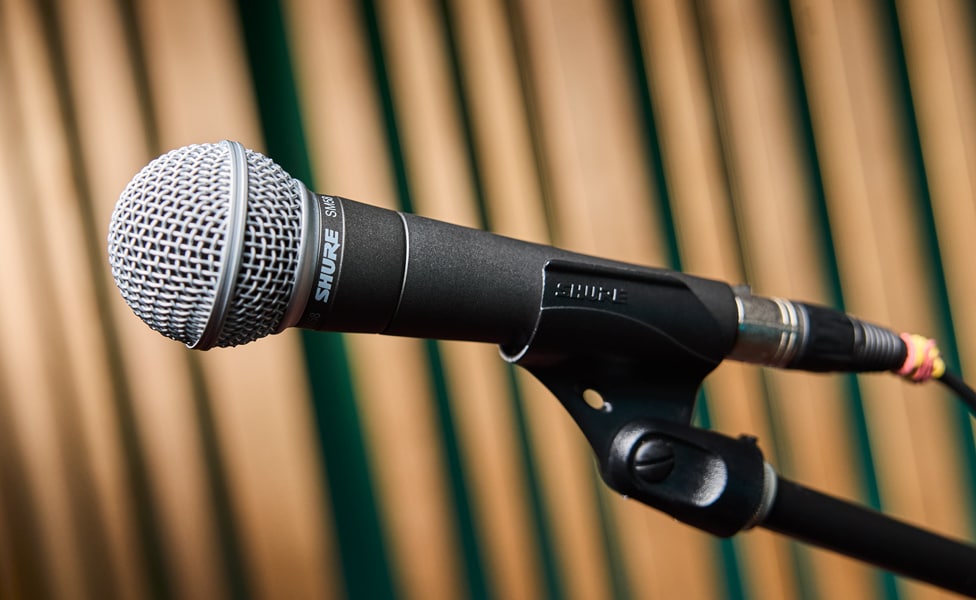
Pictured: Shure SM58 on Microphone Stand
What If I Used a Shure SM57 on Vocals?
SM57s have been used for vocals, so it wouldn’t be shocking if you handed a singer a 57. However, your SM57-equipped vocalist would need to be aware of a few things. Given that the SM57 doesn’t have the globe-like grille or heftier pop screen of the SM58, it would likely be a bad idea for them to “eat the mic.” With the 57 in front of a singer’s mouth, there are more chances for plosives, and the proximity effect can produce murky or boomy vocal timbres—a situation that’s also not helped by the fact the mic doesn’t offer much of a bass roll-off until 40Hz. The SM57 is also susceptible to handling noise, as it doesn’t possess the more substantial internal shockmount designed for the made-to-be-clutched SM58. Your best options for vocal applications are to deploy an outside windscreen, use a mic stand, tell the singer to back off a bit and save the SM57 for tenor and soprano ranges.
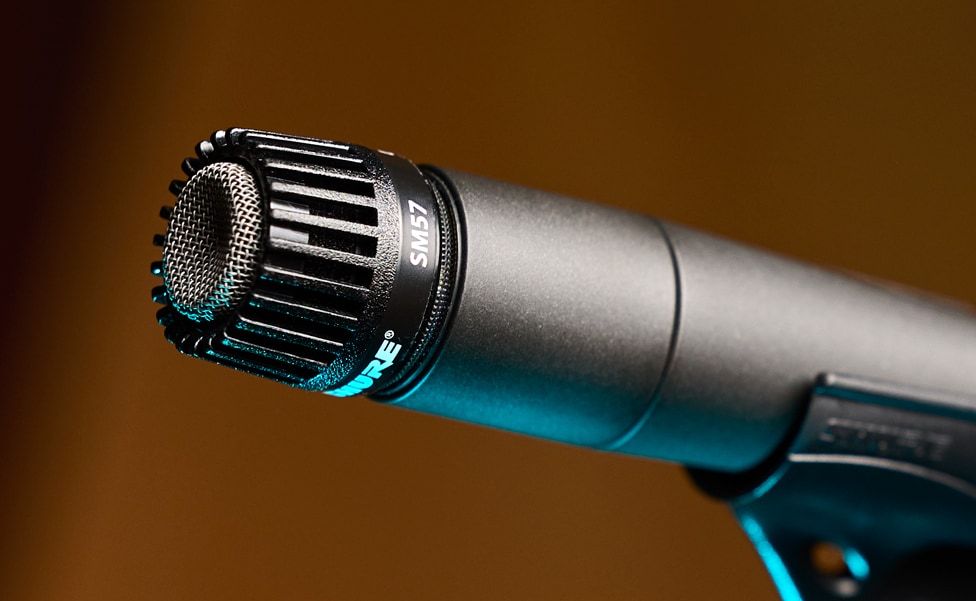
Pictured: Shure SM57 Dynamic Instrument Microphone Body and Capsule
Pro Tip: The fundamental frequency of male vocals is typically between 85Hz to just under 1kHz, while the range is between 250Hz to slightly above 1kHz for female singers. The optimum presence range for male and female vocalists is typically between 3kHz and 5kHz. An SM57 definitely has the scope to accommodate those frequency ranges.
What If I Used a Shure SM58 for Instruments?
The main risk with positioning an SM58 in front of a guitar amp or snare drum is getting that look from the musicians. “Wow, does this person know they’re trying to mic a Marshall with a vocal mic?” I’ve experienced that kind of withering gaze. But in a pinch, I’ve used 58s to mic all sorts of instruments, and I’d defy practically anyone to identify whether I used a 57, 58 or any number of popular microphones for a particular track. There are people with super sensitive, well-tuned hearing who could call me out, of course, but my next question for them would be whether the tone of the SM58 truly compromised the instrumental sound it was chosen to document. (C’mon—there are enough examples out there where the sound of the so-called “right mic” has been befouled due to “death by EQ.”) That said, because the SM58 rolls off bass around 50Hz, it might not capture the subtle warmth of a 12” or 15” guitar speaker, or the waning resonance of a rack or floor tom. Otherwise, be fearless and position the 58 wherever you want it.
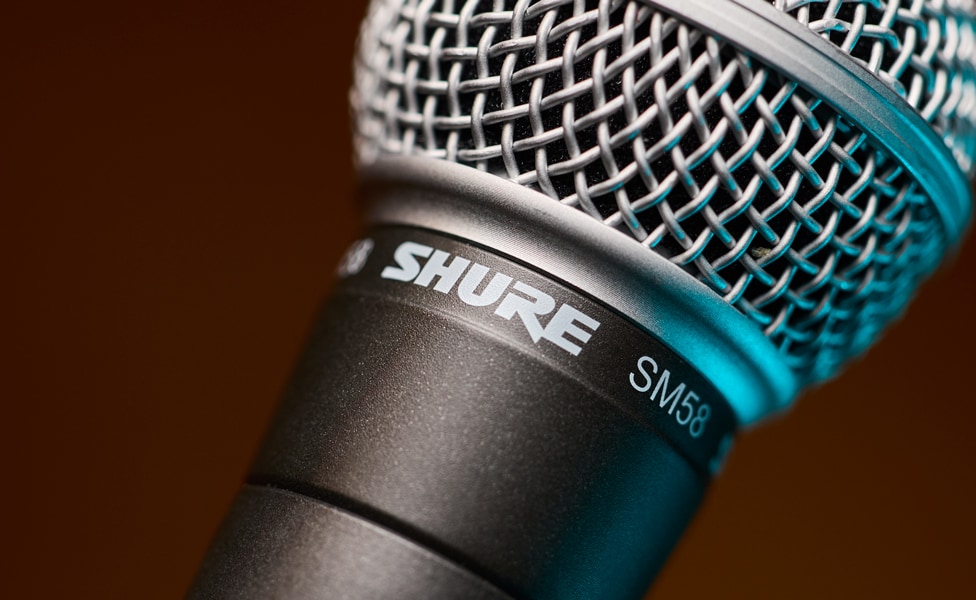
Pictured: Shure SM58 Dynamic Vocal Microphone Branding
Pro Tip: For comparison, the clarity range for electric guitars is 2kHz to 4kHz, while snare drum articulation often occurs between 3kHz to 5kHz. The presence peak of an SM58 can “play” very nicely in these frequency spectrum terrains.
If 57 were 58 (Apologies to Jimi Hendrix ...)
You could launch a decent band rehearsal or barroom debate that the SM57 and SM58 can be used to mic pretty much anything, and that the “vocal” (58) and “instrument” (57) designations are mostly fodder for a lost episode of MythBusters. You’d probably lose the verbal sparring session, but only because the industry at large has wholly accepted the time-honored job descriptions conceived and developed by Shure’s brilliant designers.
My take is the Shure SM57 and Shure SM58 are done a disservice by explicitly defining each model as a singular-use microphone. These mics are affordable, tough and versatile, and they can shine in a number of use cases. While I’d never devalue finely crafted microphones of all types, nor minimize their vital impact on tone, I’d encourage more experimental engineers out there to consider recording an entire band with only a collection of 57s and 58s—lead and background vocals, electric and acoustic guitars, bass, drum kit, percussion, horns and more. Trust me, the universe will not collapse into nothingness. I know, because I—and other professional and home-studio producers—have already done it, and the earth continues to revolve around the sun.
Written By: Michael Molenda
Michael Molenda is a content strategist, editor and writer for Guitar Center, where he has worked since 2022. He is the longest-serving Editor in Chief of Guitar Player (1997-2018), and former Editorial Director of Bass Player, EQ, Keyboard, Electronic Musician, Gig and Modern Drummer. A guitarist, drummer, bassist and producer, Mike co-owned three pro recording studios in San Francisco, and performs with Surf Monster and The Trouble With Monkeys.
Recently Added to Gear Tips
Be the first to know about exclusive offers, tips and more.

866-498-7882 English
877-687-5402 Español