.jpeg)

Pro Gear Advisers
•866-498-7882
The Best Microphones for Recording Electric Guitar
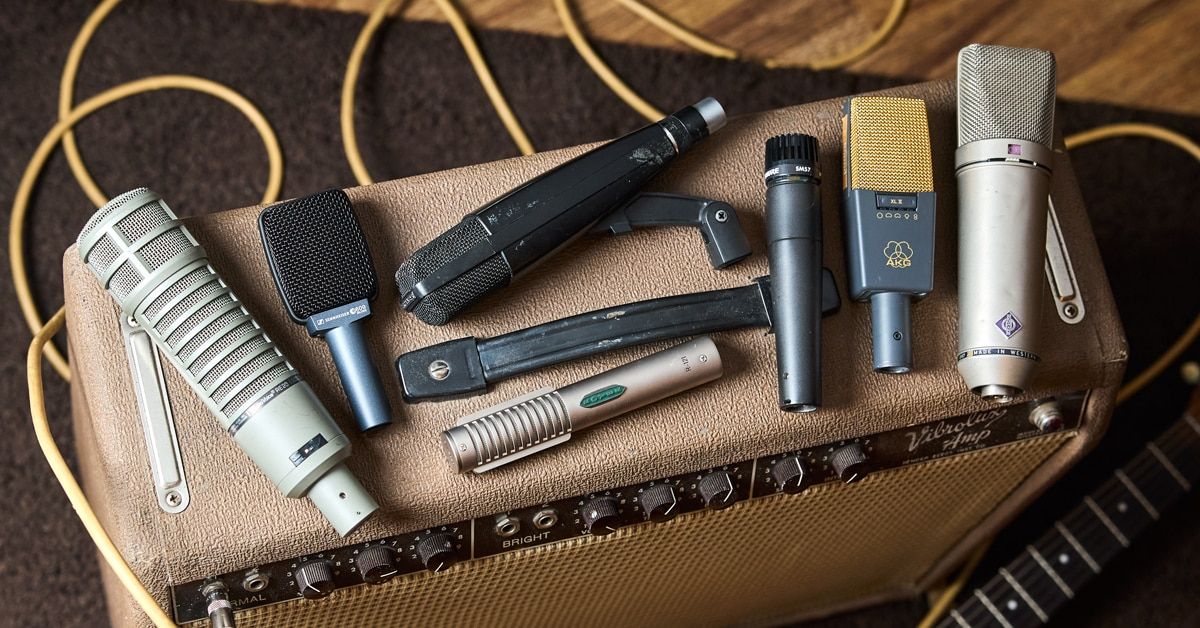

Whether you’re in the studio or onstage, the microphones you choose for your electric guitar amps matter. The mic isn’t just your ears—it’s your listeners’ ears as well. The right mic sets the tone (literally) of your performance and the personality of your presentation.
In this article, we’re providing a list of the best choices for miking your amps, along with guidance on what each mic brings to the party and how to get the most from it.
By the time we’re through, you’ll have a clear idea of whether a particular condenser, dynamic or ribbon mic is the optimum choice for getting your guitar sound heard just the way you want it. So, grab a handful of mic cables, open up your ears and let’s dive into choosing the best mics for your electric guitar rig.
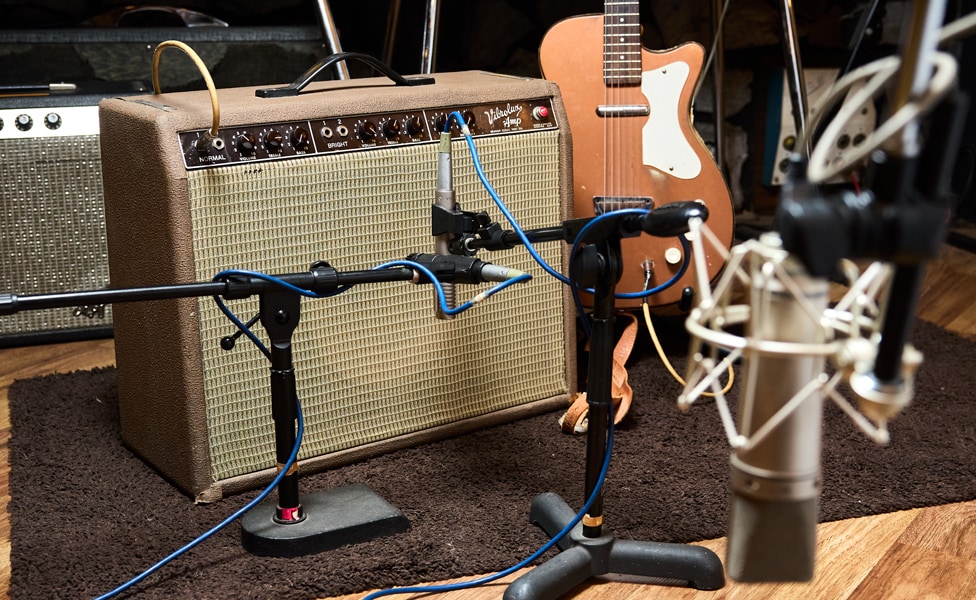
Pictured: Miking Guitar Amplifier with Royer R-121, Shure SM57 and Neumann U 87 Ai
Table of Contents
Comparing the Top Mics for Recording Electric Guitar
|
Model |
Type |
Polar Pattern(s) |
Frequency Response |
Sensitivity |
Maximum SPL |
|
Condenser |
Omni, wide cardioid, cardioid, hypercardioid, figure-8 (plus, 4 intermediate patterns) |
20Hz–20kHz |
23 mV/Pa |
140dB (with -6dB pad), 152dB (with -12dB pad) |
|
|
Dynamic |
Cardioid |
45Hz–18kHz |
1.5 mV/Pa |
>160dB (theoretical, dynamic mic without distortion threshold) |
|
|
Condenser |
Omni, cardioid, figure-8 |
20Hz–20kHz |
20 mV/Pa (cardioid) |
117dB SPL (127dB with pad) |
|
|
Ribbon |
Figure-8 |
30Hz–15kHz ±3dB |
-47 dBV/Pa |
135dB SPL |
|
|
Dynamic |
Supercardioid |
40Hz–15kHz |
1.5 mV/Pa |
>150dB SPL (typical for dynamic mics) |
|
|
Dynamic |
Cardioid |
30Hz–17kHz |
2.0 mV/Pa |
>150dB SPL (typical for dynamic mics) |
|
|
Dynamic |
Cardioid |
40Hz–15kHz |
-56 dBV/Pa |
>150dB SPL (typical for dynamic mics) |
7 Essential Mics for Recording Electric Guitar
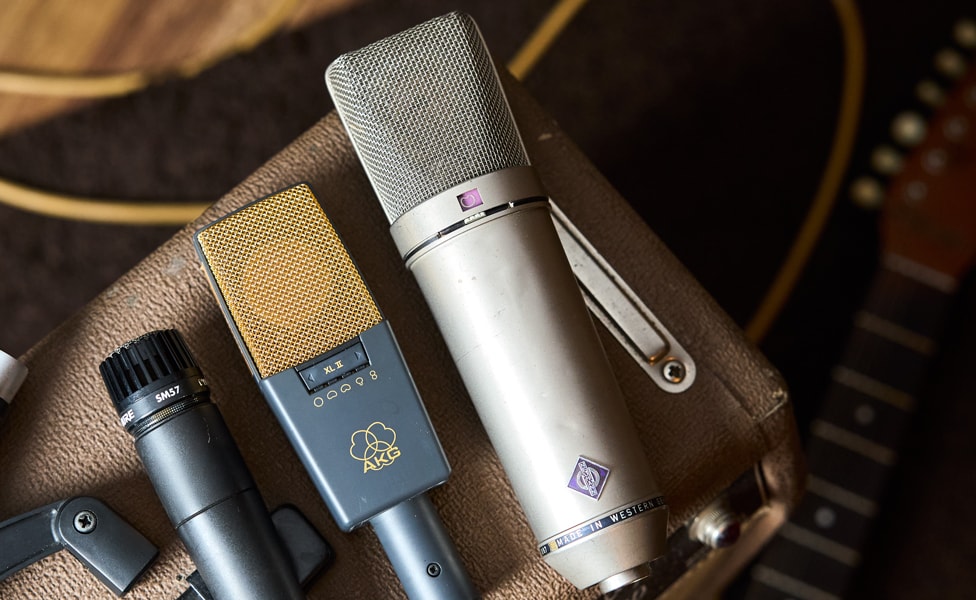
Left to Right: Shure SM57, AKG C414 XLII and Neumann U 87 Ai
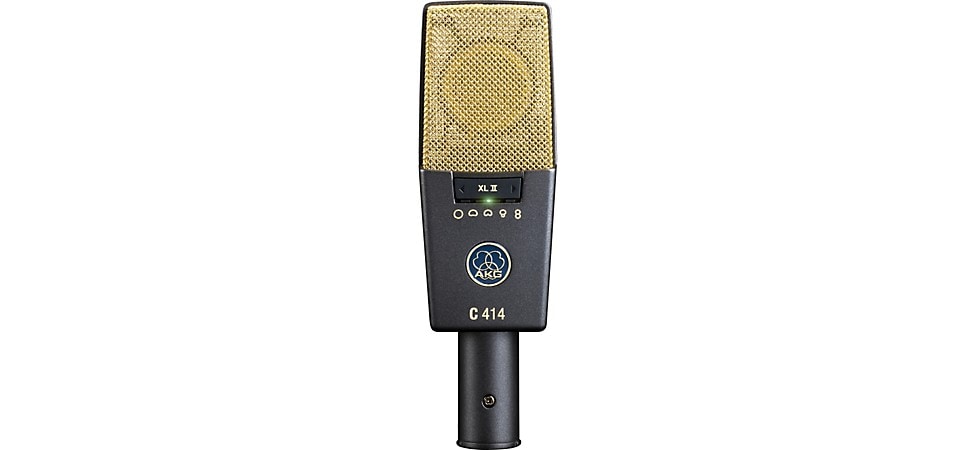
AKG C414 XLII Reference Multi-Pattern Condenser Microphone
Why It's Cool: This mic’s tonal versatility and polar-pattern control make it a precision instrument for shaping your recorded guitar tone.
Things to Consider:
- Nine selectable polar patterns let you tailor tone and space to fit the track
- Three-position pad protects against high SPL sources
- Presence boost adds shimmer that suits clean and lead tones
Shop Now: AKG C414 XLII Reference Multi-Pattern Condenser Microphone
The AKG C414 XLII is a studio legend, and it’s a powerful option for electric guitar amps when precision and flexibility are key. The XLII model’s slight presence boost makes it especially suitable for bringing out articulation and sparkle in guitar parts without relying on post-EQ. For a deep dive into this storied mic’s history, you can check out “A Guide to the AKG C414 Condenser Microphone” here on Riffs.
What really sets the C414 apart is its nine polar-pattern options—from omnidirectional to hypercardioid and figure-8—which give you subtle (or not-so-subtle) ways to shape your tone. A tighter pattern will emphasize the amp’s direct signal and reject reflections in untreated home studios or on stage, while a wider one can blend in more of a well-treated, great-sounding room for a sense of space. Positioning it a foot or so from the speaker in wide cardioid or figure-8 can result in a very natural, airy image of the amp in the room.
“It’s like pointing a microscope at your tone. Everything is clear, dimensional and sits in the mix without effort.” — Guitar Center customer review
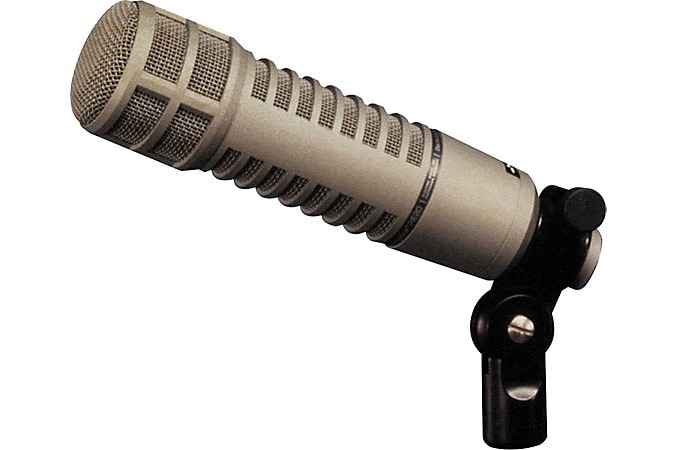
Electro-Voice RE20 Large-Diaphragm Dynamic Microphone
Why It's Cool: It’s like putting a warm, articulate narrator in front of your amp—faithful, flattering and nearly impossible to rattle.
Things to Consider:
- Variable-D design minimizes proximity effect, even when placed up close
- Smooth, natural low end captures fullness without boominess
- Internal pop filter and shockmounting help reduce mechanical noise
Shop Now: Electro-Voice RE20 Dynamic Microphone
Originally famous for its role in broadcast studios, the Electro-Voice RE20 has also earned a well-deserved place in front of guitar amps—especially in sessions where low-end accuracy and off-axis rejection matter. Its Variable-D design, basically a porting system that helps tame proximity effect, is covered in more depth in, “All About the Electro-Voice RE20 Dynamic Microphone.” That feature means you can get it right up on the speaker without the exaggerated low-end buildup typical of other cardioid dynamics.
The RE20 delivers a full, balanced sound with slightly rounded transients and just enough high-end rolloff to smooth out spiky amp tones. It works especially well on clean tones, jazz amps and classic rock crunch where you want presence and punch without harshness.
“The RE20 is one of those mics that just makes your amp sound like your amp—but better. No fizz, no mud, just solid tone.” — Guitar Center customer review
Neumann U 87 Ai Large-Diaphragm Condenser Microphone
Why It's Cool: Studio royalty that earns its reputation by delivering detailed, balanced tone—on just about anything, including guitar amps.
Things to Consider:
- Three switchable polar patterns (cardioid, omni, figure-8) expand tonal and spatial options
- Low self-noise and ultraflat response help capture subtle tonal shifts in the source
- Built-in pad and roll-off switches keep things clean when close-miking loud amps

Shop Now: Neumann U 87 Ai Large-Diaphragm Condenser Microphone
While it’s best known as the gold standard for vocals and acoustic instruments, the Neumann U 87 AI also shines when placed in front of an electric guitar amp. Its detailed frequency response and smooth transient handling make it excellent for capturing all the character of your amp without overhyping the high end or flattening out your dynamics.
Its three polar patterns (cardioid, omni, figure-8) offer tonal-shaping flexibility, particularly if you’re experimenting with amp placement in a room. Cardioid keeps things focused and direct, while figure-8 or omni can pull in natural reflections for a roomier vibe. The onboard 10dB pad and low-cut filter make it safer than you’d think for close miking, especially at moderate amp volumes.
“Not just for vocals. Put it a couple feet off a Deluxe Reverb, and it’s like listening to the amp breathe. Unreal.” — Guitar Center customer review
Royer R-121 Ribbon Microphone
Why It's Cool: It delivers the smooth, natural, and unhyped sound of a ribbon mic while handling high SPLs—perfect for guitar amps.
Things to Consider:
- Figure-8 polar pattern captures both front and rear ambience naturally—great for blending direct tone and reflections
- High-SPL tolerance (135dB+) lets you close-mic loud amps without risk
- Extremely flat frequency response gives a more natural, less hyped capture

Shop Now: Royer R-121 Ribbon Microphone
The Royer R-121 helped bring ribbon mics back into the modern guitar-recording conversation. Built to handle loud sources without breaking a sweat, the R-121 smooths out fizzy top end and rounds off harsh edges in a way that makes it a favorite for high-gain tones, bright amps or aggressive playing styles.
Its figure-8 pattern not only gives you excellent off-axis rejection but also captures room ambience naturally from the rear side of the pattern—making it a strong candidate for blending with one of our dynamic mic picks, like the SM57 or Sennheiser e 609. Close up, it delivers a sense of weight and warmth that’s hard to beat.
Just keep in mind: Like most passive ribbon mics, the R-121 shouldn’t be fed phantom power. To stay safe—and give your interface a little help with gain when you need just a little more—you may want to pair it with an inline signal booster, such as the Cloudlifter CL-1 or Klark Teknik MIC BOOSTER CM 1.
“Once you’ve recorded a cranked amp with an R-121, it’s hard to go back. It just sounds finished—even raw tracks sit better in the mix.” — Guitar Center customer review
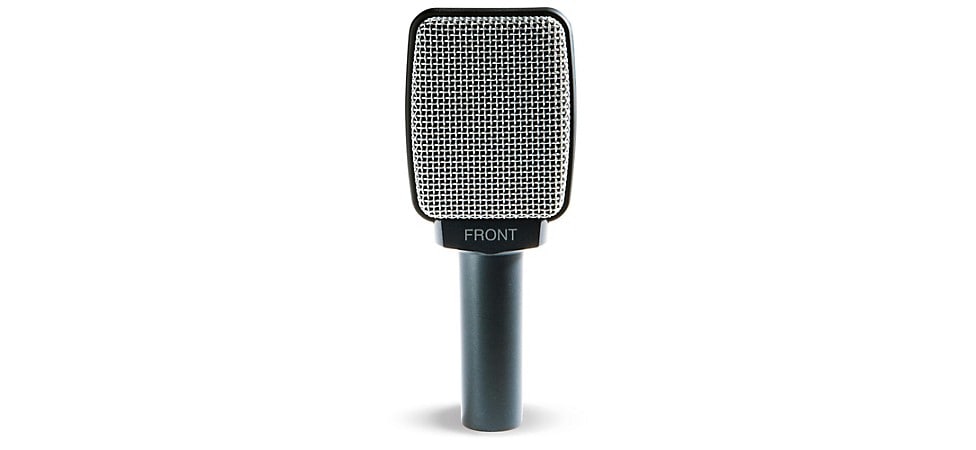
Sennheiser e 609 Dynamic Guitar Microphone
Why It's Cool: It’s built to hang—literally—right in front of your amp’s grille and get straight to the tone.
Things to Consider:
- Side-address design lets you drape it over the amp—no mic stand required
- Supercardioid pattern helps isolate your speaker from stage noise
- Tailored high end gives clarity without harshness
Shop Now: Sennheiser e 609 Silver Dynamic Guitar Microphone
The Sennheiser e 609 is a great choice for guitarists who want a no-fuss, great-sounding mic that travels well and sets up even faster. Its flat design means you can hang it right over the front of your cabinet, making it ideal for live setups where space—and time—are tight. The supercardioid pickup pattern offers excellent rejection of ambient noise and other instruments on stage or in the room.
Tonally, it delivers a slightly scooped midrange with extended highs, giving guitar tracks presence and detail without sounding shrill. It shines with brighter amps and is a natural fit for classic rock, funk and clean rhythm parts.
“Makes my Twin Reverb sound exactly like it does in the room. Love the no-stand setup too—it’s just easy.” — Guitar Center customer review
Sennheiser MD 421-II Dynamic Microphone
Why It's Cool: Its tonal versatility and extended frequency response have made it a studio staple since the ’60s.
Things to Consider:
- Five-position bass roll-off switch helps tailor low-end response and control proximity effect
- Large diaphragm captures a fuller, more balanced sound than many other dynamics
- Handles high SPLs without distortion, great for close miking loud cabs

Shop Now: Sennheiser MD 421-II Dynamic Microphone
The Sennheiser MD 421-II’s extended frequency response (30Hz–17kHz) and high-SPL handling give you plenty of headroom, whether you’re miking a crystal-clean combo or a full-stack firebreather. Though it’s known for its command of kick drums and toms, it’s also a top-tier choice for electric guitar amps.
The mic’s unique five-position bass roll-off switch allows for tonal fine-tuning right at the mic, which can be especially useful when switching between guitars, amp channels or cabinet types. It pairs well with brighter amps and can add a touch of warmth and girth to thinner-sounding guitars. If you want to dig a little deeper into the history of this legendary mic, check out out “Spotlight on the Sennheiser MD-421.”
“It just makes everything sound bigger. I’ve used it on Marshalls, VOXs, even solid-state amps, and it always brings something useful.” — Guitar Center customer review
Shure SM57 Dynamic Instrument Microphone
Why It's Cool: This workhorse mic has been part of more guitar recordings than most of us have had hot meals.
Things to Consider:
- Tight cardioid pattern helps reject bleed from nearby drums or room reflections
- Handles high SPLs easily—ideal for loud amps, no pad needed
- Midrange-focused voicing brings out bite and articulation in guitar tone

Shop Now: Shure SM57 Dynamic Instrument Microphone
The Shure SM57 has been a fixture in studios and on stages for decades. The durable and affordable SM57 captures the attack and presence that help guitar parts cut through a mix, especially in dense arrangements. Its directional cardioid pattern also makes it great for rejecting off-axis sound—handy in both live and untreated room situations.
Placing it dead center on the cone will emphasize brightness and punch, while moving it off-axis or toward the edge of the speaker can mellow things out. It’s also a natural partner in dual-mic setups—pair it with a ribbon or condenser for more dimension.
“Tried and true. Always gives me a reliable tone without too much fuss. Great for everything from punk to worship music.” — Guitar Center customer review
How to Choose a Mic for Recording Electric Guitar
Now that you’ve dug into our top picks, let’s take a look at choosing the right mic from the 30,000’ level.
Every mic tells a slightly different version of your amp’s voice. Some lean bright and aggressive. Others round things off, revealing depth and warmth. Choosing the right microphone for electric guitar isn’t just about price or specs—it’s about knowing what you want to hear and finding the mic that brings that sound into focus.
If you’re looking for a full breakdown of techniques, mic types and placements, check out our dedicated guide, “How to Record Electric Guitar.” But if you just need a few key principles to guide your mic choices, read on.
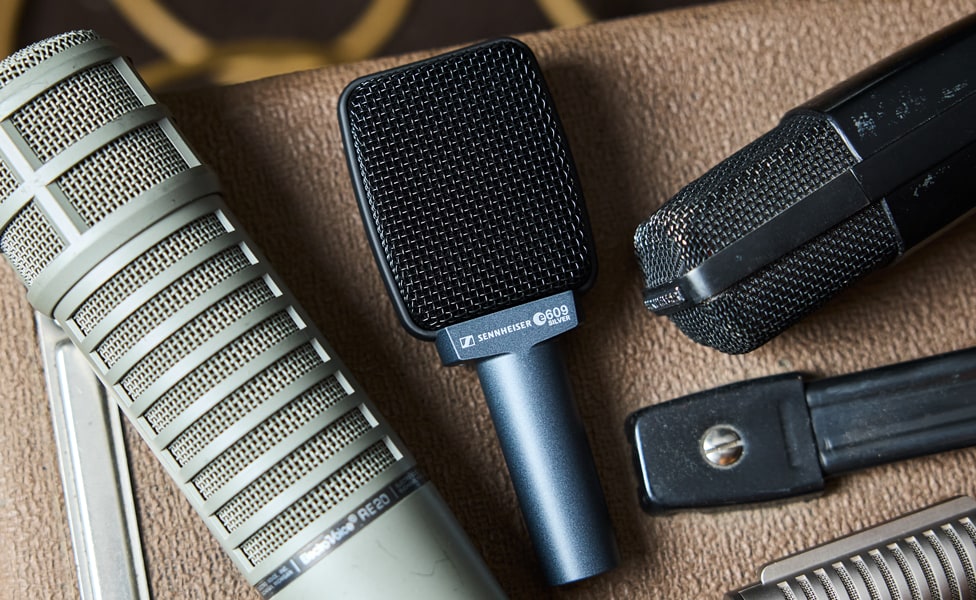
Left to Right: Electro-Voice RE20, Sennheiser e 609 and Sennheiser MD 421-II
Know the Sound You Want
Before you touch a mic or reach for a cable, ask yourself: What’s the role of this guitar in the mix? Are you tracking a jangly rhythm part that needs to cut through? A doomy lead tone that should feel like it’s coming from the basement? A clean fingerpicked line that floats in space?
If you’re after tight articulation and punch, a focused dynamic like the Shure SM57 or Sennheiser e 609 will get you there. If your tone needs air and size, a ribbon or condenser might suit you better. Starting with a tonal goal will save time and get you closer to the sound you’re chasing.
Let Mic Position Do the Work
Before you even think about switching mics, move the one you’re using. A shift of an inch or two can dramatically change how a mic “hears” your amp. A mic pointed dead center at the speaker will emphasize brightness and transient attack. Slide it off-axis or toward the edge of the cone, and you’ll often hear a smoother, rounder tone.
If you’re using a mic with variable patterns—like the AKG C414 or Neumann U 87—experimenting with those settings can also alter the tone significantly. A tighter pattern (hypercardioid or figure-8) will focus the sound and reduce room reflections. A broader one can let some of the space breathe in.
Don’t Be Afraid to Try Another Microphone
Not every mic will flatter every amp—or every player. If something’s not working, don’t get precious. Switch it out. Ribbons can sound magical on vintage combos but may feel dull on certain high-gain stacks. A dynamic might sound too mid-heavy for fingerstyle playing but perfect for chunky palm mutes.
Sometimes, a mic that sounded great on your last project won’t work at all for this one. That’s not a failure—it’s part of the process.
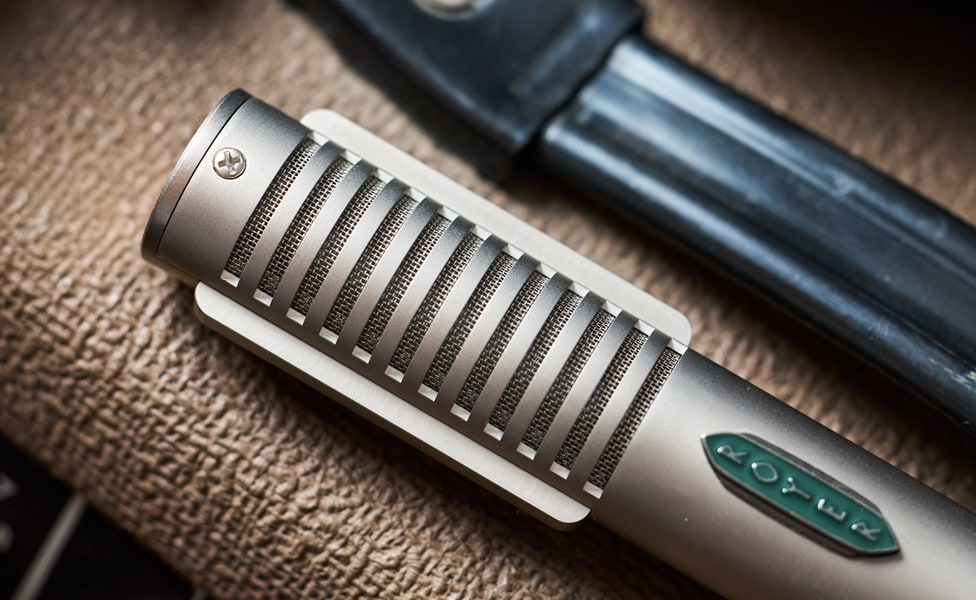
Pictured: Royer R-121 Ribbon Microphone
An SM57 Isn’t Your Only Option
The Shure SM57’s track record speaks for itself. It’s durable, affordable and has captured more famous guitar tones than probably any other mic. But it’s also colored—by design. Its upper-mid presence boost helps guitars cut through a mix, though that same quality may not suit every tone or production style.
Don’t let its ubiquity stop you from exploring. Alternatives, such as the Sennheiser MD 421-II, Electro-Voice RE20 or Royer R-121, offer very different takes on what “guitar tone” can sound like through a mic. If you’re curious how it stacks up against its vocal sibling, check out our informative gear tip, “Shure SM57 vs. SM58: What’s the Difference?”
Experiment With Dual-Microphone Setups
Pairing two microphones can open up a lot of tonal territory—especially when you’re looking for both immediacy and dimension. A common example is placing a dynamic like the SM57 close to the speaker for punch and positioning a ribbon like the Royer R-121 a little further back for body and warmth. Blend the two in your mix, and you’ve got options.
Royer even makes a mic clip bundle—the Royer AxeMount—designed to hold both mics in alignment. That keeps your phase relationship consistent and your mic placement repeatable, which is a big plus in studio sessions.
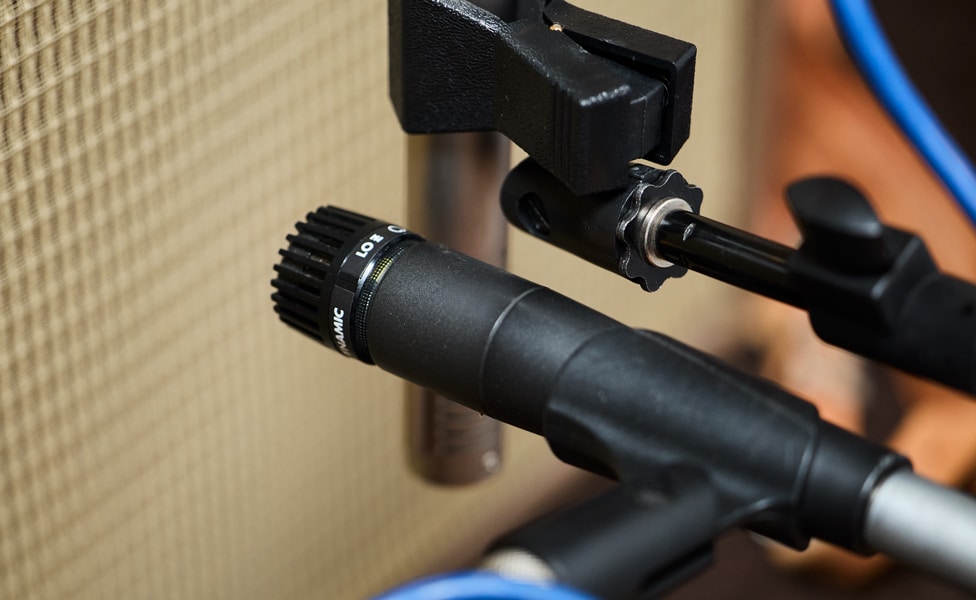
Pictured: Dual-Miking a Guitar Amplifier with Shure SM57 and Royer R-121
Match the Mic to the Room and the Guitarist
Some mics are more forgiving than others. A directional dynamic with tight off-axis rejection can save a take in a bad-sounding room. A condenser may highlight string noise, pick articulation or finger squeaks—great if you’re after detail, but not always flattering.
It also depends on the player. Someone with a heavy right hand and a scooped tone might benefit from a mic that adds midrange presence. A player with delicate touch and a rich amp sound might want something more neutral and open.
Finally, for more ideas on building out a versatile mic locker and exploring pro-level signal chains, check out our article on “Essential Microphones for Professional Recording Studios.”
Close Miking With an Open Mind
There’s no single “right” mic for recording electric guitar—only the one that gets your sound across the way you hear it in your head. Whether you’re chasing bite and grit, warmth and air, or something entirely your own, the gear in this guide will help you shape your tone with clarity and purpose.
Still not sure where to start? The knowledgeable associates at your local Guitar Center store can walk you through the options, or you can talk directly with your personal Gear Adviser to find the mic that best fits your sound, setup and budget.
And if you’d like to learn more about the science and craft behind the tools, check out our deep dives on:
- “How Do Dynamic Microphones Work?”
- “How Do Condenser Microphones Work?”
- “How Do Ribbon Microphones Work?”
Trust your ears, try different setups and don’t be afraid to experiment. After all, your tone is your signature—and the right mic just helps the world hear it.
Written By: George Van Wagner
George Van Wagner is a writer and editor for Guitar Center, where he has worked since 2007. A multi-instrumentalist, freelance recording engineer, arranger, composer, writer and all-around tech geek, he has over 30 years of experience in the musical instrument industry at companies like Midiman/M-Audio and Line 6, doing everything from customer service and writing user manuals to working in product development. He is currently gigging around Los Angeles with Gruppo Subconscious and Bobby “Hurricane” Spencer.
Recently Added to Buying Guides
Be the first to know about exclusive offers, tips and more.

866-498-7882 English
877-687-5402 Español