

Pro Gear Advisers
•866-498-7882
Inside the Noise Episode 11: Marcus Ryle
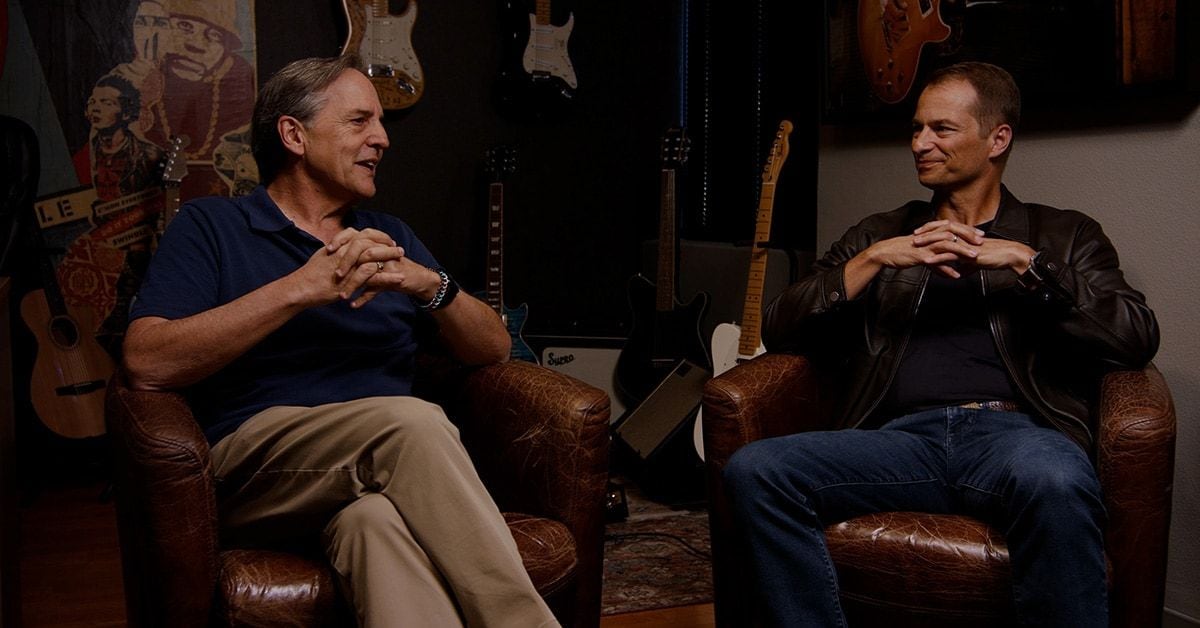
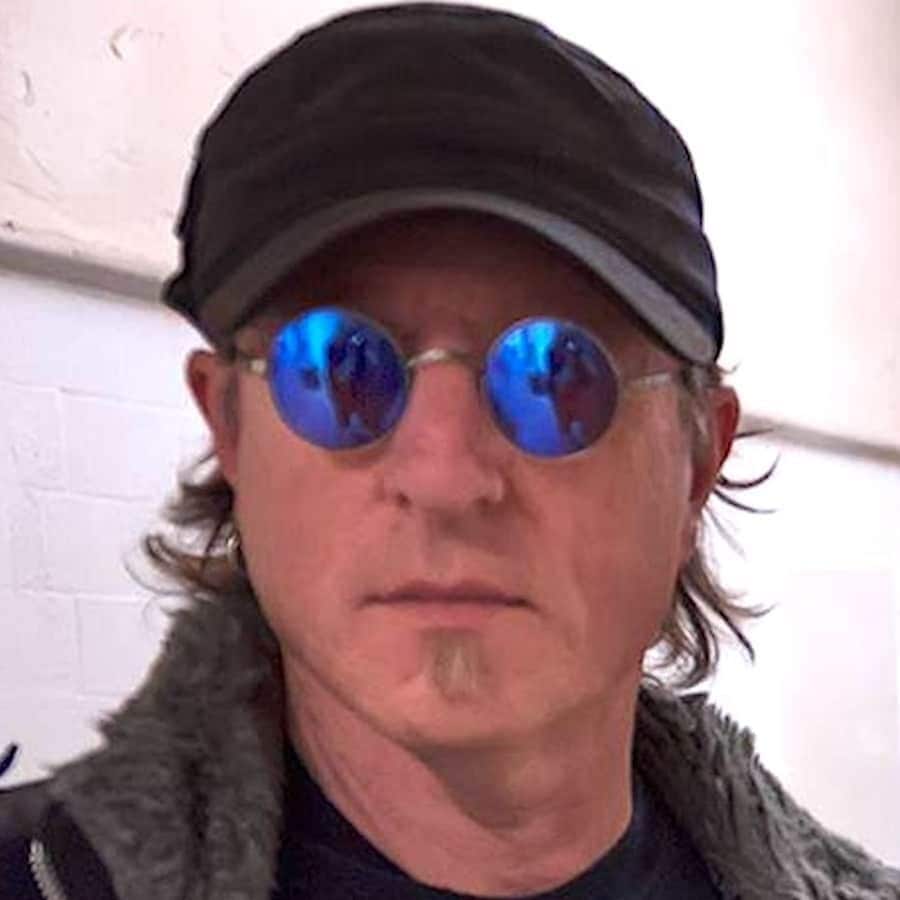
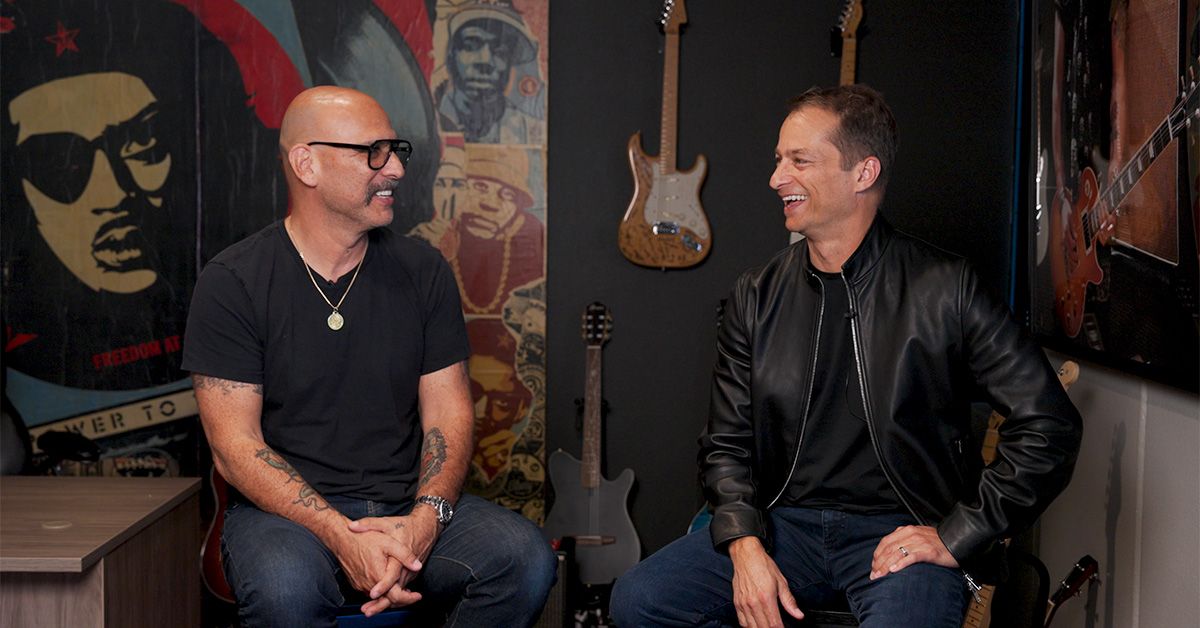
In episode 11 of Inside the Noise, Guitar Center CEO Gabe Dalporto examines the incredible “hat trick” Marcus Ryle and his teams bestowed upon the music gear industry. In three revolutionary tenures at three different companies, Ryle was instrumental in the development of the Oberheim DSX, Oberheim OB-8, Oberheim DMX drum machine, Alesis ADAT, Line 6 POD and several other indispensable music-making products.
“My superpower at Oberheim was basically selfishness,” says Ryle. “I was a musician, and I wanted things the products available at the time didn’t do. I was also self-taught, and, like most musicians, it was easy for me to say, ‘I want a product that does X.’ But how someone who uses something describes what they want isn’t always in the language understood by someone who is an engineer. Tom Oberheim saw I was both a musician and engineer built into one, and he wanted my first job at the company to be bridging that gap.”
The Alesis ADAT—which was the fire starter that made it possible for home studios to produce professional-sounding tracks instead of just demos—was similarly borne of a kind of creative audacity.
“Before the ADAT, there wasn’t anyone in the entire music industry who thought an affordable digital multitrack recorder wasn’t a good idea,” explains Ryle. “But you have to go and do it, and [Alesis founder] Keith Barr was the one who said, ‘We should build a digital tape recorder.’ But the whole time, I was I thinking, ‘We’re going to get slaughtered, because there’s no question brilliant companies like Sony and TEAC probably have this in their back pocket and they are just waiting to launch it on the world. How is Alesis—this little Santa Monica-based company that was mainly doing drum machines and reverbs—going to take over the world of tape recorders?’ But none of what the other companies did was affordable. The ADAT was $4,000.”
At Line 6, the team never rested on its laurels. In fact, it couldn’t.
“We were doing really well, but we were at risk,” says Ryle. “I never felt we were admired to the level we hoped for. It was like, ‘Line 6 is great for what it is. The modeling is okay.’ And, at the time, really great companies came around making things like the Fractal Audio Axe-FX and Kemper Profiler—which forced us to up our game. We needed to start from a clean slate, and it was like our fourth time at reinventing modeling. Helix took about five years of development before we announced it around June 2015, and I think it took about four months before we could ship the product. In hindsight, that turned out to be a good thing, because plenty of our great retailer partners were nervous about Line 6 coming out with a $1,500 guitar processor. At the time, the most expensive pedal we made was $500. Some very smart people were saying that going over $1,000 was going to be a real problem. But we said, ‘We can’t build the product we want to build at $1,000.’ The whole team was fully committed to that. My personal philosophy is that money has to be secondary. You have to recognize what is valuable to people to make something meaningful, and money is just the result of that. So is delight. It’s an exponential multiplier in your ultimate success if you can truly bring delight.”
Catch the full conversation and other episodes of Inside the Noise with Gabe Dalporto on YouTube, Apple Podcasts, Spotify or any of your favorite major platforms. When you subscribe, you’ll get new episodes every Tuesday at 3 p.m. PT.
Written By: Michael Molenda
Michael Molenda is a content strategist, editor and writer for Guitar Center, where he has worked since 2022. He is the longest-serving Editor in Chief of Guitar Player (1997-2018), and former Editorial Director of Bass Player, EQ, Keyboard, Electronic Musician, Gig and Modern Drummer. A guitarist, drummer, bassist and producer, Mike co-owned three pro recording studios in San Francisco, and performs with Surf Monster and The Trouble With Monkeys.
Be the first to know about exclusive offers, tips and more.

866-498-7882 English
877-687-5402 Español