
.jpeg)

Pro Gear Advisers
•866-498-7882
Noise-Free Pickups: Are They for You?


Why does a refrigerator hum? Because it can't remember the words.
Yeah—classic dad joke. But hum is all too real, and not something you want your guitar to do. In a world where Bluetooth, Wi-Fi and bargain-bin USB chargers are constantly spraying interference, it’s harder than ever to find an electronically quiet space to just play without 60-cycle hum sneaking in.
In this article, I'm going to take a look at the range of noise-free pickups available and give you an idea of how the various types work. This will help you decide if your guitar needs to "learn the lyrics."
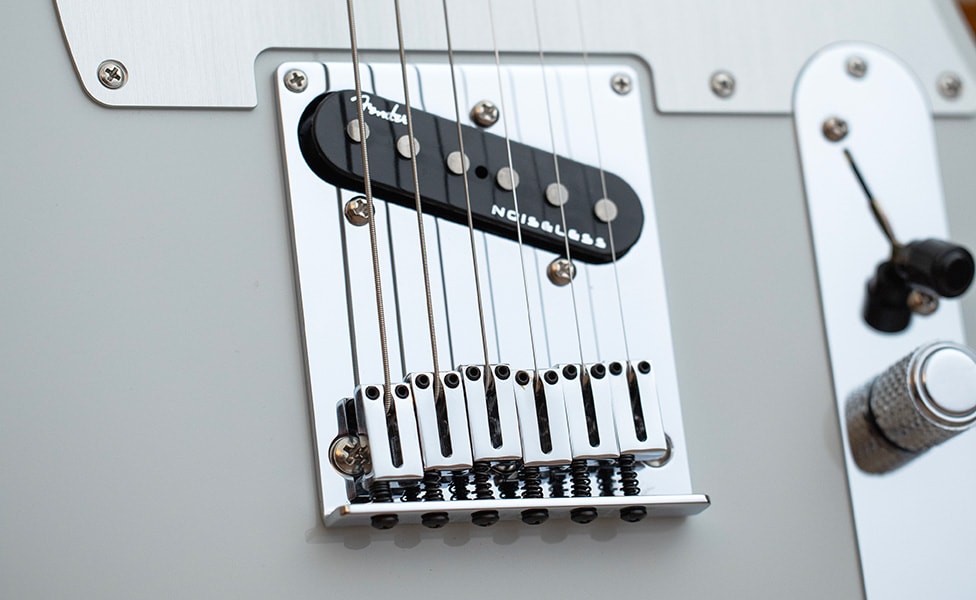
Shop Now: Fender American Ultra II Telecaster in Avalanche
Table of Contents
Why Guitar Pickups Hum (and How to Stop It)
We've had this conversation before, in a previous article I wrote, "How To Fix Hum Buzz and Other Noise In Audio Cables," but when it comes to your guitar, sometimes it's not the wires—it's the pickups.
Ever since Scottish physicist James Clerk Maxwell showed us that electric and magnetic fields are tied together like cables with a bad over/under wrap, we’ve had to deal with one field inducing current in another—that’s “inductance.” The clearest example is the 60Hz field from household AC. It leaks into the pickup’s magnetic field, which is trying to listen to your strings. That hum—or more often its harmonics at 120Hz or 180Hz—becomes a drone in your signal. Unless you like playing everything in the slightly sharp B-flat those harmonics create, that’s not so great.
Enter the Humbucker
Why were humbuckers invented? To have something that would literally buck the hum. By using two coils with reverse winding and reverse polarity (RWRP), they achieve “common-mode rejection”—anything both coils hear gets canceled, but your string vibration, picked up by the pole pieces, still comes through.
The trade-off? Because the two coils hear slightly different things, high frequencies can cancel too, leaving a narrower bandwidth. If, like me, you love single-coil sparkle, it can feel like someone threw a blanket over your guitar.
In theory, two identically wound coils wired in reverse polarity should completely cancel common-mode noise. The magnetic fields line up to sense string vibration while any environmental hum cancels itself out. On paper, it’s beautiful.
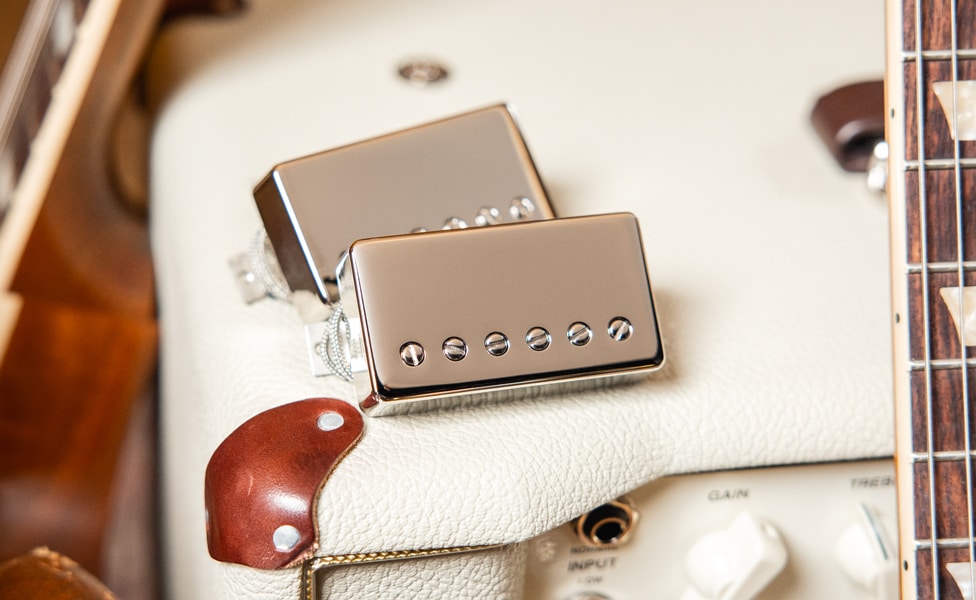
Picutred: Gibson Custom Custombucker Pickup Set
But here’s the problem: “Identically wound” is a unicorn. In the real world, small differences creep in everywhere—slight variations in the number of turns, minuscule shifts in wire thickness, spots where the winding is wound a hair tighter or looser. Each one is tiny, but together they keep hum cancellation from ever being 100%. That’s why even classic humbuckers can still buzz a bit under certain conditions.
For most players, “only mostly dead” hum cancellation is fine. The tonal benefits of a traditional humbucker outweigh the minor background noise. But for players chasing the absolute quietest rig—high-gain metal, silent studio tracking or anyone allergic to buzz—there are better tools, which we touch on in the section on active pickups (that's called foreshadowing).
How Different Pickup Types Reduce Noise
How do you get the full string sound—clear highs, beefy lows, articulate mids—from single-coil pickups without the hum? Let's look at what the different types are, how they work and give you some choices.
Stacked Coil Single-Coil Pickups
Like a humbucker, the stacked-coil pickup uses two coils wired in reverse polarity and winding direction. The difference is that they’re arranged vertically—one on top of the other—rather than side-by-side. This design avoids the phase cancellation you can get in a traditional humbucker, but it’s not perfect. The trade-off comes from our old friend, inductance. More wire means more inductance, and more inductance shaves off treble, much like your guitar's tone knob. That’s why stacked pickups often sound smoother but lose some of the sparkle of a true single-coil.
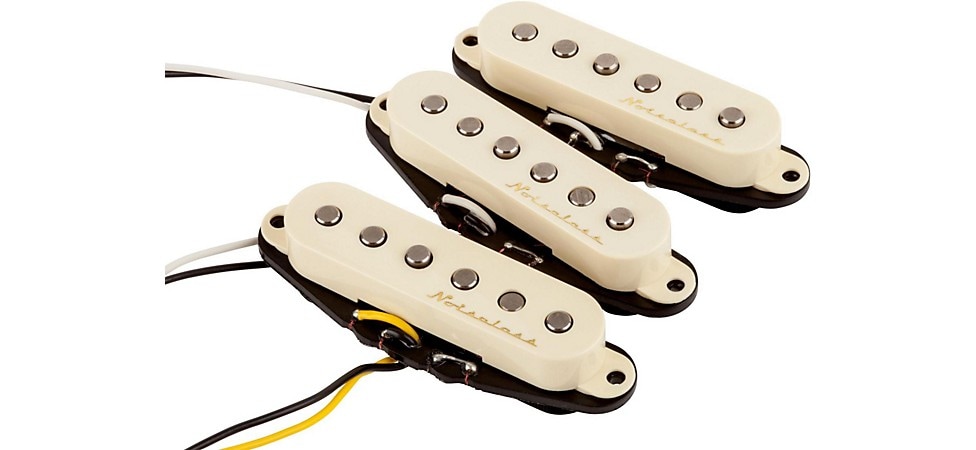
Shop Now: Fender Vintage Noiseless Stratocaster Pickup Set
Stacked-coil designs are typified in the Seymour Duncan Classic Stack and the Fender Vintage Noiseless pickups for Stratocasters and Telecasters, as well as Fender's Gen 4 Noiseless pickups, also for Strats and Teles.
What's the difference? Fender’s Gen 4 Noiseless and Vintage Noiseless pickups aim to keep as much of the traditional Strat shimmer as possible. They’re clear, articulate and lean polite—great if you want hum-free sparkle without losing the “glass.” By contrast, Seymour Duncan’s Classic Stack Plus (STK-S4) pushes a little more midrange and output. They’ve got punch and presence that cuts in a band mix, but at the cost of a touch of high-end air.
Split-Coil Pickups
In a split-coil design, each coil covers only part of the string array (typically half the strings). Wire them RWRP and the ambient hum each coil “hears” cancels out while string signal remains intact. Because each coil’s aperture is narrow—closer to a true single—the pickup keeps that fast attack and wide bandwidth big humbuckers can shave off.
The Fender Precision Bass is the most famous example of a split-coil pickup. Leo Fender never called it a “humbucker,” but that’s exactly what the P split-pickup is—a clever hum-canceling pair disguised as two single-coils.
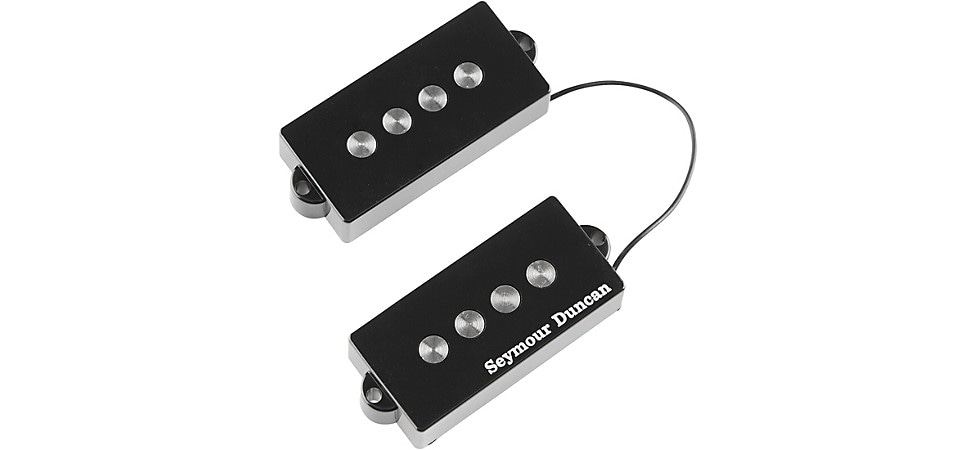
Shop Now: Seymour Duncan SPB-3 Quarter Pound P Bass Pickup Set
On the guitar side, the archetype is G&L’s Z-Coil. Launched during Leo Fender’s G&L era (1980–1991), the Z-Coil uses that P Bass trick of splitting the pickup into two offset halves that together cancel hum while maintaining single-coil clarity. It looks a little unconventional, but sonically it nails the brief: glassy top, solid fundamentals and far less buzz than a vintage Strat coil.
The Air-Gap Pickup Design
Don Lace, Sr. came at the problem sideways. Instead of trying to fight noise with brute force coils or active electronics, he built what came to be called the “air-gap” pickup. In practice, it’s less about fresh air and more about flux management. By physically spacing the windings and surrounding them with conductive barriers, Lace Sensors reduce the way turns of wire couple with each other and with the outside world. The payoff is less capacitance, less induced noise and a cleaner magnetic aperture that focuses on the strings instead of the environment.
Unlike stacked or dummy-coil designs, Lace Sensors aren’t waiting for hum to arrive so they can cancel it—they try to block it at the door. Lace patents describe shielding plates and even secondary windings that redirect flux rather than fight it head-on. The result is a quieter pickup that doesn’t sacrifice treble response to destructive interference.
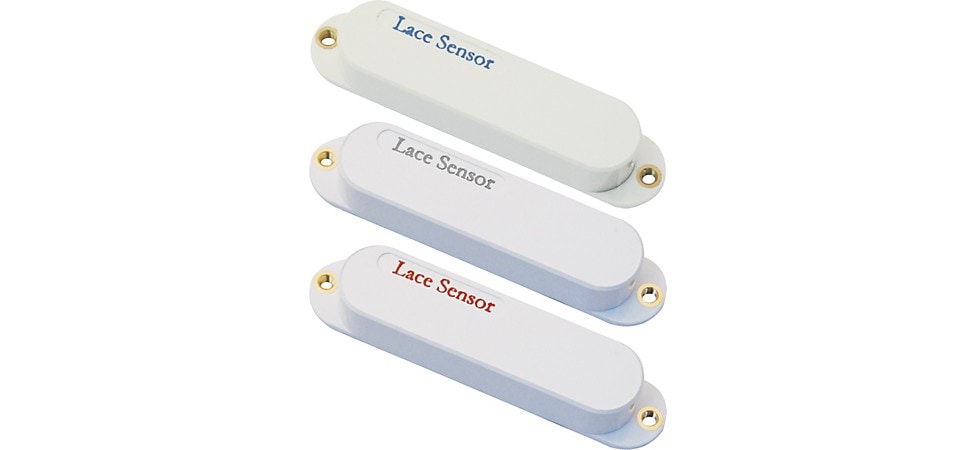
Shop Now: Lace Sensor Blue-Silver-Red 3-Pack Pickup Set
What does that mean when you plug in?
- Lower Noise Floor: The coil hears less of the room’s electromagnetic hash because the shielding intercepts it before it gets in.
- Extended Frequency Response: Less capacitance means more sparkle—treble detail that other noiseless designs sometimes lose.
- Focused Magnetic Field: With the barriers steering flux toward the strings, you don’t need overpowered magnets yanking on them. Sustain stays clean.
Active Pickup Designs
Passive coils can only do so much. Active pickups take another route: They buffer the signal with a built-in preamp, lowering impedance and letting the designer sculpt tone more freely. The payoff is a dramatically lower noise floor, especially in high-gain environments. The catch? They need power—a 9V battery (sometimes two if you want that extra headroom) or, in some modern cases, phantom power. There are two current angles of attack for active pickups, and each has its own strengths and weaknesses. Read more on active/passive pickups in "What Is the Difference Between Active and Passive Pickups?".
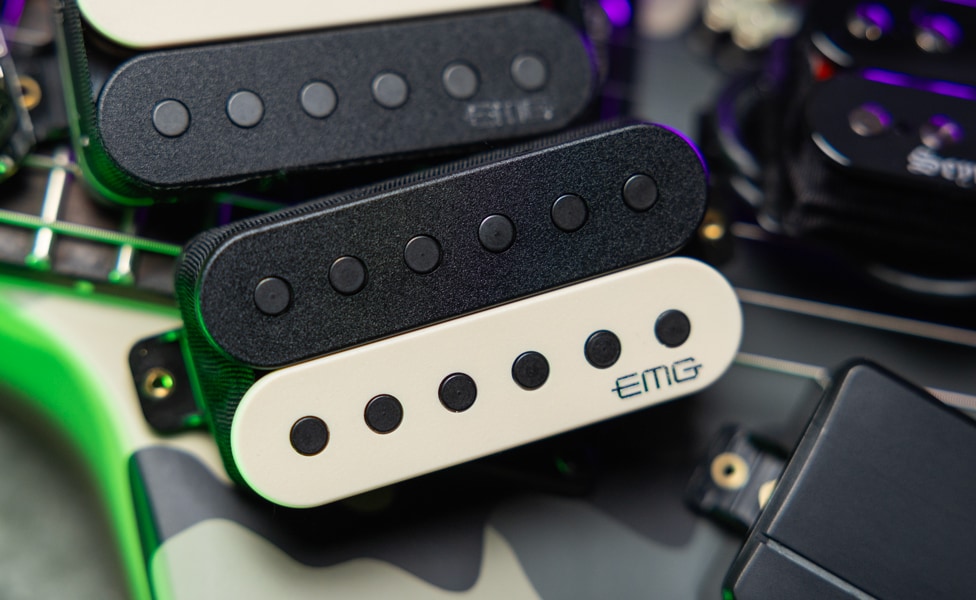
Picutred: EMG JR "Daemonum" Pickup Set
The EMG Approach
For decades, EMG has been the shorthand for active pickups. Their design focuses on consistency and control: Low-impedance coils feeding a tiny preamp that evens out response and slams noise to the floor. The result is often described as “sterile”—but think sterile like an operating room. The sound is so clean you can open it up and make surgical adjustments with pedals or EQ, knowing the pickup itself won’t add noise or coloration. For metal and high-gain players, that precision is exactly the point.
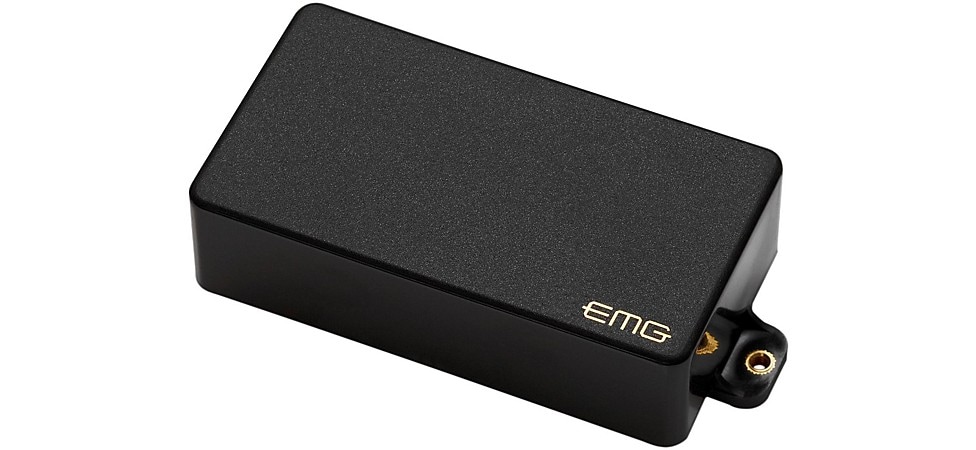
Shop Now: EMG EMG-85 Humbucking Active Guitar Pickup
Pros: Ultralow noise, surgical clarity, utterly reliable.
Cons: Requires power, and some players find the voice too uniform or lacking “vintage warmth.”
The Fishman Approach
Fishman’s Fluence line flips tradition on its head. Instead of wound coils of copper, Fluence pickups use stacked printed circuit boards etched with perfect coil patterns. That means every pickup is identical, with no inconsistencies from hand-winding. It also allows Fishman to build in multiple voicings—you can flip a switch between “vintage single-coil sparkle” and “modern high-output roar” on the same guitar. Because the magnetic field is carefully managed and the coils are perfectly balanced, hum is practically nonexistent.
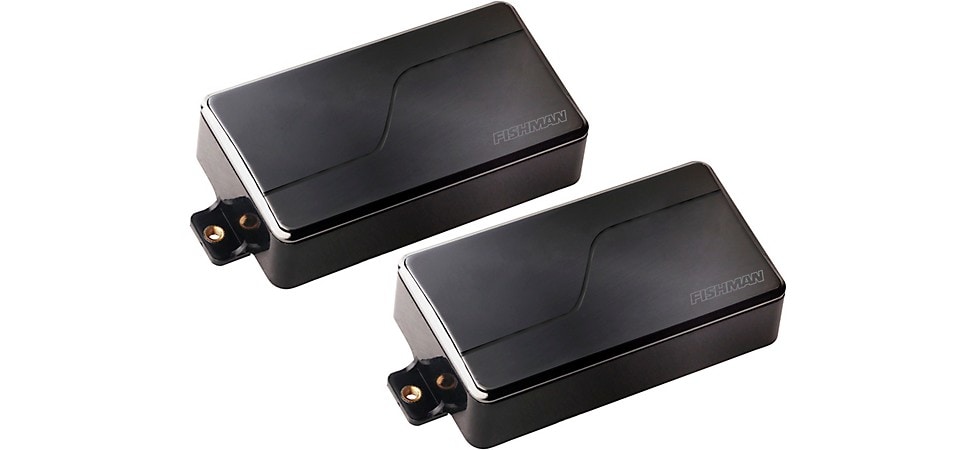
Shop Now: Fishman Fluence Modern Humbucker 3-Voice 6-String Pickup Set
Pros: Near-zero noise, multiple voices in one pickup, consistent from unit to unit.
Cons: Needs power, more complex than traditional actives.
The Master Dummy Coil
There’s one more trick for chasing silence, though it’s more of a DIY rabbit hole than an off-the-shelf solution: the master dummy coil.
Years ago, I installed one of these for Todd Rundgren in a Fender Mustang. It involved some careful routing, extra wiring and a fair amount of patience, but it worked. Not flawlessly—dummy coils don’t kill hum as effectively as stacked designs, split-coils, or actives—but well enough that the guitar was noticeably quieter on stage.
Instead of each pickup handling its own hum-cancellation, a dummy coil is added somewhere else in the guitar—It's sole purpose is to "hear" the same environmental noise as your pickups and cancel it out—is hidden under the pickguard or tucked into the body cavity.
Find Your Quiet Place
That’s our tour through the world of noise-free (or at least mostly noise-free) guitar pickups. I hope it’s given you some useful insights and maybe even sparked a few ideas for your own setup.
If you’re thinking about swapping in noiseless pickups but aren’t sure where to begin, your best move is to stop by your local Guitar Center. Spend some time with guitars that already have these pickups installed, chat with one of our knowledgeable associates, and—if you’re not the DIY type—ask our Repairs techs about installation options.
No store nearby? No problem. Reach out to your personal Gear Adviser, and they’ll walk you through the options and help match you with the right pickups for your style and budget.
Here’s to blessed silence when you want it, and righteous noise when you need it—both equally essential parts of making music.
Written By: George Van Wagner
George Van Wagner is a writer and editor for Guitar Center, where he has worked since 2007. A multi-instrumentalist, freelance recording engineer, arranger, composer, writer and all-around tech geek, he has over 30 years of experience in the musical instrument industry at companies like Midiman/M-Audio and Line 6, doing everything from customer service and writing user manuals to working in product development. He is currently gigging around Los Angeles with Gruppo Subconscious and Bobby “Hurricane” Spencer.
Recently Added to Gear Tips

Be the first to know about exclusive offers, tips and more.

866-498-7882 English
877-687-5402 Español