.jpeg)

Pro Gear Advisers
•866-498-7882
5 Top Music Gear Trends for 2026

Explicitly following stylistic trends can be a very bad idea. Why would you intentionally shackle your unique creativity to the utterly conventional?
Okay, there might be one decent reason.
More than a few creators throughout time have become fabulously successful absorbing and manifesting trends, much like suckerfish feeding on whales and sharks. But there are no guarantees mimicking others will reap rewards, and if you fail commercially, you’ll also flop creatively. Don’t let your artistic resume read: “Bland, boring and far-less-successful imitation of famous musician.”
However, there’s a much safer way to Ziploc yourself to trends.
Instead of being a human example of “copy and paste,” adopt workflows that empower creativity. Seek trending strategies that can eradicate frustrating steps, banish knowledge gaps and automate mind-numbing tasks. We’ll even help you get started. Here are five top five music gear trends that should make expressing the ideas in your head massively easier.
Cross-Platform Integration
You may ask yourself, “What’s the use of all this technology if I can’t choose to work the way I want to work, pick where I’d like to work and create across all of my favorite devices?”
Fortunately, a lot of gear manufacturers apparently asked themselves the same question. As a result, cross-platform integration is a thing, and it means many music tools can be utilized collaboratively—to varying degrees—via hardware, software, the cloud, DAWs and mobile devices.
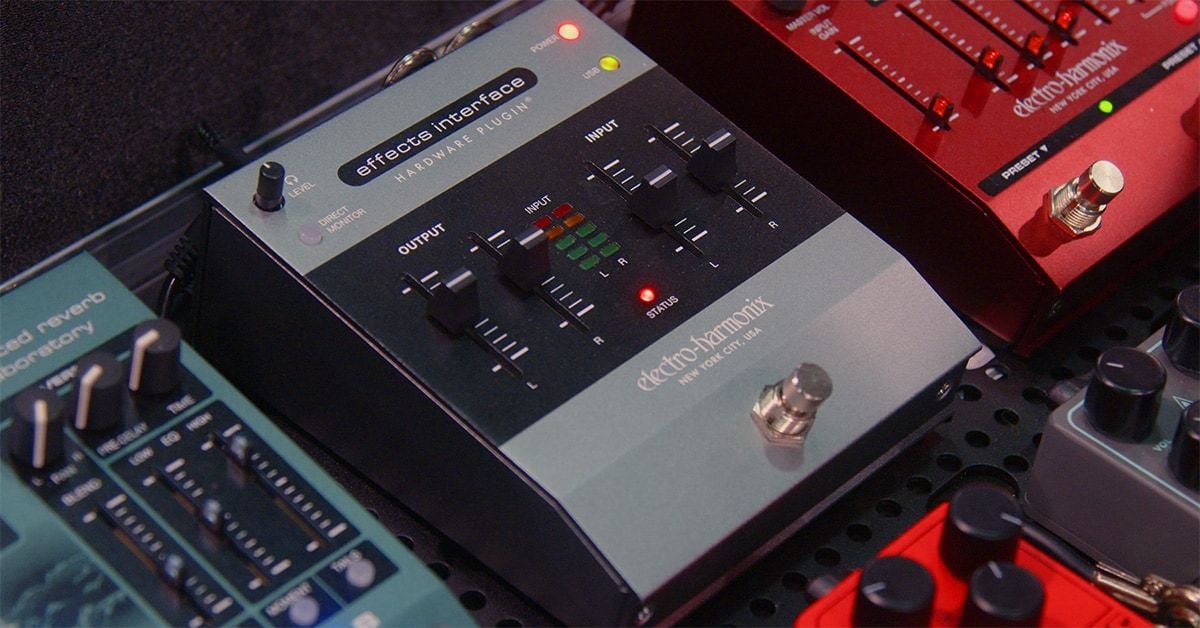
The Line 6 HX Stomp and HeadRush Core, for example, are hardware effects pedalboards that can also be used as USB audio interfaces, as well as allowing software editing on a computer and access to the cloud. Universal Audio UAFX pedals are physical stompboxes that also offer parameter editing and preset archiving in the cloud through a mobile app. There’s also the Electro-Harmonix Effects Interface Hardware Plugin, which seamlessly integrates physical pedals, software plug-ins and DAWs into your workflow. You can route your favorite stompboxes into your DAW or control your plug-ins with the Effects Interface Hardware pedal in collaboration with your pedalboard.
Shop Now: Electro-Harmonix Effects Interface Hardware Plugin Pedal
The fab trend here is you can be all old school and bring hardware to gigs and sessions, but also dig into software and transform your pedal to address different sonic needs. Forgot to load an edited preset at home and you need it for a gig? Not a problem if your device also allows editing in its mobile app. A robust cross-platform ecosystem means you never have to “be without,” or apologize for forgetting to bring the right sounds to a show. You’re still on your own with the power and audio cables. (Tip: Don’t leave those at home.)
AI-Assisted Tone Creation and Production Assistance
You can fear AI or mold it to your desires. The choice is yours. I would never rely on generative AI to create music (or articles such as this one), but I have no problem asking it to do stuff that bores me, wastes my time or keeps me from doing other things I enjoy.
For example, the AI-assisted pitch-correction plug-in that comes with Apple Logic can help make storm-crossed vocal mixes into sun-drenched idylls on Pink Sands Beach in the Bahamas. Trust me, if I was able to get back all the time I invested in recording, fixing and enhancing sour vocals to professional (and listener-pleasant) pitch standards, I could look forward to living until at least 127 years old. But, in many cases, all I need to do when using Logic is activate pitch correction, and all is right with the vocal session at hand. Within seconds.
Logic’s AI-driven Stem Splitter is also remarkable, and it saved me just a couple of months ago. A music publisher who wanted to license some of my ’80s songs asked if I had multitrack tape masters for them. I was like, “Do you know how many years ago that was? No way.” But I had digital stereo mixes archived—which is how the publisher heard the songs in the first place—and transferring them to Logic and activating Stem Splitter generated separate tracks for vocals, guitar, drums and bass. The publisher could remix the songs as desired, and I didn’t lose any financially beneficial sync fees. Thanks, AI!

Shop Now: iZotope Ozone 12 Advanced Mastering Suite
Mixing and mastering projects can be tricky for inexperienced home recording musicians, but an AI “assistant engineer” can be a click away. Software solutions—such as iZotope Ozone 12 Mastering Suite, for example—can offer genre-specific mastering help, low-frequency control, stem separation and EQ, smart expansion (for restoring transients to overcompressed audio) and more.
For augmented chops training, the JBL BandBox Solo and JBL BandBox Trio AI-powered practice amps can separate stems from streamed songs so you can isolate, say, a guitar or vocal for study, or play along with your favorite songs in music-minus-one jams. Some Positive Grid Spark amps—such as the Spark MINI Vai and Spark 2—offer AI helpers, such as Smart Jam (constructs custom backing tracks from your playing) and “text to tone” generation (produces tones derived from text or voice prompts).
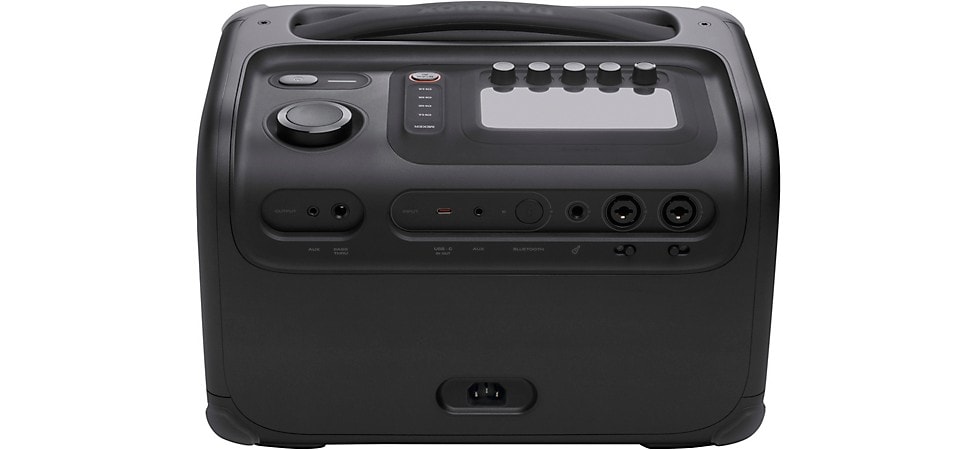
Shop Now: JBL BandBox Trio AI-Powered Practice Amp and Speaker
I could go on and on, as there are AI assistants for practically every musical endeavor and process. I recommend using Google or ChatGPT to seek out AI tools for whatever you need. You should never have to feel all alone and wonder, “How can I create sound design ideas for a movie?” or “What are the best drum grooves if I want to produce a mash up of jazz noir and yacht rock?”
Immersive Audio
As a former professional studio owner, it was a business imperative to track how people listened to sounds as audio technology evolved, and to acquire the gear music producers would need to accommodate emerging audiences. (Competition for studio bookings has always been brutal, so lagging behind music tech developments would be akin to flirting with bankruptcy.) Of course, while you don’t want to move too fast—quadraphonic sound, anyone?—you should pay good attention to markets that also embrace enhanced sonics, such as gaming, film, installed and embedded audio for amusement parks and so on.
Today, immersive audio is a good bet. Another advantage—if you’re an audio nerd—is it’s a tremendously exciting field. Infected by hilarious expansive stereo mixes of the ’60s—instruments on the left/vocals on the right and other such madness—I’ve always practiced extreme panning to animate the stereo field. But now, immersive and spatial audio lets me barrage listeners from every perspective in three dimensions. Envelop people in sound? Sign me up.

Shop Now: Apogee Symphony Studio 8x16 Interface and IK Multimedia iLoud MTM MKII Immersive Bundle
It's not a selfish endeavor to make me smile all by my lonesome self. As I mentioned above, a vast audience is already being exposed to immersive audio through VR glasses (Apple Vision Pro, Meta Quest 3 and others), movies, video gaming, multimedia theatrical experiences, amusement rides and even streaming audio. Biggies who have adopted immersive sound for streaming music and/or films include Apple Music (Dolby Atmos), Amazon Music (Dolby Atmos and Sony 360 Reality Audio) and Netflix (Sennheiser AMBEO). I think we can assume this sonic revolution is here to stay.
Diving into three-dimensional sound production typically requires an audio interface, 7.1.4 monitor system (12 speakers), DAW that supports Dolby Atmos or spatial mixing (such as Avid Pro Tools, Apple Logic Pro and Steinberg Nuendo) and immersive headphones.
The Apogee Symphony Studio 8x16 interface and IK Multimedia iLoud MTM MKII Immersive Bundle takes care of interface/monitoring needs all at once. If you’re into “separates,” the Universal Audio Apollo x16 Gen 2 and Focusrite RedNet D16R are immersive audio-ready interfaces, and 7.1.4 monitor systems include ADAM Audio 7.14, FOCAL 7.1.4 and Neumann KH80 7.1.4. There’s also a headphone option if you can’t manage the space (and expense) of a 7.1.4 speaker system. The Steven Slate Audio VSX Immersion One open-back headphones (with VSX software) simulates a lot of different monitoring environments, including a Dolby Atmos-equipped room.

Shop Now: Steven Slate Audio VSX Immersion One Open-Back Headphones
Modular Effects Architectures
An exciting trend for guitarists (and other players) who love pedals is the modular effects ecosystem that let you swap “stompboxes” practically without limits. Offering expandable hardware platforms and/or interchangeable DSP modules, these next-generation systems ensure players are never creatively stifled by a fixed format. They are flexible and future proofed. As someone who is constantly switching out pedals and pedalboards for various session necessities, the thought of “one hardware device evolving to meet all needs at all times” is intriguing.
However, as exhibited by the BOSS PX-1 Plugout FX (a single-effect-at-a-time pedal that lets you add new effects one at a time) and various keyboard and recording plug-in systems, expansion packs will likely involve added costs or paid subscriptions. While paid upgrades may be new to some guitar players, they are common in my other discipline (recording), and, anyway, if I want to add a new modulation or fuzz pedal to my board, it’s going to cost me. DSP-based expansion packs and added sounds for modular systems should be more economical than purchasing hardware versions. For example, the PX-1 model of a vintage BOSS DM-2 Delay costs $9.99, as opposed to $175 for the currently available DM-2W Waza Craft version.
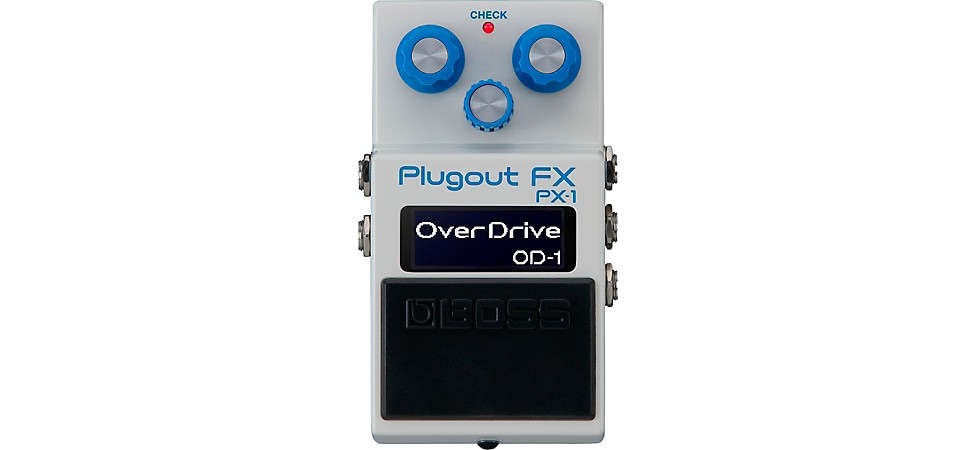
Shop Now: BOSS PX-1 Plugout FX Multi-Effects Pedal
All trends bubble up from somewhere, and we can credit the Eventide H9 with pioneering the “algorithm marketplace” for effects around 2010. The H9 lets players purchase and swap effects, making it a customizable and always-evolving platform. Line 6 also manages a modular DSP ecosystem with its Helix Stadium XL, HX Effects and HX One processors, delivering new sounds and features via firmware updates. In addition, Helix Stadium XL users can visit the Line 6 Marketplace for third-party effects models and artist-signature rigs. Another expandable system is offered by TC Electronic with its Plethora X3 Toneprint that lets you take advantage of the company’s vast library of Toneprint effects.

Shop Now: Line 6 Helix Stadium XL Multi-Effects Processor
If you want to embrace the AI impact on modular architecture, the Polyend Endless—winner of Mix magazine’s Best of Show at NAMM 2026—is a stunning trip to the future you can exploit right now. Using a remarkable “text to effect” DSP engine, you can write your idea for an effect and Polyend will manifest it into a gig-able hardware pedal in minutes. A communal library exists for you to share your creations, as well as download custom effects from others.
Standalone Workstations
I can’t imagine any musician arguing against the powerful and inspirational symbiotic relationship between the computer and music making. But, sometimes, a little absence can cause your artistic heart to grow a bit fonder—especially if you’re a performance-based creator who doesn’t love bringing a laptop to gigs.
Most standalone—no computer required—workstations offer comprehensive arrangement features (sampling, sequencing, etc.), the ability to save sessions built in (no DAW needed), onboard sounds (synths, drum machines, effects and more), portability (everything in one box), reliability (less chance of computer crashes mid-song) and pads and knobs that let you “play” on stage (give that guitarist some “charisma competition”).

Shop Now: Roland MC-707 GROOVEBOX
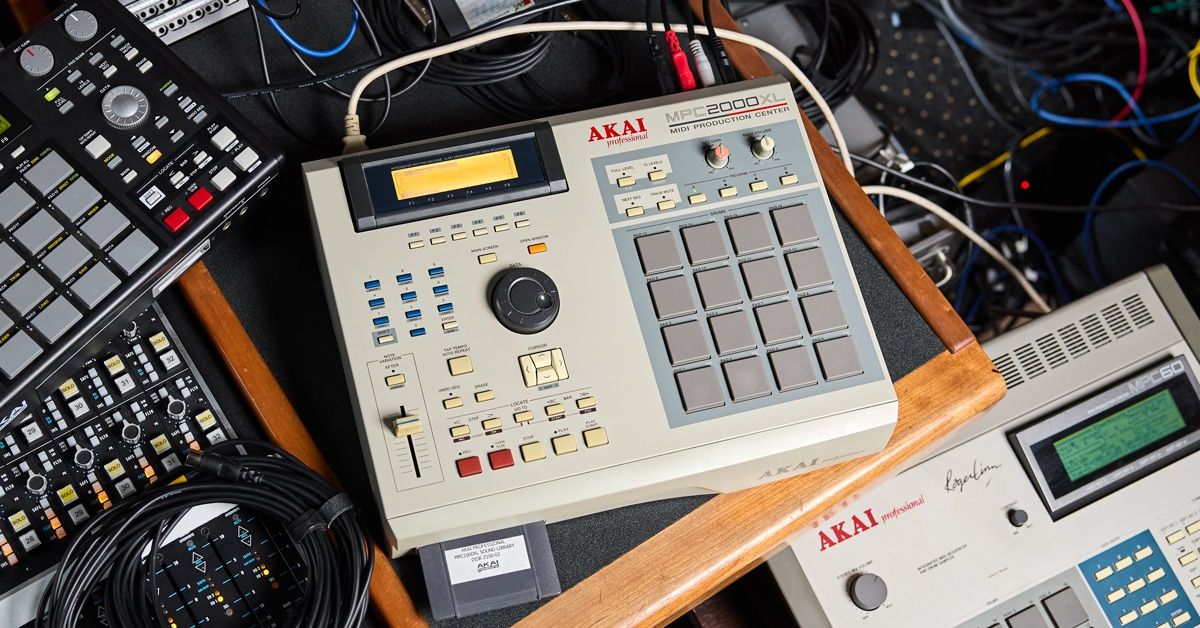
While the standalone strategy was driven predominantly by hip-hop artists, DJs, beatmakers and EDM creators, a significant number of DAW-based musicians are adopting this workflow. Tools such as the Akai Professional MPC XL and Roland MC-707 GROOVEBOX are so much more than mere beat machines. Even something like the RØDE RØDECaster Pro II can be deployed beyond podcasting chores to handle music production duties. So, if you are experiencing even a wisp of creative frustration over conforming to a computer workflow, join the standalone squad.
Shop Now: Akai Professional MPC XL Standalone Production Workstation
Trending Futures
I’m terrible at picking emerging stocks, so I can’t promise any conclusive intel on upcoming music gear trends. But it’s fun to look at the now and visualize what’s to come.
We should keep an eye on the continuing portability and downsizing of gig rigs, for example. As some artists travel more to (hopefully) expand their audiences and replace almost non-existent streaming revenue with concert fees and the resulting merchandise sales, backlined rigs at venues are welcome (no dragging pedalboards and amps on airplanes or cramming gear into small SUVs with the rest of the band). But backlines can vary drastically in quality, so having a trusted portable rig can save your gig if the provided gear is beaten to heck or not powerful enough to fill the room.
Mini guitar amp heads with higher wattage ratings, as well as even lighter and smaller powered PA speakers and acoustic guitar and vocal amplifiers capable of filling small clubs could increase performance opportunities for mobile musicians and the next generation of traveling troubadours. What are your dreams for the trending gear of the future?
Written By: Michael Molenda
Michael Molenda is a content strategist, editor and writer for Guitar Center, where he has worked since 2022. He is the longest-serving Editor in Chief of Guitar Player (1997-2018), and former Editorial Director of Bass Player, EQ, Keyboard, Electronic Musician, Gig and Modern Drummer. A guitarist, drummer, bassist and producer, Mike co-owned three pro recording studios in San Francisco, and performs with Surf Monster and The Trouble With Monkeys.
Be the first to know about exclusive offers, tips and more.

866-498-7882 English
877-687-5402 Español