.jpeg)

Pro Gear Advisers
•866-498-7882
The History of the Ampeg B-15 Portaflex Bass Amp
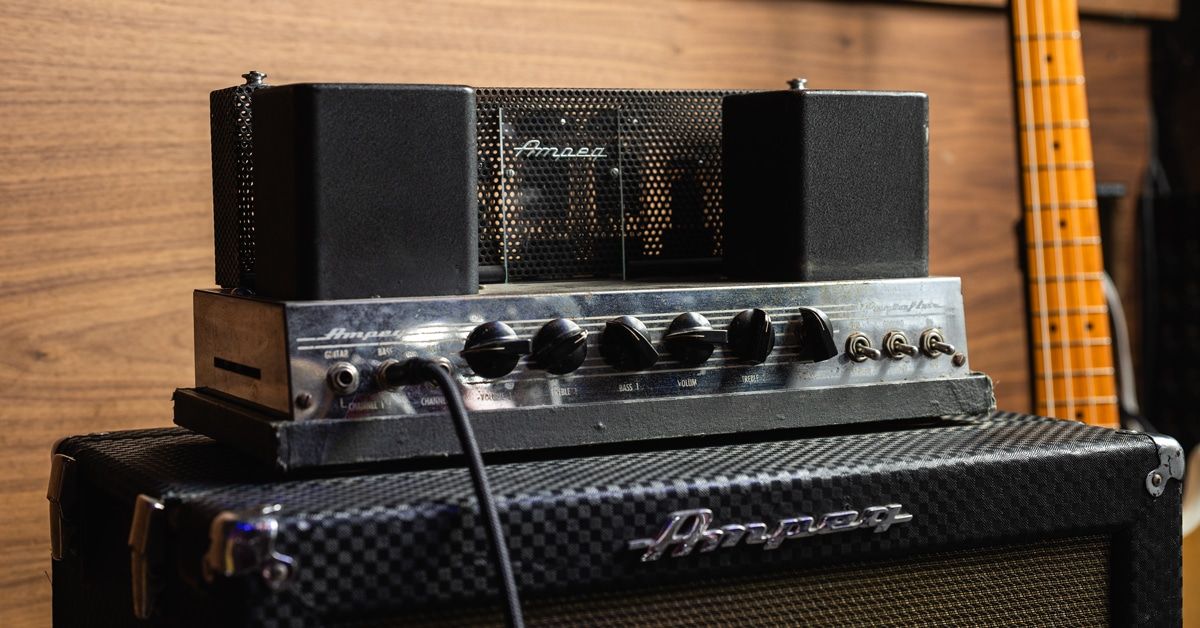

The Ampeg B-15 Portaflex bass amplifier emerged in 1960, at a time when the bass guitar was still in its nascent stage. But adventurous musicians were answering the electrified revolution’s call, and they demanded instruments and equipment in line with the changing times.
As desire for bolder and more portable tone grew, Ampeg satisfied it with the revolutionary B-15.
For countless bassists, the Ampeg B-15 Portaflex, with its practical flip-top design, punchy low-end projection and rich, tube-driven power, was the perfect complement to a new sound, new scene and new attitude.
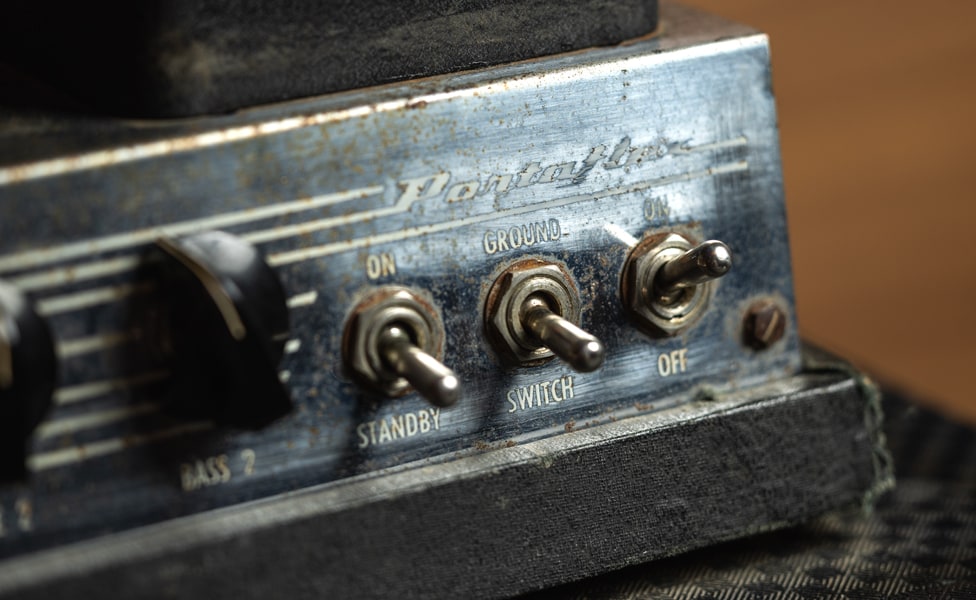
Pictured: Ampeg B-15 Portaflex Bass Amp Head Control Switches
Table of Contents
Timeline of Ampeg B-15 Development
1960: The Ampeg Company released the B-15 Portaflex bass combo, featuring 25 watts of tube-based tone. It housed a 15" Jensen P15N speaker and had two inputs with separate volume controls, a third “stereo” input combining both channels and a shared bass/treble, Baxandall-style EQ.
Later that year, Ampeg issued the B-15N, notably introducing discrete channels with individual equalizers. A smaller sibling with a 12" speaker—the B-12N—was also released.
1962: Ampeg launched the B-15NB. Aesthetically, this revision introduced Ampeg’s iconic blue checkered vinyl covering. With the B-15NB, the amp’s creator Jess Oliver also decided to switch from a tube rectifier to a solid-state one. He further updated the speaker cabinet connection to 4-pin XLR.
1963: For a short time, Ampeg produced the B-15NL, housing a 15" JBL D130F speaker as an optional upgrade from the Jensen. If you can find one of these, you should probably buy a lottery ticket, too.
Ampeg also began making the 50W B-18N with an 18" speaker during this period. This monster of amp was actually a totally different beast than the B-15, with its own distinct circuitry and sound. Roger Waters was famously a fan of the B-18N.
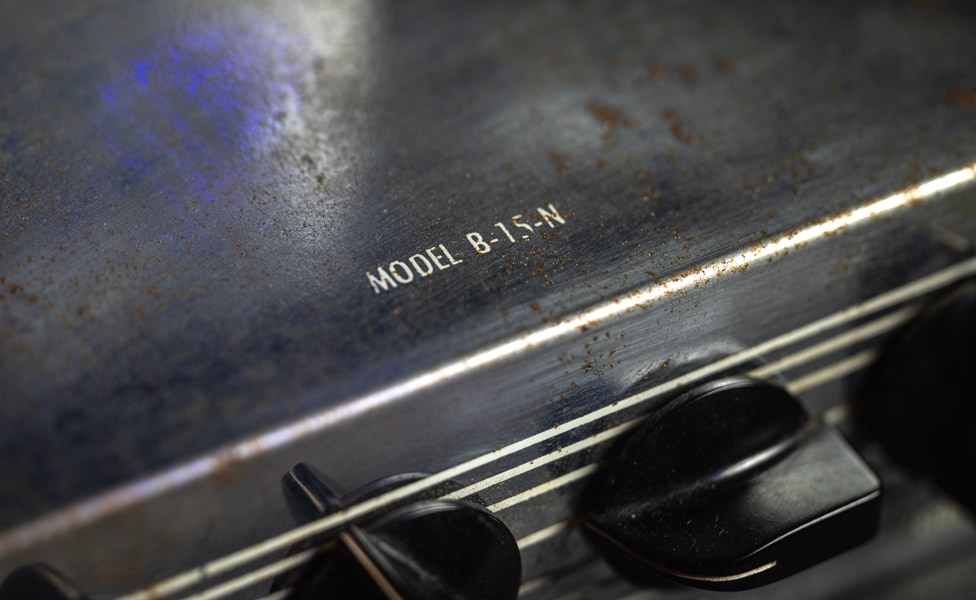
Pictured: Ampeg B-15 Portaflex Bass Amp Head Model Number
1964: The Ampeg B-15NC returned to using a tube rectifier, though Oliver opted for a different valve model with less sag (the 54AR) than the 5U4GB found in the earliest B-15s. Most importantly, the B-15NC utilized printed circuit boards for their guts, which streamlined the amplifier’s production process.
The first B-15NC combos to ship featured a Jensen C15N speaker. Ampeg switched to a 15" CTS model in 1965. These were more robust speakers that helped enhance the amplifier’s low-end response.
1965: Ampeg debuted a significant revision to the Portaflex platform in the B-15NF. The Portaflex series’ namesake double-baffle bass reflex system was reimagined as a single-baffle port. Additionally, the B-15NF ushered in fixed-bias power tubes, increasing the amplifier’s juice from 25 to 30 watts and giving it a clearer sound.
1967: Ampeg exchanged its signature blue checkered vinyl for a sleek black wrap with chrome piping around the edges of the grille. There was also a second iteration of the B-15NC released this year, pumping 50 watts through a 2x15 speaker cabinet.
1968: Ampeg revised the original B-15N. This update increased its output to 50 watts and added Ultra High and Ultra Low switches for more tonal control. These operated similarly to Pultec-style EQ, where the frequency bands have a lot of crossover for a more organic, musical sound.
1971: Ampeg produced the B-15S inspired by the company’s V-4B head. This powerful 60W, two-channel amplifier’s tone circuit incorporated a 3-way “voice” switch—Guitar, Bass and Flat—to alter the frequency response given the input.
1973–1980: A few notable events in the B-15N’s life happened during this timeframe. In 1973, Ampeg swapped to Eminence speakers from the factory and offered an Altec 421A as an optional upgrade. They also started using Thiele-ported bass reflex cabinets to enhance its low-frequency reproduction.
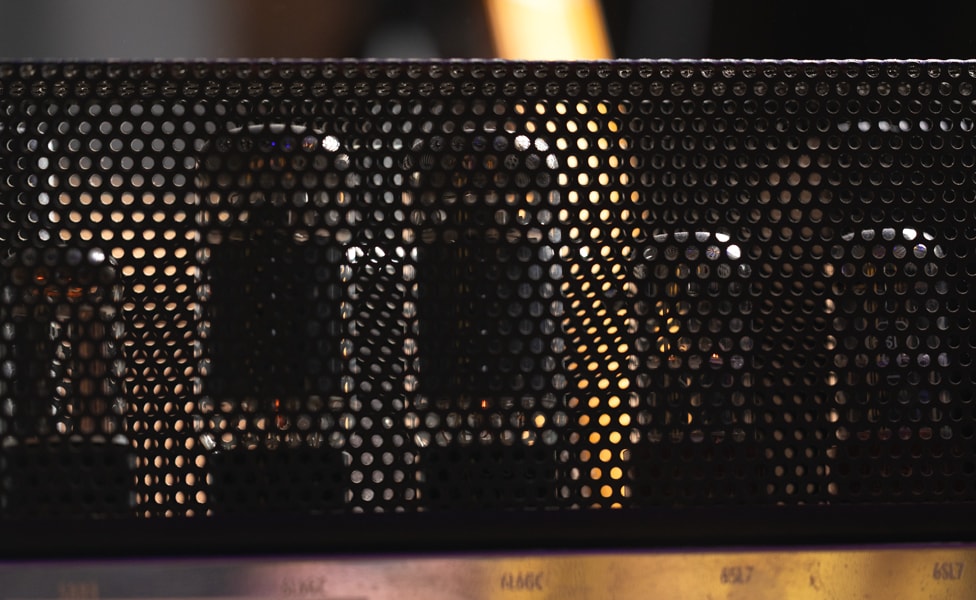
Pictured: Ampeg B-15 Portaflex Bass Amp Head Power Tubes
Of lesser consequence but worthy of note, Ampeg moved the B-15N’s standby switch from the front to the back of the amp. Finally, in 1975, Ampeg equipped the B-15N with a grounded power cable.
The B-15N stayed in production until 1980, closing out two decades of bass amplifier innovation.
1986–2006: Production of the B-15N ceased for several years in the ’80s, culminating in its return to market in 1986. Ampeg also released the B-15T in 1988, featuring a 100W solid-state head and a triangle-ported speaker cabinet.
In 1997, Ampeg launched the B-15R—an all-tube, 100W reissue of the B-15. The year 2006 marked the end of the B-15’s second 20-year tenure.
2010–: In celebration of the B-15’s 50th anniversary in 2010, Ampeg announced the Heritage B-15 and released an extremely limited run of 50 handwired pieces for $4,999 each. The faithful reissue was endorsed by Jess Oliver prior to his passing the next year.
Ampeg followed up with another run of 100 Heritage B-15 amps in 2012, this time set at $5,999—these also sold out immediately. To help meet the demand for these rare reissues, Ampeg released an additional 250 Heritage B-15 combos, using printed circuit boards, a different speaker and an all-black chassis. At $2,999, they were more obtainable, and again, sold out quickly.
Later in this article, we’ll explore where the Portaflex series sits today.
The History of the Ampeg B-15
The late Jess Oliver was a musician, electrician and inventor of the B-15. Hired by The Ampeg Company in 1956, he started work on the Portaflex design in 1958, and two years later, it was ready to rock.
Priced at a fairly steep $355 in 1960, the original Ampeg B-15 was the first combination amplifier built specifically for bass. It produced 25 watts of all-tube power through a 15" Jensen P15N speaker. The B-15’s two channels shared a Baxandall-style equalizer (bass and treble), and each input had independent volume control. There was even a third “stereo” input for players to run both channels at the same time. Ultimately, the B-15 set the benchmark for future bass amplification.
As far as naming conventions are concerned, “Portaflex” is a portmanteau of “portable” and “reflex.” This refers to the amp’s novel flip-top design (portable), which allowed the head portion to be stored inside the cabinet for transport, and the specially tuned double-baffle system that enhanced the speaker’s low-end projection (bass reflex). For the “portable” part, Jess Oliver took inspiration from hideaway Singer sewing machines.
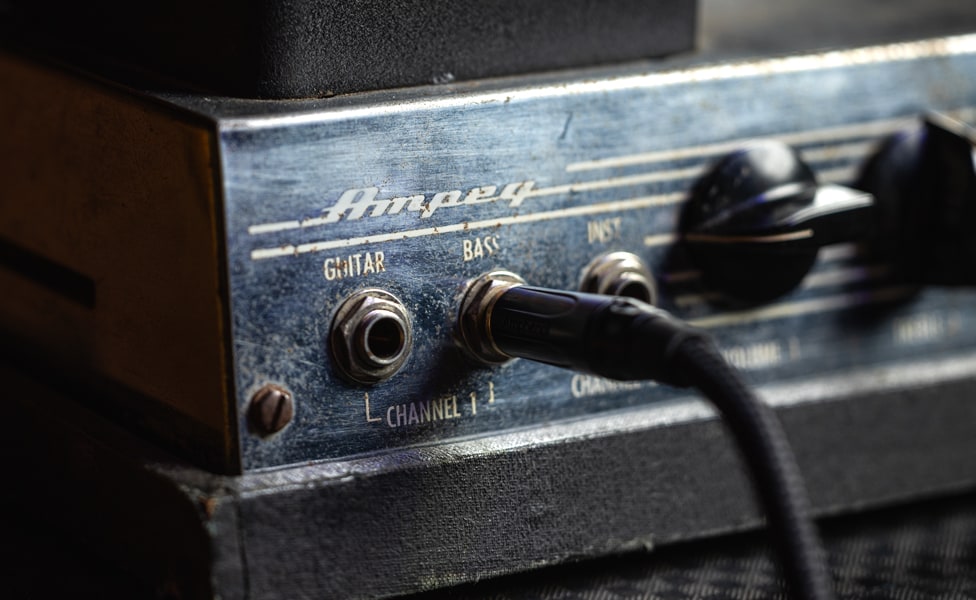
Pictured: Ampeg B-15 Portaflex Bass Amp Head Inputs
Perhaps surprisingly, when we look at the amp’s legacy in retrospect, the B-15 was conceived with pickup-equipped upright basses in mind. After all, that was still the pervasive sound of the day, since the first mass-produced electric bass guitar (the Fender Precision Bass) was only nine years old.
While the B-15’s round, fluffy tone certainly complemented the upright’s acoustic timbre, the amp was happily co-opted by bass guitarists.
Who Played Through the Ampeg B-15?
The Ampeg B-15 Portaflex combo amplifier’s surge to popularity was partly hastened by the Manhattan Bass Club—a unionized collective of New York City’s finest session bassists.
Chuck Rainey—a prolific bass player with credits in the thousands and member of the Club—trusted it with his tone. In an interview with Guitar World, he shared, “From 1962 to 1982, the B-15 was my main amp; that includes all gigs, films and many recordings. In the New York studios, most of the amps owned by the Manhattan Bass Club were B-15s or B- 12s, and as a member, I was provided one.”
Meanwhile in Detroit, legendary Motown bassist James Jamerson played the B-15 at all his gigs. For the tone chasers out there, Jamerson would typically run the bass knob all the way up with the treble at noon on stage.
Likewise, Bob Babbitt employed a B-15 on sessions with Motown Records’ studio band the Funk Brothers. Also speaking to Guitar World about the B-15’s legacy, Babbitt explained, “They remain in studios to this day because younger producers, engineers and bassists love the sound … The B-15 is a timeless bass amp with a timeless tone.”
Many others were quick to adopt this hip new bass tech, and the B-15 became omnipresent in top studios and on major stages everywhere. In Memphis, Donald “Duck” Dunn played an Ampeg B-15 on Booker T. & the M.G.’s records throughout the ’60s, and on many more releases by Stax Records.
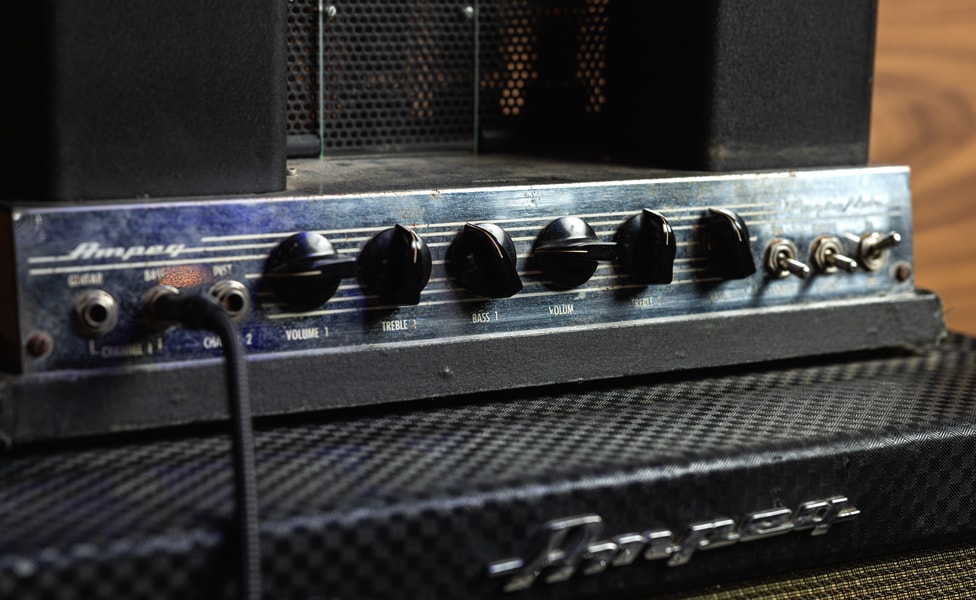
Pictured: Ampeg B-15 Portaflex Bass Amp Head Control Panel
When Earth, Wind & Fire formed in Chicago in the late ’60s and took to the studio to lay down their funkified hits, you bet Verdine White trusted a B-15 for his soulful sound, too.
In 1969, Jimi Hendrix played The Dick Cavett Show twice. On one of these appearances, he can be seen plugging his famous Olympic White Stratocaster into an Ampeg B-15 and launching into “Hear My Train a Comin’.” Hendrix would probably manage to sound like Hendrix if he played through a shoebox, but the Ampeg’s tone—full-bodied and warm, with a touch of breakup—suited his style, despite not being a “guitar” amp.
Speaking of guitar, it’s rumored that Queens of the Stone Age frontman Josh Homme has recorded guitar through a B-15. We may never know for certain, though, as he’s notoriously tight-lipped about the gear he uses in the studio. Producer Eric Valentine was also sure to safeguard Homme’s secrets in a 2016 interview with Sound On Sound. However, he did suggest a B-15 to get in the ballpark of the Songs for the Deaf guitar tone.
Another Ampeg devotee was none other than John Paul Jones. Engineer Eddie Kramer (who happened to also record Hendrix) recalls Jones dragging a B-15 to Led Zeppelin sessions in the late ’60s and early ’70s. Fast forwarding several years, The Band bassist Rick Danko fired up an Ampeg B-15S on Thanksgiving Day in 1976 for the group’s iconic Last Waltz performance.
Historically, the Ampeg B-15 Portaflex is considered one of the most-recorded bass amps of all time, and it’s had plenty of stage time as well. These are just some of the highlights.
On Wax: Famous Tracks Featuring the Ampeg B-15
With the Ampeg B-15 being a studio staple for so long, there are likely thousands of recordings showcasing its sound. The following is a narrower selection of songs where the bass tone was verifiably produced by a B-15.
B.B. King—"The Thrill Is Gone" (1969)
Originally recorded by Roy Hawkins and Rick Darnell in 1951, B.B. King helped turn “The Thrill Is Gone” into a blues standard with his version. Produced by Bill Szymczyk and recorded at the original Hit Factory in New York, bassist Jerry Jemmott laid down his driving groove through a trusty Ampeg B-15. On the final mix, some D.I. signal was layered in for that full, smooth sound with lots of bottom end we hear.
Brownsville Station—"Smokin' in the Boys Room" (1973)
Brownsville Station’s classic anthem was recorded by Michael Delugg at Mediasound Studios in New York City. Michael Lutz, who was originally the band’s rhythm guitar player, filled in the bass spot for Brownsville Station. On this track, he plugged into the studio’s Ampeg B-15 with a Dallas Arbiter fuzz in front.
Aerosmith—"Walk This Way" (1975)
Over the years, producer Jack Douglas and engineer Jay Messina have shared many interesting anecdotes from the Toys in the Attic sessions at the Record Plant in New York. For instance, how the title and chorus of “Walk This Way” were inspired by a line from Mel Brooks’ Young Frankenstein. Also, how bassist Tom Hamilton played through an Ampeg B-15 miked with an Electro-Voice RE20. A custom direct output from the head was taken, too.
Joe Walsh—"Life's Been Good" (1978)
With its many contrasting pieces, Joe Walsh’s reggae-tinged hard rock track is an unlikely hit—at least on paper. Somehow, he seamlessly melded various styles while playfully poking fun at his own self-indulgent, rock star lifestyle. Bill Szymczyk, who was also working with the Eagles, produced the tune, crafting bassist Willie Weeks’ tone from an Ampeg B-15 and a D.I. signal.
Ziggy Marley and the Melody Makers—"Tomorrow People" (1988)
Produced by the Talking Heads’ Chris Frantz and Tina Weymouth, “Tomorrow People” became a popular hit from Ziggy Marley and the Melody Makers’ Conscious Party. The record would go on to win a Grammy Award for Best Reggae Album in 1989.
For “Tomorrow People,” engineer Glenn Rosenstein recalls bassist Zeleke Gessesse playing a Steinberg through an Ampeg B-15. He was disappointed by the Steinberg’s lack of low-end resonance, so he beefed up the tone with a pair of Pultec EQP-1A equalizers.
Lou Reed—"Dirty Blvd." (1989)
“Dirty Blvd.”—produced by Jeffrey Lesser and recorded at Mediasound Studios in New York—is a straight-ahead, four-chord rock tune. At Reed’s request, bassist Rob Wasserman used his Clevinger electric upright plugged into Mediasound’s Ampeg B-15. For the mix, both the miked amplifier and D.I. were used.
Foo Fighters—"Chasing Birds" (2021)
The dream pop-infused “Chasing Birds” comes from the Foo Fighters’ 2021 release Medicine at Midnight. Seeking a low-end voice to suit the song’s mellower vibe, engineer Darrell Thorp recorded bassist Nate Mendel through a vintage Ampeg B-15. Its soft, rounded tone blends perfectly into the track’s atmosphere.
The Ampeg Portaflex Series Today
If you’re looking for authentic B-15 tone from the amp’s heyday, Guitar Center occasionally receives some vintage pieces for your consideration. But we also completely understand why you may not be keen to maintain an amplifier that’s already lived so many lives.
Contemporary Portaflex series heads and cabinets are “direct descendants,” as Ampeg calls them, of those iconic flip-tops from the ’60s and ’70s, combining retro looks with current-day construction and features.
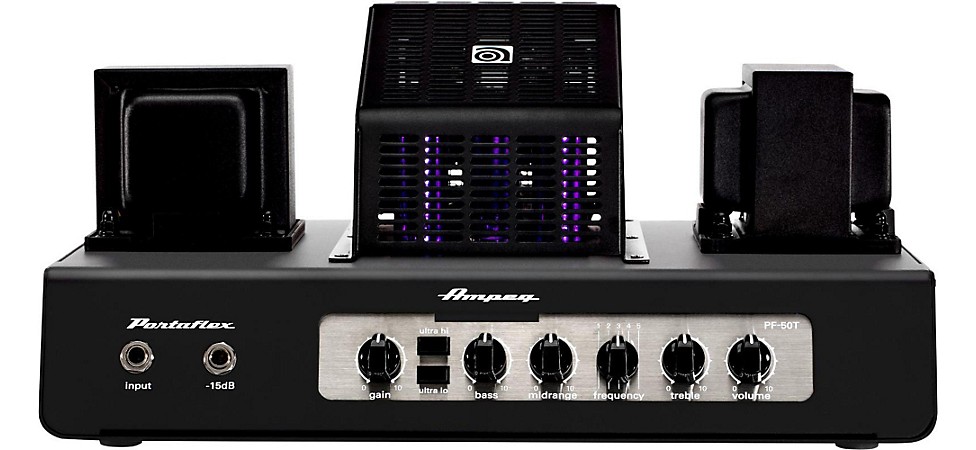
Shop Now: Ampeg PF-50T Portaflex 50W Tube Bass Amp Head
The flagship Ampeg PF-50T Portaflex is a 50W, all-tube bass amp head with a 3-band EQ section, adding the midrange option for greater tonal flexibility than its vintage inspiration. You can also select the midrange center frequency via 5-way switch, so you can dial in bass sounds that bite. For recording and gigging, the PF-50T includes a built-in direct output.
Next up is the Ampeg PF-20T Portaflex head. As its name suggests, this is a scaled-back, 20-watt version of the PF-50T. It’s mostly the same as its big brother, minus the selectable midrange frequency.
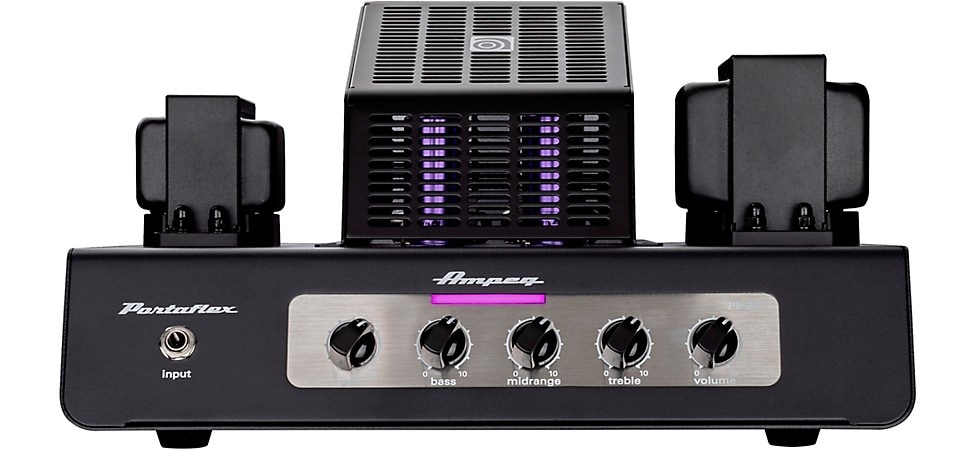
Shop Now: Ampeg PF-20T Portaflex 20W Tube Bass Amp Head
These days, Portaflex speaker cabinets are sold separately from the head. What’s super cool about them, though, is they still have a removeable top lid where you can attach a matching Portaflex amp and store it inside when you’re on the road. There’s the PF-115HE 1x15, featuring a ceramic-magnet Eminence speaker and a level-adjustable 1" high-frequency driver, as well as the PF-210HE 2x10 cab.
When the show calls for more power, the PF-410HLF Portaflex 4x10 cabinet delivers. This one doesn’t have the removable flip-top, but it makes up for that with easy-carry side handles and optional casters.
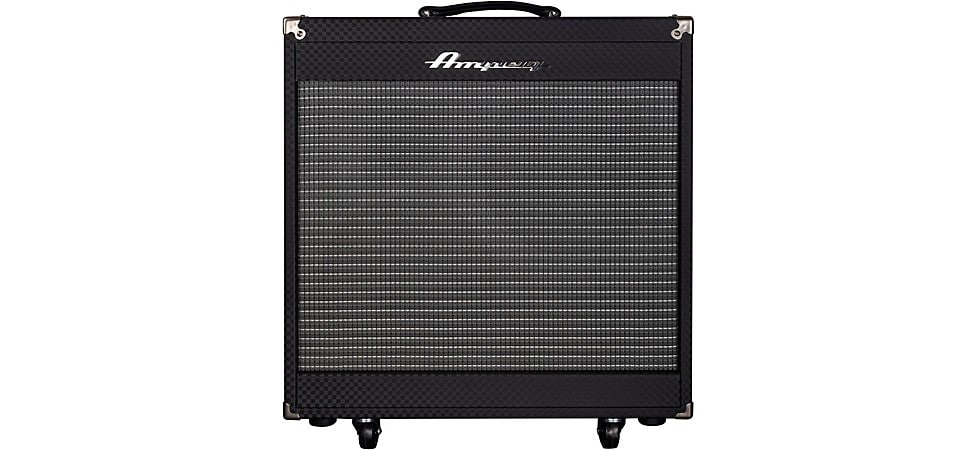
Shop Now: Ampeg PF-210HE Portaflex 2x10 Bass Speaker Cabinet
All About That Bass
Suffice to say, bass amplification wouldn’t be the same were it not for the revolutionary design and sound of the Ampeg B-15 Portaflex “flip-top” combo.
Ready to inject your bass tone with timeless vintage vibe? Stop by your local store and see what’s on the floor, or connect with one of our expert Gear Advisers for a one-on-one consultation. At Guitar Center, we’ll make it easy to land your dream bass rig.
If you’re still not sure which bass amp is right for you, don’t worry. We’ve put together “How to Choose the Best Bass Amp” to help with that decision. Even if you’re still tracking down your ideal bass guitar or maybe building out a pedalboard, we have suggestions for those, too.
Just drop us a line, and you’ll be laying down infectious grooves in no time.
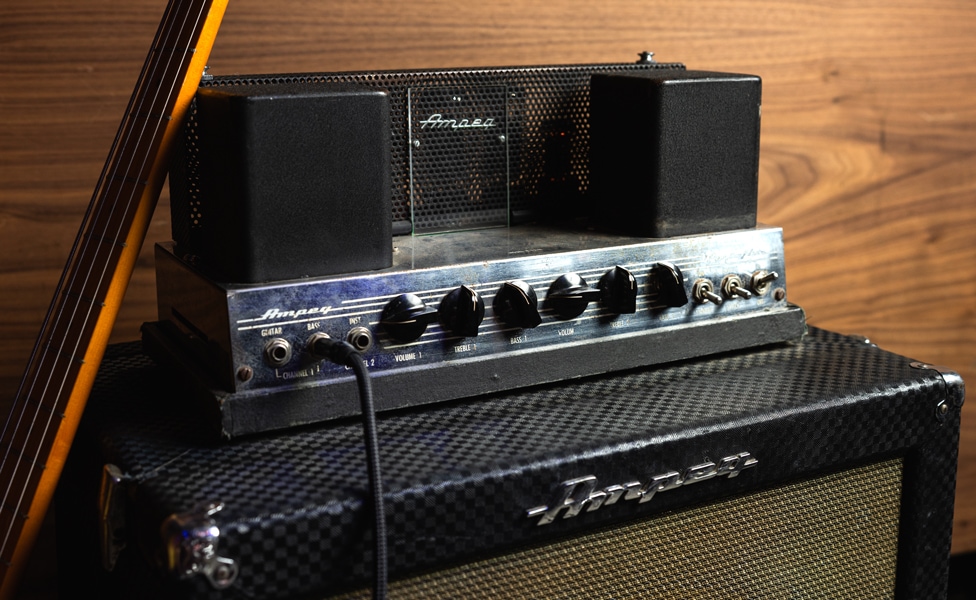
Pictured: Ampeg B-15 Portaflex Bass Amp Head
People Also Ask ...
What is an Ampeg “flip-top”?
Flip-top is the nickname given to Ampeg B-15 Portaflex series bass amplifiers. The head physically attached to the speaker cabinet’s removeable top lid, so players could flip it upside down to conceal the head inside the cab for storage and transport. This effectively made it a combo amplifier, though it was technically still comprised of a discrete head and cabinet.
How many watts is the Ampeg B-15?
The original Ampeg B-15 offered 25 watts of tube power. In 1968, Ampeg increased the flagship B-15N’s output to 50 watts. Other variations of the valve-driven B-15 platform were 30W (B-15NF), 60W (B-15S) and 100W (B-15R).
How big is the Ampeg B-15 cabinet?
An Ampeg B-15 cabinet measures approximately 27" high, 21" wide and 14" deep, according to the limited-edition Ampeg Heritage B-15 model’s manual from 2012.
What is an Ampeg SVT bass amp?
Introduced in 1969, the Ampeg SVT (Super Valve Technology, née Super Vacuum Tube) was a high-powered, 300W tube bass head designed by Bill Hughes and Roger Cox. It was nothing short of an absolute monster.
The amplifier housed 14 tubes alongside colossal transformers and was paired with not one, but two—two—8x10 speaker cabinets to handle the immense power coming from its circuitry.
There’s a good chance you’d throw your back out moving this rig, but that’s only half the story. According to Ampeg, the beast came with a warning label:
“This amp is capable of delivering sound pressure levels that may cause permanent hearing damage.”
Now that’s lore. The Ampeg SVT series is still going strong today.
Written By: Max McAllister
Max McAllister is an audio engineer, guitarist and writer. At the Brewery Recording Studio, he earned engineering credits on Kid Cudi’s Man on the Moon III, Duckwrth’s SuperGood and the LeBron James Space Jam compilation, among others. Max previously wrote for Produce Like A Pro, where he authored over 600 articles, and has also contributed to Adorama’s 42West. He’s proudly served Guitar Center as a senior writer since 2023.
Be the first to know about exclusive offers, tips and more.

866-498-7882 English
877-687-5402 Español