

Pro Gear Advisers
•866-498-7882
How to Get ’60s British Studio Tones | Best Plug-ins and Gear for Recording at Home
Apologies, but I’m lying to you. Unless you’re a sorcerer with massive supernatural chops, you won’t be able to morph your tiny bedroom studio into the epic architectural and technological wonders that were London’s fabled recording studios of the 1960s.
But our headline isn’t just clickbait, either.
Any personal studio musician with a passion for ’60s British recording aesthetics can simulate bits of the aural character of Abbey Road, Trident and Olympic studios for their own productions.
We aren’t implying you’ll capture the majesty of The Beatles’ Sgt. Pepper’s Lonely Hearts Club Band or the psychedelic splendor of the Jimi Hendrix Experience’s Are You Experienced?, but these studio tools can help “time transport” your tracks to the days of Swinging London.
Outta-Sight Mic Preamps
After the artists and their instruments, the next step for crafting enthralling studio sounds is often forged by microphones and mic preamps. The Chandler Limited REDD.47 tube microphone preamp is a pricey option, but it was born from a partnership with Abbey Road to recreate the studio’s iconic REDD.51 mixing console of the ’60s.
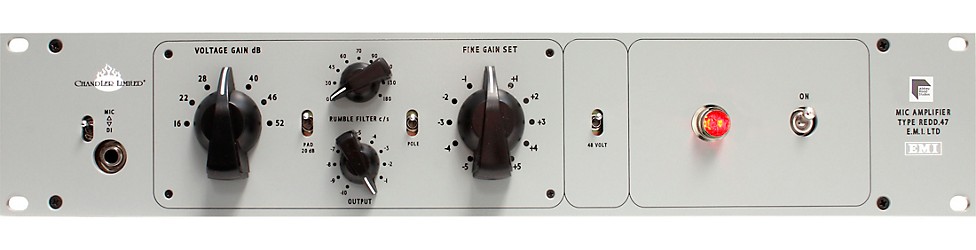
Shop Now: Chandler Limited REDD.47 Tube Microphone Preamp
Trident Studios initially used a Sound Techniques 8-channel mixer before engineers Malcolm Toft and Barry Porter created the legendary A-Range console in 1971. The Arturia TridA Preamp plug-in is an emulation of the console that recorded The White Album (Beatles), Sheer Heart Attack (Queen), The Rise and Fall of Ziggy Stardust (David Bowie) and many others.
As for Olympic, the studio’s in-house genius, Dick Swettenham, designed custom mixers for the facility, and no plug-ins currently exist for his early masterworks.
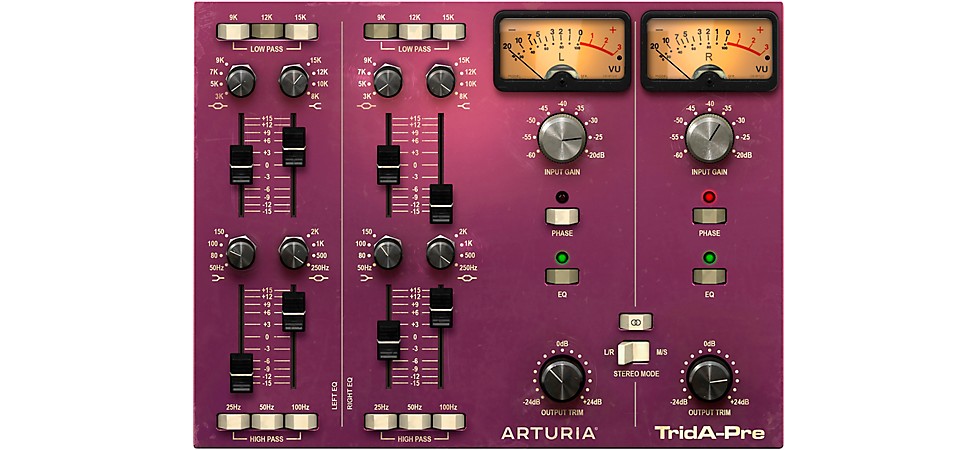
Shop Now: Arturia TridA Preamp Plug-in
Far-Out Outboard Gear
One of the joys of outboard gear in the ’60s was not just using compressors, limiters and EQs for what they were designed to do, but also abusing the parameters to achieve fabulously unique sounds. Abbey Road, Olympic and Trident were considered cutting-edge acoustic and technical environments for the era, giving legendary engineers, such as Eddie Kramer, Glyn Johns and Geoff Emerick, opportunities to devise groundbreaking recording techniques.

Shop Now: Universal Audio UA 1176 Classic FET Compressor Plug-in
At Olympic, compression was often employed using a Pye compressor or the venerable Universal Audio (UREI) 1176—a unit that was also racked up at Trident. Today, you can crush (or lightly manage) signals with the Universal Audio UA 1176 plug-in. Abbey Road engineers often preferred the Fairchild 660 valve limiter, so if you want to get the squashed vibe of some classic Beatles recordings, try the Universal Audio Fairchild Tube Limiter Collection. To enhance the sounds of instruments and vocals, the staff at Olympic and Trident would reach for the Pultec EQP-1A equalizer. You can do the same with the Universal Audio Pultec Passive EQ Collection.
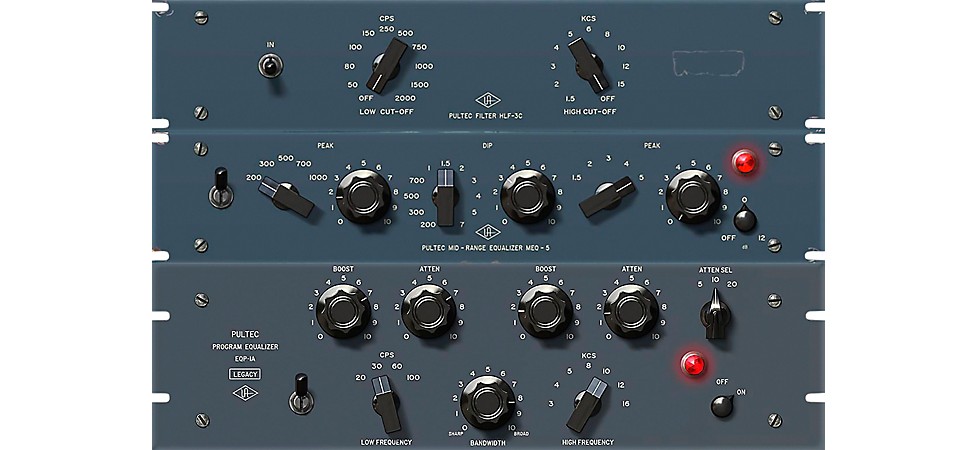
Shop Now: Universal Audio Pultec Passive EQ Plug-in Collection
Groovy Plate Reverbs
The echo chamber in Abbey Road’s fabled Studio Two could be patched into any recording room, and its ambient character is mythical—arguably one of the essential sounds of ’60s music. But echo chambers weren’t the only way engineers could deploy reverb on tracks. Almost as famous are Abbey Road’s four EMT 140 plate reverbs—labeled A, B, C and D—that were installed in 1957 to complement the fixed reverb time of the echo chamber. Not surprisingly—given the popularity of the plate—Trident and Olympic also installed EMT 140 units. Give yourself a switched-on plate sound with additional parameters using the Soundtoys SuperPlate plug-in.
Fab Microphones
Collecting the vintage mics used on Swinging London sessions would likely drain the retirement savings of you and your entire family. But we know the mics that engineers at Abbey Road, Olympic and Trident used (and likely still use today), and we can therefore suggest reasonably affordable alternatives. Please note our budget recommendations are not anywhere near direct “replacements” for classic mics, but they can at least give you some vintage zest.
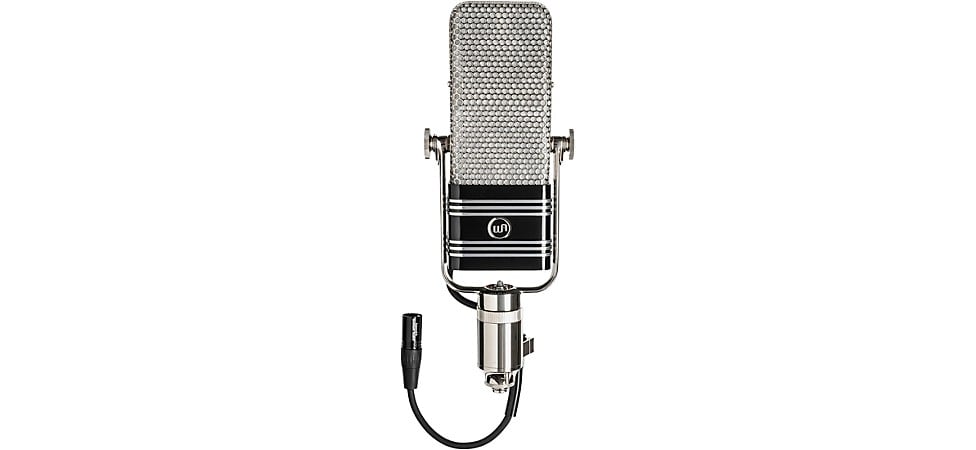
Shop Now: Warm Audio WA-44 Studio Ribbon Microphone
At Abbey Road, for example, the ’30s-era RCA 44BX ribbon mic—used by John Lennon for his vocals on “Yer Blues”—can be mimicked by the Warm Audio WA-44. The AKG D12VR is a suitable stand-in for the AKG D20 that captured Ringo Starr’s kick drum, and the Warm Audio WA-19 is a fine substitute for his overhead mic. Paul McCartney’s bass amp was often tracked using an AKG C12 tube condenser—a gig the Vanguard Audio Labs V13 Gen 2 can also handle. Finally, you can consider a trio of alternate choices for Abbey Road’s iconic 1949 Neumann U 47—a current Neumann U 47, TELEFUNKEN TF-47 or Warm Audio WA-47.
Speaking of Neumanns, many London studios—at least those who wanted clients—kept the U 67 (the “go to” at Trident), U 87 and the aforementioned U 47 at hand. All are likely too rich for the average home studio, but affordable substitutions include the Warm Audio WA-67 and WA-87.
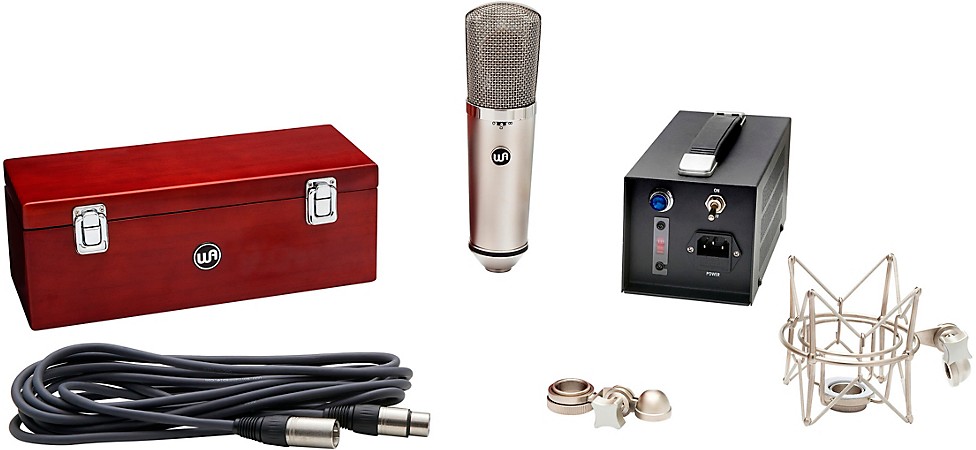
Shop Now: Warm Audio WA-67 Tube Condenser Microphone
Some other iconic mics you’d find at Olympic and Trident include the beyerdynamic M 160 double ribbon (one of Eddie Kramer’s fave mics at Olympic), AKG C12A tube condenser and AKG C451 small-diaphragm condenser. These mics can be budget breakers, but there are nicely priced alternatives for home studio musicians, such as the sE Electronic X1 R and MXL R-144 HE ribbons, Avantone CV-12 and Warm Audio WA-CX12 tube condensers, and Audix F9 and RØDE M3 small-diaphragm condensers.

Shop Now: beyerdynamic M 160 Double Ribbon Microphone
Hip Tape Saturation
As the sound of ’60s albums and singles owes so much to analog tape, you can’t emulate an authentic London studio sound in your DAW without generating tape saturation. Trident opened in 1967 with an Ampeg AG-440 4-track, and Olympic famously installed the 8-track version in 1968. The IK Multimedia T-RackS Tape Machine 440 plug-in can simulate the sonic mojo of both models.
Abbey Road’s main tape machines in the ’60s and ’70s were Studer decks—including the two synchronized J37 4-tracks used for Sgt. Pepper’s Lonely Hearts Club Band. You can capture some ’70s Studer flavor with the IK Multimedia T-RackS Tape Machine Collection, which offers an A80 MkII model as well as other iconic machines, such as an Ampex 440B, MCI JH24 and Revox PR99 MkII. Unless you’re one of those audio zealots who must precisely match the era to the sound, any tape saturation plug-in should deliver the warmth, impact and compression of vintage recordings.
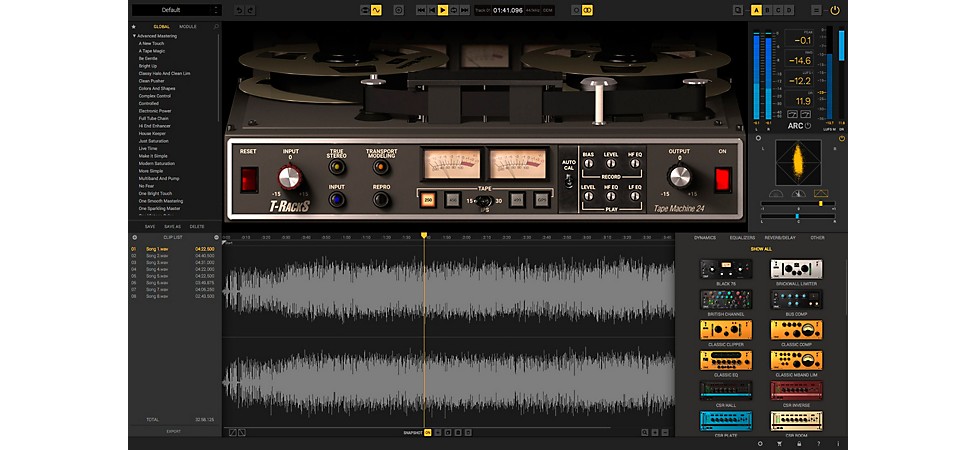
Shop Now: IK Multimedia T-RackS Tape Machine Plug-in Collection
Gear Is Great—but Free Your Mind
The ’60s sounds of London’s top studios was obviously informed by its recording spaces, equipment and staff. But gear and environment weren’t the entire equation. A spirit of innovation and experimentation was also key to all the songs you love that were recorded in those hallowed recording palaces.
The pioneering engineers at Abbey Road, Olympic and Trident famously pushed artistic and technical envelopes while also trying to make the studio a den of creative celebration. Follow that approach in your home studio, and your productions should absolutely glow with the happening vibes and flamboyant atmosphere of London in the 1960s. It may also help to wear stripes, paisleys and a flower in your hair when sitting at your DAW.
One More Thing …
While trying to craft ’60s sounds, don’t just listen exclusively to the recordings and attempt recreations that work for your own songs. You should also get into the heads of the innovators who made those happening epics in the first place. Start by seeking out books by or about the era’s top engineers and producers. Some of my favorites include All You Need Is Ears: The Inside Personal Story of the Genius Who Created the Beatles by George Martin, Here, There and Everywhere: My Life Recording the Music of The Beatles by Geoff Emerick, Sound Man: A Life Recording Hits with the Rolling Stones, the Who, Led Zeppelin, the Eagles, Eric Clapton, the Faces … by Glyn Johns, The Autobiography: Bowie, Bolan and the Brooklyn Boy by Tony Visconti and Creative Music Production: Joe Meek’s Bold Techniques by Barry Cleveland.
Written By: Michael Molenda
Michael Molenda is a content strategist, editor and writer for Guitar Center, where he has worked since 2022. He is the longest-serving Editor in Chief of Guitar Player (1997-2018), and former Editorial Director of Bass Player, EQ, Keyboard, Electronic Musician, Gig and Modern Drummer. A guitarist, drummer, bassist and producer, Mike co-owned three pro recording studios in San Francisco, and performs with Surf Monster and The Trouble With Monkeys.
Be the first to know about exclusive offers, tips and more.

866-498-7882 English
877-687-5402 Español