.jpeg)

Pro Gear Advisers
•866-498-7882
Top 5 Reasons to Consider a Digital Amp/Modeler Over a Tube Amp

It has been more than three decades since digital guitar amps first hit the market, evolving from quirky niche experiments into serious tone machines embraced by players across every genre.
I had a front-row seat for much of that transformation—running Line 6’s customer support department, writing manuals and helping guitarists understand how to get the most from modeling technology. For a while there, I was the Line 6 customer support department.
In this article, I’ll draw from those early days and the decades that followed to share five reasons why a digital amp might deserve a place alongside—or even instead of—the tube amps in your collection.
Digital Amps Are Affordable
At first glance, calling digital amps “affordable” might sound like a stretch. After all, when you’re staring down the price tag on a Line 6 Helix Stadium XL, Kemper Profiler or Fender Tone Master Pro—around two grand or more—it doesn’t exactly scream “budget buy.” But look a little closer, and the math starts to make sense.
You’re not just getting an amp. You’re getting an entire ecosystem of amp tones, pedals, effects, post-processing tools, compressors, limiters, EQs and studio-grade reverbs and delays—all baked into one box. Try to recreate that with physical gear, and you’d be looking at tens of thousands of dollars in amps and pedals, not to mention the square footage to store them all. And if your dream tone involves a certain “D-style” amp, you might want to factor in another couple hundred grand for good measure.
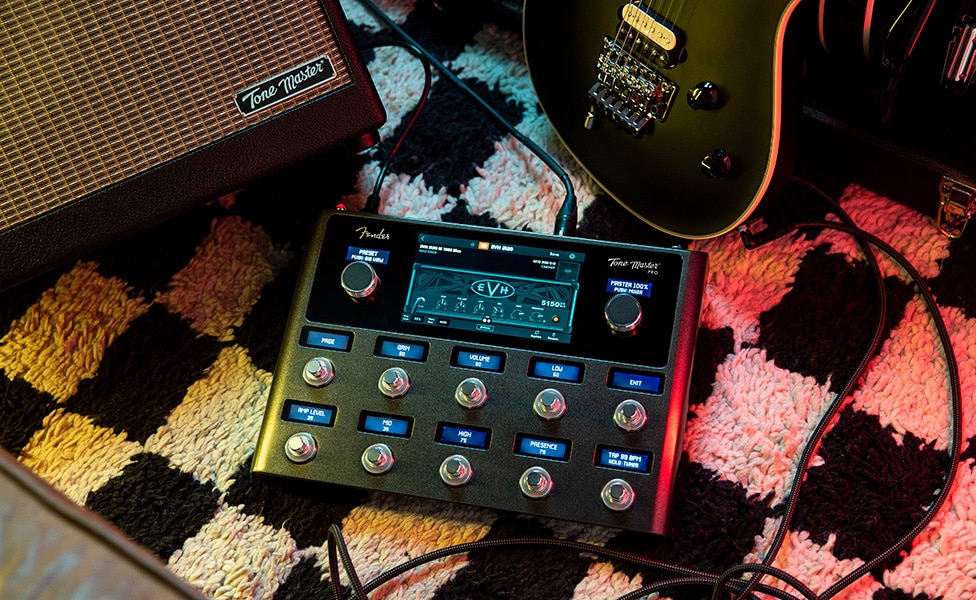
Pictured: Fender Tone Master Pro Multi-Effects Processor and Modeler
Digital Amps Are Portable
Speaking of affordability—and that imaginary warehouse full of gear—let’s not forget the cost of getting it all from point A to point B. That way lies an open account with a cartage company or a vehicle big enough to haul both you and your tone obsession.
Digital amps flip that equation. Their compact size and lightweight design make them ideal for “walk in, plug in and play” situations. Whether it’s a club gig, a recording session, a “silent stage” setup or a festival with questionable backline gear, a digital rig keeps things simple. You can patch straight into the front of house, use your amp as a front end for whatever’s on stage, and still get your sound—every time.
Digital Amps Are Consistent
Tube amps can be loyal companions—but also fickle ones. When everything lines up—the power source, stage acoustics and venue—they remain the epitome of pure guitar tone. But when conditions aren’t ideal—voltage dips, poor acoustics, rushed sound checks—things can go sideways fast.
Digital amps don’t suffer from those mood swings. Whether you’re running a full rig or just a modeling pedal like the IK Multimedia TONEX, you’ll get the same tone every time—direct to the board, into your interface or through whatever backline amp is available. Once your presets are dialed in, your sound travels with you. You’ll always sound like you, even when everything else is working against you.
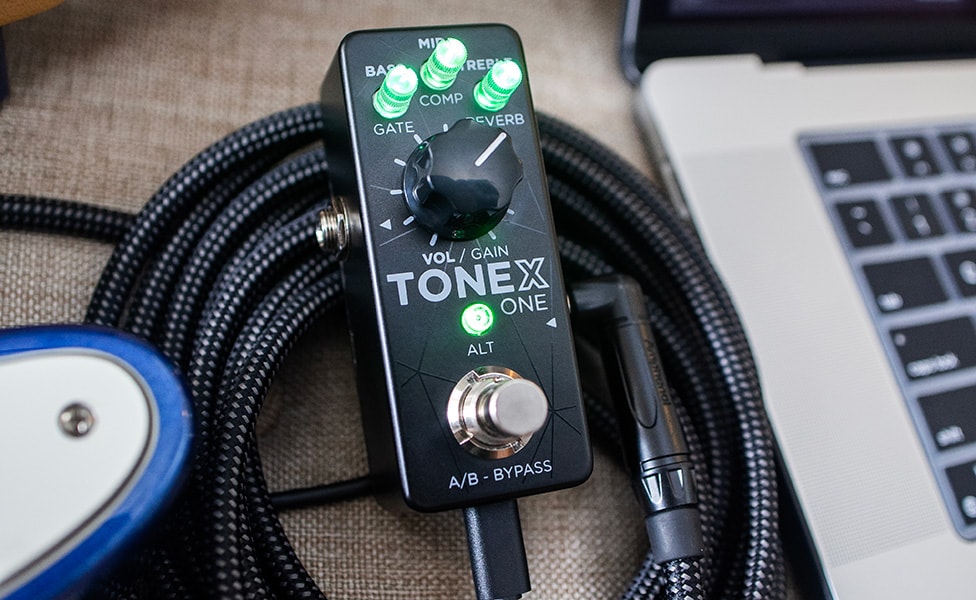
Pictured: IK Multimedia TONEX One Modeling Amp and Distortion Effects Pedal
Digital Amps Can Be Customized
My playing life stretches from straight-ahead jazz and blues to fusion, prog and the occasional deep dive into ambient soundscapes. For anything outside the traditional gigs, my go-to setup involves both a Line 6 Helix and an HX Effects, running a wet/dry/wet rig. So, the concept of customizability isn’t theoretical for me—it’s essential.
Modern digital amps and multi-effects units offer astounding flexibility in routing and tone shaping. You can completely reorder effects from one preset to the next. Want distortion after delay for a specific track? Go for it. Need to toggle between two delays in series or the same pair in parallel—with a stereo panner up front? Easy. Or maybe you want to get weird and run a modeled Pignose through a virtual Marshall 1959 4x12. If you can imagine it, your digital rig can deliver it—no rewiring, no Velcro, no crawling under a pedalboard.
And with the ability to save custom preset banks for specific gigs or setlists, you can walk on stage knowing your rig will behave exactly as you designed it.
Digital Amps Are Versatile
Versatility is the ultimate advantage of a digital amp or multi-effects rig. It’s just as comfortable in your home studio as it is on a stadium stage—Ron “Bumblefoot” Thal swears by his Line 6 Helix as a creative tool.
Sure, you can use it like a traditional amp and just play. But that’s only the beginning. You can go direct, run through powered FRFR (Full Range Flat Response) cabinets, feed the front or effects return of a tube amp—virtually any input that’ll take a signal. Your imagination is the only limit. So why not dive in and see where it takes you?
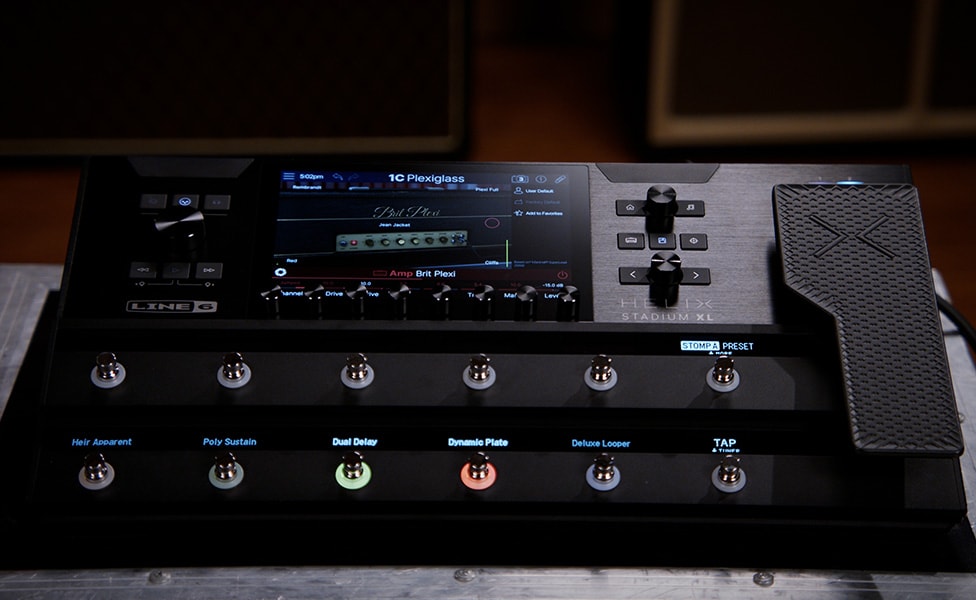
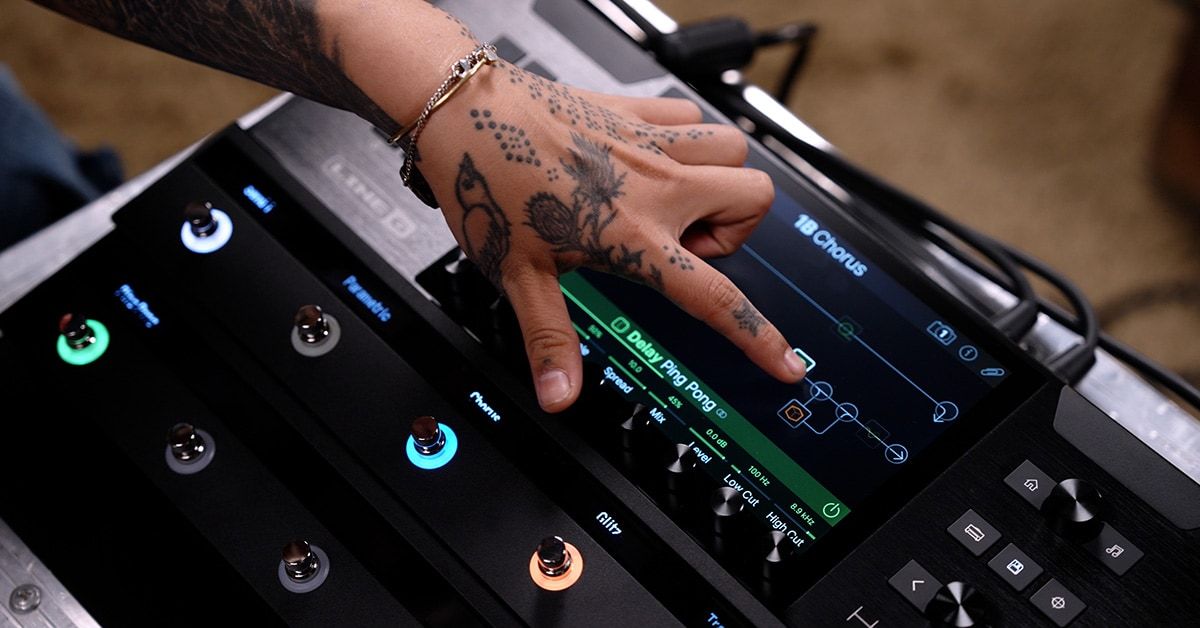
Pictured: Line 6 Helix Stadium XL
But Wait, There's More!
There you have it—five reasons to consider making your next (or first) amp a digital rig. But I’ve got one bonus reason for you.
Back in the early Line 6 days, we caught some flak from amp makers who thought modeling might cannibalize their sales. I remember several rather pointed discussions. Then something unexpected happened—sales of the amps we modeled went up. Players using digital gear were discovering amps they’d never encountered before, and many decided to buy the real thing.
That’s your bonus reason: A digital amp is the most affordable way to audition an incredible variety of amps, from rare vintage classics to modern boutique builds. And since manufacturers keep adding new models, you’ll always have access to a curated collection of the best tones ever made.
If this article has sparked your curiosity, head to your local Guitar Center and talk with one of our knowledgeable associates—or, if you’re not near a store, call your personal Gear Adviser to explore your options.
And just one more “bonus bonus” reason: A great digital amp invites you to play more, explore more and experiment more. It might even make you a better player because of that. (Your mileage may vary—but it sure worked for me.)
Written By: George Van Wagner
George Van Wagner is a writer and editor for Guitar Center, where he has worked since 2007. A multi-instrumentalist, freelance recording engineer, arranger, composer, writer and all-around tech geek, he has over 30 years of experience in the musical instrument industry at companies like Midiman/M-Audio and Line 6, doing everything from customer service and writing user manuals to working in product development. He is currently gigging around Los Angeles with Gruppo Subconscious and Bobby “Hurricane” Spencer.
Recently Added to Gear Tips
Be the first to know about exclusive offers, tips and more.

866-498-7882 English
877-687-5402 Español