.jpeg)

Pro Gear Advisers
•866-498-7882
A Closer Look at Yamaha's MGX Digital Mixers | 5 Questions with Sean Tokuyama
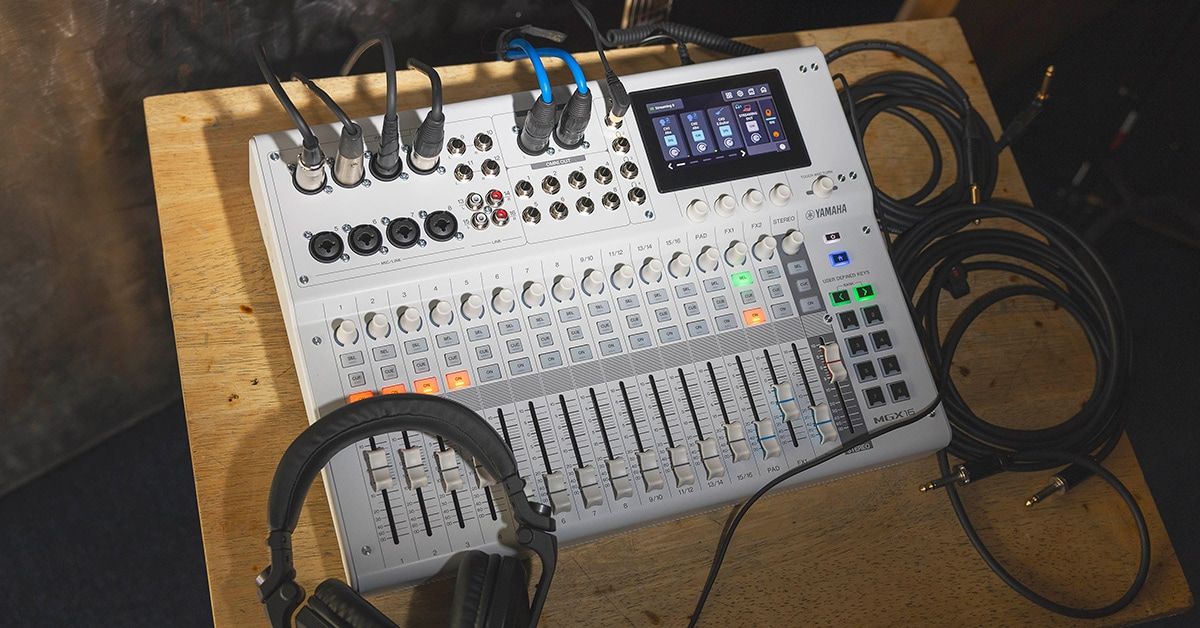

The renowned MG series of analog mixers has evolved into the digital, multiple-use MGX lineup. Designed to handle live sound, recording, podcasting/streaming and even installed audio operations—such as churches, convention centers, clubs, etc.—the compact MGX12 and larger format MGX16 digital mixing consoles come in two colors (black or white), and also offer versions optimized for video production, the MGX12V and MGX16V, with built-in HDMI interfaces.
“MGX mixers are designed to be standalone, so you don’t need another device to mix, but you have the option with dual USB ports should you need it,” says Yamaha Product Marketing Manager Sean Tokuyama. “It’s the best of both worlds, with tactile control and digital mixing capabilities with Steinberg software integration.”
The MGX line is flexible, versatile, portable and allows creators to fashion their own workflows with customizable pads. In addition to introducing us to the Yamaha MGX lineup, Tokuyama answers five burning questions about the mixer’s evolution and why it matters to your creative vision.
On the touchscreen, what are the main differences between the Simple and Standard modes?
Tokuyama: Simple Mode offers a simplified workflow and terminology. You get a Setup Assistant that makes it easy for beginners to understand digital mixers. There’s a step-by-step instructional process illustrated with onscreen animations. Scene Presets also help because they are based on the application, such as live music, streaming and DAW recording. Then, individual Channel Presets identify the type of input, and they are described with natural language. For example, vocal microphone presets are Sweet, Deep, Mellow, Airy and so on, while guitar presents are Clean, Crunch, Lead, etc.
In Standard Mode, however, the MGX operates as a typical digital mixer. All settings start at an initialized state, and you kind of need to know your way around a mixer to make it work for you.

Pictured: Yamaha MGX16 Display
How did the team land on assigning EQ controls to the touchscreen rather than making them physical knobs on the mixer panel?
We wanted users to be able to use EQ in multiple ways. The touchscreen provides musicians with four knobs under it for adjusting EQ parameters. You can touch and turn a knob to tweak the entire EQ curve or use source-based presets as starting points.
We see a lot of “premium converters” on audio products, but what is “premium" as defined by Yamaha, and what does it mean for users?
The result of our premium conversion is faithful reproduction of sound sources. We want you to hear recorded sources as close to their natural state as possible. The MGX offers 32-bit recording, supports up to 96kHz and delivers a 125dB dynamic range.
I like to describe bit depth/sample rate audio resolution specs in terms of video quality. Low-quality conversion is like watching an old TV, whereas high quality is like watching a show in 4K on a new TV. Higher audio resolution creates a more impactful experience for the listener and more accurate source material for the user. Our goal is to ensure customers have the highest-performing tools at every price point, because great sound should never be compromised.

Pictured: Yamaha MGX16 Faders
How has the MGX been designed to “take a licking and keep on ticking” in the often rough world of live gigs?
Yamaha is known for uncompromising build quality and reliability. The moment you experience these products firsthand, you’ll understand why. Every detail—from the rugged metal chassis to the tactile controls and responsive touchscreen—reflects our commitment to excellence.
What does the future of the MGX look like?
We will continue to evolve the MGX through future firmware updates—unlocking new features to amplify performance, versatility and value. We want to ensure our users always have the most powerful tools at their fingertips.
Written By: Michael Molenda
Michael Molenda is a content strategist, editor and writer for Guitar Center, where he has worked since 2022. He is the longest-serving Editor in Chief of Guitar Player (1997-2018), and former Editorial Director of Bass Player, EQ, Keyboard, Electronic Musician, Gig and Modern Drummer. A guitarist, drummer, bassist and producer, Mike co-owned three pro recording studios in San Francisco, and performs with Surf Monster and The Trouble With Monkeys.
Be the first to know about exclusive offers, tips and more.

866-498-7882 English
877-687-5402 Español