.jpeg)

Pro Gear Advisers
•866-498-7882
Fender Introduces Fender Studio Pro
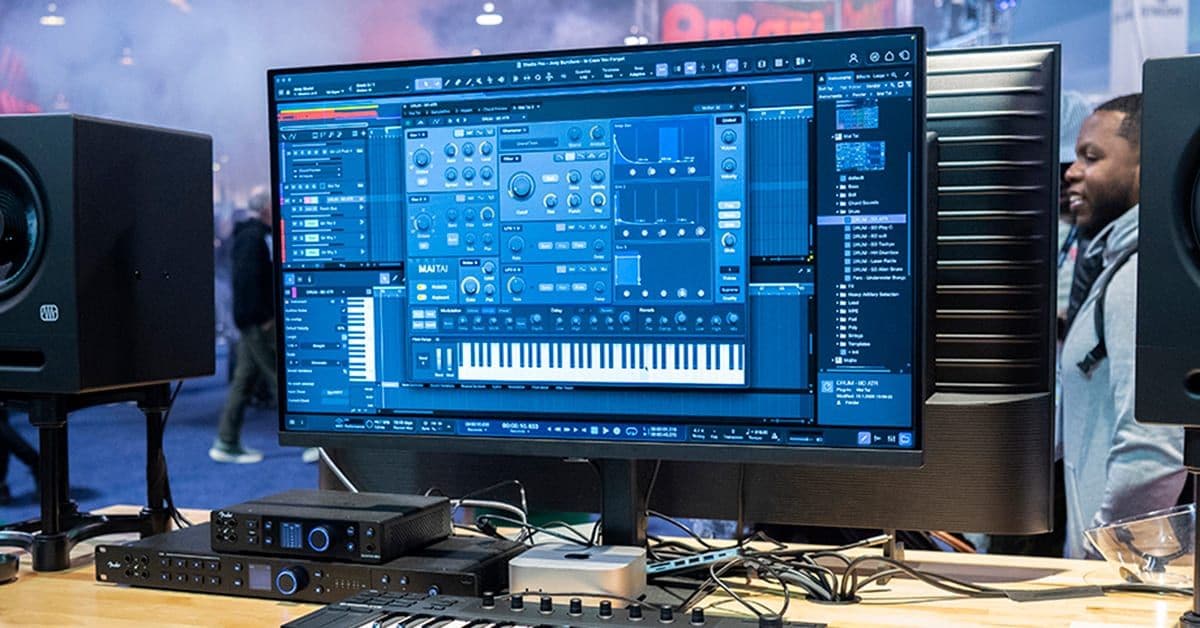
Fender is putting a new name on some very familiar studio gear while introducing a new recording ecosystem. The move is much bigger than a simple rebrand. In a statement earlier this month, Fender announced PreSonus Studio One Pro is becoming Fender Studio Pro, and PreSonus Quantum interfaces will move forward as the Fender Quantum Series.
The goal is to take what made PreSonus a studio staple and present it through a Fender lens, with a more player-friendly, tone-centric experience at the center.
To get the inside scoop, we spoke with Haseeb Patail, Director of Marketing for Fender Studio. We discussed why Fender made the shift now, what stays true to the PreSonus DNA and how Fender Studio Pro and the Fender Quantum Series aim to get musicians from inspiration to finished tracks faster.
What was the impetus for this re-branding with Studio Pro, as well as the Quantum line?
Patail: Fender joined forces with PreSonus back in 2021. Ever since it came out, Studio One has been one of the flagship PreSonus products, and with its continued success, it has gotten a lot of development attention. PreSonus also has a strong history in audio interfaces—to say nothing of the live sound area—but Studio One has really shined over the past several years.
As we look at the rebrand, this may feel like the “big one,” but the first steps we took were in May 2025, when Fender released the Fender Studio free mobile app. While we all had big expectations, I’d say we were pleasantly surprised to see hundreds of thousands of downloads upon launch. And it wasn’t just downloads—it had a great reception in the media, getting great reviews and receiving a TEC Award nomination.
The primary reason this rebrand is happening is to really bring the whole ecosystem together and provide a holistic solution for the customer. When you think of Fender, of course, you think of Strats and Teles, but in recent years, you think of things like the Tone Master Pro, and all the amp and effects models and digital elements of the signal chain. Fender has done a ton of work on that side. And then, you have this super talented team in Hamburg—PreSonus Software Limited—who developed Studio One. Bringing the two teams together has been incredible and it worked really naturally.
You talked about the adoption of the Fender Studio mobile app last spring as a pleasant surprise.
We were anticipating it to do well, as Fender has had success with apps in the past—Fender Tone, Fender Tune and Fender Play. I think the idea that Fender could come out with a free recording app and have people get stoked about it is great. There’s a natural appetite for people who learn guitar to want to record what they've learned.
Can you tell us a little bit about where you could see Studio Pro’s development going with this new branding?
As long as I've been with the company—and certainly before I joined—Studio One has been this “challenger” DAW that is respected and revered, and it has a very staunch, loyal user base. But I feel Studio One often does not get credit for being the first to do so many things. ARA integration, for example, is something that Studio One did first. Having Melodyne directly integrated into the DAW—it was the first to do that. It was the first DAW to have Splice integrated directly into the browser, which other competitive DAWs are doing now. There are a handful of other firsts, as well. This all goes back to the development team in Hamburg and how talented and dedicated they are at making Studio One world class.

Shop Now: Fender Studio Pro 8 DAW
In the past couple of years, we've also seen a lot more market adoption of Studio One by modern music-making communities—from young upstarts to GRAMMY-winning producers. Is it the industry standard yet? Maybe not, but we've seen its popularity grow and grow. It is exciting now to have the Fender name behind it because Fender is a household name when it comes to music, the music industry, and musical instruments. Having the Fender name attached to this DAW will help us reach an even larger audience.
With a likely influx of guitarists and bassists coming into the Studio Pro and Quantum worlds now, what do you think they’ll be most excited or surprised about?
Number one is the inclusion of Fender IP—in terms of amps and effects—in a DAW. That’s a no-brainer. Right from the gate, you can get in there with great sounding models via Mustang Native plug-ins and lay down some serious stuff. Having access to that caliber of tone is huge.
There are a handful of other nice features too. For example, we just introduced audio-to-MIDI conversion. Let's say you are a guitar player, and you lay down a chord progression with your guitar, and you want to layer it with a synth or some keys but, unfortunately, you don't play synth or keys. Now, you can just drag and drop your audio event to a MIDI track to convert your audio-to-MIDI, and play it back through a synth or some other virtual instrument.

Shop Now: Fender Quantum HD 2 USB-C Audio Interface
On the hardware side, when you look at the Fender Quantum HD interfaces, you have the ability to re-amp. I am not a guitarist, but for people who play guitar, re-amping is not only a fun thing, it can be an important part of the workflow if you record your initial guitar tracks dry and have the flexibility to change your amp and amp settings in the mix. It’s powerful.
Obviously, that’s not limited to guitars. You could run any audio back out that way. I’m really looking forward to hearing how these workflows are going to be used in the ways we aren’t expecting. At the end of the day, these are all production and recording tools that can be used creatively no matter the genre or instrument. I was on a call with DJ Jazzy Jeff yesterday and he was showing me some new beats he made in Fender Studio Pro. While all the new guitarists and bassists getting into these tools are going to love them, these tools are great for anyone making music, not just guitarists.
While we’re on the topic of the Quantum interfaces, if you’re looking to get into recording, and are a little intimidated by the tech and hardware considerations of the HD models, the Quantum LT interfaces are a great entry point.

Shop Now: Fender Quantum LT 2 USB-C Audio Interface
Outside of the rebrand itself, can you tell us a bit more about what’s new in the latest version of Studio One—now Fender Studio Pro?
I mentioned the audio-to-note conversion already, and I think people are going to love it. We’ve also done some clever new things with the UI. Channel Overview is something totally new. It wasn’t in Studio One Pro 7. If you launch Fender Studio Pro 8 and open Channel Overview, you can see all your plug-ins and your signal chain. It’s nice and neat, and all the native plug-ins within Fender Studio Pro load up, and you get easy access to key parameters of all the plugins in the chain in one view. It works for third-party plug-ins, too. It’s cool to be able to access different parts of your signal chain in one spot and see it all together in context.
There's also a new Arrangement Overview that expands from the upper third of the DAW and lets you navigate through different parts of your session. People who are arranging complete records or longer compositions are really going to appreciate that.
We mentioned Chord Assistant. Not everyone is a natural born player on all instruments, and not everyone has a formal education or background in music theory. But if you take something like Audio-to-Note conversion, combine it with Chord Assistant and load up Splice integration, you're supercharging your songwriting. These are the kinds of tools that really go a long way to be helpful and inspirational.
Finally, going back to what we talked about earlier, further integration with Tone Master Pro and the Fender Studio app will really allow people to use things in a seamless way that expands the ecosystem we’re building.
It’s clear things such as machine learning and AI tools are progressing very quickly in their capabilities and their integration with DAWs. What do you think are the average user's expectations for how a DAW can support them in that regard?
I think AI tools can make people feel like, “Oh, this is too easy.” There are people that may feel the art of making music is being lost in all the technology out there—whether it's AI tools, sample libraries, or whatever else it might be. To be clear, this is not new. People said similar things about early drum machines and DAWs when they first hit the market decades ago.
However, I feel some of the purists who have been averse to this kind of stuff are understanding, “Hey, if I don't use this stuff, I will fall behind.” Whether you choose to use sample libraries or AI on the tools you use, it's a personal choice, but we don't want our products to put anyone at a deficit.
We are committed to providing creators with modern tools and solutions to make the best music they can, and in a way that’s seamless and intuitive. We're proponents of AI as assistive tools, whether you’re doing stem separation, audio-to-note, or whatever. We approach everything with an ethical mindset, and we put musicians and creators first. It's our responsibility to provide modern tools and solutions that people use and need, while also making sure artists and creators still can feel like artists and creators. You don't just push a button and your song is made. We want to create more musicians in the world. That’s what Fender has done, and it’s what Fender will continue to do.
Written By: Max Lauer-Bader
Max Lauer-Bader is the Sr. Manger of Content and Social Media at Guitar Center, where has worked since 2014. A multi-instrumentalist and recording engineer, Max has nearly two decades in the musical instruments industry working for brands including Korg, VOX, Marshall and Blackstar.
Be the first to know about exclusive offers, tips and more.

866-498-7882 English
877-687-5402 Español