.jpeg)

Pro Gear Advisers
•866-498-7882
Top 5 Reasons to Use Microphones Over Digital Models & Samples

Digitally modeled “these” and meticulously sampled “those” have democratized music and audio production. Everyone has access to fantastic-sounding grand pianos, organs, horn sections, string ensembles, guitar and bass amplifiers, drum kits and sound effects—and they never have to lift a microphone.
Virtual instruments, sample libraries, amp emulations, impulse responses and countless other digital snapshots of analog signal chains aren’t going away. Their practicality, affordability and relative sound quality are untouchable.
But happy accidents have defined recorded music for decades, and it’s much easier to make a cool-sounding mistake when you’re messing around with real microphones and real noise makers in real spaces.
In this article, we’ll reflect on five reasons to reach for a microphone and capture your own sounds. Any mic, or selection of them, and audio interface will do, so let your creativity and curiosity lead the way.
Use Microphones to Make Your Sound Yours
While it’s possible to customize a premade digital sound till your ears fall off, you’re inevitably starting with someone else’s concept of an ideally recorded piano, or violin, or drum kit.
Miking an instrument yourself will almost always yield the most unique results, based on all the variables you can (and can’t) control. Mic selection and placement, the room itself and the nuances of a live performance can be hard to convincingly translate through MIDI.
If you want to give your projects a sonic edge over the homogenized masses, try to record instruments whenever you can.
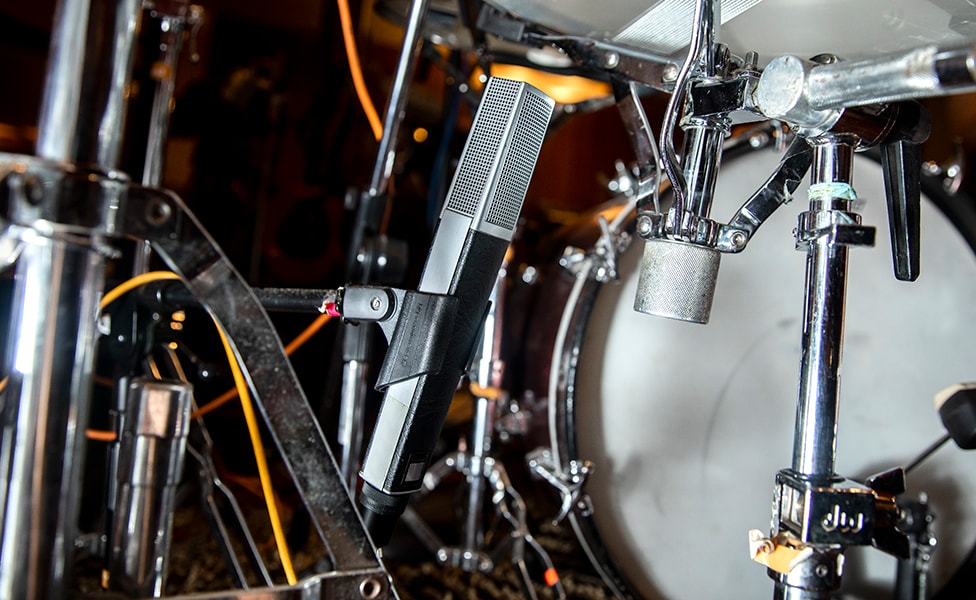
Pictured: Shure MD 441 Miking Kick Drum
Use Microphones for Their Tone
It wasn’t so long ago recording engineers and their microphones were like painters and their palette. You have all these wonderful colors at your disposal, so which one is right for the picture?
The more you play with microphones, the more you’ll start to recognize their distinctive hues. Then you can commit to tonal choices up front and spend more of your mixdown time fine-tuning tones rather than completely constructing them. Eventually, you’ll be able to pick the appropriate tool for the job and reach your desired sounds that much faster.
If you’re in the process of assembling a mic locker, check out “Five Essential Mics for Your Home Studio.”
Use Microphones to Design Sound Effects From Scratch
During my short time wearing all the hats as a rerecording mixer, sound designer and Foley artist on a couple of feature-length indies, I discovered post-production audio may be one of the few places where miking technique is still sacred.
Sure, you can use canned background ambiences, footsteps, door knocks and “everyday” sound effects from whichever prerecorded library you choose, but there’s magic (and loads of fun) in the DIY approach. Plus, there’s no fear of peers recognizing a crummy stock one-shot in your work.
First off, there’s simply no substitute for honest-to-goodness Foley art. And second, when it comes to creative sound design—the kind that involves layering up ordinary sounds to simulate something totally unrecognizable from its constituent parts—you have to grab a mic and get in the field.
P.S. You’ll love the detail and directionality a shotgun mic offers for these very purposes.
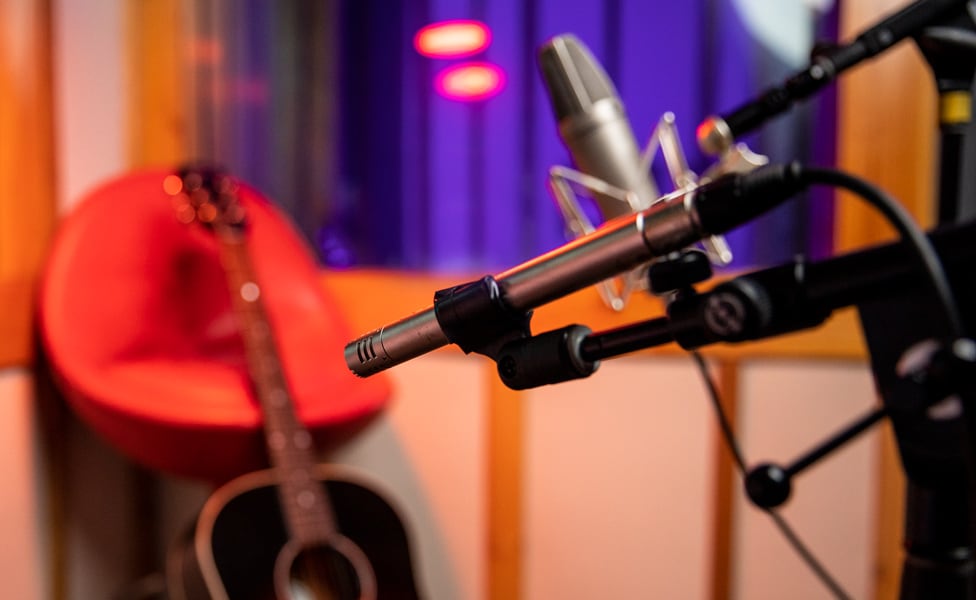
Pictured: AKG C451 B and Neuman U 87 Ai
Use Microphones to Make Your Own Reverb
Before digital effects hardware and plug-ins, reverb was captured in dedicated echo chambers and vibrant spaces with lots of reflections—empty stairwells, hallways, bathrooms.
For example, John Bonham’s drums on “When the Levee Breaks” were recorded in a hallway at the Headley Grange estate in England. Years later, Radiohead famously recorded OK Computer at the St. Catherine’s Court mansion. Listen to the natural echo on Thom Yorke’s vocals from “Exit Music (For a Film)”—which was captured in a stone stairwell.
You can set up a microphone to record the atmosphere of your own space, too, and come up with a sound no one else has. The bathroom trick is a must-try, but you might also have a garage, living room or kitchen with some brilliant organic ambience.
If you’re comfortable printing room acoustics straight to your tracks, then all you have to do is record in your chosen space. But if you want to preserve a dry track recorded in a controlled environment for safety, you can capture only the room’s reverb separately. Here’s how to do that:
- Set up a speaker where you want to record the reverb
- Position a microphone in the space, experimenting with placement until you’ve found the desired reverberance
- Send the dry signal on which you want to apply the reverb through the speaker
- Record the room sound and mix it in with your dry recording
For more on making the most of your home recording arrangement, read “3 Ways to Get Pro Sound in Your Home Studio.”
Use Microphones to Get Weird
When you’re in charge of the microphone, you can make it go places a sample library wouldn’t.
To borrow an anecdote from producer and multi-instrumentalist Scott Mathews, Brian Wilson once got the idea to place microphones at the bottom of an empty swimming pool and have the Beach Boys lie belly-down at the edge to sing. During the “Yellow Submarine” sessions, Beatles producer George Martin tried suspending a latex-wrapped mic in water.
You can also make unconventional instruments by miking up any array of household objects or produce your own off-kilter samples to toss into an arrangement.
I’m spitballing here, but hopefully you get the idea: Experimentation is encouraged when you’re taking the time to use microphones over digital models and software sounds.
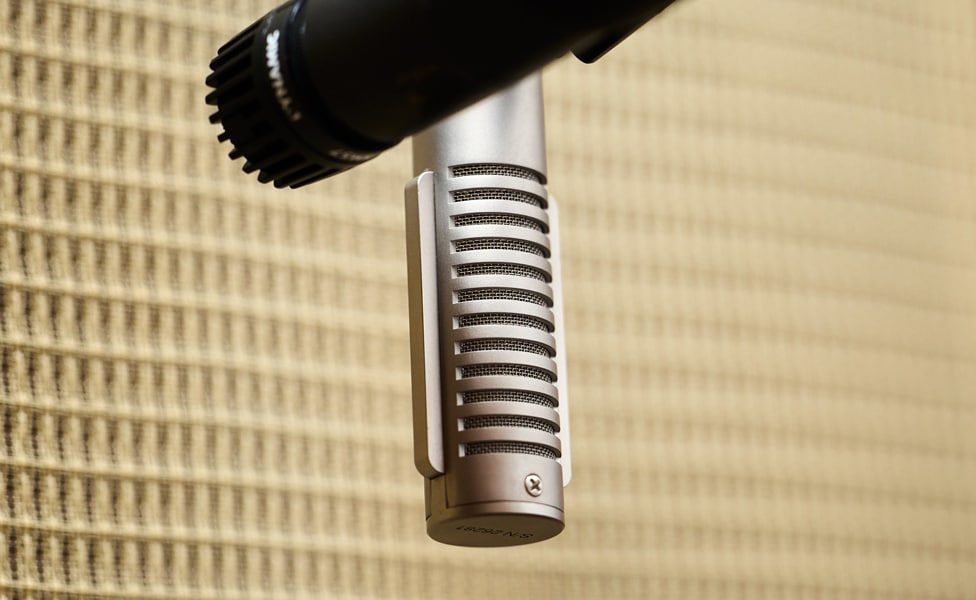
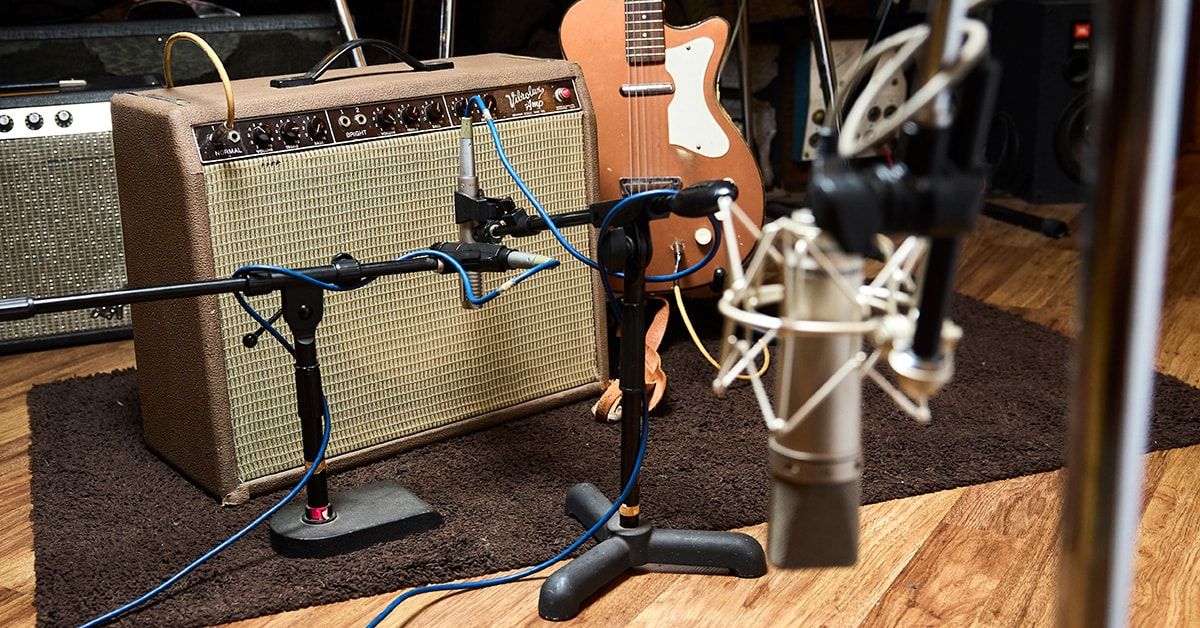
Pictured: Shure SM57 and Royer R-121 Miking Guitar Amplifier
Don’t Discount Digital
While we’ve advocated for traditional—and by extension, experimental—recording methods in this article, we’re certainly not analog purists (or worse: snobs). We’re fans of tube amplifiers and digital modelers; real and virtual instruments; outboard gear and plug-ins. There’re a million ways to make a hit record.
That said, if you’re compelled to take your microphone game to the next level, visit your local Guitar Center or chat with one of our Gear Advisers to track down the gear you need.
Written By: Max McAllister
Max McAllister is an audio engineer, guitarist and writer. At the Brewery Recording Studio, he earned engineering credits on Kid Cudi’s Man on the Moon III, Duckwrth’s SuperGood and the LeBron James Space Jam compilation, among others. Max previously wrote for Produce Like A Pro, where he authored over 600 articles, and has also contributed to Adorama’s 42West. He’s proudly served Guitar Center as a senior writer since 2023.
Be the first to know about exclusive offers, tips and more.

866-498-7882 English
877-687-5402 Español