

Pro Gear Advisers
•866-498-7882
The History of the Gibson SG
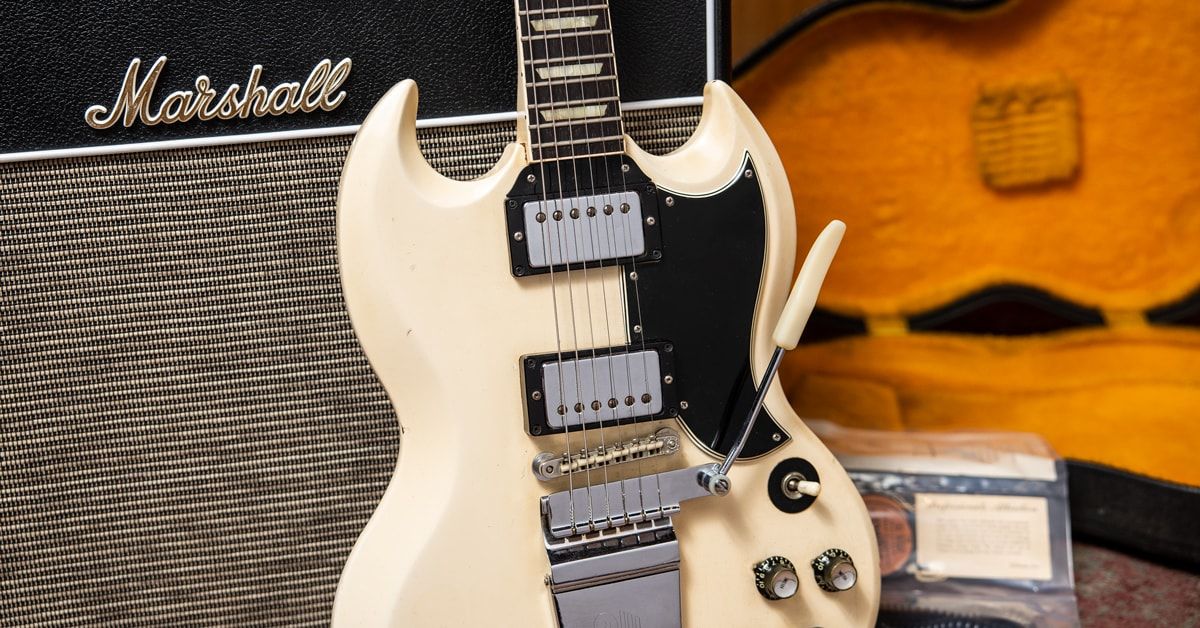

Few guitars carry the swagger, controversy and staying power of the Gibson SG. Born in 1961 out of both necessity and bold reinvention, the new Les Paul—an SG as we know it today but not called that yet—signaled a clean break from tradition.
Where its single-cutaway forerunner Les Paul had curves and weight, the Solid Guitar came out swinging—sharp-edged, impressively light and ready to roar. Its slim neck, double-cutaway figure and snarling humbuckers were a radical rethink of how an electric guitar could look, feel and sound. Journeying back through Gibson SG history offers compelling insight into how it came to be.
At first, Ted McCarty’s latest innovation shocked traditionalists, including Les Paul himself.
But in the hands of groundbreaking players, from Sister Rosetta Tharpe to Tony Iommi to Angus Young, the Gibson SG became the sound of entire movements, from gospel-inflected proto-rock to the dawn of heavy metal and punk. The SG has grown into one of the most recognizable silhouettes onstage, celebrated the world over for its aggressive bite, easy playability and incredible versatility across eras, styles and genres.
Table of Contents
When Was the Gibson SG Introduced?
Gibson began manufacturing SGs in late 1960, and they hit the market in 1961. These were the two-pickup Les Paul Standard and the three-pickup Les Paul Custom, as they were originally named. Let’s take a closer look at how they got there.
Gibson introduced its first solidbody electric guitar in 1952, the Les Paul Model. Though it was a game-changing instrument, the design wasn’t radical. It shared a similar outline as the ES-140 archtop. Later iterations included the Standard, Special, Custom, Junior and TV.
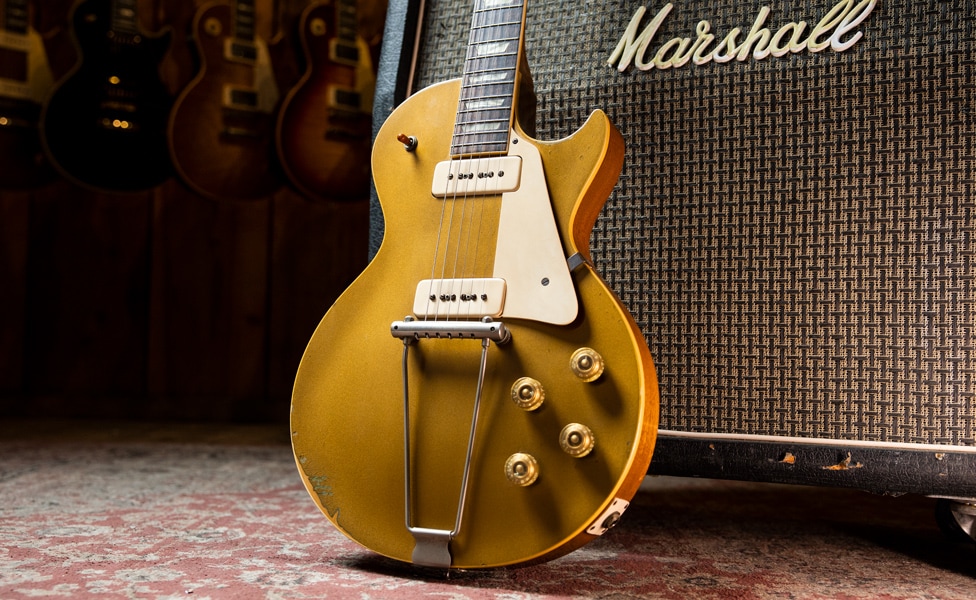
Pictured: Vintage 1952 Gibson Les Paul Goldtop
While well received, sales were slow. In 1958, Gibson made small but important updates to the Les Paul Junior and TV models, adding rounded double cutaways. Other designs that year were more radical, like the futuristic Explorer and Flying V, but Gibson only shipped 19 and 81, respectively, in 1958 and discontinued both models in 1959.
In their search for an innovative—but not polarizing—design, Gibson eventually landed on the SG. Unfortunately, Paul himself was less than thrilled with the new guitar. It didn’t help that he was heading toward semi-retirement with a divorce on the horizon. Plus, his contract with Gibson was set to expire in 1962. With all that on his plate, he was in no mood to renegotiate an endorsement. Sometime in 1963, “Les Paul” vanished from the headstock; two letters replaced it on the truss rod cover—SG.
Today, SG-style bodies manufactured from late 1960 to 1963 with Les Paul truss rod covers are known as SG/Les Pauls or Les Paul/SGs.
Why Gibson Redesigned the Les Paul Into the SG
It's important to understand what Fender—Gibson's main competitor—was up to at the time.
Fender built guitars with utility in mind—the Stratocaster, Esquire, Telecaster, Duo Sonic and Jazzmaster had bolt-on necks, which made them cheaper and easier to produce than Gibson’s set neck. In fact, the flagship Les Paul Custom was 20% more expensive than Fender’s comparable Jazzmaster. To broaden their market share, Gibson President Ted McCarty gave shop foreman Larry Allers marching orders: redesign the Les Paul line.
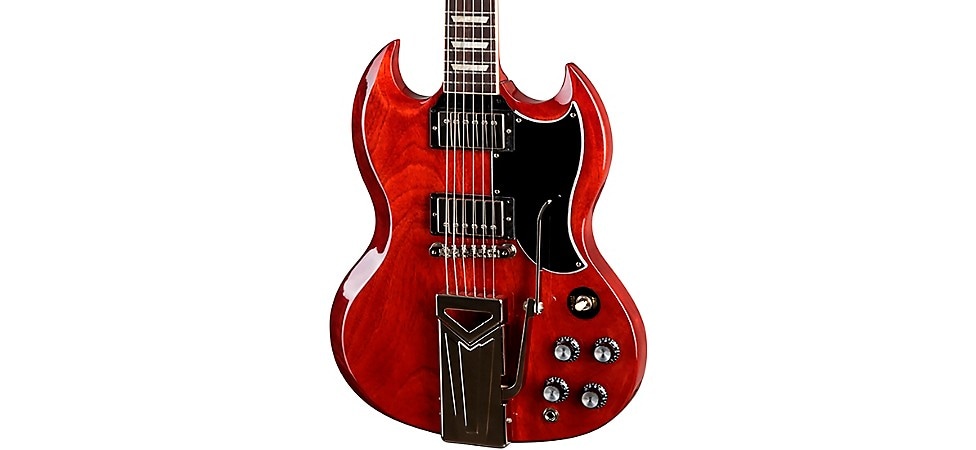
Shop Now: Gibson SG Standard '61 Sideways Vibrola
Allers drew inspiration from Gibson’s latest double cutaways, but instead of rounded contours, he beveled the new body at a sharp 22 degrees. It was more ergonomic, if slightly demonic—especially with horns dyed Cherry Red. The body was thinner and lighter than the ’59 Les Paul Standard or Custom; it also had a slimmer neck profile that joined the body at the 22nd fret, putting every note within reach.
This was a guitar unlike anything else on the market.
Gibson SG Timeline
- Late 1957 – Gibson experiments with double-cutaway prototypes, paving the way for what would become the SG’s distinctive silhouette.
- Late 1959 – The Les Paul Special and TV models adopt the “SG” name, marking the first official use of the designation.
- 1961 – Gibson launches the SG Standard, replacing the original single-cutaway Les Paul in the catalog. Features include beveled mahogany body, SlimTaper neck and twin humbuckers.
- 1962–1965 – The SG line expands to include Custom, Junior and Special models, along with variations like Maestro Vibrola tremolo systems and three-pickup configurations.
- Late 1960s – The SG Special picks up steam with P-90 pickups, a stripped-down aesthetic and affordability that appeals to garage and proto-punk players.
- 1970s–1980s – Hard rock and heavy metal artists from Tony Iommi to Angus Young cement the SG’s reputation for aggressive rhythm tone and face-melting solo potential.
- 1990s–2000s – Gibson issues reissues and signature models, honoring both early ’60s specs and famous artist configurations.
- Today – The SG remains in continuous production, offered in a range of configurations from vintage-accurate tributes to modernized, high-performance versions.
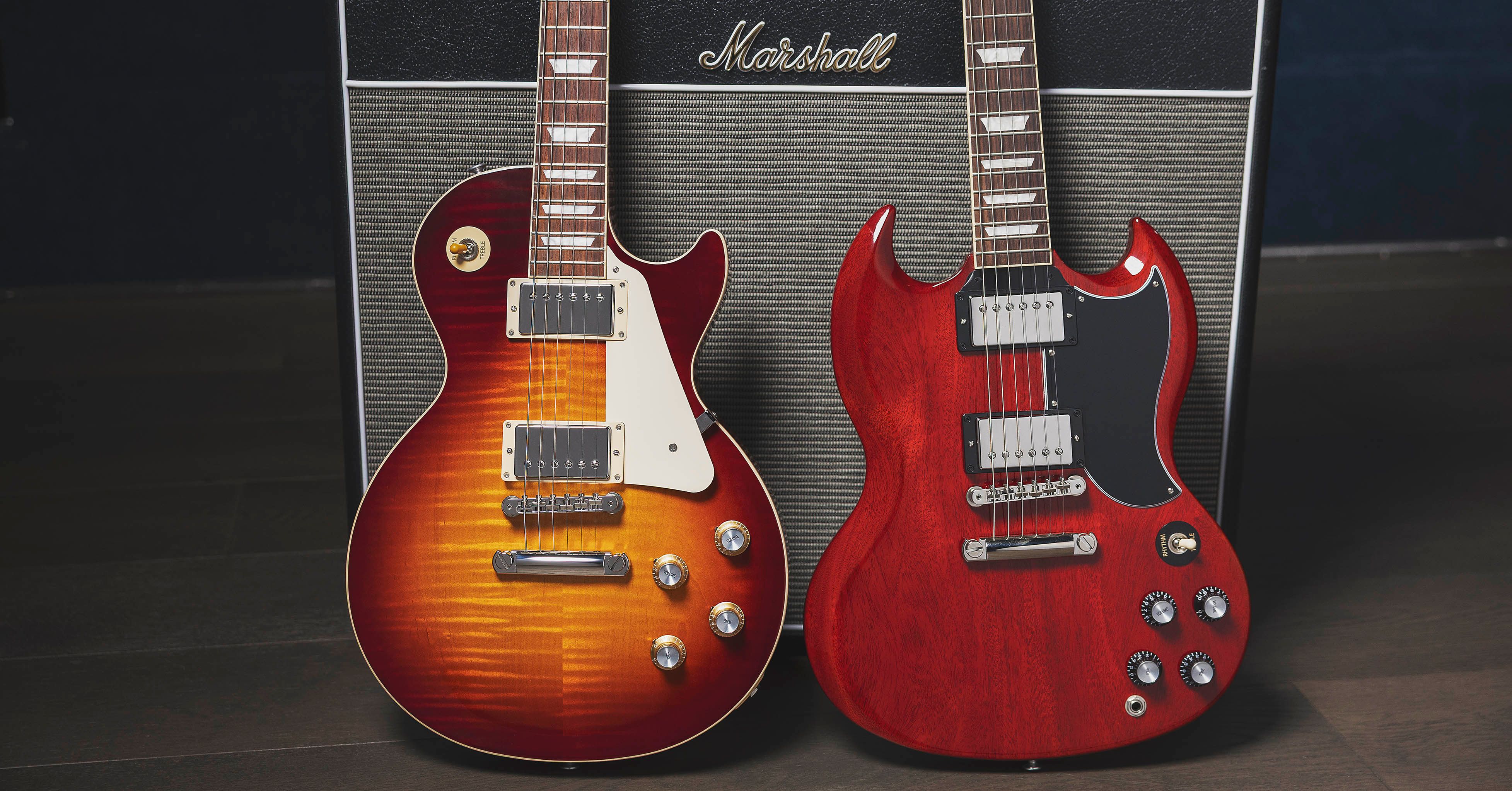
Gibson SG vs. Les Paul: The Key Differences
The SG and Les Paul play differently due to their respective designs. Here's a quick comparison.
|
Les Paul Standard |
SG Standard |
|
Approx. weight: 9-12 lb. |
Approx. weight: 6-7 lb. |
|
Neck joins body between 16th and 17th frets |
Neck joins body at 22nd fret |
|
Approx. thickness: 2-3/8" |
Approx. thickness 1-3/8" |
|
Single cutaway |
Double cutaway |
|
Chunky neck profile |
Slimmer neck profile |
The SG is 1" thinner and approximately 2 lb. lighter than a typical Les Paul Standard. The double cutaway offers complete access to all 22 frets, something the single-cutaway Les Paul can’t match. The neck profile is slimmer, too. In a sense, the SG opened the door for faster, more muscular styles of music, but it was only in the late ’60s and early ’70s that players made the discovery.
What Does a Gibson SG Sound Like?
The answer: It depends. The 1961 Les Paul/SG Custom (SG in appearance, Les Paul in name) came with a set of PAF or “Patent Applied For” pickups. Warm and creamy, throaty and raw, PAF pickups can do it all. Every humbucker today is a variation of the original that either replicates the sound or adds to it. Note that a vintage PAF won’t sound the same today as it did back then. Components have drifted over 60 years, plus tolerances weren’t as tight.
SG models with P-90 single-coils have a sound all their own. They play clean but get raspier as you turn them up. The tone is thicker than a Strat or Tele but still rings clear—when you want it to. For more, read our “Ultimate Guide to Gibson Pickups.”
Worth noting, compared to a traditional Les Paul with the exact same pickups, SGs tend to be brighter and snappier. This is because pickups on an SG are positioned closer to the bridge than on a Les Paul. There’s good reason to believe this was a deliberate design choice to help the SG compete with the bright-sounding Stratocaster.
If you’re interested in changing up the tone of your SG, be sure to check out “The Best Pickups for Gibson SG Guitars” and find the set that’s right for your sound.
Famous Gibson SG Players and Songs
"Up Above My Head (Live on TV Gospel Time)"—Sister Rosetta Tharpe (1964)
Sister Rosetta Tharpe, often hailed as the Godmother of Rock ’n’ Roll, wielded a 1961 SG Custom with a sideways Vibrola during live performances starting in 1963. In this rendition of “Up Above My Head,” she blends soulful vocal fireworks with searing guitar phrases that predate and arguably paved the way for rock guitar heroes. Her charismatic command of the SG and the audience left the next generation of rockers mesmerized and inspired.
"She Said She Said"—The Beatles (1966)
George Harrison’s late-’64 SG Standard adds a distinctive chiming crunch to this Revolver standout. The guitar’s articulate top end and balanced low mids complement John Lennon’s rhythm guitar, creating a dense yet airy mix of jangly psychedelia. The SG’s comfortable double-cutaway body gave Harrison easy access for inventive lead fills throughout the track.
"Break on Through (to the Other Side)"—The Doors (1967)
Robbie Krieger’s 1964 SG Standard brings a punchy, almost percussive quality to the band’s debut single. Its slightly overdriven tone stood perfectly alongside Ray Manzarek’s organ lines, and its responsiveness let Krieger weave between tight chord work and effervescent fingerstyle licks.
"Sunshine of Your Love"—Cream (1967)
Eric Clapton recorded this blues rock classic on his psychedelically handpainted 1964 Gibson SG Standard. Nicknamed “The Fool” after the Dutch design collective that painted it, it was later dubbed “Sunny” by future owner Todd Rundgren, inspired by this song. The axe’s PAF humbuckers and solid mahogany body helped deliver Clapton’s sound, which he achieved by rolling back the tone knob for a sweet, vocal-like lead sound that he called the “woman tone.”
"My Generation (Live at Leeds)"—The Who (1970)
On Live at Leeds, Pete Townshend’s SG Special blasts through stacks of Hiwatt amps with unrelenting energy. The dual P-90 pickups give this performance its raw midrange growl, perfectly juxtaposed with Keith Moon’s chaotic drumming. The SG’s lightweight build also let Townshend’s stage presence fly with his trademark windmills and leaps.
"Paranoid"—Black Sabbath (1970)
Lefty Tony Iommi tracked this heavy metal cornerstone using his heavily modified 1964/1965 Gibson SG Special he named “Monkey,” which he used almost exclusively until 1975. Monkey’s biting treble and thick mids sliced right through the mix across Black Sabbath’s early catalog. Because of his prosthetic fingertips, Iommi famously used light-gauge strings that were down tuned, which added to his incredibly unique sound, giving Sabbath their one-of-a-kind foreboding edge.
"Back in Black"—AC/DC (1980)
Angus Young’s beloved cherry red 1971 SG Standard is a key part of AC/DC’s hard rock sound on the Back in Black title track. The song’s gritty riff and iconic solo unleashed a raw aggression that helped propel the album to being one of the best-selling records of all time. Its slim neck profile and lighter body let Young command the stage with his signature high-energy antics, making it one of his go-to touring guitars for decades.
"Falling (Live at iTunes Festival)"—HAIM (2012)
Before the release of their Days Are Gone debut, Danielle Haim brandished her 2005 cherry red SG with sleek, precise playing that defined the band’s textured pop rock style. Especially in this live rendition, the SG’s edgy tone cuts through the mix as she juggles rhythm and lead parts with poise and inventiveness.
Why the Gibson SG Still Matters Today
More than 60 years after its debut, the Gibson SG hasn’t lost an ounce of its rebellious streak. It remains in constant production, inspiring new generations of players while staying true to its devil-horned roots. Whether you’re chasing Clapton’s “woman tone,” Iommi’s down-tuned thunder or looking to carve your own mark with a razor-sharp axe built for speed and oozing with attitude, the SG is the axiomatic “Solid Guitar.”
And with Gibson offering everything from vintage-accurate reissues to modern, high-performance takes, there’s never been a better time to plug one in and see why the SG has never gone out of style. Want to explore today’s SG models yourself? Head to your local Guitar Center store to feel an SG in your own hands—or instantly get in touch one of our online Gear Advisers to find the perfect SG for your vibe.
People Also Ask ...
Is the Gibson SG good for beginners?
The SG is a beginner-friendly guitar. Its lightweight, double-cutaway body is thin and contoured, promoting unrestrained access to the highest frets. The SG’s slim neck profile is comfortable to hold, and its 24.75" scale length reduces string tension and the space between frets compared to a 25.5"-scale guitar. You don’t have to spring big bucks for a Gibson, either—the Epiphone SG lineup includes plenty of excellent starter guitars.
Does a Gibson SG have neck dive?
Since the SG’s neck joins the body at the 22nd fret, and the top strap button sits at the back of the neck joint instead of on the upper horn, some players find its balance a little quirky. Usually, though, it’s considered part of the SG’s charm rather than a persistent, unresolved issue. Something as simple as the right guitar strap can remedy any neck dive that might occur.
Why do so many rock and metal players use Gibson SGs?
Most of it stems from the SG’s inherent playability, as well as the location of its pickups that give it a bright, aggressive sound. It’s also a great choice for players who prefer a traditional aesthetic over more “extreme” contemporary metal guitars.
Why did Gibson change the Les Paul to the SG?
Before the two became separate models, the “Les Paul SG” was a bolder, more ergonomic take on the original single-cutaway design, meant to compete with other popular electric guitars of the era. When negotiations with Les Paul (the man) to keep his name on the latest model’s headstock failed, Gibson formally designated it the SG—and the iconic, single-cutaway Les Paul went back into production, too.
Who are the most famous Gibson SG players?
The most famous Gibson SG players include Sister Rosetta Tharpe, Tony Iommi, Angus Young, Frank Zappa, Eric Clapton, Pete Townshend, Gary Rossington, Robby Krieger, Derek Trucks, Carrie Brownstein and Gary Clark Jr., to name a handful. Of course, there are probably innumerable, undocumented instances of one of your favorite artists using an SG in the studio for a particular sound, even if it’s not their “signature” instrument.
Written By: Drew Beaupré
Drew Beaupré is a multi-instrumentalist, audio engineer and writer. With a bachelor’s in psychology from Purdue and background as a gigging guitarist and drummer, he began his audio career at the world-famous Westlake Recording Studios, before venturing into live sound engineering for clients such as KCRW, Santa Monica College, CSULA and Nyjah Huston—eventually becoming studio manager at Guordan Banks’ Bank On It Studios in downtown L.A. He also has worked extensively with the industrial band Ministry, as an engineer at Al Jourgensen’s studio, as well as domestic and international touring stage tech for DJ Swamp and Joey Jordison. Prior to writing with Guitar Center, Drew has written for Fender and various music blogs.
Recently Added to Gear Tips
Be the first to know about exclusive offers, tips and more.

866-498-7882 English
877-687-5402 Español