

Pro Gear Advisers
•866-498-7882
A Deeper Dive Into the Superstrat
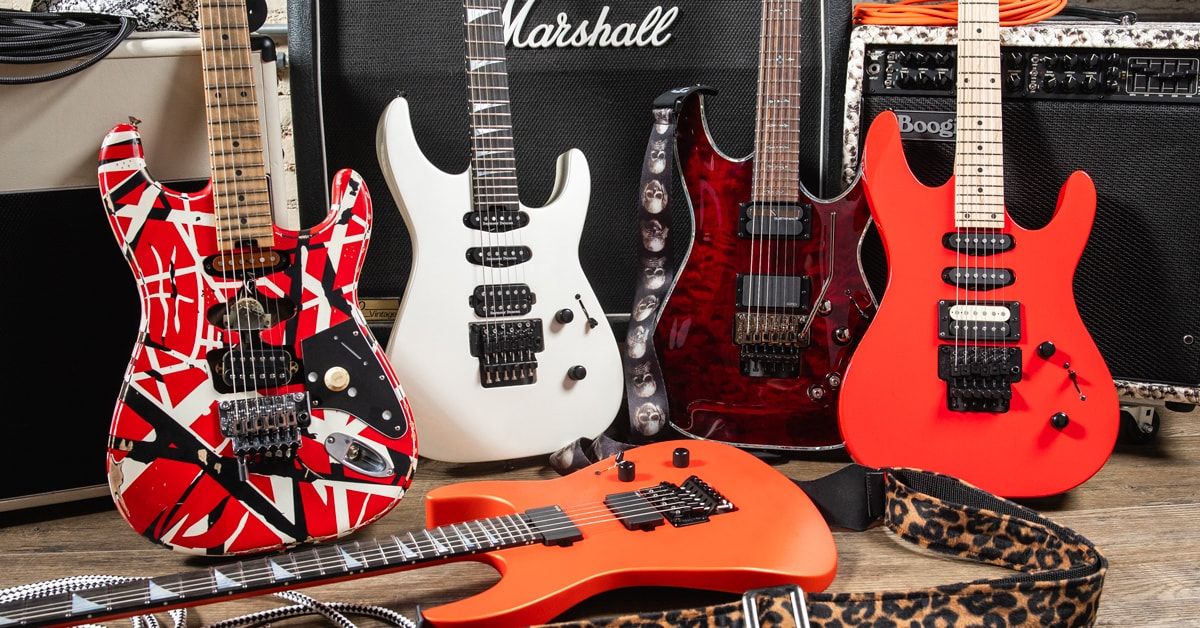

Few guitars have reshaped the electric guitar—as well as hard rock and metal music—like the Superstrat. As the hot-rodded descendant of Leo Fender’s iconic Stratocaster design, the Superstrat, or “S-style” guitar, in its myriad forms made by various makers, became the instrument of choice for a generation of players who demanded speed, precision and power. Born from the musical trends of the late 1970s into the ’80s—think shred guitar heroes, prog rockers, speed metal demons, and the legions of glam and hair metal bands that broke into the mainstream—the Superstrat evolved into a high-performance machine, designed to push the boundaries of what a guitar could do. In this article, we’ll explore the history of the Superstrat, from its inception to its lasting legacy, and dive into the features and brands that have defined this groundbreaking approach to guitar design and manufacturing.

Pictured: Jackson American Series Soloist SL2MG Electric Guitar
Table of Contents
- The Birth of the Superstrat
- The Physical Features of a Superstrat
- From Superstrat to High-Performance Axes
- The Fender Stratocaster: The Grandfather of All Superstrats
- Charvel’s Superstrat Offerings
- Jackson’s Superstrat Offerings
- Ibanez’s Superstrat Offerings
- Kramer’s Superstrat Offerings
- EVH’s Superstrat Offerings
- Schecter’s Superstrat Offerings
- How We Picked These Guitars
- Pick Up That Guitar
The Birth of the Superstrat
The story of the Superstrat begins in 1974, when Eddie Van Halen wanted something that combined that fluid Fender Strat look with a mammoth, humbucker-driven sound. As he recalled, “I didn’t have the money, and the guitar that I wanted to play did not exist.” So, he famously picked up a $50 Strat-style body and paired it with an $80 wide neck sporting an especially thin profile and large frets, both from a Charvel supplier. He then soldered in a P.A.F. humbucking pickup—taken from his Gibson ES-335, and having dipped it in paraffin wax to reduce feedback—in the bridge position, and disconnected the middle and neck pickups to create his iconic “Frankenstrat,” when it was still white, as heard on Van Halen’s debut self-titled album.
This one-of-a-kind guitar brought the best of both worlds: the tonal versatility of a Strat and the thicker, hotter sound of a humbucker—and was further modified for even better pitch bending and tuning stability in the years to come. It was the spark that set off the Superstrat revolution.

Pictured: EVH Striped Series Frankie Electric Guitar
Van Halen’s legendary Frankenstrat set the tone for what would become the Superstrat: a guitar specially engineered for speed, tone and technical precision. With its humbucking pickup, Floyd Rose locking vibrato bridge and custom wiring, the Frankenstrat ended up a far cry from the classic Stratocaster—but its DNA was unmistakable.
Over the next decade, musical styles like shred rock and glam metal would dominate the airwaves, demanding guitars that could handle rapid-fire solos, dive bombs and complex head-turning techniques. This need for a high-performance instrument sparked an "arms race" among manufacturers, with brands such as Charvel, Jackson, Kramer and Ibanez leading the charge. Each sought to outdo the other, creating guitars that were faster, more versatile and more durable than anything that had come before.

Pictured: Kramer Striker HSS' pickups, controls and Floyd Rose bridge
Beyond the big names of the time, boutique builders like Anderson Guitarworks and Schecter also threw their hats into the ring, constantly challenging the status quo of conventional guitar craftsmanship. These early pioneers and disruptors laid the groundwork for the modern Superstrat, a guitar that was as much a tool for innovation as it was a response to the demands of a new musical era.
The Physical Features of a Superstrat
At first glance, the greatest common factor of any Superstrat is the iconic contoured double-cutaway body shape of the classic Strat. But, aside from brand and model name, what sets a Superstrat apart from its Stratocaster ancestor? The devil, as they say, is in the details. While the original Stratocaster brought unmatched versatility and clarity to the table, the Superstrat doubled down on high-performance modifications to meet the demands of shredders and metal players. These features weren’t just cosmetic—they were thoughtfully engineered to elevate playability, tone and durability.

Pictured: Schecter Guitar Research Hellraiser C-1 with Floyd Rose Bridge
Locking vibrato bridges, like the Floyd Rose, became synonymous with the Superstrat, offering face-melting dive bombs and pitch modulation without sacrificing tuning stability. Hot-rodded pickups, often a mix of humbuckers and single coils, provided a broader tonal palette to cover everything from searing leads to chunky, chugging rhythms. Locking tuners and locking nuts also became a defining feature of the Superstrat. Players loved the streamlined controls, often opting for simple wiring layouts to maximize on-the-fly adjustments during intense performances.

Pictured: Jackson American Series Soloist SL2MG locking tuners
Over the years, these features have evolved, with modern Superstrats taking on multi-scale necks, advanced electronics and lightweight body designs. The result: a guitar that continues to set the standard for high-performance instruments.
From Superstrat to High-Performance Axes
The Superstrat may have started as essentially a modified Stratocaster, but it soon inspired an entire category of high-performance guitars that categorically broke away from the original design. As the arms race for innovation heated up, guitar makers began exploring bold new directions—experimenting with exotic woods, aggressive body contours and unconventional pickup configurations.

Pictured: Jackson American Series Soloist SL3 cutaways and contours
Modern Superstrats often feature neck-through construction for enhanced sustain and access to upper frets, as well as ergonomic body designs that prioritize both comfort and style. Manufacturers like Ibanez and Schecter have pushed the envelope with multi-scale designs and extended-range models, catering to players in progressive metal and other more technical genres.

Pictured: Various Superstrat Headstocks
Even as some high-performance guitars have moved beyond the classic Strat silhouette, the spirit of the Superstrat lives on—serving as a bridge between tradition and revolution for players seeking the ultimate musical expression.
The Fender Stratocaster: The Grandfather of All Superstrats
But before Eddie Van Halen set out on his DIY project that would culminate in the Frankenstrat and beyond, it all really began with the Fender Stratocaster, the best-selling guitar model of all time. Introduced in 1954, the Stratocaster wasn’t just a game-changing guitar in its own right—it was a blueprint for innovation. With its sleek, ergonomic double-cutaway body, three single-coil pickups and a vibrato system (coined by Leo Fender as “tremolo”—the technical misnomer stuck), it was quickly renowned as one of the most versatile instruments on the market. And it’s remained so. But it was its modular design and ease of customization that would later pave the way for the Superstrat.
Fender itself would later enter the Superstrat fray with models like the HM Strat, which debuted in the late ’80s and saw a limited run reissue in 2020. With features like high-output pickups and Floyd Rose-style bridges, the HM Strat marked Fender’s bigger-picture recognition of the genre-defining trends the massively influential company had inadvertently inspired.
Charvel’s Superstrat Offerings
Founded by former Fender employee Wayne Charvel in 1974, Charvel started out as a repair company for out-of-warranty Fender guitars, eventually building their own Strat-specific parts and full-guitar builds at the advice of Charvel employee Grover Jackson. In effect creating the canvas for the one that started it all, the Frankenstrat, Charvel has a storied legacy going back to the very beginnings of the Superstrat phenomenon, and has kept up ever since. In 2002, Charvel, along with its parent company, Jackson, joined the Fender family of guitar makers, FMIC (Fender Musical Instruments Corporation)—a fitting move for a brand whose association with the Strat is strong.
Charvel Pro-Mod Plus Dinky DK24 HH 2PT E QM
Why We Picked It: Charvel gives their shred-friendly Pro-Mod Plus Dinky platform a two-humbucker configuration with exquisite Chlorine Burst and Midnight Ocean finishes.
Key Features:
- Caramelized maple Speed Neck with rolled fingerboard edges
- Quilt maple top on a lightweight basswood body
- Seymour Duncan humbuckers

Shop Now: Charvel Pro-Mod Plus Dinky DK24 HH 2PT E QM Electric Guitar in Chlorine Burst
Originally made in San Dimas as a Jackson custom shop-only model in the early ’80s, Charvel began building the 7/8-size Dinky in 1986 using the snappy bolt-on construction that Charvel had been known for. This 24-fret Pro-Mod Plus Dinky is one of Charvel’s latest steps in the evolution of the Superstrat classic, sporting a recessed Wilkinson vibrato bridge and direct-mount Seymour Duncan Full Shred TB-10 bridge and Alnico Pro II APH-1N neck pickups.
Charvel Pro-Mod So-Cal Style 1 HSS FR E
Why We Picked It: Perhaps the closest in shape to the Fender Strat on this guide, the aptly named So-Cal Style 1 also harkens to the Strat’s tonal chameleon factor with its HSS configuration and well-balanced alder body.
Key Features:
- Maple neck with a 12–18” compound-radius ebony fingerboard
- Floyd Rose 1000 Series double-locking bridge
- Seymour Duncan Distortion TB-6 bridge, Flat Strat SSL-6 middle and Custom Flat Strat SSL-6 RWRP pickups

Shop Now: Charvel Pro-Mod So-Cal Style 1 HSS FR E Electric Guitar in Ferrari Red
The Charvel So-Cal guitar first emerged in 2008 as an homage to Charvel’s late ’70s models that closely mirrored the sleek design and comfortable contours of the granddaddy of all Superstrats—but of course, specially tailored for speed demons. The Pro-Mod-So-Cal Style 1 HSS FR E features a bolt-on maple neck with graphite reinforcement, as well as a heel-mount truss rod wheel that makes it a breeze to adjust your neck relief. It’s available in three sharp-looking gloss finishes: Racing Red, Pharaohs Gold and Lambo Green Metallic.
Jackson’s Superstrat Offerings
Grover Jackson founded Jackson in 1980 after having built the first guitars bearing the Charvel name in the mid-’70s, and subsequently even buying the Charvel company in 1978 from Wayne Charvel himself. While the Jackson brand itself owes its beginnings to a collaboration with Randy Rhoads to create an entirely new instrument shape, and signaled a departure from the Strat-based models Charvel had been producing, it’s made its mark on the evolution of the Superstrat with its JS and Soloist lines.
Jackson Dinky JS22 DKA Arch Top
Why We Picked It: It’s like a greatest hits collection for the Jackson Dinky, including longtime favorites like high-output humbuckers, a gorgeously contoured arched top and maple neck with compound-radius fingerboard and sharkfin inlays.
Key Features:
- Graphite-reinforced maple speed neck
- Synchronized fulcrum tremolo bridge
- Angled-back headstock eliminates the need for string trees or retainer bars

Shop Now: Jackson Dinky JS22 DKA Arch Top Electric Guitar in Satin Black
The Dinky JS22 DKA is a budget-friendly introduction to Jackson’s legendary 7/8-body-size (hence the name) Dinky lineup, which burst into the scene in 1986. Featuring a sleek arch top, a fast neck and high-output humbuckers, this guitar delivers all the tone and fast playability metalheads and hard rockers crave. Its lightweight and timeless design make it an alluring choice for beginners stepping into the world of Superstrats. A top-selling hit, this Dinky isn’t just for beginners, however. This veteran Guitar Center reviewer says it all: “I have owned nice Strats, and I have very high-end acoustic gear, so I know quality, and this Jackson is solid … I used to do the endless modding thing but now just want to spend my time playing guitar. This one fits my needs exactly.”
Jackson American Series Soloist SL3
Why We Picked It: Jackson’s first made-in-Corona flagship run, the American Series Soloist SL3 hails from a storied line beloved by hard rock and metal virtuoso legends.
Key Features:
- Floyd Rose 1500 Series double-locking vibrato
- Seymour Duncan JB TB-4 bridge, Custom Flat Strat SSL-6 RWRP middle and Flat Strat SSL-6 neck pickups
- Elevated appointments including Luminlay side dots, Dunlop dual-locking strap buttons and Gotoh MG-T locking tuners

Shop Now: Jackson American Series Soloist SL3 Electric Guitar in Platinum Pearl
Another cornerstone of Jackson’s offerings, the Soloist was first released in 1984, as a Superstrat that differentiated itself—and added sustain—with its neck-through-body design. On the higher end of the current offerings, the American Series Soloist SL3 is a designed with a shredder’s need for precision in mind. Its 12"–16" compound-radius carve flattens out as you go up the neck, making it comfortable to blaze across the fretboard. Seymour Duncan pickups in an HSS configuration give you a wide tonal range that runs the gamut from clean ballad lines, mega overdriven solos and everything in between.
It’s also available in four eye-catching finishes, paying homage to the look of loud that’s adorned Soloist guitars since they crashed the party over four decades ago.
Jackson American Series Soloist SL2MG
Why We Picked It: An even more premium option, this USA-built axe joined the Jackson lineup in 2024 to cover everything from glassy sparkle to full-fledged roar.
Key Features:
- 3-piece maple neck with graphite reinforcement
- Floyd Rose 1500 Series double-locking bridge
- 12"–16" compound-radius rolled ebony fingerboard

Shop Now: Jackson American Series Soloist SL2MG Electric Guitar in Satin Lambo Orange
And for the ones really looking to kick it up to 11, the SL2MG delivers the goods with a pair of EMG 81/85 active pickups that produce searing leads and tight rhythms. This Corona, California-built guitar features a smooth ebony fingerboard and a contoured neck-through alder body, offering impeccable comfort and balance during high-energy performances. Built for modern, discerning players, it pairs aggressive tone with immaculate craftsmanship.
Ibanez’s Superstrat Offerings
Ibanez has a well-documented story of originally imitating and later drawing heavy inspiration from the Strat, and is often tightly linked to the Superstrat. They’ve since specialized in a wide array of designs that have become massively popular in heavier rock and metal circles. Debuting in 1987, the RG Series and JEM Series have been serious contenders for those on the hunt for a souped-up, high-performance guitar.
Ibanez RG470PB
Why We Picked It: At its sub-$700 price, this head-turning poplar-burl-top axe serves up an impressive range across the tonal spectrum, thanks to its Quantum pickups in an HSH configuration.
Key Features:
- Ultrathin, flat and fast Wizard III neck
- Edge-Zero II double-locking bridge keeps tuning stable
- Meranti body offers a warm, resonant tone akin to mahogany

Shop Now: Ibanez RG470PB Standard Electric Guitar in Red Eclipse Burst
The Ibanez RG470PB combines a striking angular Strat-derived shape with the performance-driven playability that put Ibanez on the map. Its Quantum HSH pickups dish out plenty of quick low-end response and full-bodied mid-to-upper-register tone. It also delivers on the little things that make life easier down the road as well, such as a mono-unit input jack that eliminates the age-old issue of loosening output jacks and connection failures.
Ibanez RG550 Genesis Collection
Why We Picked It: Made in Japan, the RG550 Genesis Collection is a throwback to a classic late ’80s design, but with some modern refinements, as we’ll go over.
Key Features:
- Super Wizard 5-piece maple/walnut neck with a maple fretboard
- V8 bridge, S1 middle and V7 neck pickups dish out a vast range of tone
- Available in five gorgeous finishes: Road Flare Red, Purple Neon, Desert Sun Yellow, Black and Electric Blue

Shop Now: Ibanez RG550 Genesis Collection Electric Guitar in Electric Blue
RG550 Genesis pays homage to Ibanez’s iconic 1980s designs, featuring a fast Super Wizard neck and V7/V8 pickups for tonal versatility. With its classic basswood body and modern updates, this guitar is a dream for players who love vintage styling with contemporary playability. It’s perfect for shredders and admirers of Ibanez’s legacy.
Ibanez JEMJR Steve Vai Signature JEM Series
Why We Picked It: Available at an astoundingly budget-friendly value in white and black models with matching headstocks, Steve Vai’s signature needs no introduction.
Key Features:
- Sleek, rock-solid Wizard III maple neck
- Quantum HSH pickups
- 24-fret jatoba fingerboard with Tree of Life inlay

Shop Now: Ibanez JEMJR Steve Vai Signature JEM Series Electric Guitar in White
The JEMJR brings Steve Vai’s signature design to an accessible price, complete with its iconic “monkey grip” and decorative inlays. Its HSH pickup configuration and Edge trem system make it incredibly versatile for everything from sweeping solos to dynamic rhythms. A truly distinctive model, it embodies Vai’s one-of-a-kind approach to guitar design.
Kramer’s Superstrat Offerings
While Kramer got its start in 1974 specializing in guitars with aluminum necks, it caught on to Charvel’s Strat-style popularity and dove into the Superstrat game in 1981—so much so that it received a cease-and-desist letter from Fender for copying its patented headstock shape. But Kramer also had the Rockinger vibrato system that stayed in tune, which caught Eddie Van Halen’s attention. Van Halen joined Kramer as an endorser in 1982, and the Rockinger became known as “Edward Van Halen tremolo,” before Floyd Rose replaced it the following year.
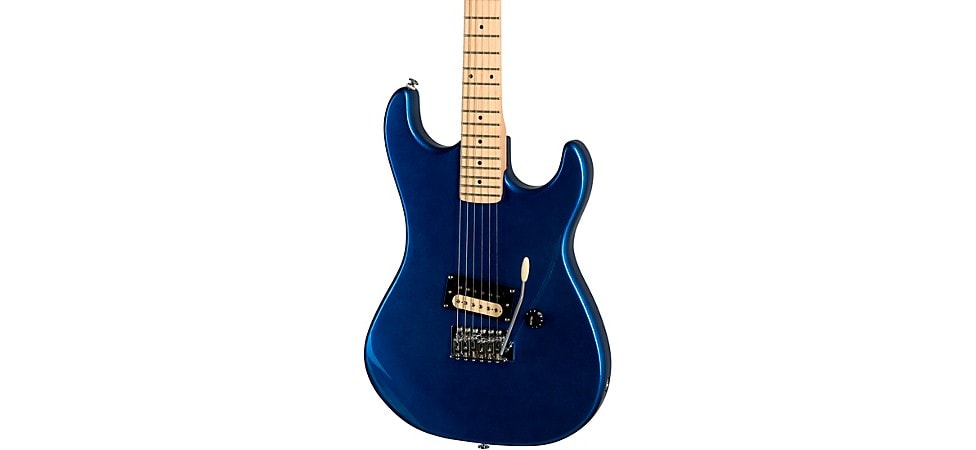
Kramer Baretta Special
Why We Picked It: One of the most affordable in this guide, it’s a beautifully minimalistic, no-nonsense shredder—whether that’s your vibe or not, you’ve gotta respect it.
Key Features:
- Mahogany body in one of four gloss finishes
- Slim maple neck and fingerboard with 12" radius
- Single knob controlling the bridge pickup’s output
Shop Now: Kramer Baretta Special Electric Guitar in Candy Blue
Originally designed to EVH’s signature specs, the Baretta was released in 1983. Today, the jaw-droppingly affordable Baretta Special harkens back to the heyday of ’80s shred and glam rock. With a single diagonal Alnico V Zebra Coil humbucker and Kramer Traditional vibrato bridge, it’s designed for sheer simplicity and raw power, making it an enticing choice for anyone wanting straightforward controls and hard-hitting tones.
Kramer Pacer Carrera
Why We Picked It: Another Superstrat that owes its existence to Eddie Van Halen, this one also oozes ’80s glammed-out virtuoso appeal—and a heap of tonal options to choose from.
Key Features:
- Fast maple neck with ebony fingerboard
- 22 medium-jumbo frets
- Available in two gloss finishes: Defender Red and Ebony

Shop Now: Kramer Pacer Carrera Electric Guitar in Defender Red
In the early ’80s, the Pacer was Kramer’s Superstrat offering that featured new and improved Floyd Rose/Kramer bridge designs—a partnership that EVH himself helped foster. Today, the Pacer Carrera adds some fast car-inspired throwback bravado to Kramer’s lineup with dual humbuckers and a push-pull coil-split for added tonal options. Its Seymour Duncan SH-2N and JB pickups, Floyd Rose 1000 Series bridge and R2 locking nut make it a favorite among shredders.
Kramer SM-1 Figured
Why We Picked It: Part of Kramer’s Original Collection, it’s a higher-end model with the wide tonal options and eye-catching finishes to prove it.
Key Features:
- 24 jumbo frets on an ebony fingerboard with 12.6" radius
- Seymour Duncan JB bridge and Cool Rails middle and neck pickups
- Floyd Rose R2 1000 Series vibrato and R2 1000 Series locking nut

Shop Now: Kramer SM-1 Figured Electric Guitar in Caribbean Blue Perimeter
Getting back into more modern Superstrat territory, the mahogany-body Kramer SM-1 Figured flaunts some dive bomb-friendly Floyd Rose hardware, as well as a trio of Perimeter finishes over a AAA figured maple veneer top. And for Kramer aficionados who hold a special place in their hearts for attention to detail, it has the iconic mini Kramer headstock inlays across the fingerboard.
EVH’s Superstrat Offerings
As we know by this point, the Superstrat owes its start to the neurotic hot-rodding, tone-seeking experimentation by one of the most game-changing guitarists of all time, Eddie Van Halen. Taking his DIY ethos to the next level, he collaborated with Kramer, Ernie Ball Music Man, Steinberger and Peavey, before founding EVH Gear, licensed under FMIC, in 2005.
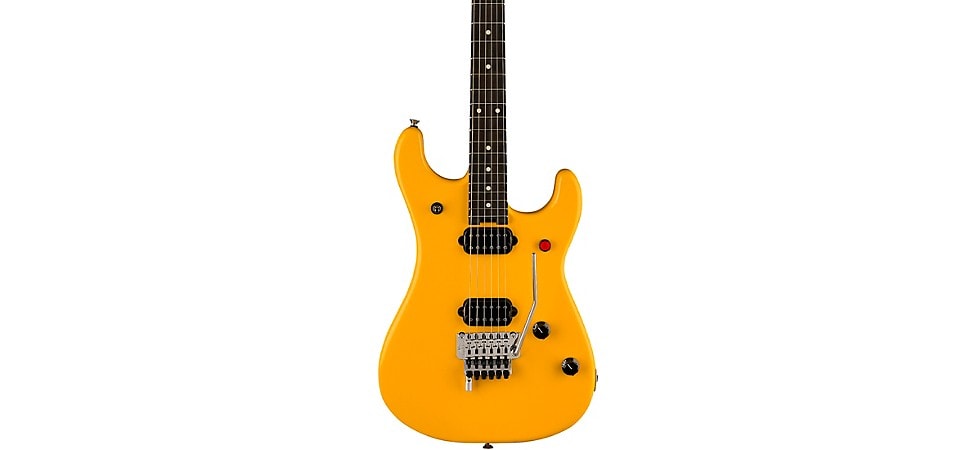
EVH 5150 Standard Series
Why We Picked It: This EVH Yellow 5150 boasts a kill switch, D-Tuna and a look that’s every bit as bold as its shred potential.
Key Features:
- EVH Modified C-shaped quartersawn maple neck
- 22-fret ebony fingerboard with 12"–16" compound radius
- Heel-mount truss rod adjustment wheel
Shop Now: EVH 5150 Standard Series Electric Guitar in Yellow
EVH 5150 Standard channels the legacy of Eddie Van Halen with modern upgrades that extend beyond the classic Frankenstrat/Strat-style canvas. Its basswood body and EVH-branded Floyd Rose R3 ensure stability during extreme dive bombs, while a pair of Wolfgang Alnico 2 humbucking pickups deliver a powerful, articulate tone. It even comes with a red kill switch on the lower bout for those rhythmic signal cutouts, and a D-Tuna system on the tailpiece, which lets you change from standard to drop-D tuning with the flick of a finger. The 5150 Standard’s razor-sharp ingenuity matches its aesthetic.
EVH Striped Series Frankie
Why We Picked It: It’s meticulously modeled after one of the most—if not the most—instantly recognizable guitars in the world, down to the oiled neck finish and dummy neck single-coil and selector switches.
Key Features:
- Quartersawn maple neck with modified C back shape
- 12"–16" compound-radius maple fingerboard
- D-Tuna lets you switch from E to drop D at the flick of a finger

Shop Now: EVH Striped Series Frankie Electric Guitar
The Striped Series Frankie is a tribute to Eddie’s legendary Frankenstrat in its most familiar red form, complete with its iconic striped finish and single-humbucker configuration. The Floyd Rose tremolo and custom-wound EVH pickup ensure it delivers the tone and feel players would expect from an EVH guitar. Frankie is a must-have for players inspired by Van Halen’s revolutionary sound.With an above-4.5-star average Guitar Center customer review out of 28 submissions, it’s a faithful recreation of one of the most famous guitars of all time. Looking to earn your stripes for less? Not a problem—the EVH Striped Series guitar with red and black stripes, as well as a left-handed option, have you covered with a more accessible option than the Frankie.
EVH Wolfgang USA
Why We Picked It: A flagship EVH model with an innovative shape in its own right, it’s earned its place here as an “honorary” Superstrat.
Key Features:
- Kill Switch and D-Tuna
- EVH High Friction tone pot provides some rotational resistance, making it easier to control
- Low Friction volume pot makes quick volume swells a breeze

Shop Now: EVH Wolfgang USA Edward Van Halen Signature Electric Guitar in Stealth Black
While it strays from the Strat-shaped foundation of many EVH guitars, Wolfgang USA Edward Van Halen Signature is the pinnacle of EVH’s lineup, blending premium craftsmanship with cutting-edge features. In addition to the kill switch and D-Tuna present on the 5150 Standard, its custom pickups and baked maple neck offer a combination of warmth, clarity and comfort, making it perfect for both intricate solos and powerful rhythm playing. With meticulous attention to detail, this guitar is a true performer’s instrument. And because it’s in our Platinum collection, you can view all our available individual models for both colorways, with exact weights and serial numbers listed.
Schecter’s Superstrat Offerings
Somewhat similar to Charvel’s beginnings, Schecter Guitar Research—known as just Schecter—got its start in 1976 making spare parts for Fender and Gibson guitars, before delving into the world of full-blown guitar making in 1979. Often mimicking Fender (usually Strat) designs in those early years, these high-end guitars attracted the likes of Yngwie Malmsteen and other virtuosos who demanded the most out of their instruments.
Schecter Guitar Research C-1 FR S Electro-Resin
Why We Picked It: An electro-resin treatment gives this hard rock and metal classic axe a truly one-of-a-kind look.
Key Features:
- Sustainiac neck pickup gives infinite sustain
- Seymour Duncan ’78 bridge humbucker keeps articulation through heavy distortion
- Floyd Rose 1500 Series vibrato
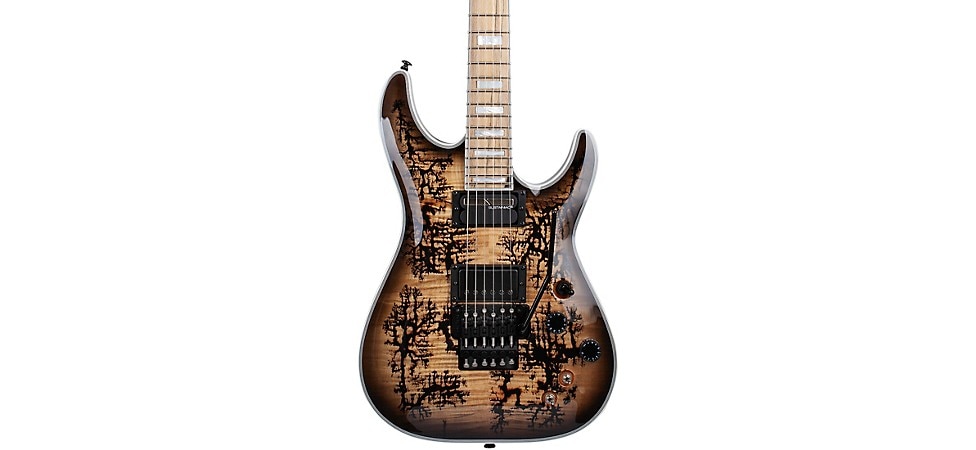
Shop Now: Schecter Guitar Research C-1 FR S Electro-Resin Electric Guitar in Black Burst
Only at Guitar Center, the Schecter C-1 FR S Electro-Resin flaunts a carved, flamed maple top that’s been fractal burned to create lightning-like burn canyons that are then filled in with black resin—you won’t find two that look alike. A moon ebony fretboard with mother-of-pearl block inlays adds a visually arresting juxtaposition to the seeping darkness of the body. Add the extremely comfortable playing feel of a slim, 24-fret mahogany set neck with an Ultra Access heel, and you’ve got a stage and studio companion that’s engineered to maximize your range of creative expression.
Schecter Guitar Research Demon-6 FR
Why We Picked It: With its gothic cross pearloid inlays, this otherwise understated, stealthy, budget-friendly axe that punches well above its weight.
Key Features:
- Thin C maple neck with 24 jumbo frets
- 14"-radius wenge fingerboard provides articulate, resonant tone
- Floyd Rose Special Hot Rod vibrato employs hardened stainless steel string-lock and saddle mounting screws

Shop Now: Schecter Guitar Research Demon-6 FR Electric Guitar in Satin Aged Black
The Schecter Demon-6 FR is enticingly sleek with its arched top finished in Aged Black Satin, and is loaded with mayhem-inducing potential with a pair of Schecter Diamond Active HB105S humbuckers. It’s earned a 4.83/5-star average from Guitar Center customers, with Austin from Alabama raving: “I was scared to buy this because it would be my first Floyd Rose guitar, but after getting it and immediately doing dive bombs it stayed in tune perfectly! Right out of the box it was needed no setup. Highly recommend this if you're looking for a mid-range guitar or buying your first Floyd Rose.”
How We Picked These Guitars
Given the how vast of a subcategory Superstrats has become over the past half century, it’s a tall order to capture a “best of” collection of today’s offerings. Our methodology for narrowing down the list to these guitars factored in sales, cultural impact and innovation to the S-style platform that have made each of these models stand out from the crowd. And we’ll continue to update this guide as new Superstrats continue to break the mold.
As one could imagine, there’s a galaxy of worthy Superstrats that didn’t make our list, so be sure to check out our online and in-store selection. Talk to one of our in-store associates or on-call Gear Advisers, who are ready to help you narrow down your search to the Superstrat that’s just right for you.
Pick Up That Guitar
Whether you’re a beginner or a seasoned pro, sometimes you just know what you’re looking for in a Superstrat and have already decided on one of these. It’s also easy to go down the rabbit hole of feature and spec comparisons, so we believe the best way to find your sound is to pick it up and try it out for yourself.
And if you’re looking to supercharge a Stratocaster or Strat-style guitar to create your own Superstrat, our Repairs techs at your local Guitar Center are always ready to trick out your Strat to your specs. If you're into metal and are looking for a tricked out S-style guitar be sure to check out "The Best Metal Guitars".
Written By: Drew Beaupré
Drew Beaupré is a multi-instrumentalist, audio engineer and writer. With a bachelor’s in psychology from Purdue and background as a gigging guitarist and drummer, he began his audio career at the world-famous Westlake Recording Studios, before venturing into live sound engineering for clients such as KCRW, Santa Monica College, CSULA and Nyjah Huston—eventually becoming studio manager at Guordan Banks’ Bank On It Studios in downtown L.A. He also has worked extensively with the industrial band Ministry, as an engineer at Al Jourgensen’s studio, as well as domestic and international touring stage tech for DJ Swamp and Joey Jordison. Prior to writing with Guitar Center, Drew has written for Fender and various music blogs.
Recently Added to Gear Tips
Be the first to know about exclusive offers, tips and more.

866-498-7882 English
877-687-5402 Español