.jpeg)

Pro Gear Advisers
•866-498-7882
Spotlight on the New AKG C Series Microphones

When I opened my first commercial recording studio in 1983—Sound & Vision in San Francisco—an AKG C414 multipattern large-diaphragm condenser and two AKG C451 small-diaphragm condensers were some of the indispensable microphones I had to acquire if I wanted professional artists to book sessions.
At the time, every essential pro-studio mic was far from inexpensive, so populating a microphone cabinet that would ensure the comfort of musicians, freelance engineers and roving producers was an exercise in budget busting and fiscal anxiety. Of course, an even more dire financial circumstance was getting zero bookings because we didn’t provide the right microphones.
If only I had a time machine.
Armed with the ability to surf through the years, I would have sliced through the waves to 2026 and procured the new AKG C104, AKG C114 and AKG C151—all stunning, pro-level mics with costs under $250 each (as of April 2026). I could have saved enough money in 1983 to open an entire franchise of Sound & Visions throughout California and still provide clients with the pristine audio they demand.
All of that is just a dream that never happened for me. But it can be your future—thanks to the new trio of AKG C Series microphones.

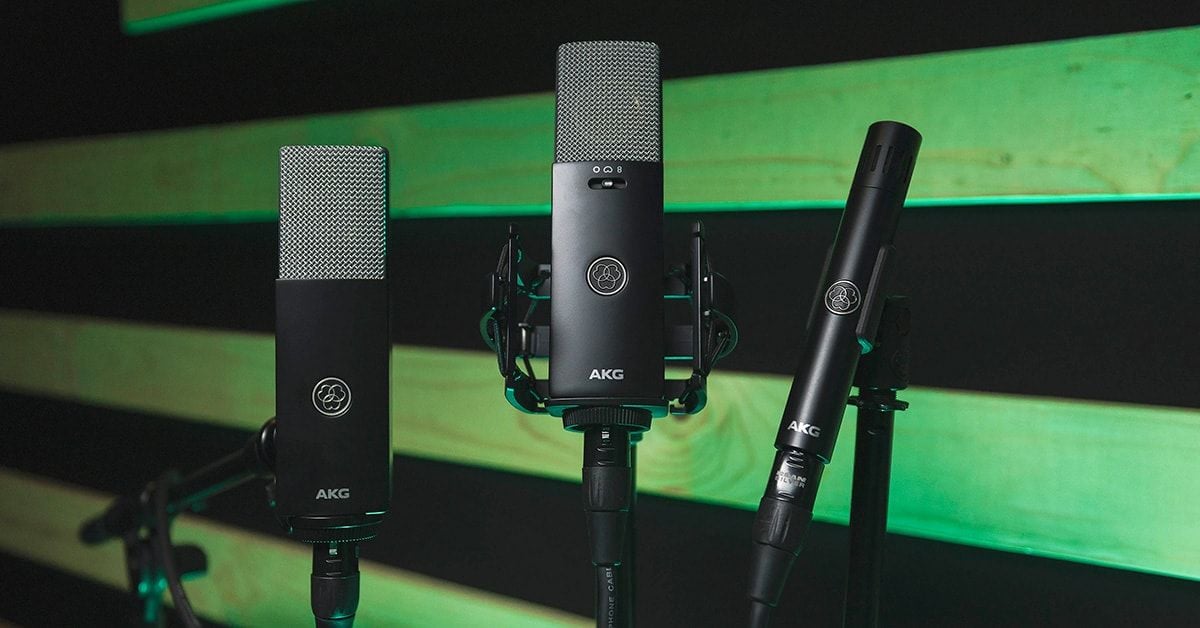
Left to Right: AKG C104, AKG C114 and AKG C151
Table of Contents
Quick Specs for the AKG C Series Microphones
Model | |||
Capsule | Large-diaphrapm condenser | Dual, large-diaphragm condenser | Small-diaphrapm condenser |
Polar Pattern(s) | Cardioid | Cardioid, omnidirectional, figure-8 | Cardioid |
Frequency Response | 20Hz–20kHz | 20Hz–20kHz | 20Hz–20kHz |
48V Phantom Power | Yes | Yes | Yes |
Self Noise | 14dB(A) | 12dB(A) | 21dB(A) |
Signal to Noise | 80dB | 82dB | 73dB |
Sensitivity | 13.5mV/Pa | 13.5mV/Pa (cardioid) | 11mV/Pa |
Maximum SPL | 143dB | 145dB | 143dB |
Stand Attachment | Mic clip | Shockmount | Mic clip |
Price* | $122.55 | $229 | $129 |
Pricing as of July 2026*
What's the Background of the New AKG C Series Mics?
The new AKG C Series is actually “new.” The C104, C114 and C151 are fresh starts—rather than abridged or reimagined versions of current models—designed by AKG Product Manager Phil Feinmen and his crew of engineers. However, there are some “echoes” of AKG legends. The C114 pays homage to the C414, and the C151 does the same for the C451. Apparently, the C104 takes its inspiration from a number of AKG mics, rather than a single model.
In all three cases, the engineering goal was to design affordable, entry-level microphones that sound amazing and can cover myriad applications in the studio.
There was yet another engineering feat realized by the new C Series team. It’s not a sonic enhancement, but a benefit to Mama Earth. The C104, C114 and C151 can lay claim to being some of the first sustainable microphone designs on the planet. The microphone housings are manufactured from recycled industrial metals, all packaging is printed with soy inks and even the mic bags inside the boxes are created using a corn-based material. So, the new C Series can be good for your sessions and also good for the planet.

Pictured: AKG C104 Miking Guitar Amplifier
Is There a Feature Trade-off With AKG's Affordable C Series Mics?
The only real trade-off you may experience with the new C Series is the one between your dreams (these mics deliver sounds very close to high-end C414s and C12s) and reality (they aren’t C12s or C414s, but they are excellent and well-reviewed microphones). With savvy mic placement, a decent recording environment and an inspired signal path (clean or edgy/vibey), these microphones will produce a level of quality very much up to the task of hanging with professional major- and indie-label releases.
But there are two notable features that appear on AKG’s more upscale mics that were not included on the new C Series: attenuation and filter switches.
The AKG C414 XLII, for example, offers three pads (-6dB, -12dB, -18dB) and a trio of bass-cut filters (40Hz, 80Hz, 160Hz). The AKG C451 B provides two pads (-10dB, -20dB) and two bass-cut filters (75Hz, 150Hz). These switches are obviously fabulous for tailoring response directly at the mic, but it certainly won’t tank a session if you don’t have them on C Series models. You can always adjust gain staging and low-end cuts in your DAW, as well as by using the EQ and preamp-level knobs on hardware mixers.
One more thing. AKG C114 users get three polar patterns while the AKG C414 XLII includes nine—five main (omnidirectional, wide cardioid, cardioid, hypercardioid, figure-8) and four intermediate settings that sit between one pattern and another. (Think of the old-school “in-between” settings on a Fender Stratocaster with a three-way pickup selector switch.)
Again, while it’s always nice to have more options, the AKG C114 arguably gives you the top three choices: cardioid, omnidirectional and figure-8. I used an AKG C414 on countless professional sessions, and I doubt I ever selected any polar pattern beyond those three. They pretty much cover most recording applications, so the polar patterns on the AKG C114 can hardly be considered as “dealing with a trade-off.”

Pictured: AKG C151 Miking Hi-hats
AKG C104
Three Things to Know About the C104
Multitasker—great for vocals and instruments
Proximity effect adds girth without muddiness
Smooth midrange articulation

Shop Now: AKG C104 Large-Diaphragm Condenser Microphone
The AKG C104 offers massive value to recording musicians on a tight budget. As a side-address, large-diaphragm cardioid condenser, it can be used for lead and background vocals, speech (podcasts) and instrument miking, from acoustic guitars and electric guitar amps to drum overheads, percussion and horns.
The AKG C104 is almost a perfect “one-mic-fits-all-applications” option, and it’s budget-friendly enough that many home studio musicians could afford two—opening up possibilities for stereo mic placement.
The C104 produces excellent high end without any gritty edges.
Low mids are warm yet taut, and the proximity effect is rich without being muddy. Place the C104 in front of a male podcast guest, and it will enhance the timbre into Morgan Freeman territory. Likewise, it can deliver toms that rumble, cajons that lower the boom and enhance other tracks that benefit from lush bass frequencies.
Midrange articulation is simultaneously present and velvety, which contributes to the lack of low-end muddiness and high frequencies without the sear factor. You can use the C104 on aggressive guitars and mid-forward vocalists without concern the attack will end up unpleasant or fatiguing for listeners.
I should also mention these microphones—and AKG models in general—tend to be tough tools. Just because you’re in your studio and not dragging the new C Series mics out into the cruel world doesn’t mean they won’t be dropped, banged or jostled. When a percussionist accidently swats your C104 with a tambourine, you’re going to love the fact it wasn’t constructed with overly delicate materials.
AKG C114
Three Things to Know About the C114
Three polar patterns cover myriad studio applications
Expansive high-end response
Coherent midrange frequencies

Shop Now: AKG C114 Large-Diaphragm Condenser Microphone
If you can find your way to spend a few more dollars than the price of a C104, the AKG C114 is a tremendous upgrade for the added cost.
The C114 is reminiscent of a C414, and the C414 has always been one of the most-used mics in every studio I’ve owned. A C414 sounds amazing on almost every source, and there’s no reason to believe the C114 won’t offer similar versatility and sound quality for home recording musicians. It’s an excellent microphone, and good ears and careful mic placement can lead to stunning results.
For starters, the AKG C114 offers three essential polar patterns in one mic.
Cardioid may be your go-to pattern, as it’s a good choice for recording vocals and positioning in the sweet spot of acoustic instruments and guitar speaker cabinets. Omnidirectional is an outstanding pattern to select for a room mic, and it also doesn’t exhibit proximity effect, so it can be used whenever you’re looking for a flat low-frequency response on any source sound. Figure-8 is fun. I often use this pattern to record two background vocalists singing at the same time and facing each other for maximum interaction and cueing. If the singers have good pitch, I feel it’s more textural to get their parts down in one pass, rather than overdub them separately.
I found the high end on the C114 to be well defined and vibrant, and it exhibits an almost three-dimensional quality. It’s a tad difficult to explain, but along with the sparkle are ghostly “tingles” that create a sense of expansiveness.
Midrange frequencies are coherent and polite without losing any articulation. They’re the kind of the mids you want to hear—clear and distinct but not fatiguing.
Lows are full, rich and warm. There’s no boominess or mud—unless you drop the C114 into a position that could overwhelm it with low-end energy. But even if you fall victim to that miscue, you could simply move the mic or use EQ to diminish the bass.
All in all, the C114 makes friends with every sound and instrument. The only danger is you may want to rerecord some of your earlier recording projects using the C114. The sonic enhancement is real.
AKG C151
Three Things to Know About the C151
Great as drum overhead and acoustic guitar mic
Excellent off-axis rejection
Bright but not shrill high end

Shop Now: AKG C151 Small-Diaphragm Condenser Microphone
Small-diaphragm condensers, such as the AKG C151, are lovely choices for recording acoustic guitars, hi-hats, percussion, room ambiences and more. As with the C104, the price of the C151 makes it easy to buy a pair and deploy the two mics for “matched” stereo perspectives.
The C151 seems like a tribute to the AKG C451, and it somehow manages to produce comparable sonics. I’ve used two C451s as drum overheads for decades, and in a double-blind audio reference test, I think the C151 might fool an experienced studio engineer (or two) into calling it out as a C451.
Really digging deep into the details reveals the C151 is not as polished or smooth on the high end as a C451. The C151 produces a more intense brightness, but it’s still a courteous level of treble, so there’s no distracting shrillness.
In fact, if I auditioned both mics on a hi-hat, I’d likely choose the C151 because it imparts a driving sizzle. The C451 would win the same test for drum overheads as it adds a balanced silkiness to the combo of toms, snare, hi-hat and ride and crash cymbals, but the C151 wouldn’t be far behind.
The C151 provides exceptional off-axis rejection—a groovy thing indeed if you don’t want too much snare to bleed into the hi-hat mic. The C151 also helped clarify a stereo-miked acoustic guitar. The C151 was positioned a foot or so off the neck and pointed toward the 12th fret, while the C114 was placed near the guitar’s soundhole at an angle. During the mixdown, we panned the two tracks hard right and hard left for a wide stereo perspective. The cardioid C114 “heard” some of the jangle of the neck position, but hardly any mids or low mids from the soundhole were picked up by the C151. There was, like, 90.8% sparkle on the C151 track, which made for an animated and dimensional stereo acoustic sound when combined with the soundhole track.
You have to adore little gifts like this when you’re chasing after impactful tones and cinematic soundscapes.
Save the C Notes, Embrace the C Series
Which New C Series Mic Should You Choose?
C104: Awesome all-round home studio microphone
C114: Super versatile, multi-pattern option
C151: Incredible on percussion and acoustic instruments

Pictured: AKG C114 Large-Diaphragm Condenser Microphone
If you were a small, local studio owner or home studio musician in the 1990s, there were few good feelings as delightful as discovering the cost of professional condenser microphones was creeping under $1,000. No disrespect to the venerable and multipurpose Shure SM57 and other outstanding dynamic mics—or even all of those Radio Shack models that were usually all we could afford—but finally having the ability to record the subtle details of vocals and acoustic instruments was truly epic.
Historians may quite rightly point to the Alesis ADAT for bestowing home studios the professional quality to record masters rather than just demos. But I firmly believe if affordable high-end microphones had not also entered the field, the “demo era” of personal studios would have persisted a few years longer. After all, capturing sound and documenting it for public distribution go hand in hand.
The new C Series mics is perhaps another step in the evolution of achieving magnificent sound for mini outlay. Any upgrade in sound quality—whether it’s via monitor speakers, plug-ins, signal processors, audio interfaces or microphones—helps home recording musicians create more soundscapes that can compete with the work of professional studios. I really believe that. Ideas, experience and talent should drive audio productions that charm the public—not where they were recorded—and the new C Series mics offer three ways to elevate your creative concepts.
Written By: Michael Molenda
Michael Molenda is a content strategist, editor and writer for Guitar Center, where he has worked since 2022. He is the longest-serving Editor in Chief of Guitar Player (1997-2018), and former Editorial Director of Bass Player, EQ, Keyboard, Electronic Musician, Gig and Modern Drummer. A guitarist, drummer, bassist and producer, Mike co-owned three pro recording studios in San Francisco, and performs with Surf Monster and The Trouble With Monkeys.
Be the first to know about exclusive offers, tips and more.

866-498-7882 English
877-687-5402 Español