.jpeg)


Jimmy Cliff didn’t just write and sing songs. He introduced the world to an entire musical language.
His passing this last weekend marks the loss of a global cultural figure, a fiercely creative spirit and, for many of us, the voice that guided our first steps into the world of reggae.
Cliff had a long friendship with Guitar Center, joining us for interviews and performances. Each time he carried that unmistakable mix of grace, fire and generosity. Those qualities defined both the man and the music.
The Artist Who Opened the Door
When The Harder They Come premiered in 1972, reggae was still finding its footing outside Jamaica. Cliff, along with pioneers such as Toots Hibbert, Max Romeo and the early members of The Wailers, wasn’t following an established tradition. Since the early 1960s, they had been building it in real time, shaping the rhythms, themes and emotional vocabulary that would echo across decades.
The soundtrack to The Harder They Come went far beyond simply supporting the film—it became a cultural touchstone. Songs such as “You Can Get It If You Really Want,” “Many Rivers to Cross” and the title track introduced international audiences to the heart of Jamaican music—hope, resilience and a profound sense of human connection.
A Global Voice for Truth
Cliff’s artistry was never confined to genre. He wrote anthems that crossed borders and lifted spirits everywhere. His voice carried the warmth of gospel, the pulse of ska, the storytelling of folk music and the unabashed soulfulness that made his catalog timeless.
His impact reached far beyond music charts.
In 1980, he performed in Soweto at a time when such gatherings were discouraged—or outright suppressed—under apartheid. That concert became one of the first visible cracks in the system’s armor. Cliff’s presence was galvanizing. He brought songs of resilience and resistance directly into a community fighting for its future, and the authorities took notice. Decades later, many still point to that performance as an early cultural turning point in apartheid’s long unraveling.
But what made Cliff extraordinary wasn’t just the songs, it was the way he delivered them. He sang with conviction, but also with compassion. His music didn’t push you, rather, it walked alongside you. Even his most urgent lyrics carried an invitation: Believe in something. Believe in yourself. Keep going.
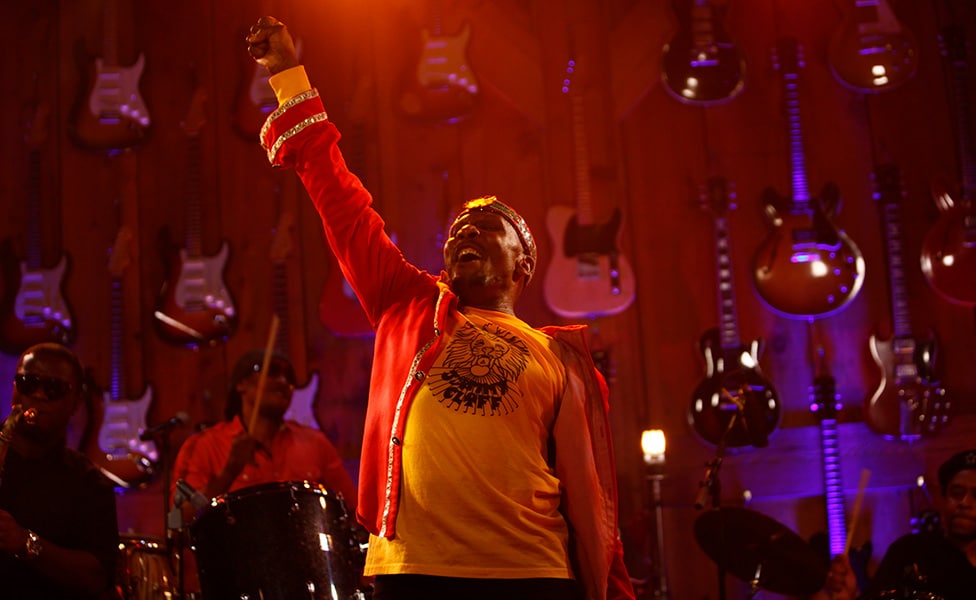
Pictured: Jimmy Cliff Performing in the Vintage Room at Guitar Center Hollywood
A Friend of Musicians Everywhere
Cliff’s relationship with Guitar Center was rooted in his connection to musicians. In his recordings for Guitar Center Sessions, he spoke openly about craft, creativity and the magic of collaboration. Whether discussing songwriting, stagecraft, the origins of reggae or the spiritual dimension of music, he reminded us that every guitar, every voice and every band comes from the same place—a desire to tell the truth through sound.
Those conversations resonated deeply with our community. Cliff understood that gear isn’t just equipment—it’s an instrument of possibility. And he loved seeing musicians chase their next idea, their next song, their next breakthrough.
Crossing Rivers, Carrying the Flame
As we honor Jimmy Cliff’s life, we remember an artist who shaped the soundtrack of the Caribbean and carried it to the world. His songs still inspire new generations of guitarists, singers, producers and players—anyone who’s ever found hope in a melody or strength in a lyric.
Cliff’s music taught us that no matter how many rivers stand in your way, there’s always a way forward.
Rest easy, Jimmy. Your voice will always be with us.