
.jpeg)

Pro Gear Advisers
•866-498-7882
Ludwig Unveils Guitar Center Exclusive Heritage Cherry Drums
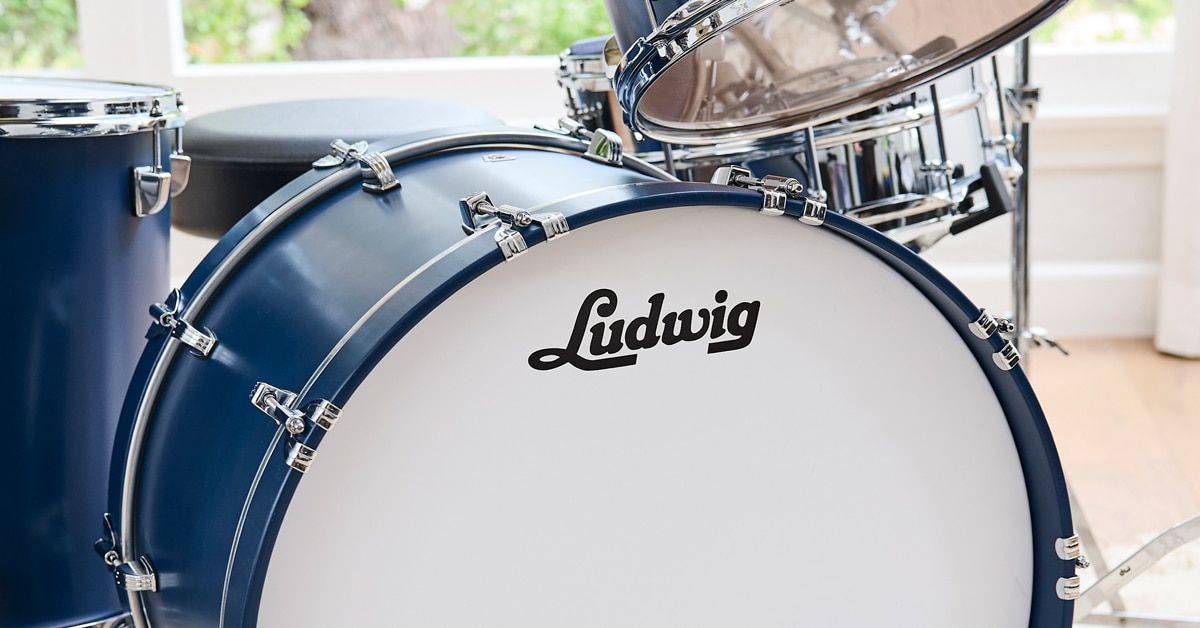

The iconic, 116-year-old drum brand that is Ludwig has been partnering with Guitar Center on groove-tastic products since founder Wayne Mitchell opened our first store in Hollywood in 1959. The latest Guitar Center-exclusive offering from our long-term percussion allies is the new Ludwig Heritage Cherry series of three-piece shell packs.Crafted for serious, gigging drummers, the made-in-the USA Heritage Cherry kits feature 9-ply shells (3-ply maple core, 3-ply cherry inner layer, 3-ply cherry outer layer), Ludwig TRIAD isolation brackets, 45-degree bearing edges, 2.3 mm triple-flange hoops and EVANS G1 single-ply drum heads. The Heritage debuts in a 13x9" rack tom, 16x16" floor tom and 22x14" bass drum configuration, and comes in two colors—Resolute Blue and Silver Dust.
“When Guitar Center asked if we’d be interested in developing what became the Heritage series, it was a no-brainer,” says Ludwig Director of Sales Mike Nieland, who was formerly a drum buyer at Guitar Center for 12 years. “Having worked there, I have a better-than-average understanding of the Guitar Center drum customer, and I was energized by the company’s new direction of focusing on serious musicians.”
Ludwig’s gang of gigging drummers and Guitar Center’s own drum experts worked closely on the Heritage Cherry project. Nothing was developed in a vacuum—the team members provided feedback on construction, configuration, sound and even colors—or devised exclusively to fit into an untapped sales niche.
“When the drummers on the GC team say, ‘Hey, it would be great if we had this thing,’ it’s not coming from a purely revenue or a market share place,” says Nieland. “It’s coming from a drummer’s perspective. We’re the same way at Ludwig. We’re not spreadsheet jockeys. We are gigging drummers. We love to hit things and hear what they sound like. And what we came up with for drummers was the brand-new Heritage Cherry line.”
What was the primary concept for the new Heritage Cherry line?
Nieland: Heritage Cherry is based on our NeuSonic platform. A NeuSonic shell is three plies of maple—which is what most Ludwig stuff is based on—with three plies of cherry. They're not interwoven. The Heritage Cherry shell is a different approach, because it's three plies of maple in the middle, three plies of cherry on the inside and three plies of cherry on the outside. The result is a very unique character, as well as a familiar warm sound—thanks to the maple. Maple tends to feature a lot of stick and scooped mids, and cherry adds some of the midrange that maple doesn't inherently have. I think Heritage Cherry drums have a more enhanced low end than typical NeuSonic kits. They sit in the mix in their own space, and they’re very easy to tune.

Shop Now: Ludwig Heritage Cherry 3-Piece Shell Pack with 22" Bass Drum in Resolute Blue
Did the team audition a bunch of different wood combinations to find the “voice” for the Heritage Cherry shells?
We were mostly looking to build on the NeuSonic platform, as there is already an acceptance of the maple sound. But we knew maple and cherry were going to sound good, because we had already proven the two woods work together quite nicely. The detail work was determining how to best use the woods, and we found the inner and outer cherry plies on the maple core added a different character to the drums.
What was the thinking for offering the initial Heritage Cherry shell packs in a 13-16-22 configuration?
It was data driven. A 13" rack, 16" floor and 22" bass drum configuration is the top-seller for all of our lines. It’s what most people gravitate to initially, and they will add on and expand from there.
The Heritage Cherry includes Ludwig TRIAD isolation brackets that are designed to enhance resonance. Could you share how they do that?
There's no metal touching the drums. Everything is surrounded in rubber, so it floats. There's no metal-to-metal contact, which will ground a drum out and kill the resonance.
When you say “kill” the resonance, is it really that severe of a tone change?
Oh, yeah. Here’s an easy example. Take one of the legs of your floor tom, put it upside down in the brackets so the metal edge touches the floor instead of the rubber foot, and watch how fast it kills the resonance. Some drummers even do this as a studio trick if there’s too much booming low end when the floor tom is miked for recording. Flipping over the tom legs ground out the drum as soon as they touch the floor, drastically reducing the resonance.
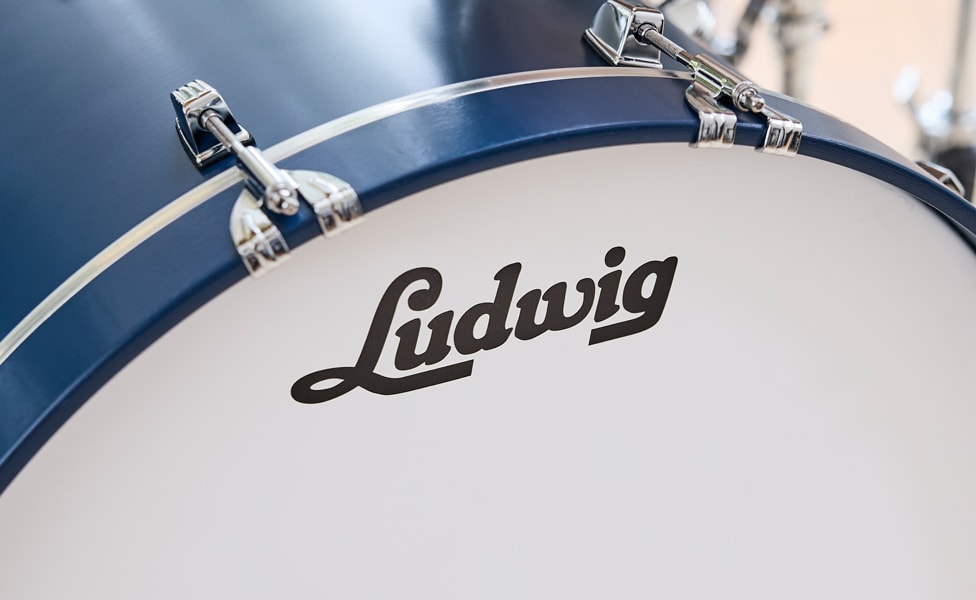
Pictured: Ludwig Heritage Cherry 3-Piece Shell Pack in Resolute Blue 22" Bass Drum
How do the 45-degree bearing edges on the Heritage Cherry inform the tone of the drum?
The sharper the bearing edge of a drum, the less surface-to-head contact you have. The Heritage Cherry has a straight 45, which is our most commonly used bearing edge. This sharper edge offers increased attack, sustain and overtones.
To varying degrees, bearing edges have become very thin and sharp at their apex. Just moving the apex affects the resonance and tone of the drum. For example, in our Classic Maple line, you can choose your bearing edge—which no one else offers. You can select a double-sided 45, where the apex actually moves on the shell to creates a tympanic kind of resonance. We also offer a full round-over edge that puts more of the shell’s wood in contact with the head. Those drums tend to sound fluffier with a little more tubbiness to them.
This makes me wonder how bearing edges may have evolved over the years. Did different options appear to better serve the music of the time or was it technology driven, or both?
Drum shells back in the day—and we're talking ’50s, ’60s and ’70s here—had three plies with a maple reinforcement ring. The bearing edge was closer to 30 degrees, so more of the wood was touching the head. As a result, older drums tended not to ring as long. By the way, we still make that shell today in our Legacy series.
In addition, the edging was done by hand at the time. Today, this is an automated process, so every drum that comes out of the factory is consistent. With vintage drums, that wasn’t always the case. It’s funny. At trade shows, we’ll inevitably have someone come up and ask, “Why can’t you make drums like you did in 1965?” I get it. There’s a romanticism to that. But while Ludwig adheres to traditional sonics, the drum we make now is an infinitely better made drum.
I’m assuming you are saying that’s the case because of improved consistency.
Yes. Consistency. I should clarify that although the process is automated, we still sand it by hand once the edge is cut. But the automation lets us make a multitude of drums that sound very much the same. We keep the tradition and secret sauce, but in a way that allows us to replicate it over and over again. In 1965, for example, each drum could be somewhat—or markedly—different because of the human factor.
There’s a funny story about Ringo Starr that illustrates this. From what I understand from his historian, when he was playing with the Beatles in the early 1960s, Ringo originally picked out a Downbeat kit that was on display at Drum City—which came with a 14x4” snare. He requested a deeper snare for recording—a 14x5” JazzFest to be exact. At the time, our factory was in Chicago, and perhaps the order came in on a Friday afternoon after a late lunch—who knows? But the guy went in and grabbed the wrong blank shell, so the snare we sent to Ringo was a 14x5.5". When he got the half-inch wider drum, nobody was the wiser. But Ringo played it, loved it, and it’s the snare that appeared on every Beatles record since. He still has it. We offer that snare configuration today as part of our Jazz Fest series, which evolved from the Buddy Rich Model snare drum of the 1960s.
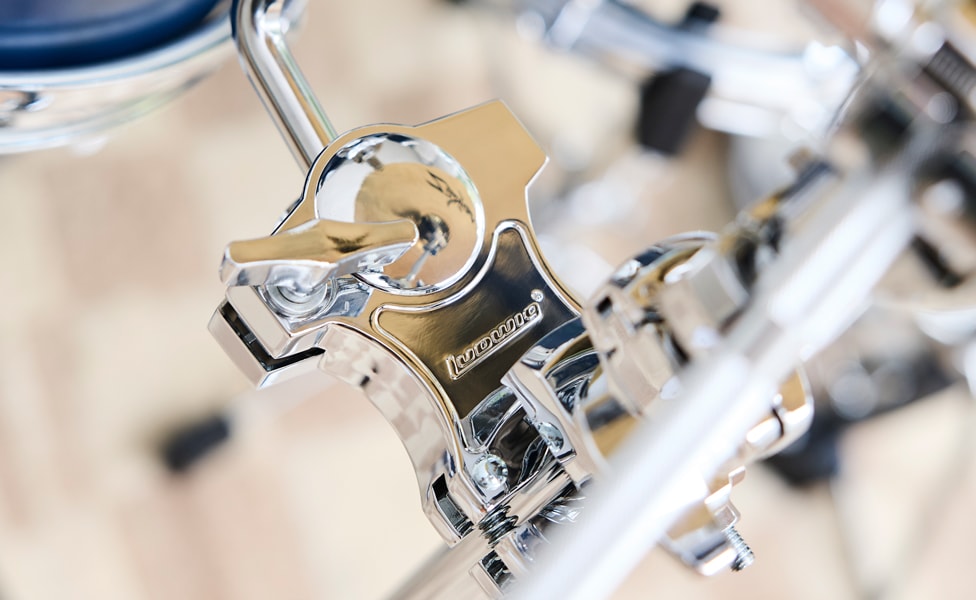
Pictured: Ludwig Heritage Cherry 3-Piece Shell Pack Hardware
How did you choose the drum heads for the shells?
We partnered with our friends at D'Addario to offer this kit with U.S.-made EVANS G1 heads—which doesn't exist in this price point, and certainly not on USA drums. The head choice made a lot of sense for these. The single-ply heads on these shells sound thick, gummy and tubby—as if you were hitting a double-ply drum head. But you’re also getting all the resonance, attack and beauty of a single-ply head.
Is it at all frustrating when you go to the trouble of matching a head to your shells, and then a user immediately changes them out because of their own preferences—possibly without even testing the stock drum heads?
Not at all. We wanted to ensure the Heritage Cherry sounds wonderful as soon as it comes out of the box and sits on the floor. But drummers are very habitual, so the chances of a customer replacing the stock heads with their own are high. We feel the Heritage Cherry shells and EVANS G1 heads represent the best we can offer, but if drummers want to change the heads, they are certainly free to change the heads.
You’ve debuted the Heritage Cherry with a virgin bass drum—meaning no tom mount was drilled into the shell. Is there really that much of a sonic difference between a bass drum with a tom mount and one without?
There's long been a perception that high-end drums shouldn't have tom mounts on the bass drum. So, we didn’t put them on the Heritage series drums, because they are higher-end kits. These are not your average step-up drums—meaning this is not a kit you’re going to play for six months. It’s a forever kit. It’s made in the U.S. in our Monroe, North Carolina factory. Everything on this kit is at a professional level aimed right at the players Guitar Center is now focusing on—the serious intermediate-to-pro drummer.
You said “perception,” but what do you feel is the distinction in actual practice—like a live gig or studio session?
Personally, I think it makes zero difference. I've always kind of wondered about that one, because, on one hand drummers might worry a tom mount will kill the resonance of the bass drum, but on the other hand, they’ll stuff a pillow or blanket inside of the drum. Doesn’t that kill the resonance? I will say it’s easier for me to use a bass drum with a built-in tom mount when I’m gigging.
Let’s talk about color choice. So many options. People can short circuit themselves just trying to decide what color to paint their kitchen walls. So, how did you land on Resolute Blue and Silver Dust for the first Heritage Cherry release?
The color thing is interesting, because certain finishes are hit and miss. Are there green drums? Of course. There are some really famous green kits. How about Tony Williams’ iconic yellow drums, as well as Lars Ulrich’s yellow kit? They’re cool colors, but we tend to stay away from those finishes because there’s a smaller net of potential users. We know the colors that cast a wider net, but honestly, it’s often a gut-level decision. What speaks to you? For the Heritage Cherry, we picked four or five colors and gave them to the Guitar Center drum team to chew on. Which colors did they feel more comfortable with? The Resolute Blue and Silver Dust were the result of that process.
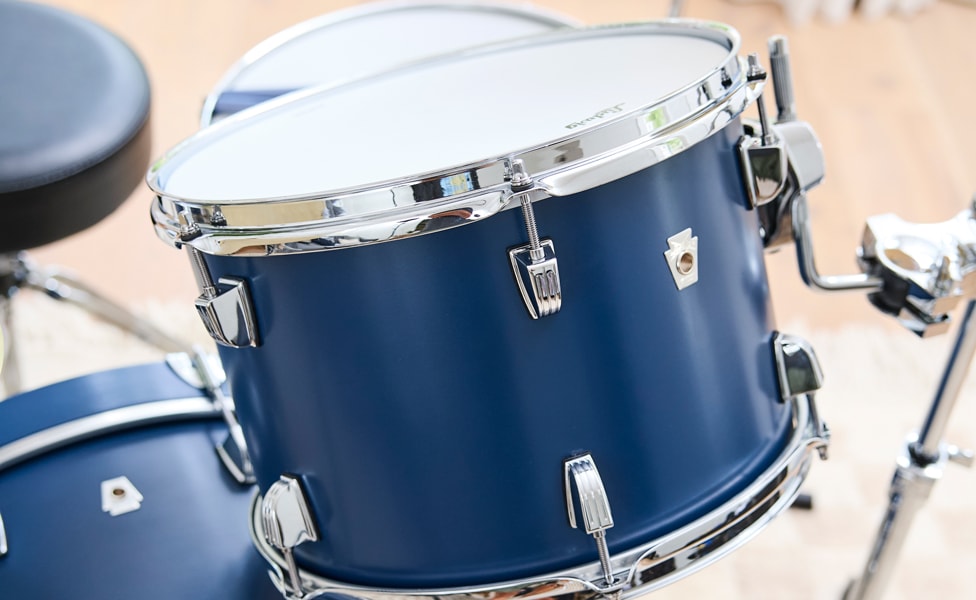
Pictured: Ludwig Heritage Cherry 3-Piece Shell Pack in Resolute Blue 13x9" Rack Tom
You didn’t champion a specific color?
I've been wrong a million times with colors [laughs]. I'm a big red geek, so if it was up to me, everybody would play candy apple red drums. But the least helpful thing you can do as a salesperson is to sell what you like. Instead, you owe it to your customers to understand what their needs are and to respond to them.
Do you think color choices for the Heritage Cherry line will expand?
The worst thing you can do is not offer anything new, so new colors will be an ongoing thing. We want to keep the line fresh. We want to give drummers and your drum team something to talk about, to get excited about.
I am aware of certain generalities based on my experience, but the Guitar Center team knows who walks into their stores and what they want. In fact, there’s not a drum shop in this country that doesn't have the same people walk in two or three times a month. They may buy something, or they may not, but they always want to see what's new. After all, we're in the business of creating excitement and selling passion, and that's what any good instrument manufacturer should never lose sight of.
As music and drum culture evolve, how does Ludwig seek to expand its imprint and relevance with players—especially younger and up-and-coming drummers?
We've taken great strides in the last ten years of expanding who plays Ludwig. Ludwig used to be a very pigeonholed kind of drum perceived as solely for classic-rock players, and our artist roster now is all styles. It's for everybody.
For younger drummers, I think it's a discovery thing, because they have this preconceived notion that legacy brands such as Ludwig are associated with “old.” But when they sit down and play our stuff, they're like, “It's not old or new. It's just good.”
What do you feel is the foremost seductive aspect of Ludwig drums for those considering trying out the brand?
They're very drummer friendly to play. They're easy to get a tone out of. There's a familiarity to the sound, because you've been hearing this sound for years and years. Also, people want to be identified with their heroes, and one of the most important things to a drummer is what logo is on their front bass drum head. Drummers who sit behind our logo—there's a weight to it and a history. You can laugh at our slogan, “The most famous name on drums,” but it’s not just a kitschy catchphrase. It's 100-percent true.
Written By: Michael Molenda
Michael Molenda is a content strategist, editor and writer for Guitar Center, where he has worked since 2022. He is the longest-serving Editor in Chief of Guitar Player (1997-2018), and former Editorial Director of Bass Player, EQ, Keyboard, Electronic Musician, Gig and Modern Drummer. A guitarist, drummer, bassist and producer, Mike co-owned three pro recording studios in San Francisco, and performs with Surf Monster and The Trouble With Monkeys.
Recently Added to Interviews

Be the first to know about exclusive offers, tips and more.

866-498-7882 English
877-687-5402 Español