

Pro Gear Advisers
•866-498-7882
The Most Slept-on Guitar: 5 Reasons to Love a Semi-Hollowbody
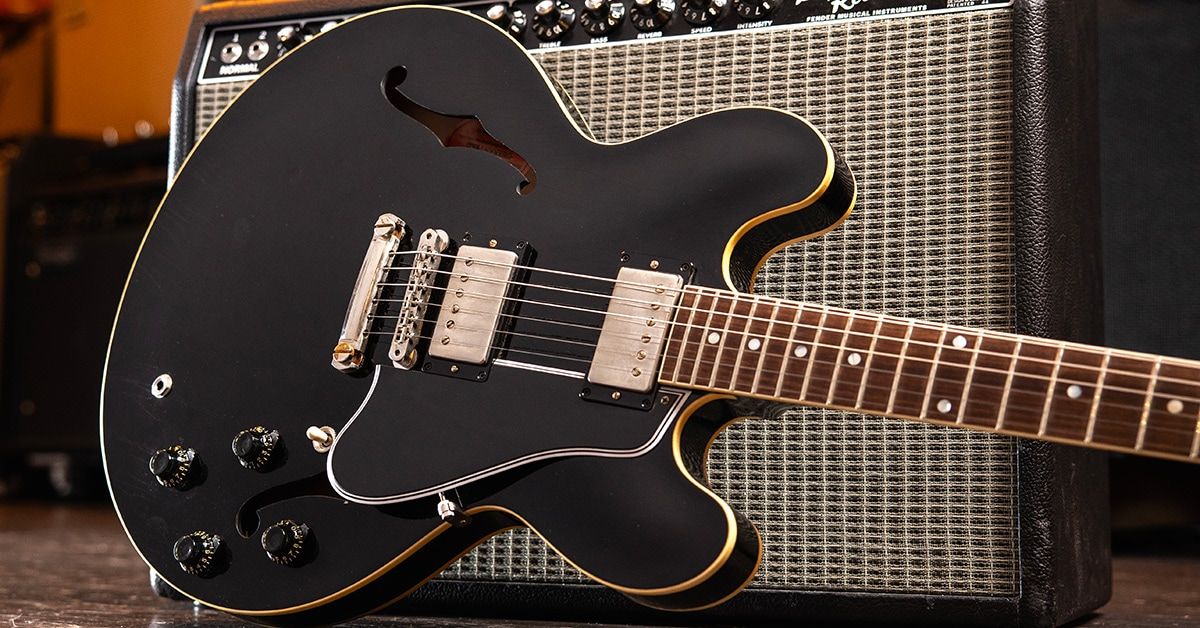

It doesn’t get the everyday spotlight like a Strat or a Les Paul, and it’s not headlining metal festivals like a pointy shred machine—but the semi-hollowbody guitar, whether a Gibson, Gretsch, Epiphone, Fender, Ibanez, D’Angelico, Yamaha or other, might just be the most criminally underrated electric in your lineup. Here’s why it deserves a lot more love. Let’s count it down.
5: That Woody, Lively Tone Hits Different
Solidbodies are great at precise articulation, but a semi-hollowbody gives you something solidbodies rarely do—natural resonance. Thanks to its chambered wings and center block construction, you get an airy, open character—especially in the mids—that makes chords ring and single notes bloom. It’s not a full jazz box, but it adds a subtle “room tone” you can actually feel in your picking hand.
Whether you’re running clean or pushing the edge of breakup, that little bit of acoustic breath makes every phrase sound just a little more alive.
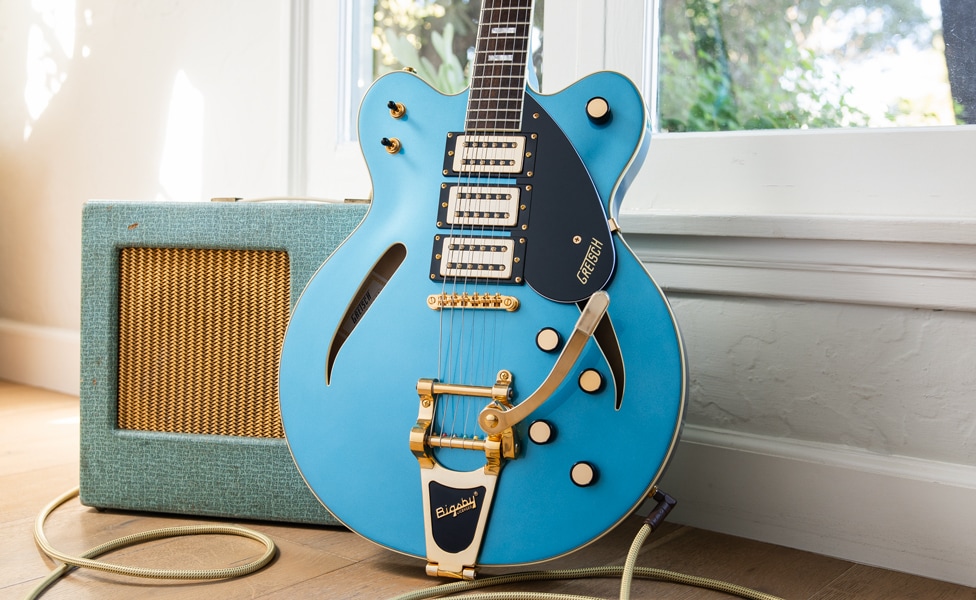
A Semi-Hollow You're Gonna Love: Gretsch Guitars Limited-Edition Streamliner Cat-Eye Semi-Hollow
4: Feedback That Works With You
One of the most misunderstood traits of the semi-hollow is its relationship with feedback. Yes, it’ll howl if you’re careless with a fuzz pedal and a high-gain amp—but the key difference is how it feeds back. Instead of an uncontrollable squeal, you get a slow-building, musical resonance you can actually shape and play with.
It’s the difference between a shriek and a sustained vocal note. In the right hands—and the right context—that’s a powerful tool.
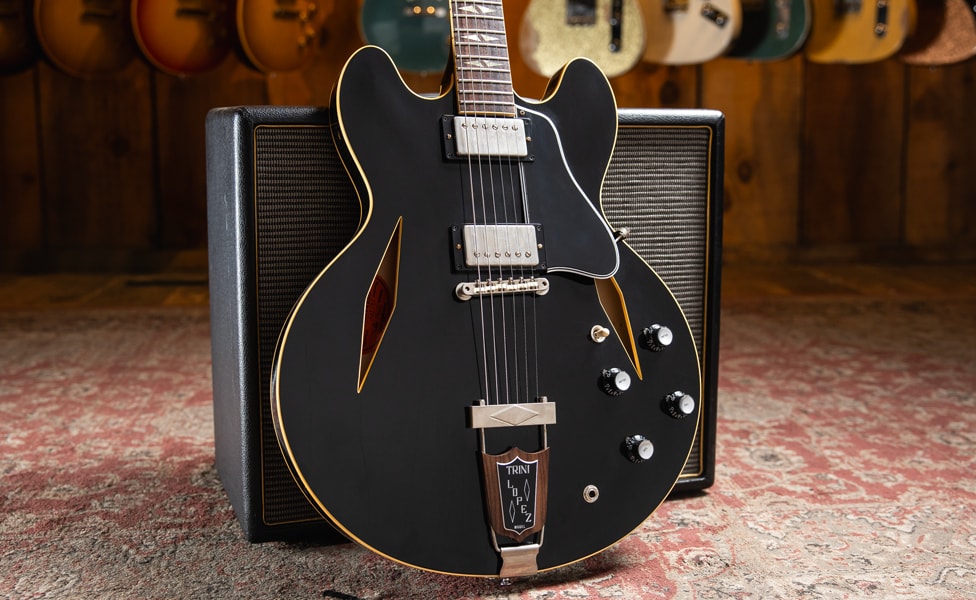
A Semi-Hollow You're Gonna Love: Gibson Custom 1964 Trini Lopez Standard Reissue Ultra-Light Aged
3: Effortlessly Cool, Without Trying Too Hard
There’s a visual swagger to a semi-hollow. The curves, the f-holes, the vintage tailpieces—it’s got stage presence without needing flames or gold hardware to announce itself. But it’s not just about looks.
From B.B. King’s Lucille to Dave Grohl’s Trini Lopez, from Emily Kokal’s haunted textures to John Scofield’s elastic jazz-funk—and yes, the ever-stylish and sadly under-appreciated Bill Nelson, whose tone has always matched his artistic vision—semi-hollows have lived in every genre. They don’t scream for attention—they just show up, sound great and look like they’ve always belonged there—even when in the hands of a fictional character like Marty McFly.
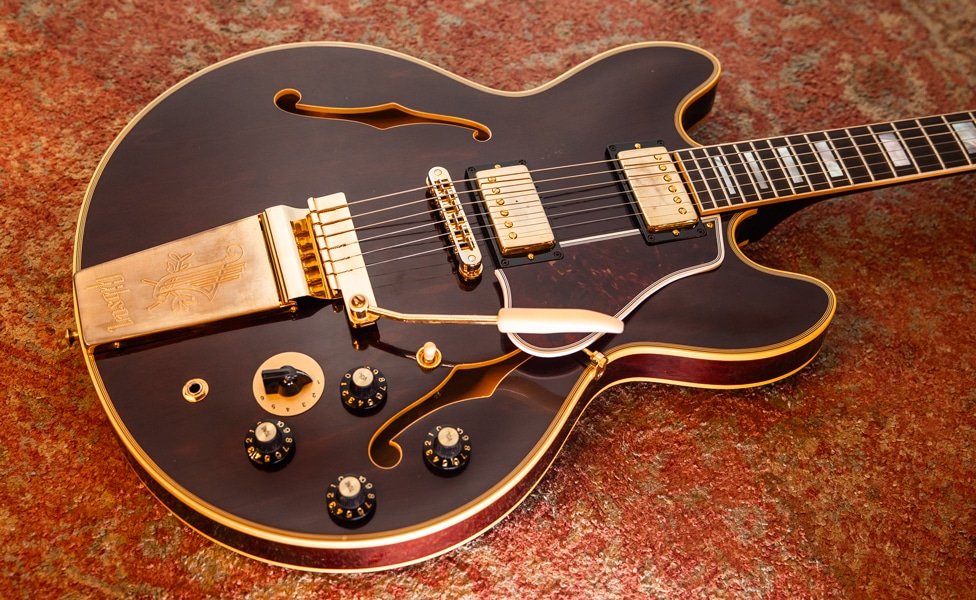
A Semi-Hollow You're Gonna Love: Gibson B.B. King "Rumble in the Jungle" 1974 ES-335 VOS
2: Surprisingly Comfortable to Play
At a glance, a semi-hollow looks big—especially next to a sleek Strat or offset. But in practice? Most are lighter than their solidbody cousins, and many use thinner profiles or ergonomic contours that make them sit beautifully whether you're standing at a show or sitting in a studio session.
The center block cuts down on weight and neck dive, and the added body width actually helps with right-hand placement for chord work and comping. You may not realize how comfortable it is until you’ve played a full set and don’t have to crack your back after.
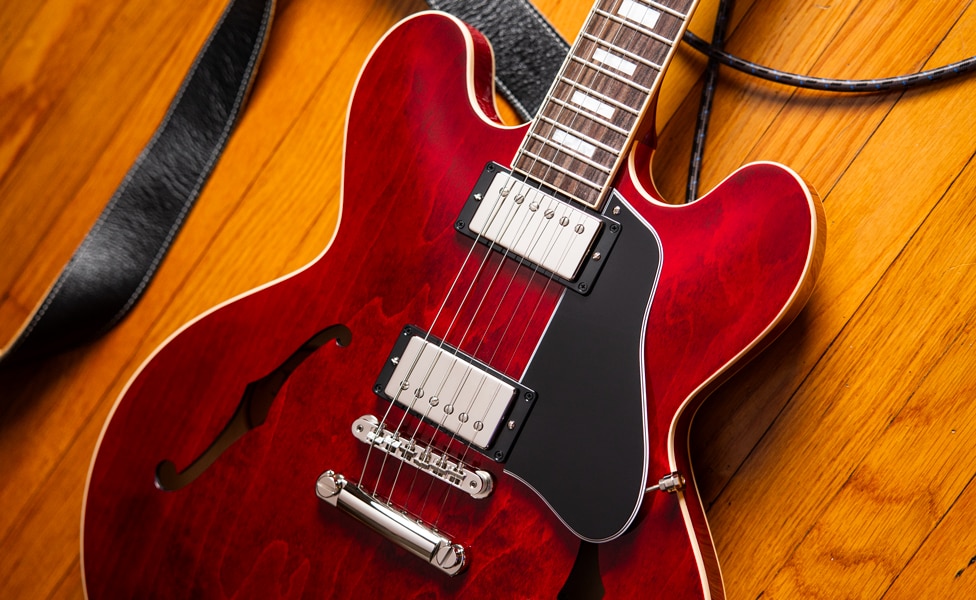
A Semi-Hollow You're Gonna Love: Gibson Limited-Edition ES-335 '60s Block
1: Versatility Is Their Secret Superpower
This is the kicker. A good semi-hollow can cover clean jazz runs, fingerpicked indie, funky R&B stabs, blues bends, gritty alt-rock, pop-punk and even doom riffs—if you know how to tame it. It pairs beautifully with pedals, records like a dream and brings a dynamic responsiveness that rewards expressive players.
No, it’s not going to unseat your Strat or Les Paul. But it fills in the gaps between them—and often opens doors they never quite reached.
A semi-hollow doesn’t need to be your only guitar. But if you’re looking to add one electric that expands your sonic range without overlapping too much with what you already love, this is it.
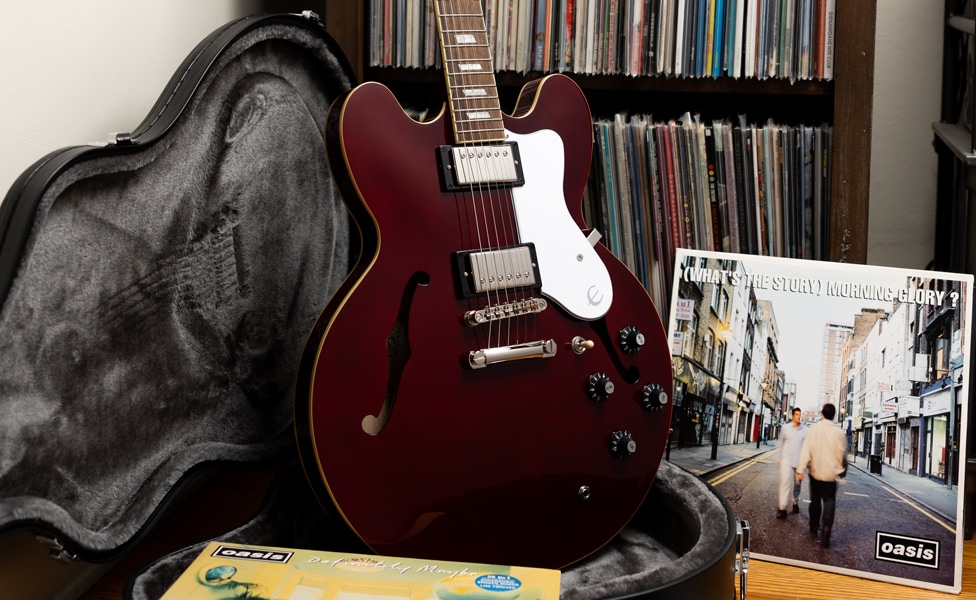
A Semi-Hollow You're Gonna Love: Epiphone Noel Gallagher Riviera
The Takeaway
The semi-hollow may be the guitar world’s most flexible supporting actor—capable of stepping into a lead role when the moment’s right. Whether you're chasing warmth, responsiveness or a touch of vintage character without sacrificing tone and reliability, there's a reason these guitars have quietly powered some of the most iconic tones across decades.
And if you're curious how this style got started, you can dig into the origin story of the design that launched it all with our article “The History of the Gibson ES-335.”
Written By: George Van Wagner
George Van Wagner is a writer and editor for Guitar Center, where he has worked since 2007. A multi-instrumentalist, freelance recording engineer, arranger, composer, writer and all-around tech geek, he has over 30 years of experience in the musical instrument industry at companies like Midiman/M-Audio and Line 6, doing everything from customer service and writing user manuals to working in product development. He is currently gigging around Los Angeles with Gruppo Subconscious and Bobby “Hurricane” Spencer.
Be the first to know about exclusive offers, tips and more.

866-498-7882 English
877-687-5402 Español