.jpeg)

Pro Gear Advisers
•866-498-7882
Inside the Noise Season 2, Episode 7: Yvette Young
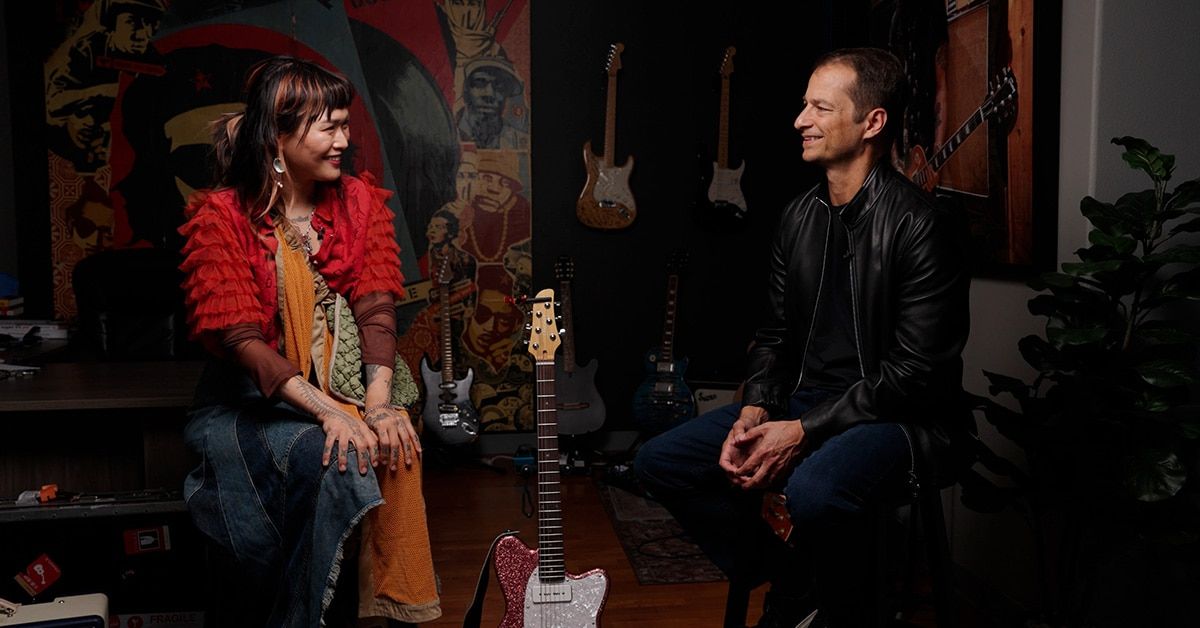
Like lots of talented and ambitious guitarists with something musical to say, Yvette Young started filming her own play-throughs in 2009. But what happened with Young, that doesn’t materialize for most players, is she was chosen as the 155th “Greatest Guitarist of All Time” in a 2023 Rolling Stone article. Incredibly, Young achieved the honor by being a bit of an outlier, rather than treading the seemingly more wide-appeal path of a conventional pop guitarist. In this episode of Inside the Noise, Guitar Center CEO Gabe Dalporto investigates how an innovative, versatile and fearlessly experimental player from the commercially small math rock genre managed to break into the mainstream.
Here are some of the news flashes Young reveals in this exclusive interview …
Why You Need to Be Careful With Collaborators
“If you start a project with your friends, don't assume they're always going to have your best interests,” says Young. “Being a woman in a band of guys is sometimes tricky. Things happen, and I was betrayed. It got to a point where I was so depressed in my own project that I wanted it all to go away. But remember, you are in control of your work environment and your destiny. If you're in a situation where your environment is making you feel sick or unmotivated,
you are allowed to make the changes necessary to escape.”
Using the Guitar to Emote and Help People
“I really latched on to the emotive part of music. I realized no matter what I do with any instrument, I want it to help people feel something. The guitar is such a great outlet for people to express themselves. I know we sometimes get lost in this world of like, ‘Oh, we have to be technical’ or ‘We must have the most wow factor when we pay,’ but I think one of the most special things about guitar is that it's so emotive, and it can help bring out emotions people have locked up inside.”
How She Fell Into Math Rock
“I think math rock happened because that's how my brain works. I played a lot of classical music that ebbed and flowed. It wasn't so rigid to 4/4, and for that reason, I think I was always really comfortable with polyrhythms, compound meter and things like that. Naturally, in my writing, I would write stuff that sounded like a person speaking. Sentences flow—people don’t talk to a [rhythmic] grid. I mean, sometimes after I write something, I count it, and I’m like, ‘Oh wow, that’s messed up.’ [Laughs.] So, I kind of fell into math rock by accident. But I care more about emotion, rather than the angular component of math rock.”
What's Next?
“I think as an artist, it's not right to just do the same thing forever, because you never grow. And I feel like I've been doing the same thing for a while. Right now, I'm touring a bunch of songs I wrote ages ago, and I have been trying to carve out the time to write new music. I want to do some solo stuff and have more opportunities to write music for film. I also realized I love recording from home. I just got a house in the woods and I built a recording studio up there. I’m loving just being in my own space, producing and things like that.”
Subscribe to Inside the Noise with Gabe Dalporto
Catch the full conversation and other episodes of Inside the Noise with Gabe Dalporto on YouTube, Apple Podcasts, Spotify or any of your favorite major platforms. When you subscribe, you’ll get new episodes every Tuesday at 3 pm PT.
Written By: Michael Molenda
Michael Molenda is a content strategist, editor and writer for Guitar Center, where he has worked since 2022. He is the longest-serving Editor in Chief of Guitar Player (1997-2018), and former Editorial Director of Bass Player, EQ, Keyboard, Electronic Musician, Gig and Modern Drummer. A guitarist, drummer, bassist and producer, Mike co-owned three pro recording studios in San Francisco, and performs with Surf Monster and The Trouble With Monkeys.
Recently Added to Interviews
Be the first to know about exclusive offers, tips and more.

866-498-7882 English
877-687-5402 Español