.jpeg)

Pro Gear Advisers
•866-498-7882
Trey Hensley's Go-To Warm-Up Exercises for Better Bluegrass Flatpicking
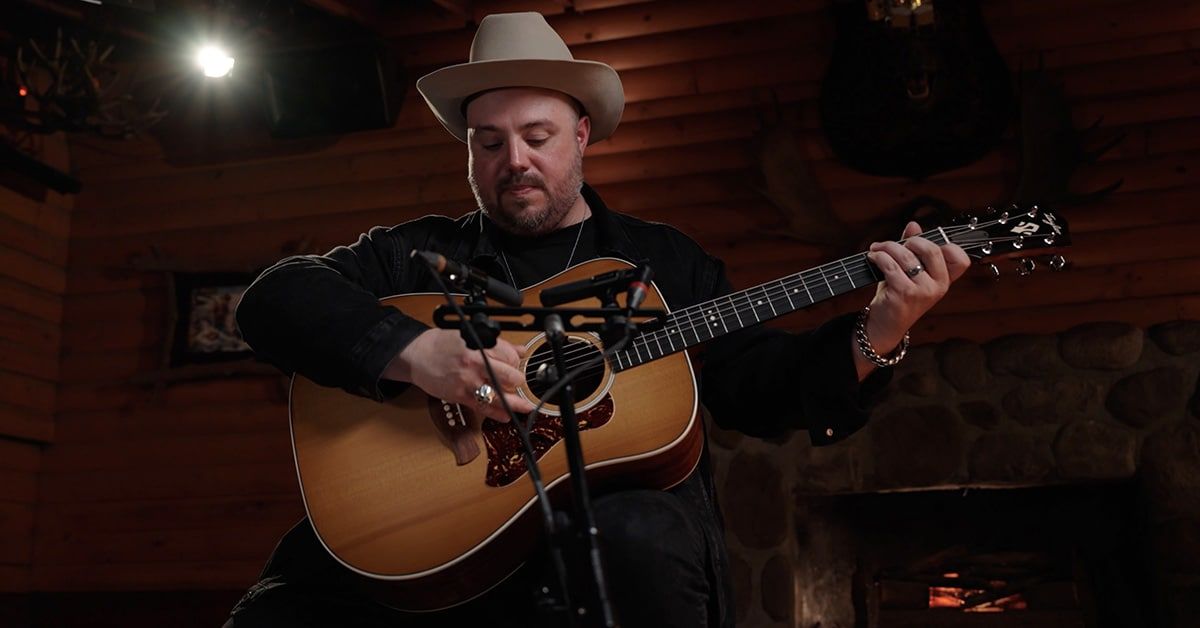

Even after years of constant touring and recording, Grammy-winning guitarist Trey Hensley is aware he can’t pick up a guitar and immediately perform the high-level technique he is known for.
Like any serious musician—or athlete—he knows preparation matters.
"Sure, I play all the time," says Hensley. "But I still do my ‘wake up and warm up’ exercises. They are especially important for bluegrass flatpicking, because you use so much of your right hand."
In this exclusive Guitar Center video lesson, Hensley shares three exercises he relies on to improve speed, accuracy and control.
Build Consistency with Alternate Picking
Hensley's first priority isn't speed—it's consistency. So, every warm-up begins with alternate picking, keeping the pick flat against the string while maintaining identical attack from note to note.
"With every downstroke and upstroke, I'm focused on producing the same tone, pressure and motion," he says. "Then, I'll usually move into some crosspicking patterns over a C chord."
Improve Dexterity with Doc Watson's Chromatic Approach
Like many bluegrass guitar players, Hensley draws inspiration from one of flatpicking's legendary pioneers—Doc Watson. Not surprisingly, one of Hensley’s favorite warm-up exercises comes directly from Watson's performance of "Black Mountain Rag." The exercise moves chromatically from one string to the next, and Hensley often reverses it, playing the phrase forward and backward.
"It's a great dexterity lick," he says, "as well as a good right-hand alternate-picking exercise."
Don't Ignore Open-String Licks
In another exercise, Hensley plays flatpicking lines that combine chromatic and open-string runs, as inspired by Mississippi John Hurt.
“Every string up until your fourth string is going to be played open at some point,” he says. “This exercise is another one for building dexterity and good right-hand alternate picking.”
Short Exercises, Long-Term Results
As Hensley demonstrates, the goal isn't simply to play faster—it's to develop the control, consistency and confidence that make speed possible. Whether you're preparing for a gig, a recording session or simply sitting down to practice, a few focused minutes spent refining alternate picking, chromatic movement and open-string control can help establish the relaxed technique and consistent tone every flatpicker strives for. Be sure to check out our one-on-one lessons where our expert instructors can help you start picking like Trey.
Written By: Michael Molenda
Michael Molenda is a content strategist, editor and writer for Guitar Center, where he has worked since 2022. He is the longest-serving Editor in Chief of Guitar Player (1997-2018), and former Editorial Director of Bass Player, EQ, Keyboard, Electronic Musician, Gig and Modern Drummer. A guitarist, drummer, bassist and producer, Mike co-owned three pro recording studios in San Francisco, and performs with Surf Monster and The Trouble With Monkeys.
Recently Added to Interviews

Be the first to know about exclusive offers, tips and more.

866-498-7882 English
877-687-5402 Español