.jpeg)

Pro Gear Advisers
•866-498-7882
Top 5 Plug-ins for Vintage Sound
In the 1960s, ’70s and ’80s, legendary studios were palaces of singular vibes and exceptional sounds. The fact that numerous facilities built their own consoles, preamps, EQs, compressors and other electronic gear informed the specialness of each space, as well as the distinct physical designs and the talent of in-house engineers and producers.
You can hear it all in the grooves of your favorite songs and albums—the luscious sonic signatures of Abbey Road, Olympic and Trident (London); Criteria Recording (Miami); Capitol, A&M, United Western, Sunset Sound, Village Recorders and Gold Star (Los Angeles); Electric Lady, Power Station and The Hit Factory (New York); Motown (Detroit); Sun Studio (Memphis); Muscle Shoals Sound Studio (Alabama); Wally Heider, Record Plant West and The Automatt (San Francisco); Chess Records (Chicago); Sigma Sound (Philadelphia) and Hansa Tonstudio (Berlin).
Whew. That’s a long—but hardly complete—list of iconic studios that helped shape pop culture.
Today, physical environments and hardware devices aren’t required to craft compelling musical productions. As the digital recording revolution unfolded, a new generation of inspired software visionaries made it possible to deploy digital plug-ins to craft vintage studio tones inside your DAW.
Here are five of my favorite plug-ins for taking sonic trips back in time.
Vintage Plug-ins Chart
|
Make/Model |
Type |
Platform |
Plug-in Format |
Free Hard Drive Space |
|
Reverb |
Mac/Windows |
VST 2.4, VST 3, AU, AAX, NKS |
1GB |
|
|
Channel Strip |
Mac/Windows |
VST 2.4, VST 3, AU, AAX, NKS |
1GB |
|
|
Analog Recorder |
Mac/Windows |
VST 3, AU, AAX |
9GB |
|
|
EQ |
Mac/Windows |
VST 3, AU, AAX |
1GB–10GB (per plug-in); 100GB recommended |
|
|
Vintage Studio Hardware |
Mac/Windows |
VST-2, VST-3, AU, AAX |
1GB–10GB (per plug-in); 100GB recommended |
Bring on the Sounds of the Past
For me, the giddy joy of ’60s and ’70s rock, psychedelic, funk and soul recordings was never about immaculate sounds or flawless musical performances. I was more fascinated by sweat and swagger, happy accidents, sonic surprises and pure, unhinged emotion.
Furthermore, I became obsessed with how artists, engineers and producers could conjure a fearlessly unique aural landscape within a three-minute single—or longer album track—that entranced listeners. Eventually, I discovered part of the equation was the era’s recording gear and how it was used and, perhaps more importantly, misused.
The following list of my five favorite vintage plug-ins is therefore informed by the wonders of “wrong.” I feel it would be a disservice to approach any of these plug-ins as drab, monochrome paths to pristine audio. Instead, celebrate the brash, defiant and gritty attitude of these digitally modeled, analog-age marvels.
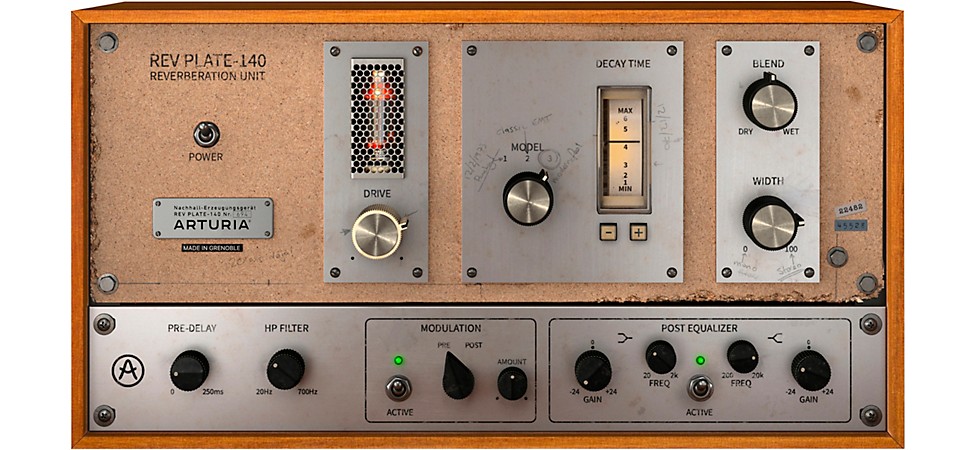
Arturia Rev PLATE-140
The Vintage Vibe: An emulation of the German-made EMT 140 Reverberation Unit—first released in 1957—that is one of the most lush and sexy reverbs of all time.
Things to Consider:
- Three plate reverb models: Classic EMT 140, Punchy (enhanced low-midrange frequencies) and Modern (more high-end presence)
- Drive control for tube-like saturation
- Wet/dry mix and 2-band shelving EQ
Shop Now: Arturia Rev PLATE-140 Plug-in
The Arturia Rev PLATE-140 reminds me of the divine moment when producer Scott Mathews—my partner at Tiki Town Studios (Mill Valley, California)—acquired an actual EMT 140 plate reverb for us. The mammoth device was heavy as blazes and had to be carefully situated and regularly serviced. But it produced a sumptuous reverb that evoked a sky full of luminous rainbows, loving cuddles from your mama and stop-you-in-your-tracks beauty. Sending vocals, guitars, drums and other tracks to the EMT 140 transformed them into not just “instruments” but also aural cinema. The Rev PLATE-140 gets you to that glorious place without breaking your back or requiring you hire a studio maintenance tech.
Arturia TridA-Pre
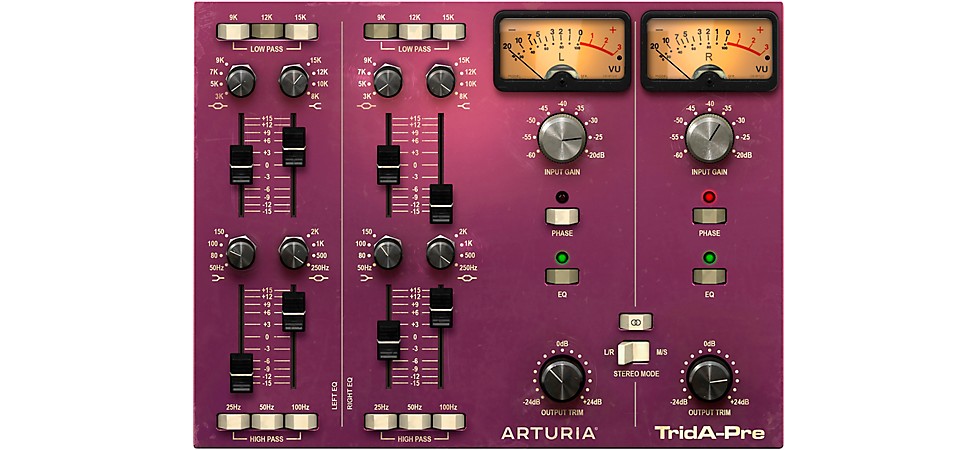
The Vintage Vibe: Replicates the legendary A-Range console at Trident Studios London—the control center for sessions by the Beatles to Bowie and the Bee Gees, as well as Genesis, T-Rex, The Rolling Stones, Queen, Elton John and more. From 1971–1975, Trident manufactured A-Range mixers for other studios, but only 13 were ever made.
Things to Consider:
- Switchable transformers between original early ’70s-era Carnill (warm and gritty) and modified Marinair (more transparent with airy high end) components
- Mono or stereo 4-band EQ with selectable frequencies
- Automatic gain control
Shop Now: Arturia TridA-Pre Preamp Plug-in
From VOX, Marshall and Orange guitar amps to live and studio mixers, I’ve always been a massive fan of brazen and sassy “British EQ” sounds. When I opened my first recording studio—Sound & Vision in San Francisco—with childhood friend (and eventual Digidesign/Avid engineer) Neal Breitbarth, a Trident Series 65 became the only option for our mixing desk. The Trident’s musical EQ and indescribably sexy mic preamps became a significant reason for Sound & Vision’s decade of success. The Arturia TridA-Pre models the even more celebrated (and rare) Trident A-Range console, emulating the sounds of the board that helped create some of the most beloved albums of the ’70s.
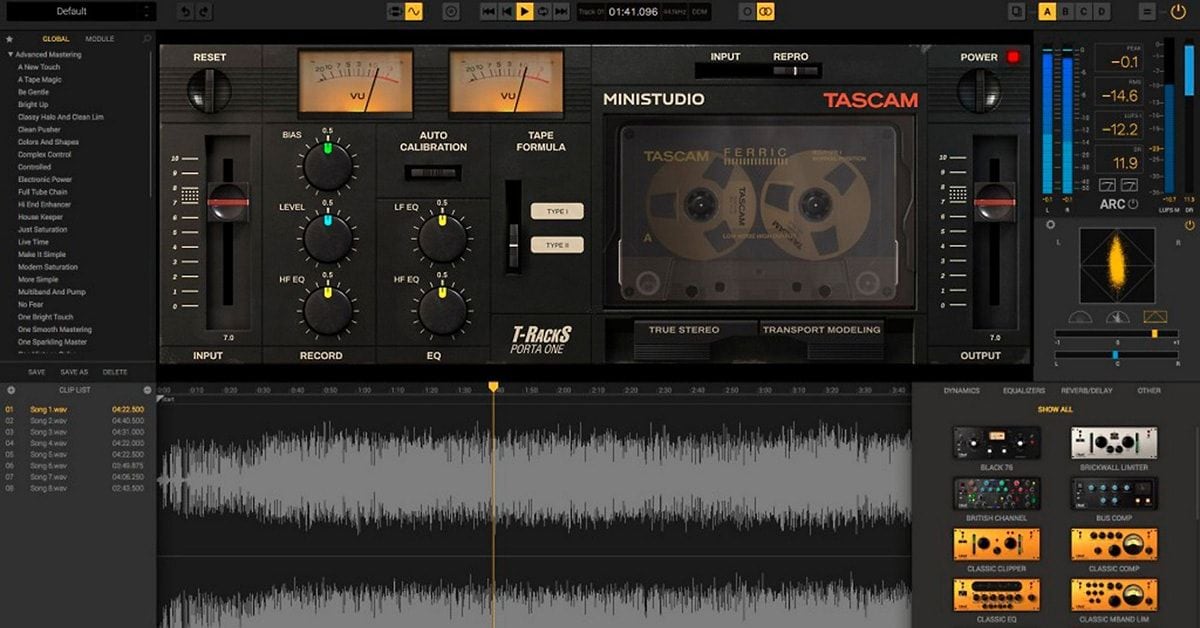
IK Multimedia T-RackS TASCAM Porta One
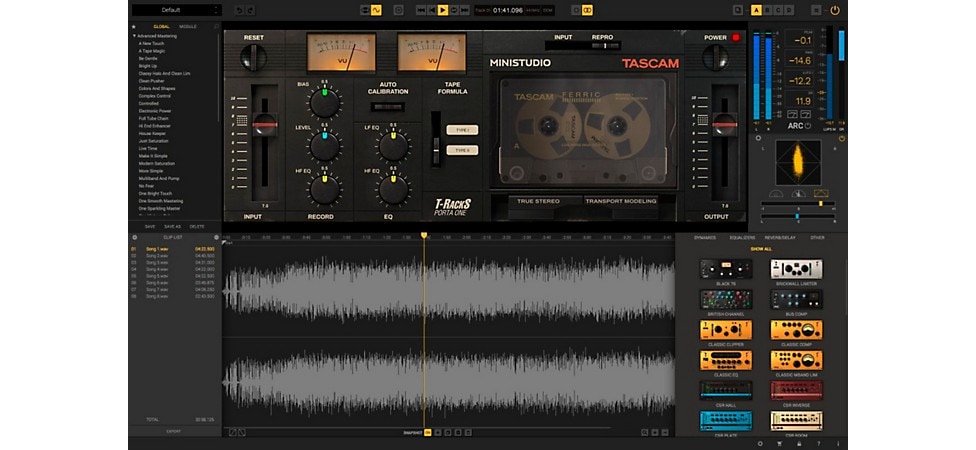
The Vintage Vibe: Evokes the era of portable cassette multitrack recorders that forged the home studio revolution in the pre-Alesis ADAT years.
Things to Consider:
- Two cassette formulations available—Type II (vintage warmth) and Type I (lo-fi)
- Variable tape speed (7.5 ips–15 ips and 15 ips–30 ips; slower speeds offer lower fidelity)
- Transport Modeling mimics mechanical quirks (can be disabled for stable audio)
Shop Now: IK Multimedia T-RackS TASCAM Porta One Plug-in
The IK Multimedia T-RackS TASCAM Porta One doesn’t simply model the sound of a vintage cassette multitrack recorder. It also pays homage to a tumultuous disruption the big studio industry never saw coming—the burgeoning community of home studio musicians. You can relive the revolutionary rumblings in our article, “The Enduring Appeal of Cassette Multitrack Decks,” and, for your own recordings, you can’t get much more glorious lo-fi, vintage gristle than running selected DAW tracks through the T-RackS TASCAM Porta One. I was one of those passionate Portastudio radicals in the early ’80s, and while I never envisioned “cassette audio” as an effect back then, this T-RackS plug-in is a welcome nod to vintage grit and fluttery pitch in the here and now.
Universal Audio Hitsville EQ Collection
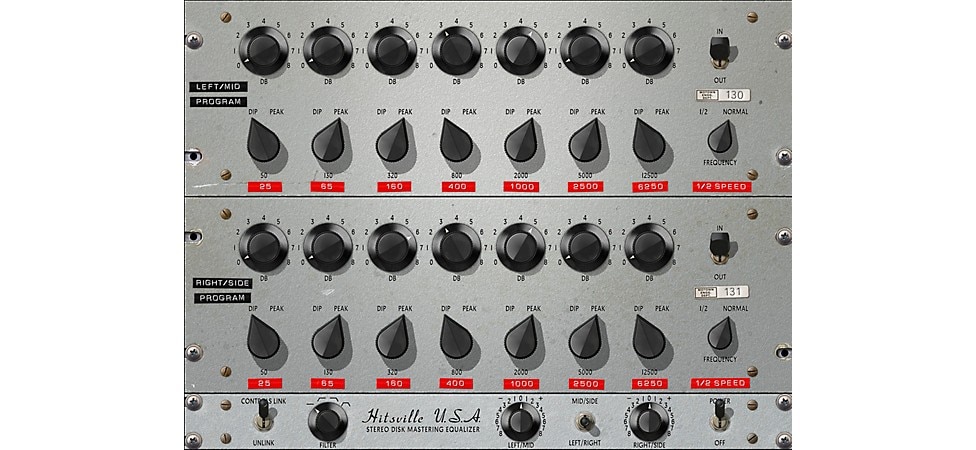
The Vintage Vibe: Elicits the soulful, vintage sound of the EQ designed and built for Motown’s Hitsville U.S.A. studio in Detroit—home of hits by Smokey Robinson, The Supremes, Stevie Wonder, Marvin Gaye and others.
Things to Consider:
- Includes studio and mastering EQs
- Mid/Side switch (sums stereo signal to mono and right and left sides for adjusting width, clarity and balance)
- Artist presets include Bob Olhsson (’60s Motown mastering engineer), Michael Brauer (Coldplay, John Mayer, Tony Bennett) and Joe Chiccarelli (Frank Zappa, Jason Mraz, Alanis Morissette)
Shop Now: Universal Audio Hitsville EQ Collection Plug-ins
As an AM radio fanatic in the Beatlemania era, I loved all of the pop hits of the day. But the sound of the exuberant grooves, spirited instrumental riffs and rousing vocals of Motown singles always gushed more jubilantly from my Viscount 606 transistor radio than some other songs (sorry, Herman’s Hermits). The Universal Audio Hitsville EQ Collection pulls back the curtain on why the Motown Sound in the 1960s was so captivating—the handbuilt EQ units installed at Hitsville U.S.A. in Detroit. Developed by Motown’s Mike McLean and built by engineer John Windt, the military-grade Hitsville EQs were forged from necessity, as the studio’s Langevin EQ modules didn’t have the stamina to keep up with the label’s 24/7 recording sessions. Every frequency adjustment in the Hitsville EQ Collection is a trip back to the Motown sound.
Universal Audio UAD Studio Classics Bundle
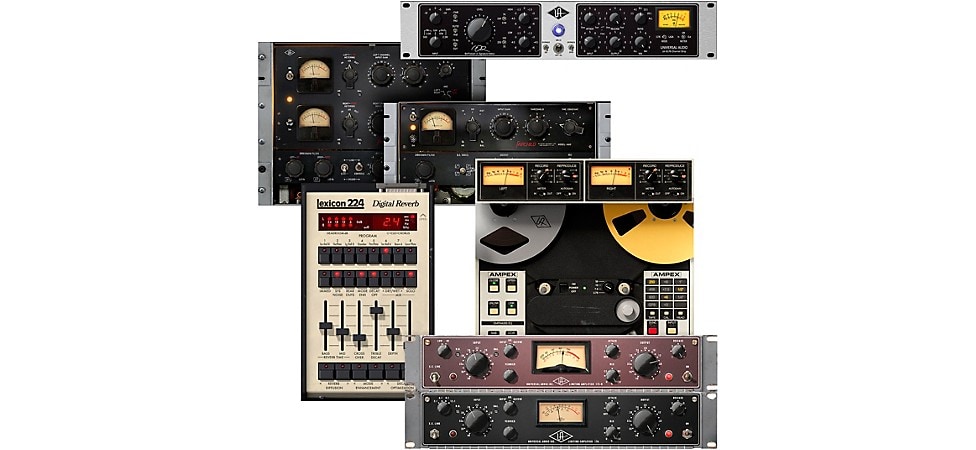
The Vintage Vibe: A virtual rack of fabled recording tools.
Things to Consider:
- Includes compressor, limiter, channel strip, digital reverb and analog tape recorder
- Parallel processing feature (two distinct signal paths) with ability to set blend (processed/direct)
- Artist presets include Andy Johns (Van Halen, The Rolling Stones, Led Zeppelin) and Kevin Killen (U2, Kate Bush, Peter Gabriel)
Shop Now: Universal Audio UAD Studio Classics Plug-in Bundle
The Universal Audio UAD Studio Classics Bundle is like finding a box of legendary and still working hardware processors at an iconic recording studio’s yard sale. I’ve been lucky enough to use the original models when I’ve worked in big studios, and they are profoundly awesome devices that can transform “meh” audio into signals bustling with personality and impact. And, oh, the history. The Studio Classics Bundle includes Fairchild 660 and 670 tube limiters (used at Abbey Road for Beatles sessions), Universal Audio 175B and 176 tube compressors (heard on classic tracks by Led Zeppelin, The Rolling Stones and Aretha Franklin), LA-6176 Channel Strip (modeled from the Universal Audio 610 Modular Amplifier preamp that graced sessions by The Beach Boys, Ray Charles and Adele), Lexicon 224 Digital Reverb (enhanced tracks by Prince, Rush, Talking Heads) and Ampex ATR-102 Mastering Tape Recorder (a revered tape deck providing gorgeous tape saturation). Want to spin through more UA plug-ins? Check out “A Guide to Universal Audio Plug-ins.”
Making "Hitsville" at Home
It was quite a year in 1992, when the arrival of the Alesis ADAT freed me from ever again having to run alignment tones to calibrate an analog multitrack deck. But I didn’t envision the digital recording revolution would someday let me emulate the vintage grandeur of mythic studios from a laptop on my dining room table. For a self-confessed audio production geek, that capability is far more magical than waving a sorcerer’s wand and having a 1962 Ferrari 250 GT “California Spider” (finished in Azzurro Iridescente) appear in my driveway.
Obviously, there are tons of vintage plug-ins available than the five I selected for this article. So, whether you’re hoping to imitate the tones of your favorite Kinks tracks from the 1960s, the psychedelic soundscapes of Weyes Blood or the tripster hysteria of Australia’s King Gizzard & the Lizard Wizard, one of our Guitar Center Gear Advisers can help you find the best plug-in for the gig.
Written By: Michael Molenda
Michael Molenda is a content strategist, editor and writer for Guitar Center, where he has worked since 2022. He is the longest-serving Editor in Chief of Guitar Player (1997-2018), and former Editorial Director of Bass Player, EQ, Keyboard, Electronic Musician, Gig and Modern Drummer. A guitarist, drummer, bassist and producer, Mike co-owned three pro recording studios in San Francisco, and performs with Surf Monster and The Trouble With Monkeys.
Recently Added to Buying Guides
Be the first to know about exclusive offers, tips and more.

866-498-7882 English
877-687-5402 Español