.jpeg)

Pro Gear Advisers
•866-498-7882
5 beyerdynamic Mics Your Studio Can't Live Without
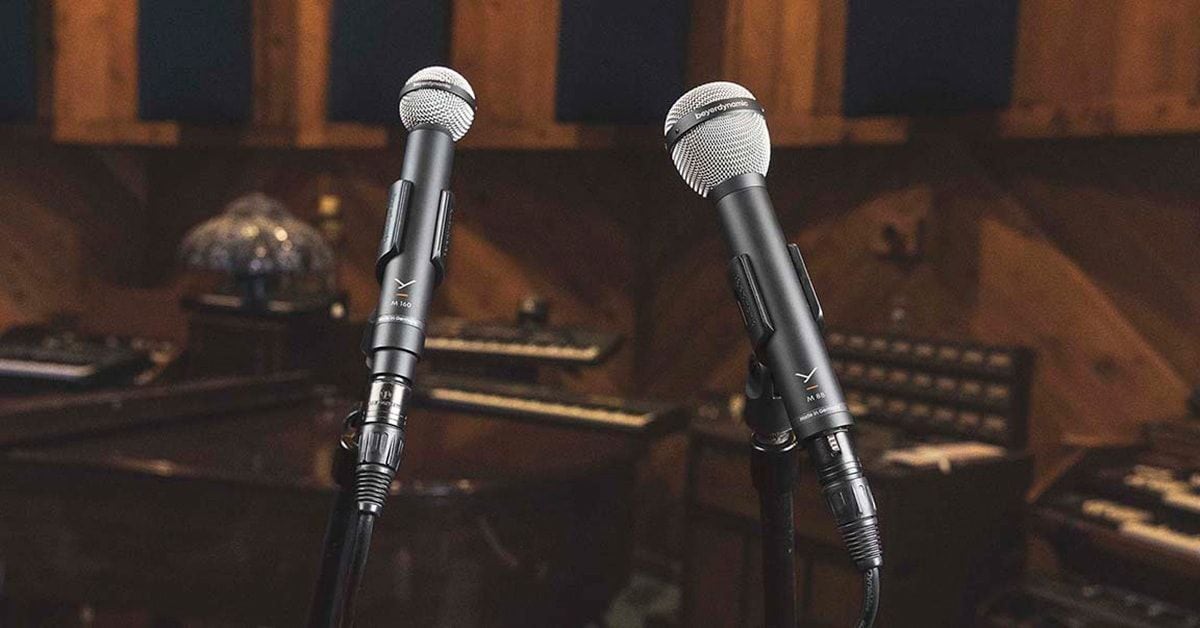

I’ve co-owned and operated three commercial recording studios during my career, and one of the consistent questions from freelance engineers looking to book the facilities was, “What’s in your microphone cabinet?”
Trust me, it was quite the business concern to ensure we always had the mics engineers and artists felt were essential for enhancing their tracks. Other gear would be in the decision mix, as well, but it didn’t bother me too much if I lost a project to a bigger studio with an vintage mixing console or the latest fabulously expensive rack processor.
However, it was devastating to wave goodbye to a booking if I didn’t have the relatively affordable microphone on hand that was a “must have” for the client.
Of course, you probably aren’t running a professional studio that relies on a steady revenue stream to keep your staff hired, gear maintained and marketing and new equipment budgets healthy. But home studios absolutely need a varied collection of mics that offer “freedom of choice” and a bounty of creative options.
How Different Mics Matter
You can’t build a spa bathroom in your home with just a flat head screwdriver, and it’s just as challenging—or near impossible—to do a session with one or two mics. No single microphone can shine at capturing all sources, performance styles and recording environments. All mics have their individual frequency response, sensitivity, character and vibe, and those differences can be creativity exploited for recording varied source sounds.
Perhaps the classic example is picking the right mic for a vocalist. Pro studio engineers can spend a significant amount of time auditioning different microphones to ensure a singer’s particular style and timbre is magnificently documented. Limited to a single vocal mic, you could miss enhancing the singer’s signature breathiness, bravado, or purity of tone.
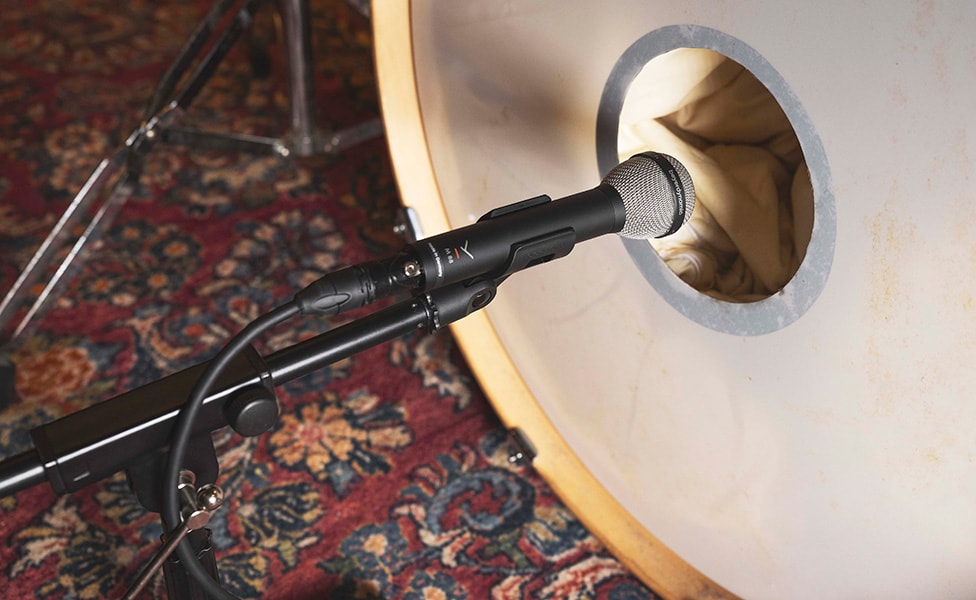
Pictured: beyerdynamic M 88 Miking Bass Drum
The same scenario is true for recording electric guitar amps, acoustic guitars, pianos, horns, percussion and the elements of a drum kit. In addition, multiple mic placements are impossible if you only have one mic.
So, while home studio musicians may not need to put up with the headache of populating a mic cabinet with heaps of models—which was my simultaneous delight and nightmare—they still need the flexibility to choose the right mics for the job at hand.
Why beyerdynamic Microphones Are Studio Essentials
Germany’s beyerdynamic has been manufacturing microphones and headphones for more than 100 years, and its imprint upon the broadcast and recording industries is massive. The beyerdynamic M 160 ribbon mic, for example, was released in 1957, and it has been a legendary studio go-to ever since. In fact, the M 160 was inducted into the NAMM TECnology Hall of Fame in 2019.
Through the years, the company earned the much-deserved reputation as one of the most iconic mic manufacturers of all time—which means when I opened my first studio, San Francisco’s Sound & Vision in 1983, we needed to have a few beyerdynamics because lots of clients asked for them.
As my relationship with beyerdynamic goes back many years, I’m using that experience to share with the Guitar Center community how these microphones can elevate your recording sessions. So, I opened up my old engineering notebooks to recommend five beyerdynamic mics your studio can’t live without.
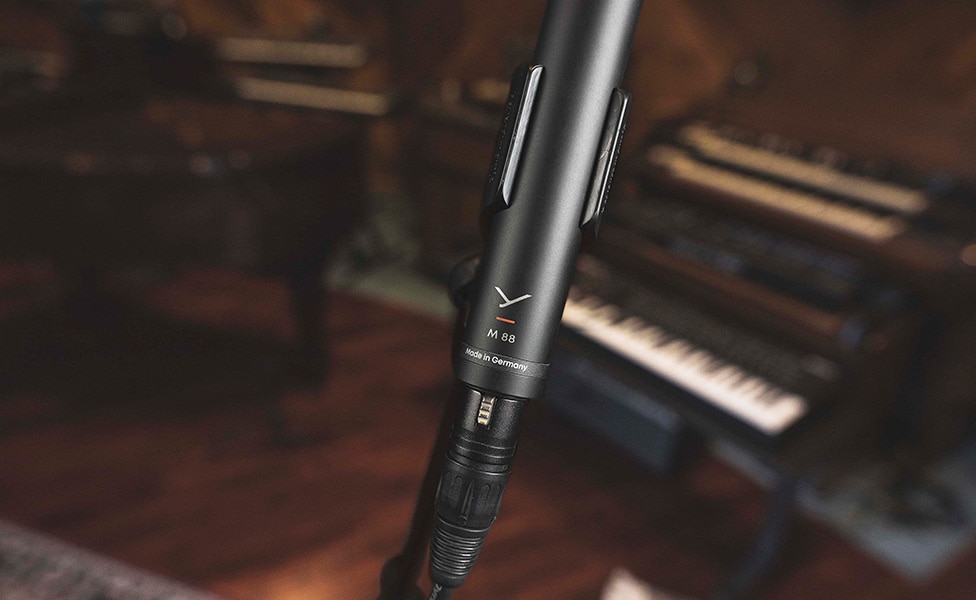
Pictured: beyerdynamic M 88 XLR connector and logo
Legendary Ribbon: beyerdynamic M 160
Why Your Studio Can’t Live Without It: The M 160 is a time-tested, classic microphone that captures the natural beauty of whatever it is recording.
I’m a recording geek, so I would pore over issues of Mix magazine to steal studio secrets and absorb knowledge. (I eventually worked alongside the Mix staff when I became an editor at Electronic Musician, as TV legend Norman Lear owned both publications for a time.) Therefore, I was aware the beyerdynamic M 160 was used by many of my favorite engineers, such as Eddie Kramer (Jimi Hendrix), Andy Johns (Led Zeppelin), and Tony Visconti (David Bowie), and I had to have one for Sound & Vision. The M 160 did not disappoint.

Shop Now: beyerdynamic M 160 Dynamic Hypercardioid Double-Ribbon Microphone
While not a factor anymore, classic ribbon mics were fragile—even a strong wind could snap the ribbon material. But even though the M 160 was born in the ’50s, it’s incredibly tough. Led Zep drummer John Bonham couldn’t melt an M 160 during sessions, so there’s no problem with it handling the high sound-pressure levels of bashing crashing drums and raging guitar amps.
Another advantage of the M 160 is, while conventional ribbons typically offer figure-8 polar patterns—where sound is heard equally from the front and back of the mic—this beyerdynamic ribbon is hypercardioid. You can position the M 160 directly in front of a source without fretting about signal bleed from the back and sides preventing you from capturing a focused sound.
For example, Sound & Vision had a reasonably-sized live room—about the size of a typical one-car garage—so the M 160 was often my sonic savior if a band wanted to record with everyone in the same room. I’d use it on a singer doing scratch vocals, or a guitar amp, or even as a bit of a room mic in front of the drummer. My recording notes reflect my enthusiasm for the versatility and warm, organic sound of the M 160, as it seems I pulled it out for every session, alternating between using it on guitar amps, acoustic guitars and vocals, as well as an ambient mic.
Iconic Dynamic: beyerdynamic M 88
Why Your Studio Can’t Live Without It: The M 88 offers an almost full-bandwidth frequency response that makes it a delightful alternative to traditional, more midrange-focused dynamic mic sounds.
At a quick glance, you could mistake the beyerdynamic M 88 for the M 160 ribbon, but the M 88 is a dynamic hypercardioid microphone that was introduced in 1962. It’s yet another iconic mic from beyerdynamic, but it’s also in much the same lane as a classic and very affordable dynamic mic from a different manufacturer.
But I invested in an M 88 anyway.
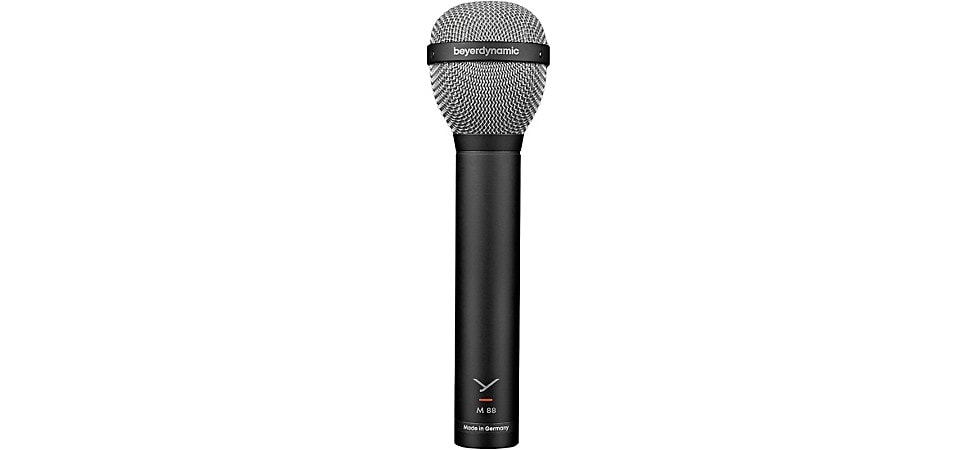
Shop Now: beyerdynamic M 88 Dynamic Hypercardioid Microphone
It’s not that I love spending money on gear, but the M 88 is a good studio value, as it offers an expanded frequency range (30Hz-20kHz, as opposed to 40Hz-15kHz for the “other mic”), tight hypercardioid pattern (the other mic is cardioid) and high SPL rating (although beyerdynamic doesn’t publish the exact spec, the mic works great on very loud sources). The M 88 is universally esteemed for recording instruments, although Phil Collins famously used it for his vocals in the 1980s.
Of course, there’s a particular sound you get—and it’s a very cool sound—when you place “the other” mic on guitar amps, drum toms, snares, horns and percussion. So, I would use the M 88 whenever I wanted to try something different. On electric guitar amps, I liked the M 88’s articulate midrange attack and high-end sheen. It also worked very nicely on kick drums, delivering a tight snap and low-end boom. I also used the M 88 when a dynamic mic seemed to be the best choice for a vocalist, but I was looking for an airy shimmer in addition to articulation.
Precision Condenser: beyerdynamic MC 950
Why Your Studio Can’t Live Without It: The MC 950 is a superb small-diaphragm condenser, and every studio needs one or two to truly have a versatile mic cabinet. If you go for a pair, the bullish off-axis rejection of the MC 950s makes it possible to capture well-defined stereo imaging.
I acquired a pair of beyerdynamic MC 950 condensers after I moved on from Sound & Vision to partner with producer Scott Mathews at Tiki Town Studios in San Rafael. The MC 950’s supercardioid pattern delivers excellent off-axis rejection, so they were my favorite mics for separating the low and high end of the studio’s grand piano—even though the two mics weren’t positioned all that far apart when the lid was opened.

Shop Now: beyerdynamic MC 950 True Condenser Microphone
Using the spaced-pair miking method, I’d place one MC 950 near the treble strings at a height of about ten inches and position the other MC 950 by the bass strings at around six inches high. I love extreme right-left panning, so although the piano’s fundamental notes and harmonics would whirl around the mics, I was still able to capture fairly distinct bass and treble sounds that made it possible for me to create a wide stereo perspective.
It was much the same when I used the MC 950s as drum overheads. Drums are loud, and both the right and left overheads tend to toss the crash cymbals, ride cymbal, hi-hats, toms, snare and kick drum into a sonic purée—not awesome when I like the elements separated as much as possible.
The MC 950 pair didn’t do a magical job of keeping the right and left perspectives isolated—that would require Marvel superhero Doctor Strange—but the mics’ off-axis rejection got me close enough. When the overheads were panned far left and far right, I could clearly hear the ride cymbal in the left channel and the hi-hat in the right. The absence of an overbearing and indistinct high-end sizzle from the overhead mics meant I could mix the drums in a more cinematic, “fake” surround sound panorama: kick drum center, snare drum slightly right, hi-hat hard right, rack tom and crash cymbal mostly right, ride cymbal and floor tom mostly left.
It’s perhaps a small thing, but as a dangerously unhinged disciple of radical 1960s-style panning, I applaud anything that lets me place mix elements all over the audio spectrum. Thanks, MC 950.
Broadcast Buddy: beyerdynamic M 70 PRO X
Why Your Studio Can’t Live Without It: The M 70 PRO X is a wonderful podcast mic that conveys broadcast-ready voice timbres, and it can also be multitasked for recording guitar amps and other instruments.
The beyerdynamic M 70 PRO X is a large-diaphragm, dynamic cardioid designed as a broadcast/podcast mic. It was released late in 2021—after I decided to retire from running pro studios—so it wasn’t a part of my microphone collections. But it was easy to find test options among friends who are podcasters, because the M 70 PRO X turns out to be a popular mic with that crew.
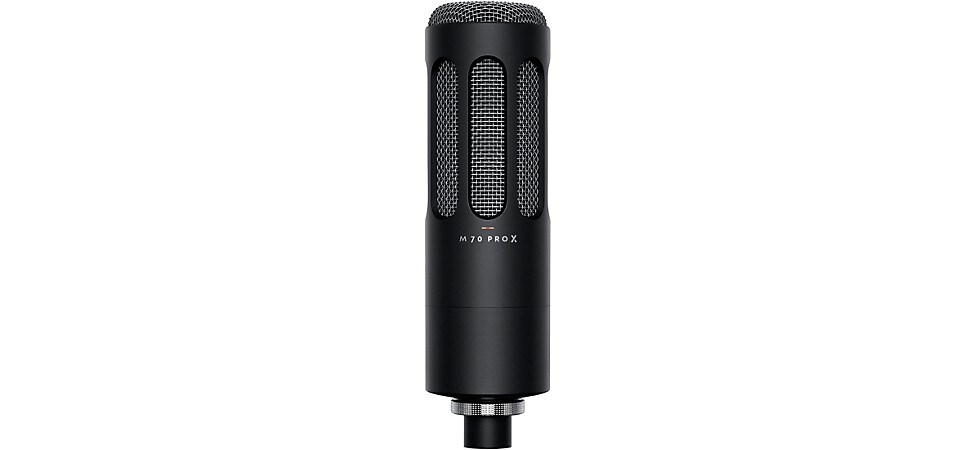
Shop Now: beyerdynamic M 70 PRO X Dynamic Broadcast Microphone
The beyerdynamic M 70 PRO X was already set up for action, routed to a RØDE RØDECaster PRO II integrated production studio in the spare room my friend uses to record his shows at home. The M 70 PRO X is budget priced, but it doesn’t deliver cut-rate sound. While reading scripts, my friend’s voice sounded organic, full and articulate, and he knew how to work the M 70 PRO X’s proximity effect to add or subtract “beef” while doing character voices.
No EQ adjustments were needed during the sessions, as the voices already sounded natural, clean and pro-broadcast ready as captured flat through the mic. I also didn’t notice any significant plosives—an integrated pop filter in the M 70 PRO X grille guards against annoying “buh” and “puh” sounds—and high-end sibilance was minimal.
I didn’t want to rearrange a studio that wasn’t mine to try out the M 70 PRO X on guitar amps, singers, percussion and so on, but given the mic’s polished and natural performance on speech, I see no reason why it couldn’t be used effectively on other source sounds. After all, there are precedents with budget dynamic mics that do excellent jobs recording various instruments.
Quirky Boundary Mic: beyerdynamic TG D71
Why Your Studio Can’t Live Without It: The TG D71 inspires experimentation and uncommon mic placement, which can unlock unusual sounds and environmental textures.
I think it’s fun, practical and creatively beneficial to have one or two untraditional mics in your collection. Outliers can inspire new miking methods, produce intriguing sounds and sometimes provide a track with a sonic earworm that makes fans out of strangers.
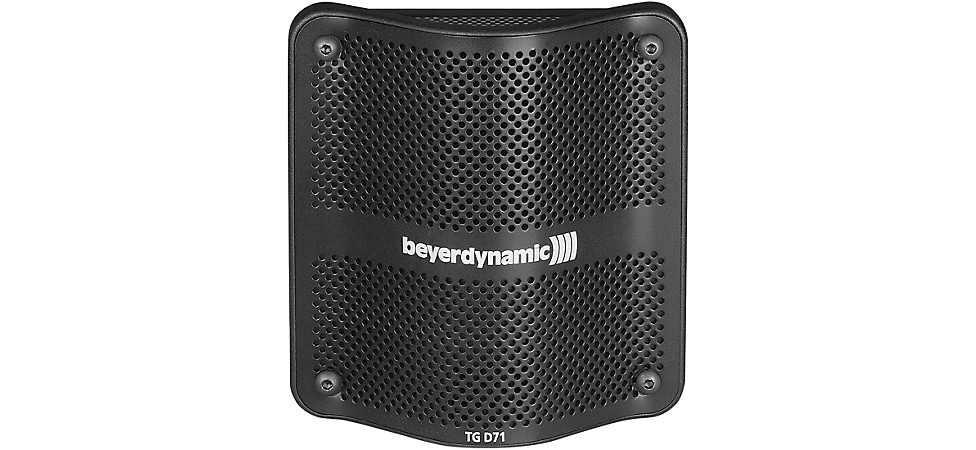
Shop Now: beyerdynamic TG D71 Condenser Boundary Kick Drum Microphone
The beyerdynamic TG D71 boundary mic is that kind of cool studio tool. You can place the TG D71 anywhere—inside a kick drum, attached to a wall, placed on a floor, mounted to a ceiling and so on—to capture a unique mix of a source sound and the space around it.
Years ago, I was shocked when an engineer brought out a pair of original PZM-style boundary mics to record drums for a session. He affixed each PZM to a plywood board, slipped the panels into DIY stands and positioned them to the right and left side of the drum kit. I remember thinking, “What are these things? That’s it? No close mics? No way is this going to produce a decent drum sound.”
I was wrong. At mixdown, the engineer compressed the heck out of the tracks, did some EQ to tame cymbal wash and increase the attack of the snare, and panned the drums for a stereo perspective. The effect wasn’t, well, “normal” for the time. It was a ferociously saturated modern-rock drum sound before there really was such a thing.
I loved it, everyone else hated it (timing is everything), but the session taught me how boundary mics can add a striking and ear-catching vibe to recordings that most conventional mics can’t attain—at least without a significant application of signal processing.
Although you can certainly deploy the beyerdynamic TG D71 to capture conventional sounds, this boss boundary mic stands ready to challenge you with mic position gymnastics. Placing the TG D71 inside a kick drum is pretty common, but if you have a home studio and the inclination to experiment, why not go for the strange and wonderful?
Assuming acoustic drums can be recorded in your space, you could, for example, emulate the technique Andy Johns used for John Bonham’s drums on “When the Levee Breaks.” That track was recorded at England’s Headley Grange with Bonham’s drums setup at the bottom of a three-story stairwell and two mics positioned way up top facing down. (Fun fact: those mics were beyerdynamic M 160s.)
I’m going to guess you don’t live in a 19th-century English mansion, but you could simulate ample ambience by placing a TG D71 on the floor of a hallway, or in a shower (or tub) with the bathroom door open to capture the racket, or if your neighbors are understanding, open the window and position the mic outdoors a few feet. I’d even consider taping the TG D71 to the window (it has a rubber underside, so the glass should be safe). It costs nothing to try atypical mic positions with a gloriously unconventional mic, and the sonic rewards might be astounding.
Mic It
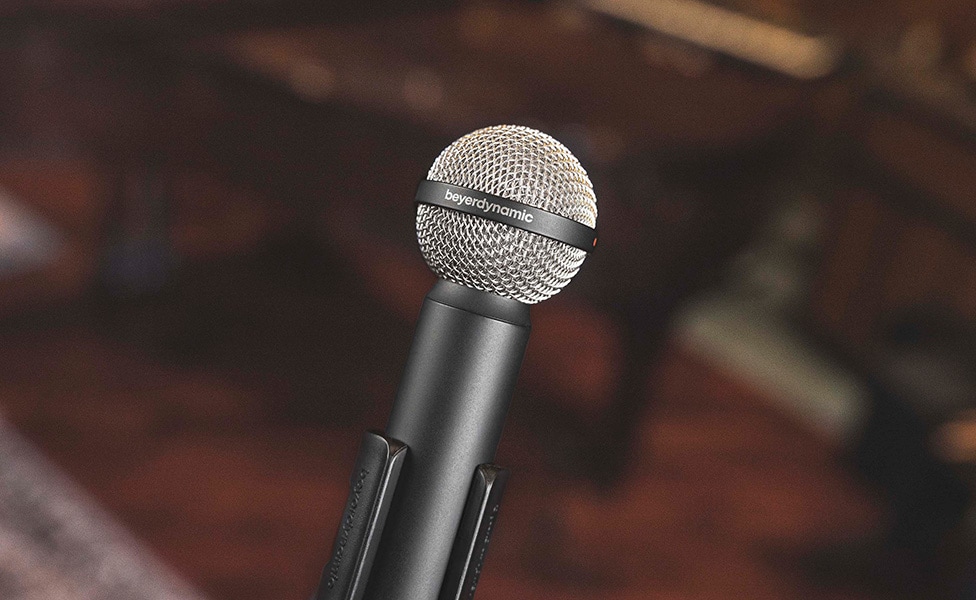
Pictured: beyerdynamic M 160 Capsule
You can’t go wrong with any of the five beyerdynamic mics we profiled in this article, but they aren’t the only beyer microphones available. Be sure to check out to see all of the models we offer at Guitar Center.
As always, our Gear Advisers are excellent resources for advice on beyerdynamic microphones and other home studio gear. And don’t forget you can drop by your local Guitar Center to talk to one of our associates in person or ask our Rig Advisor app for suggestions.
Written By: Michael Molenda
Michael Molenda is a content strategist, editor and writer for Guitar Center, where he has worked since 2022. He is the longest-serving Editor in Chief of Guitar Player (1997-2018), and former Editorial Director of Bass Player, EQ, Keyboard, Electronic Musician, Gig and Modern Drummer. A guitarist, drummer, bassist and producer, Mike co-owned three pro recording studios in San Francisco, and performs with Surf Monster and The Trouble With Monkeys.
Recently Added to Buying Guides
Be the first to know about exclusive offers, tips and more.

866-498-7882 English
877-687-5402 Español