

Pro Gear Advisers
•866-498-7882
5 Budget Pedals That Deliver Pro Sounds

After co-owning four professional recording studios and performing in various bands for many years, I’ve collected far more than my share of effects pedals. I mean, I have three 27-gallon storage bins just for my fuzz pedals. Include the rest of the various stompboxes I own, and my garage looks like the container aisle at Home Depot.
I love everything from pricey boutique pedals to mainstream production brands to bizarre, off-kilter “science experiments” by garage-based builders to vintage icons. But what I really dig is looking for inexpensive stompboxes that can do the job on stage and in the studio. Call me a penny pincher, but it’s super fun to find a jewel hiding amongst so-called “cheap” pedals.
What Makes a Budget Pedal Worthy of Professional Use?
Even though it’s a very subjective marker, tone is a top consideration. One player may be happy with the sound of an off-the-shelf delay, and another won’t step on stage without a boutique model. Obviously, making yourself comfortable with your tone is essential for inspiration and execution.
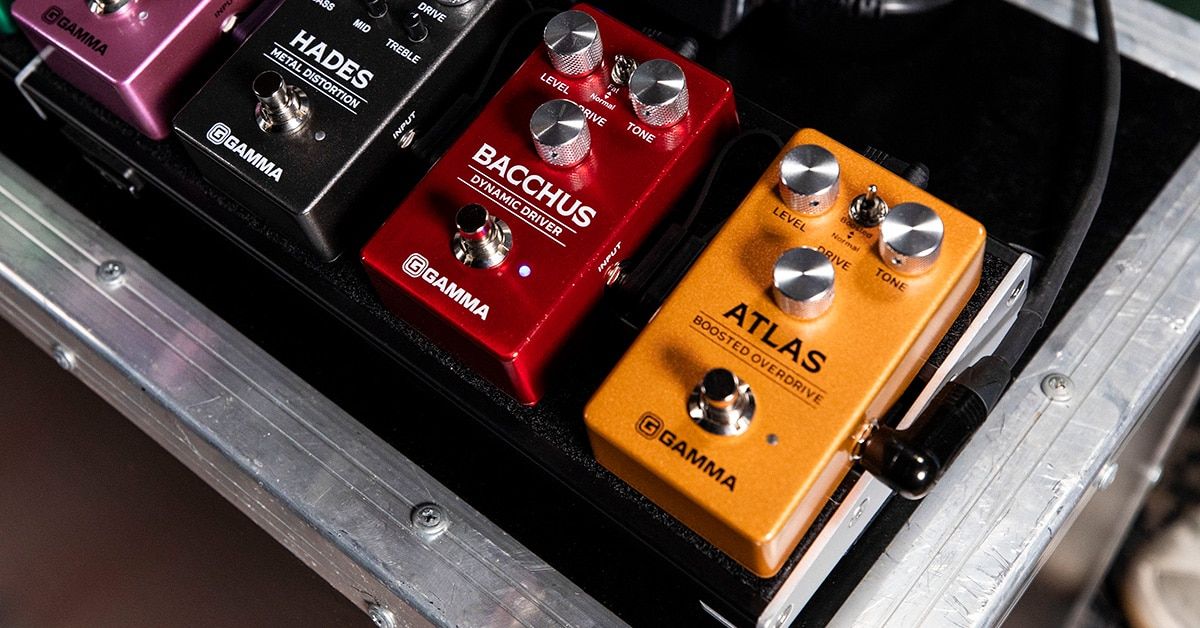
But I also consider the audience, because a performance isn’t just about me. Before installing a cool budget stompbox onto my pedalboard for gigs, I ask myself, “Will the crowd even be aware this thing didn’t cost me big bucks?” I doubt, for example, most music fans in a raucous club environment could tell the difference between, say, an affordable GAMMA Atlas Boosted Overdrive and a more expensive Fender Santa Ana Overdrive.
Of course, the qualitative analysis would be different under the microscope of a home or pro studio. But even then, other sonic factors enter the mix, such as mic preamps and audio interfaces, microphones, plug-ins, signal processing and the skills of the session engineer. High-end and boutique pedals are wonderful to record with, but you wouldn’t cancel the session if one wasn’t available, would you?
Build quality is another issue. I wouldn’t want to obliterate a pedal in mid performance because the footswitch wasn’t up to handling my Doc Martens. However, I’ve only run into three epic pedal fails in many years of gigging—and they were all mid-price to expensive models—so I tend to rock budget boxes in the wild without fear.
So, with all of that in mind, here are my choices for five pedals under $100 that won’t let you down at pro gigs.
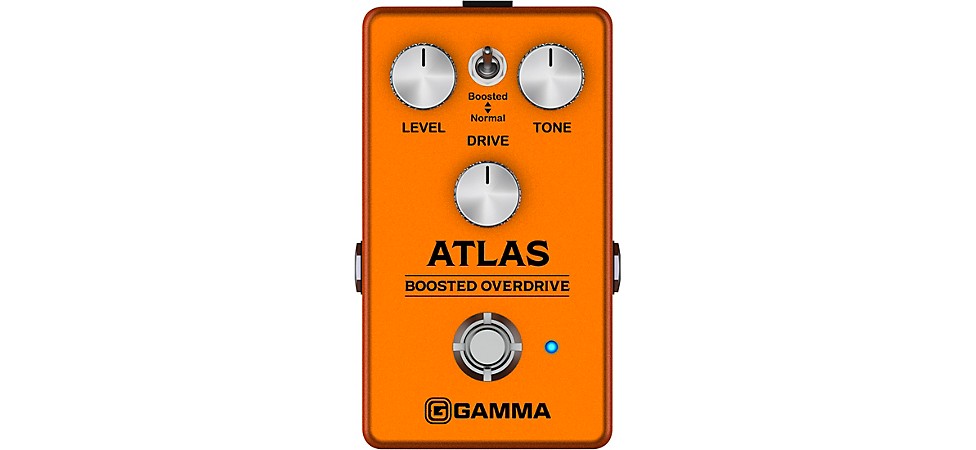
GAMMA Atlas Boosted Overdrive
I tested the GAMMA Atlas Boosted Overdrive when I was helping with an article on the entire GAMMA line. In fact, I brought it to Wroclaw, Poland, when I performed at the city’s annual Gitarowy Rekord Guinnessa festival. I wanted a simple, yet soaring lead tone that would propel me above the phalanx of Marshall half stacks the other guitarists were plugging into. With provided backlines, you rarely know what amp is going to have your name on it, so it was important I could rely on a trusted, foundational tone—especially in a situation where a ton of different guitarists are coming on and off stage, and your soundcheck is little more than a line check. “Okay, we have signal. Go!”
The GAMMA Atlas wasn’t as fancy as some of the boutique pedals at the foot of the stage, but it more than earned its professional status. It nimbly trekked from SFO to Poland in a small shoulder bag, didn’t require Polish power conversion (thanks to its 9V battery), handled being trampled upon by overworked sound crews and sounded tough, boldly saturated and loud when it was my turn to solo.
Shop Now: GAMMA Atlas Boosted Overdrive
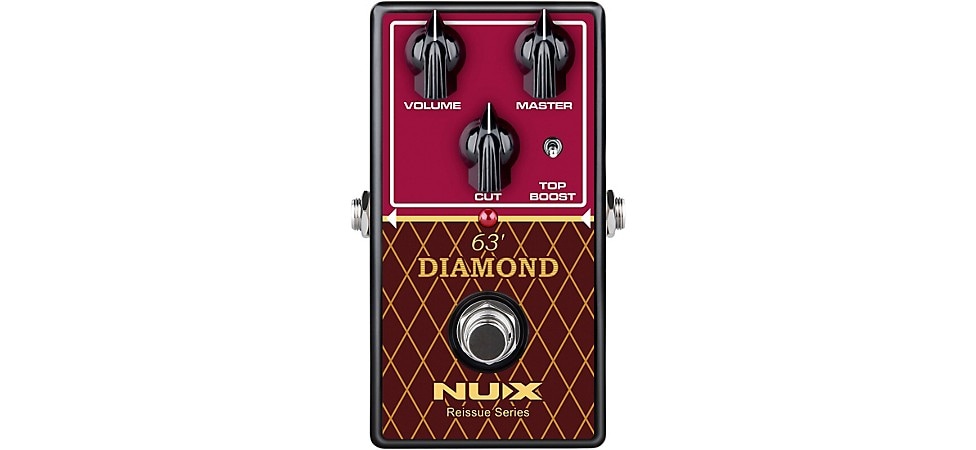
NUX ’63 Diamond Reissue Series
The NUX ’63 Diamond Reissue Series pedal is not a dedicated amp modeler, as there’s no onboard speaker emulation. It’s a British-voiced overdrive that can transform just about any amplifier into a vibey simulation of a VOX AC30. Enough of a bargain to be sold at Dollar Tree, the ’63 Diamond isn’t going to make the excellent Universal Audio UAFX Ruby ’63 tremble in fear, but it gets the job done with a scrappy, garage rock swagger. Everyone I’ve showed it to has said something like, “That’s like a toy, dude,” but the NUX ’63 Diamond has saved my butt when a backlined amp is too clean, too beat up or tragically devoid of rock and roll rowdiness. I get to sound like me in professional gig situations, even if I have to plug into a dubious Johnson Millenium amp that was probably buried in a sound company’s warehouse since 1997.
Shop Now: NUX '63 Diamond Reissue Series VOX AC Preamp
Behringer Fuzz Bender
Remember my three storage bins chock full of fuzz pedals? Among the stockpile of boutique and production-model fuzzes, my most prized is the JMI Tone Bender MK1 Mick Ronson Signature, which never leaves my home studio. While I could use any one of my pedals to provide a retro-psychedelic wail for a gig, I’m tickled the Behringer Fuzz Bender gets me there in a vintage-style chassis for under $100.
The Fuzz Bender’s Level and Attack controls are the same as on my Mick Ronson model, but the Behringer version adds a mode switch. According to a Guitar World review, Original mode is based on the Mk1.5 Tone Bender used by the Beatles on Rubber Soul, while Mod mode emulates the MkII version deployed by Jimmy Page on the first Led Zeppelin album. (There’s a deep dive on the Tone Bender here.) I keep mine parked on Mod, because it sounds more like the jagged, snarky and somewhat arbitrary grind of my Ronson. Original offers a marvelous roar, but, to my ears, it’s a bit too conventional—like a warm and smooth vintage overdrive.
Given my JMI Mick Ronson Signature usually goes for a few thousand bucks on eBay, I’m thankful I can stomp on the ferocious Fuzz Bender for less than the price of five, post-gig Baconator combos at Wendy’s.
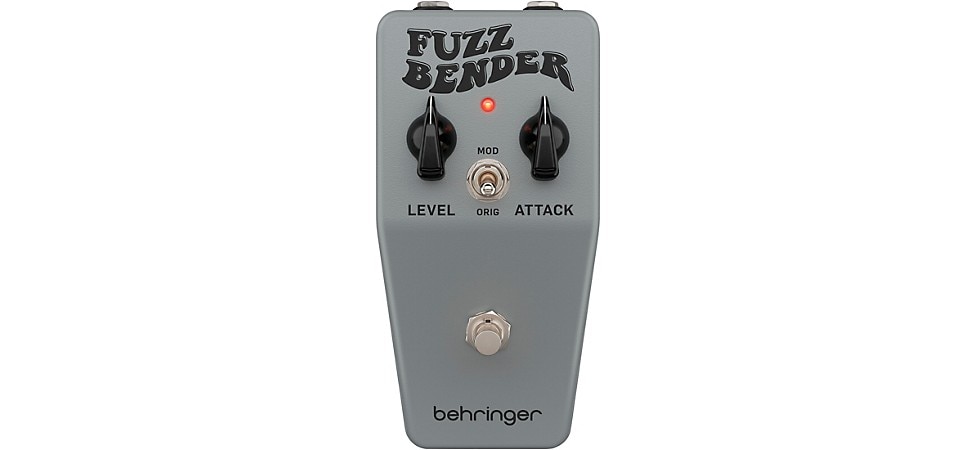
Shop Now: Behringer Fuzz Bender
JHS Pedals 3 Series Harmonic Tremolo
I needed a choppy rhythmic tremolo effect on the choruses of Cher’s “All or Nothing” for a tribute band. Well, imagine my surprise and embarrassment when I couldn’t find a tremolo pedal in my vast assortment of stompbox bins. Oops. The JHS 3 Series Harmonic Tremolo came to the rescue for a very nice price, saving me from attempting to badly emulate the effect by rapidly working my guitar’s volume knob for just one song. Cher—or her producers—didn’t require harmonic tremolo for her late-’90s disco opus, so I just use the pedal’s “Amp Trem” option. The chatter I need is easy to dial in, and it sounds wonderful. Even better, no one has ever accused me of cheapening the glory of Cher’s music with a budget trem pedal—and her fans are, like, rabid.
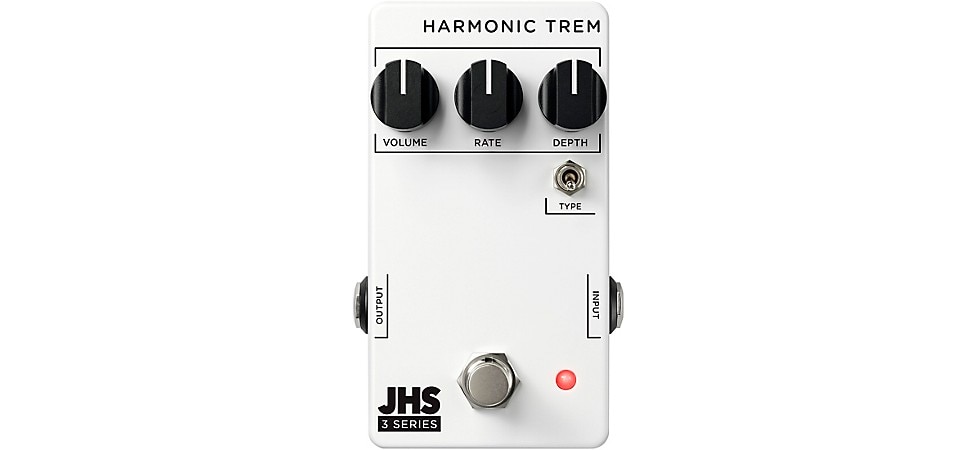
Shop Now: JHS Pedals 3 Series Harmonic Trem
Walrus Audio Fundamental Series Ambient Reverb
When I was writing part two of my series on Guitar Center’s Pedal Stations, I came across the Walrus Audio Fundamental Series. Only three of the nine pedals in the series were mounted on the Pedal Station for me to audition for the article—Reverb, Delay and Chorus—but I found the Walrus Audio Fundamental Series Ambient while researching the lineup. It was kind of a revelation—especially as one of my guitar gigs is creating ambient, cinematic soundscapes for San Francisco singer-songwriter Eva Jay Fortune. I like blending different reverbs together—such as the Keeley 30ms Automatic Double Tracker and Catalinbread Soft Focus—to create scrumptious environmental textures, but I can also depend solely on the Ambient’s Deep, Lush or Haze settings to craft three-dimensional alternate universes. The Fundamental Series may be intended primarily for beginners, but the simple, budget-friendly Ambient pedal has enough atmospheric vigor to inspire professional sound designers.
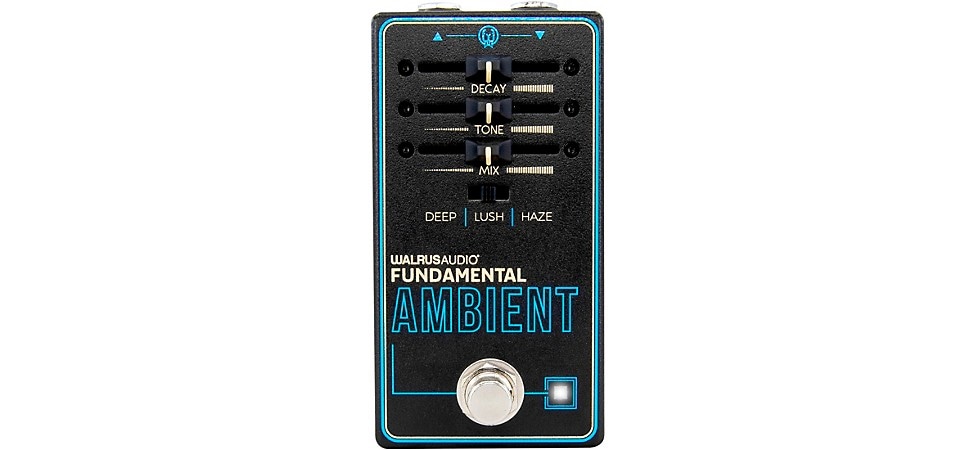
Shop Now: Walrus Audio Fundamental Series Ambient Reverb
Budget Bliss
When I owned professional recording studios, players would sometimes come in with the cheapest and cheesiest effects boxes and yet find a way to make them sound interesting, functional or hellishly cool. Those experiences taught me to never disregard any type of pedal without first hearing it in action and objectively evaluating whether the sound lifted up a part or weakened its impact. I’ve found it’s not always the cost of the gear that wins the day, so trust your ears before you look at a pedal’s price tag.
Written By: Michael Molenda
Michael Molenda is a content strategist, editor and writer for Guitar Center, where he has worked since 2022. He is the longest-serving Editor in Chief of Guitar Player (1997-2018), and former Editorial Director of Bass Player, EQ, Keyboard, Electronic Musician, Gig and Modern Drummer. A guitarist, drummer, bassist and producer, Mike co-owned three pro recording studios in San Francisco, and performs with Surf Monster and The Trouble With Monkeys.
Recently Added to Buying Guides
Be the first to know about exclusive offers, tips and more.

866-498-7882 English
877-687-5402 Español