

Pro Gear Advisers
•866-498-7882
Gibson 1952 Les Paul | Tracking Treasures at Guitar Center Hollywood's Vintage Room

For aficionados and fans of classic instruments, the Vintage Room at Guitar Center’s flagship store in Hollywood is like the mythic Shangri-La or El Dorado. Except it’s real.
The walls, floors and display cases of the Vintage Room are chock-full of musical gems, historical touchstones, intriguing oddities, iconic instruments, pawnshop prizes and more.
It’s also a favored destination for guitarist and renowned vintage gear collector Joe Bonamassa, who filmed his popular “Vintage Faves” series for Guitar Center’s YouTube channel and hosted last year’s Premium Vintage Event in the space.
But beyond being an admirer of vintage instruments, and ogling the Vintage Room’s expanse of colorful finishes and rarities, how do you take things a step or two further and actually consider buying a classic axe?
It’s easier than you think.
While not everyone has the budget to drop thousands of dollars on a 1961 Fender Strat or a 1962 Gibson ES-335, there are affordable treasures to be found.
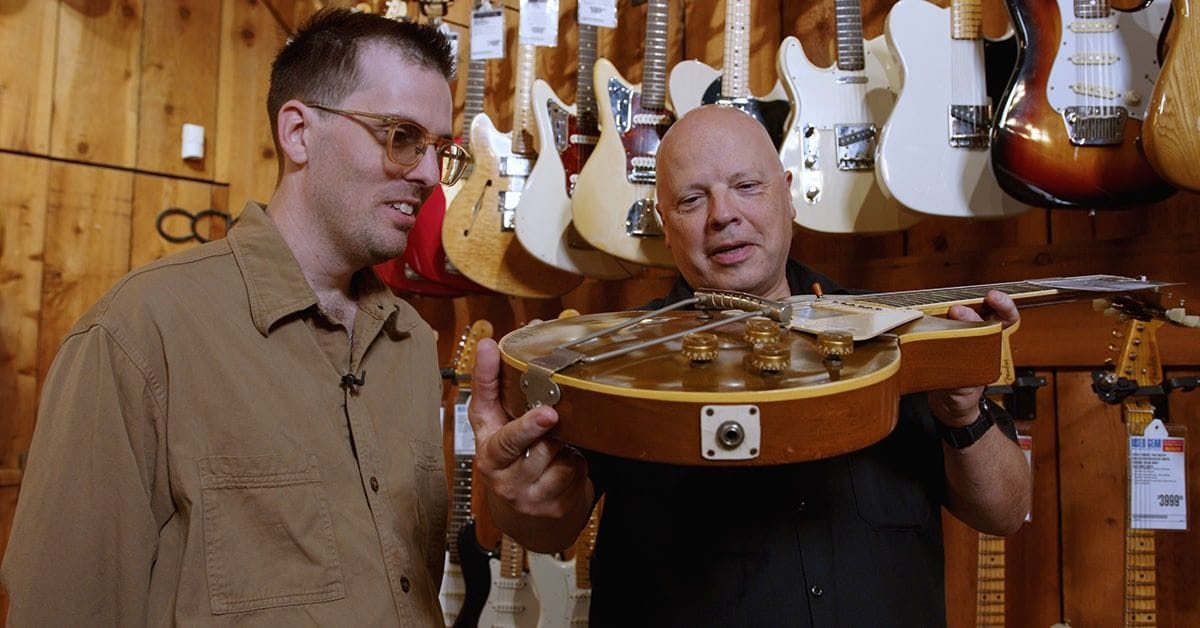
In our exclusive video, guitarist Mason Stoops meets with Guitar Center’s Allan Clarke to learn about the typical vintage shopping experience.
“How do we even begin in a room like this?” asks Stoops.
Inviting a player to look around and take in the whole room is, not surprisingly, step one. But to really kick off the vintage hunt, Clarke shows Stoops a gorgeous 1952 Goldtop Gibson Les Paul.
“We’re here to help people try to find their dreams and see if they can take home that dream to make it a reality,” says Clarke, as he hands the Goldtop to Stoops.
“There’s so much to take in on these early 1952 Les Pauls,” says Stoops, who owns a much-modified ’52 Les Paul himself. “We’re kind of looking at the blueprint for what was to come.”
Over the coming years, the Les Paul saw enhancements such as a wraparound bridge, Tune-O-Matic bridge, maple tops, humbucking pickups and more.
“It’s a truly magical evolution,” says Clarke. “You get to see the development and thought processes as Gibson took feedback from musicians and put it into practice.”
[Experience that development in our article, “The History and Evolution of the Gibson Les Paul: A Timeline of Changes.”]
One of the thrills of the above video is hearing Stoops play the 1952 Les Paul, as few of us have likely had the opportunity to handle one, much less plug it into an amp and try out a few licks.
The Guitar Center Hollywood’s Vintage Room offers that kind of visceral experience. Vintage instruments are no longer simply things you read about or watch other guitarists play live on stage or in videos. Make the pilgrimage, and you can embrace history.
“What you get in a vintage instrument that you don’t get from a new guitar from the factory is the story that came with it,” says Stoops. “We can’t know all of the players and owners, but when you see the wear and feel the neck, you experience what the guitar has gone through in its decades of life. And now, you are adding to that guitar’s story. You become a part of the never-ending link of people who loved it.”
Written By: Michael Molenda
Michael Molenda is a content strategist, editor and writer for Guitar Center, where he has worked since 2022. He is the longest-serving Editor in Chief of Guitar Player (1997-2018), and former Editorial Director of Bass Player, EQ, Keyboard, Electronic Musician, Gig and Modern Drummer. A guitarist, drummer, bassist and producer, Mike co-owned three pro recording studios in San Francisco, and performs with Surf Monster and The Trouble With Monkeys.
Recently Added to Product Demos
Be the first to know about exclusive offers, tips and more.

866-498-7882 English
877-687-5402 Español