.jpeg)

Pro Gear Advisers
•866-498-7882
The Tale of Two 1952 Telecasters | Tracking Treasures at Guitar Center Hollywood’s Vintage Room

The beauty—and, sometimes, the terror—of early ’50s guitars is that each instrument in a specific model series can be significantly different. This was the era before digitally assisted CNC machines brought precision manufacturing to guitar making. A factory worker in the 1950s could influence the shape of a neck, pickup windings, fret dressing and other details because they were in a hurry to make a dinner date, was late to pick up their kids from school, or even may have been hungover after a night out. In short, depending on the situation, a C-shaped neck would have a whole lot of variations from model to model.
This is one of the thrilling benefits—and educational advantages—of Guitar Center Hollywood’s Vintage Room. It’s a not just a retail space, it’s a living museum every wall hums with the stories, deviations, evolutions and inspiration from decades of instrument and amplifier production.
One of these amazing stories is the difference between two 1952 Telecasters.
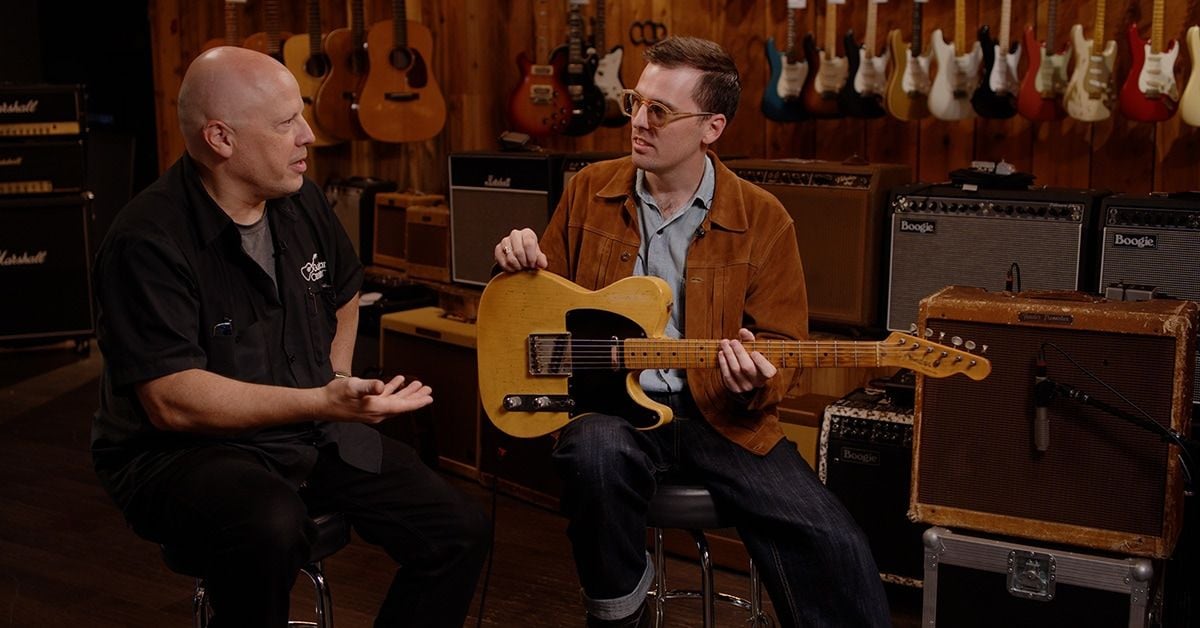
Watch the full video to see guitarist Mason Stoops and Guitar Center’s Allan Clarke compare a 1952 Fender Telecaster with Stoops’ own ’52 Tele. What follows is a detailed, joyful geek-out session that’s as much about craft and curiosity as it is about tone.
Comparing Legends
As Clarke hands Stoops the Vintage Room’s vintage Tele, the pair immediately dive into a side-by-side evaluation. The conversation kicks off with a question any collector or player can appreciate: Just how much variation existed in Fender’s earliest solidbody years?
“There will probably be a difference in the neck profiles,” Clarke notes, “because 1952 was the genesis of the solidbody electric guitar and everything was an experiment. Fender guitars in that year often had different neck shapes depending on who was sanding the neck.”
Stoops chimes in as he inspects the neck carve of the store’s ’52:
“Yeah—the presumption would be this ’52 Tele should have a huge baseball bat neck, but this is not massive and it’s really comfortable. It’s a slight V profile, whereas my ’52 Telecaster is closer to a baseball bat shape.”
Tadeo Gomez and Fender's Golden Age
The conversation takes a fascinating turn when Clarke and Stoops uncover the initials “TG” stamped into both Telecasters’ necks—the mark of legendary Fender craftsman Tadeo Gomez.
Gomez’s touch graced some of Fender’s most storied guitars, including Eric Clapton’s “Brownie” Stratocaster.
“To a certain degree, these marks inside a guitar identify who did what at a certain point,” Clarke explains. “Tadeo’s initials in our Telecasters indicate he was very much involved with building them. When you can link a particular builder to very famous guitars, there’s almost a lineage from one guitar to the next, and the story, the myth and the legend all grows from that point.”
Stoops and Clarke’s discussion is a perfect encapsulation of what makes vintage instruments so captivating: Each one carries not only a certain tone but its own unique history.
Written By: Guitar Center
The Guitar Center Riffs team is a passionate group of professional musicians, writers and gear enthusiasts. Combining decades of experience onstage, in the studio and behind the counter, they bring expert insight, hands-on reviews and inspiring stories to the Guitar Center community. From breaking down the latest gear to sharing tips that spark creativity, the Riffs Team is here to help every musician—from first-time strummers to touring pros—find their sound.

Be the first to know about exclusive offers, tips and more.

866-498-7882 English
877-687-5402 Español