.jpeg)




The enormous world of electric guitars can seem daunting to navigate. While there is no best or worst guitar, there are guitars that have become part of our collective consciousness (dare we say zeitgeist?). These are the guitars that have defined genres and become the persistent image of what an electric guitar is. Putting aside the latest in guitar tech or rare vintage gems, let’s take a look at models that have, time and time again, satisfied and inspired players from all walks of life. Here are five of the most popular electric guitars in the world.
Why We Chose These Electric Guitars
Our selections are based on a combination of long-term sales performance at Guitar Center, real-world use across genres and the simple fact that these models continue to show up everywhere—from beginner rigs to professional stages and studios. These are the most popular and consistently best-selling electric guitars not just because of brand recognition, but because they deliver tones and playability that musicians come back to again and again.
Just as important, each of these guitars has proven its versatility over time. Whether you’re playing rock, blues, country, pop, indie or jazz, these models have shaped the sound of those genres—and continue to evolve with them.
While newer models and brands can surge in popularity—and in some cases become top-rated electric guitars in their own right—the guitars on this list have something more difficult to quantify: a track record. Decades of recordings, performances and player preference have cemented their place as foundational instruments.
That being said, we'll drop an honorable mention for models like the PRS SE Custom 24 and SE Silver Sky that have become some of the more popular electric guitars in recent years. While they may not yet have the decades-long reputation of the guitars below, their popularity continues to grow.
If you’re looking for a place to start—or a guitar you’ll never outgrow—these are the benchmarks. The reference points. The “ur-guitars” everything else is measured against.
Comparing the Five Most Popular Electric Guitars
|
Model |
Genre/Best For |
Pickup Configuration |
Tone + Why It’s Popular |
|
Country, rock, indie, blues; great for rhythm and lead players |
SS, also HS, HH and SSS variants |
Snappy, punchy and direct with strong note definition; top-rated for its simplicity, reliability and mix-cutting ability |
|
|
Blues, rock, pop, funk, indie; versatile for beginners and experienced players |
SSS (typically), also HSS variants |
Bright, articulate and highly dynamic; one of the most popular and best-selling electric guitars due to its versatility and comfort |
|
|
Rock, hard rock, metal, blues; sustain-focused lead playing |
HH |
Thick, warm and sustaining tone with powerful output; renowned for its rich sound and iconic rock voice |
|
|
Blues, jazz, rock, indie; players seeking warmth with clarity |
HH |
Warm, resonant tone with added air and articulation; valued for its versatility across clean and overdriven styles |
|
|
Rock, metal, blues; players who want lighter weight and upper fret access |
HH |
Aggressive, mid-forward tone with excellent upper fret access; known for its playability and biting tones |
Fender Telecaster
Why We Picked It: The first mass-produced solid body electric guitar is still in production, still relevant, and still showing up on records more than 75 years later.
Best For:
- Country, Americana and roots players chasing classic twang and note clarity
- Rock and indie players who want a guitar that cuts through a mix without getting muddy
- Beginners and experienced players alike looking for a simple, reliable and versatile electric guitar
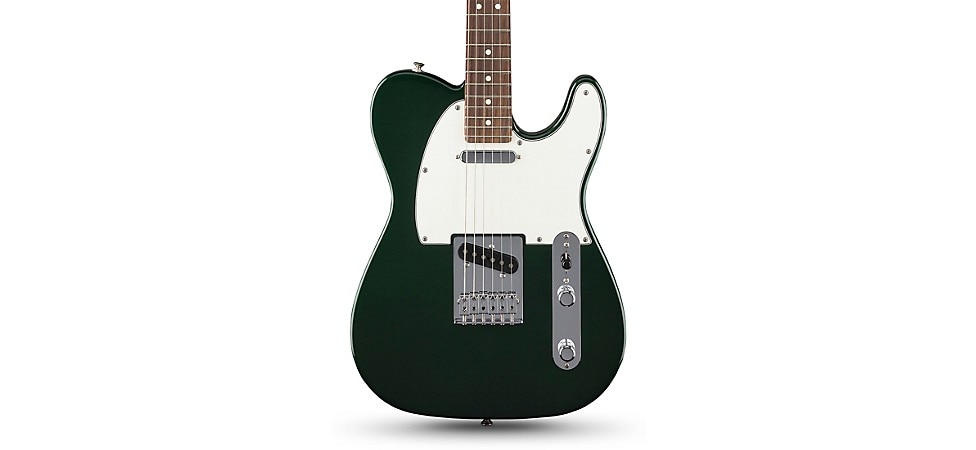
Shop Now: Fender Player II Telecaster in Limited-Edition British Racing Green
In 1950, Leo Fender introduced the single-pickup Esquire, then a few months later released a dual-pickup version called the Broadcaster that, due to trademark issues, was renamed the Telecaster. The Tele would go on to become the world’s first successfully mass-produced solidbody electric guitar. Simple yet elegant, it has been a showstopper and session magnet since its debut. It’s the go-to guitar for twangy chicken pickin’ solos, which is why the iconic axe has appeared on the majority of country records over the past 75+ years.
The Tele’s unmistakable tone comes down to a few key factors: body size, wood density and—most importantly—the metal bridge plate that helps give the bridge pickup its signature snap and bite. From the more affordable but road-ready Squier Telecaster models to Mexican-made Player Series and American-made versions, the Telecaster holds an undeniable place in history.
To discover which Tele might fit you best, check out our guide to the Fender Telecaster.
Few guitars respond to picking dynamics like a Telecaster. It rewards a light touch, barks when you dig in and sits exactly where you want it in a mix—whether you’re onstage, in the studio or just getting your first rig together.
Fender Stratocaster
Why We Picked It: If there’s a more widely used electric guitar across genres and decades, it’s a short list—and the Stratocaster is at the top of it.
Best For:
- Blues, rock, pop and funk players who want expressive, touch-sensitive tones
- Players who rely on vibrato techniques for subtle shimmer or more dramatic pitch effects
- Beginners and experienced players looking for one of the most versatile electric guitars available

Shop Now: Fender Player II Stratocaster HSS Plus Top Limited-Edition in Blue Burst
The Fender Stratocaster, or Strat (as it’s been referred to affectionately for decades), has become a favorite for players of all genres. Introduced in 1954, the Stratocaster ushered in a new era of guitar design and has been shaping modern music ever since. Like its older cousin, the Telecaster, it typically features single-coil pickups—but with the addition of a middle pickup and five-way selector, it unlocks a wider range of tones, including the signature “in-between” sounds that define so many classic recordings. It was also the first solidbody electric guitar to feature a built-in vibrato system.
The Strat didn’t just sound different—its aesthetics and ergonomics changed the landscape. With double cutaways and a contoured body, it offered a level of comfort that was unheard of at the time. Originally built for western swing guitarist Bill Carson, it was quickly embraced by early rock ’n’ roll players like Buddy Holly and Hank Marvin, and has since become one of the most popular and best-selling electric guitars in history.
Get an idea which Strat is right for you with our guide to the Fender Stratocaster.
The Stratocaster’s strength is in its range. From glassy cleans to gritty overdrive, it covers a wide tonal spectrum while maintaining its unique personality—making it a go-to choice whether you’re dialing in your first sound or refining your signature voice.
Gibson Les Paul
Why We Picked It: Its combination of sustain, warmth and raw power made it one of the defining instrument of rock's most influential players.
Best For:
- Rock, hard rock and metal players who want thick tone and strong output
- Blues and classic rock players looking for warmth, depth and expressive lead tones
- Players who prefer the feel of a solid, substantial guitar with natural sustain

Shop Now: Gibson Les Paul Standard '60s AAA Flame Top in Honey Lemon Burst
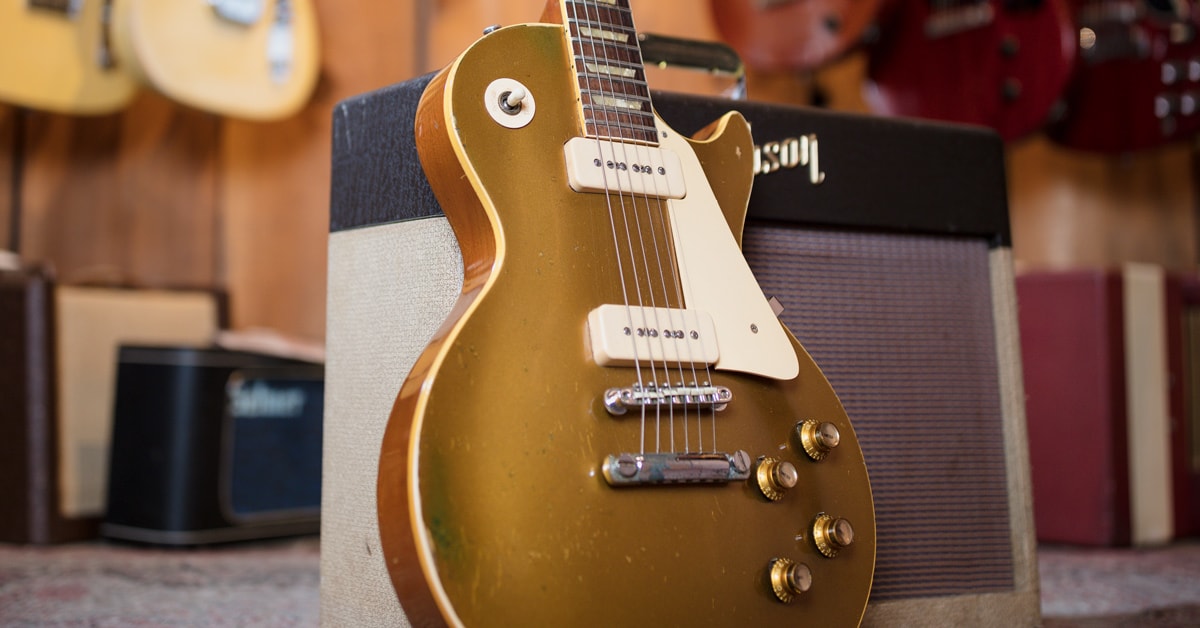
Jazz guitarist Les Paul spent years tinkering with his own electric guitar designs, but his early creations were initially rejected by Gibson’s parent company in 1946. A few years later, on the heels of Fender’s success with the Telecaster—and Paul’s growing popularity as an artist—Gibson struck a deal with him to endorse their new solidbody design. The result was the Les Paul model, introduced in 1952. Since then, it has become one of the most imitated and sought-after electric guitars in the world, with late-’50s examples among the most prized instruments ever made.
Originally equipped with P-90 pickups, the Les Paul took a defining turn in 1957 with the introduction of humbuckers. Gibson engineer Seth Lover’s PAF (Patent Applied For) pickups delivered higher output, reduced noise and a thicker, more sustaining tone that helped shape the sound of modern rock and blues. From Goldtops to Black Beauties to the iconic sunburst finishes, Les Paul guitars come in a wide range of variations—but they all share a voice that’s rich, powerful and unmistakable.
If you're trying to decide which way to go, you'll want to take a look at both our “How to Choose the Best Gibson Les Paul” and “How to Choose the Best Epiphone Les Paul” guides.
The Les Paul is all about authority. Notes bloom, chords carry weight and notes seems to hang in the air a little longer—making it one of the most popular electric guitars for players who want their tone to feel as big as it sounds.
Gibson ES-335
Why We Picked It: The ES-335 remains the go-to choice for players who want a touch of hollowbody-style warmth without feedback issues at the volume a live stage demands.
Best For:
- Blues, jazz and soul players who want warmth, depth and expressive dynamics
- Rock and indie players looking for a blend of resonance and feedback control
- Players who want a versatile guitar that bridges the gap between hollowbody and solidbody tones

Shop Now: Gibson Limited-Edition ES-335 '60s Block in Sixties Cherry
In 1958, Gibson introduced the ES-335 as part of its Electric Spanish line, and it became the world’s first commercially successful semi-hollow electric guitar. Featuring a solid center block in an otherwise hollow thinline body, the then-radical design combined the airy resonance of a traditional archtop with the sustain and feedback resistance of a solidbody. It’s a formula that’s been widely imitated ever since.
The ES-335 has found a home in nearly every genre imaginable. Typically equipped with dual humbuckers, its semi-hollow construction produces a warm, woody tone with a natural sense of air and dimension. In the hands of players like Larry Carlton or B.B. King, that sound can feel almost vocal—smooth, expressive and deeply responsive. But despite its strong ties to blues, the ES-335 is far from a one-lane instrument. From jazz and soul to rock and alternative, it adapts easily without losing its character.
There are a number of different members of the ES-335 family, and our guide to the Gibson ES-335 will help you suss out which one is the right fit for you.
The ES-335 lives in the middle—in the best possible way. It offers more air and texture than a solidbody, more control than a hollowbody and a tonal balance that makes it one of the most versatile and top-rated electric guitars across genres.
Gibson SG Standard
Why We Picked It: Lighter, faster and more aggressive than its Gibson stablemate, it became the weapon of choice for players who wanted humbucker power without the added weight.
Best For:
- Rock and metal players who want aggressive tone with strong midrange presence
- Players who value lighter weight and easy upper-fret access for lead playing
- Guitarists looking for humbucker power with a faster, more responsive feel than a Les Paul
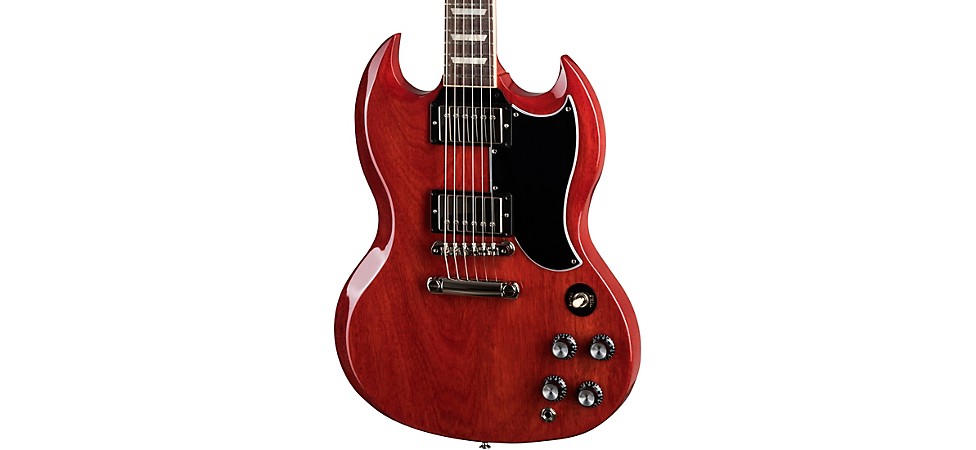
Shop Now: Gibson SG Standard '61 in Vintage Cherry
The SG Standard is Gibson’s all-time best-selling guitar. Introduced in 1961 as a redesign of the Les Paul, it featured distinctive horn-shaped double cutaways and a neck joint moved further into the body, making the guitar lighter and allowing easier access to the upper frets. The body was slimmer, the neck profile more slender and the overall feel faster and more immediate. While Les Paul himself preferred the original design—and his name was eventually removed due to contractual changes—players quickly embraced the new direction. By 1963, the model was officially renamed the SG, or “Solid Guitar.”
The SG retains the dual-humbucker configuration of the Les Paul Standard, but it delivers that sound with a different attitude. With its lighter weight, sharper attack and pronounced midrange bite, the SG has become a defining voice in rock ’n’ roll. It’s one of the few electric guitars that has remained in continuous production since its introduction—an indicator of just how enduring its design has been.
You can explore current models in our guide on “How to Choose the Best SG Guitar.”
The SG trades some of the Les Paul’s heft for speed and bite. It feels alive in your hands—quick to respond, eager to push an amp and perfectly suited to players who like their tone with a little edge.
Get the Right Accessories and Learn Guitar With Our Lessons Program
And, when you're buying that new guitar, don't forget a good case and spare strings. We're glad to help you figure out what you need, either with our knowledgeable associates in your local Guitar Center store, through your personal Gear Adviser or with our Riffs articles on how to choose the right case and the best strings for your guitar.
Did you know that Guitar Center offers guitar lessons for all skill levels? Our expert guitar instructors will work closely with you to tailor your lessons to your musical tastes and goals. Whether you're a beginner using tablature to learn your first riffs or a more experienced player looking to grow, we're here to help.
People Also Ask ...
What is the most popular electric guitar?
The Fender Stratocaster is widely considered the most popular electric guitar thanks to its versatility, comfort and presence across nearly every genre of music. It’s one of the most consistently best-selling electric guitars, used by beginners and professionals alike.
What electric guitar is best for beginners?
Some of the best electric guitars for beginners include the Fender Stratocaster and Telecaster, as well as Squier (for Fender) and Epiphone (for Gibson) versions of classic designs. These guitars are easy to play, widely available and versatile enough to cover multiple styles as your skills develop. If you’re just starting out, check out our guide to the best electric guitars for beginners for more options.
What’s the difference between single-coil and humbucker pickups?
Single-coil pickups produce a bright, clear and articulate tone, but can introduce some background noise. Humbucker pickups are designed to cancel that noise, resulting in a thicker, warmer tone with higher output—making them a popular choice for rock and higher-gain styles.
Which electric guitar is best for rock or metal?
For rock and metal, guitars with humbucker pickups—like the Gibson Les Paul and SG—are among the most popular choices because of their powerful output and sustain. That said, many players also use Stratocasters and Telecasters for rock, especially when a brighter, more cutting tone is needed.
What are the most popular electric guitar brands?
Some of the most popular electric guitar brands include Fender, Gibson, Epiphone, Squier and PRS. These brands offer a range of models—from beginner electric guitars to professional instruments—and have helped define the sound of modern music.
What electric guitar should I buy first?
A great first electric guitar is one that’s comfortable to play, stays in tune and can cover a range of tones as you learn. Models like the Fender Stratocaster and Telecaster—or their Squier equivalents—are popular beginner electric guitars because they’re reliable, versatile and widely available at different price points. For a deeper dive, our guide “The Best Electric Guitars for Beginners” (linked above) will help you find the right fit for your style and budget.