.jpeg)

Pro Gear Advisers
•866-498-7882
Inside the Noise Season 2, Episode 6: Brian Ball and Tosin Abasi
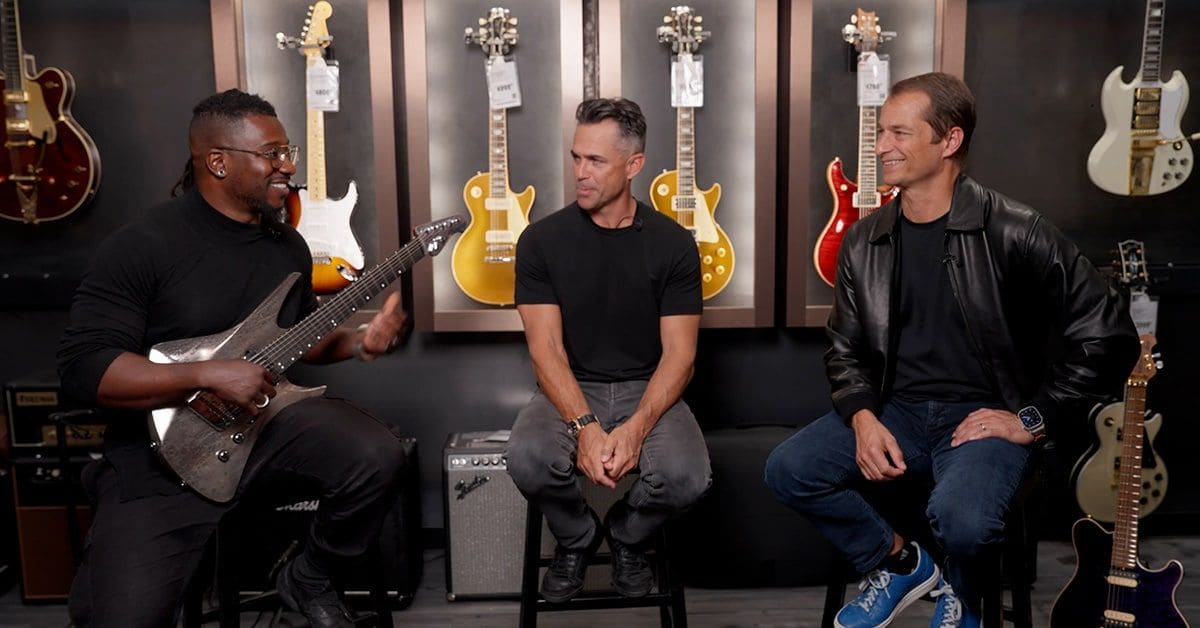

Ernie Ball CEO Brian Ball sits down with Guitar Center CEO Gabe Dalporto to trace the family legacy behind one of guitar’s most influential companies—from Ernie Ball’s first rock ’n’ roll string sets to Music Man, the StingRay bass, artist partnerships and the future of guitar innovation. Later in the episode, guitarist Tosin Abasi joins the conversation to explore how that legacy continues through a forward-thinking Music Man collaboration built for extended-range playing, modern ergonomics and progressive technique.
Ball’s account of the company’s origins is refreshingly practical. Ernie Ball was a guitarist and retail pioneer who saw a problem before there was a full market built around solving it: Young players wanted to play rock ’n’ roll, but the strings available at the time were too heavy for how the music was evolving.
“Ernie Ball was born out of an opportunity. It wasn’t born out of trying to create a lifestyle brand. He was a player, recognized that there was a market opportunity, was told he was crazy, and then still marched forward and created lighter strings for people to play rock ’n’ roll.”
That player-first mindset remained central as the company grew. Brian recalls how his grandfather started by private labeling banjo strings as rock ’n’ roll guitar strings because lighter gauges simply were not available. The fluorescent packaging came from an early kind of street-level test—kids were shown a black-and-white pack and a fluorescent pack, and they chose the brighter one. The eagle logo, created by designer Raleigh Crump, became another piece of the brand’s identity.
As rock ’n’ roll expanded, Ernie Ball caught the wave. Guitar magazines, retail growth and the rise of electric guitar culture all helped carry the company forward. Later, Sterling Ball’s acquisition of Music Man in 1984 brought another major chapter, with the StingRay bass becoming a defining part of the company’s story.
“My dad beta tested for the StingRay and I think when the opportunity came that Music Man became available, he felt like he was such an early steward for the instrument that it had to be Ernie Ball to help carry that torch.”
Brian’s own path into the business started on the Vans Warped Tour, where Ernie Ball operated a mobile stage that gave undiscovered bands a chance to play live. That experience shaped his belief that artist relationships are not transactional. They are creative partnerships that can push products, ideas and entire careers forward.
That philosophy leads directly into the second half of the conversation, when Tosin Abasi joins to discuss his collaboration with Music Man. Rather than treating the project like a traditional signature model, Abasi saw a chance to make a Music Man guitar that did not already exist—one built around extended-range playing, modern ergonomics and the demands of progressive technique.
“I kind of feel like the guitar should disappear, like it shouldn’t get in your way at all. It’s hard enough to play guitar.”
Abasi’s design goals started with the way he plays: 7- and 8-string guitar, lowered tunings, fast lead work and a need for clarity across the instrument. Multi-scale construction became essential because it helps the lower strings retain tension while keeping the treble strings easier to play for legato, wide stretches and fluid phrasing.
The collaboration also pushed Music Man into new territory. Abasi notes that the guitar became Music Man’s first multi-scale instrument, while Ball points to the challenge of building a guitar with no flat surfaces. Abasi also highlights the thin body, double-cutaway design, multi-scale tremolo and the “infinity radius” concept intended to improve visibility and feel across the treble strings.
“It feels kind of like you drive a car and then you hop in like a Porsche 911 or something. You’re like, whoa. It’s sharper, it’s more responsive. The steer is more dialed, and I kind of like that in the guitar, because it just allows you to put all your efforts into playing.”
Even the finish came from experimentation. Ball explains that they were chasing a futuristic, metal-like look without using metal. What emerged looked to Abasi like something from a wreckage site or reentry pod—and because of the process, each guitar comes out slightly different.
For Ball, all of this points to why guitar still feels wide open. Even with familiar conversations about the instrument’s place in popular music, he sees a generation of players searching for new sounds, new tools and new ways to express themselves.
“I’m not interested in making the same old thing. We will offer the best tools that people are used to, but we’re going to certainly try to keep advancing it.”
Catch the full conversation and other episodes of Inside the Noise with Gabe Dalporto on YouTube, Apple Podcasts, Spotify or any of your favorite major platforms.
Written By: Guitar Center
The Guitar Center Riffs team is a passionate group of professional musicians, writers and gear enthusiasts. Combining decades of experience onstage, in the studio and behind the counter, they bring expert insight, hands-on reviews and inspiring stories to the Guitar Center community. From breaking down the latest gear to sharing tips that spark creativity, the Riffs Team is here to help every musician—from first-time strummers to touring pros—find their sound.
Recently Added to Interviews

Be the first to know about exclusive offers, tips and more.

866-498-7882 English
877-687-5402 Español