

Pro Gear Advisers
•866-498-7882
Inside the Noise Season 2, Episode 5: Dave Maddux
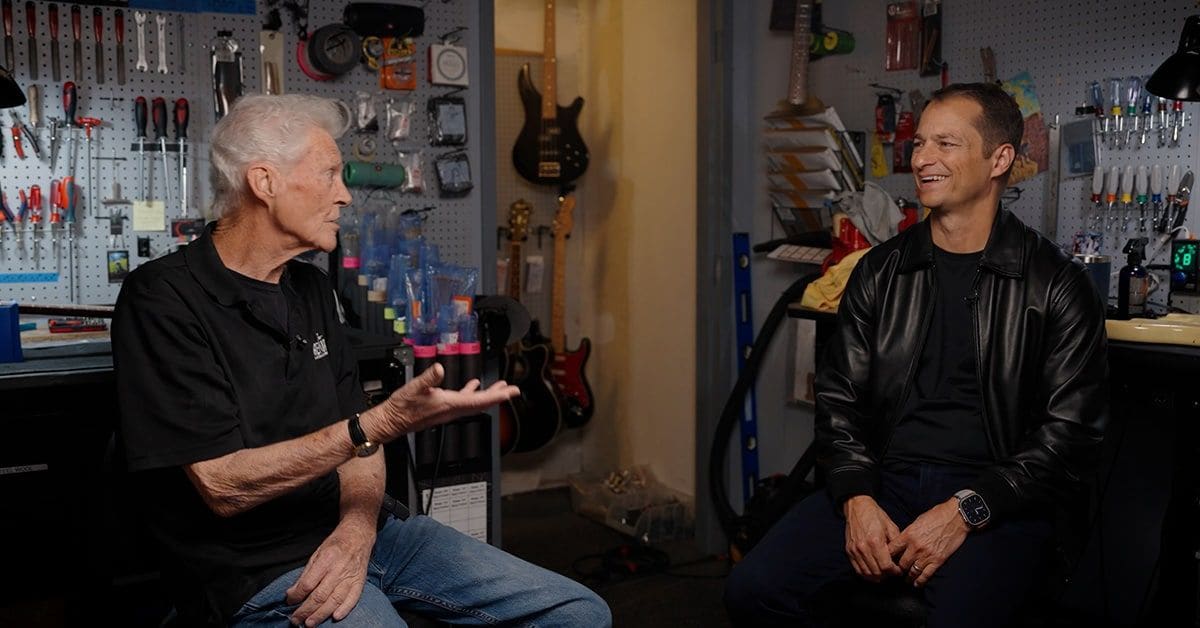

Dave Maddux has spent much of his life close to the details most players feel before they can name them—the nut height, the neck pocket, the bridge setup, the few strokes of sanding that can make a neck feel right. In this episode of Inside the Noise, Guitar Center CEO Gabe Dalporto speaks with Maddux about a career that began on the Fender factory floor and now continues at Guitar Center Hollywood, where he repairs and restores remarkable instruments.
Maddux started at Fender painting guitar bodies, moved into tune testing and inspection, worked on Rhodes pianos and eventually became part of the team that helped define more repeatable production standards for Fender guitars. Those years gave him a view of the company from the inside, including the tension between building more instruments and building better ones.
Looking back on the CBS era, Maddux describes a factory culture where the people closest to the instruments often had to push back against decisions made for output. “CBS would always default toward lower quality if it meant more production numbers,” he says. “They would make those kind of decisions. And the people on the line were always kind of fighting against that.”
The story changes when Fender begins rebuilding its manufacturing culture in Corona. For Maddux, the most important shift was not just new ownership or a new facility. It was a renewed understanding that a guitar was not finished simply because all the parts were assembled. “A lot of the people running the show were guitar players themselves, and so they understood the importance of not just having all the parts in the box. They understood the importance of actually making it work.”
That idea led Maddux and Eddie Yoon to help write specific setup criteria for Fender guitars—neck bow, nut height, bridge height and the kinds of measurements that could make quality more consistent from instrument to instrument. In the conversation, those details never sound abstract. They sound like the difference between a guitar that leaves the factory as a product and one that leaves as something a player can actually use.
Maddux also shares a few stories from the more mythic side of guitar history. He remembers George Harrison’s rosewood Telecaster being sent back to the Fender factory because it was coming apart where the two pieces joined. After the repair, Maddux carved his initials inside the pickup cavity before the guitar was finished over. He also recalls the development of Eric Clapton’s signature Stratocaster and the moment Clapton rejected a switch on an early version of the model: “Take the switch off or take my name off.”
Later, Maddux became involved in the launch of Fender’s Mexico factory, where he helped train the team and built the first Mexico guitar himself. He describes the early work as starting from scratch, but his view of Mexico-built Fender quality is rooted in the same practical standards that shaped his time in Corona: accurate routing, clean neck pockets, proper pickup depth, consistent thickness and hands-on final work that still depends on the people assembling the instruments.
The conversation eventually turns toward what Maddux would want in a personal workhorse guitar. His answers are revealing because they are so functional: single-coils, the in-between sounds of a Stratocaster, a wraparound bridge, locking tuners, a real bone nut, a bolt-on neck and enough reliability to serve the player rather than distract from the song. He is not chasing ornament for its own sake. He is chasing feel, serviceability and musical usefulness.
After decades around new, rare and artist-owned instruments, Maddux still believes vintage guitars can hold a different kind of presence. “There is definitely a feel when you pick up an old vintage instrument,” he says. “There’s a magic.”
Catch the full conversation and other episodes of Inside the Noise with Gabe Dalporto on YouTube, Apple Podcasts, Spotify or any of your favorite major platforms. When you subscribe, you’ll get new episodes every Tuesday at 3 p.m. PT.
Written By: Guitar Center
The Guitar Center Riffs team is a passionate group of professional musicians, writers and gear enthusiasts. Combining decades of experience onstage, in the studio and behind the counter, they bring expert insight, hands-on reviews and inspiring stories to the Guitar Center community. From breaking down the latest gear to sharing tips that spark creativity, the Riffs Team is here to help every musician—from first-time strummers to touring pros—find their sound.
Be the first to know about exclusive offers, tips and more.

866-498-7882 English
877-687-5402 Español