
.jpeg)

Pro Gear Advisers
•866-498-7882
Vintage Fender Jazzmaster vs. Jaguar Shootout | Mason Stoops Breaks Down the Differences
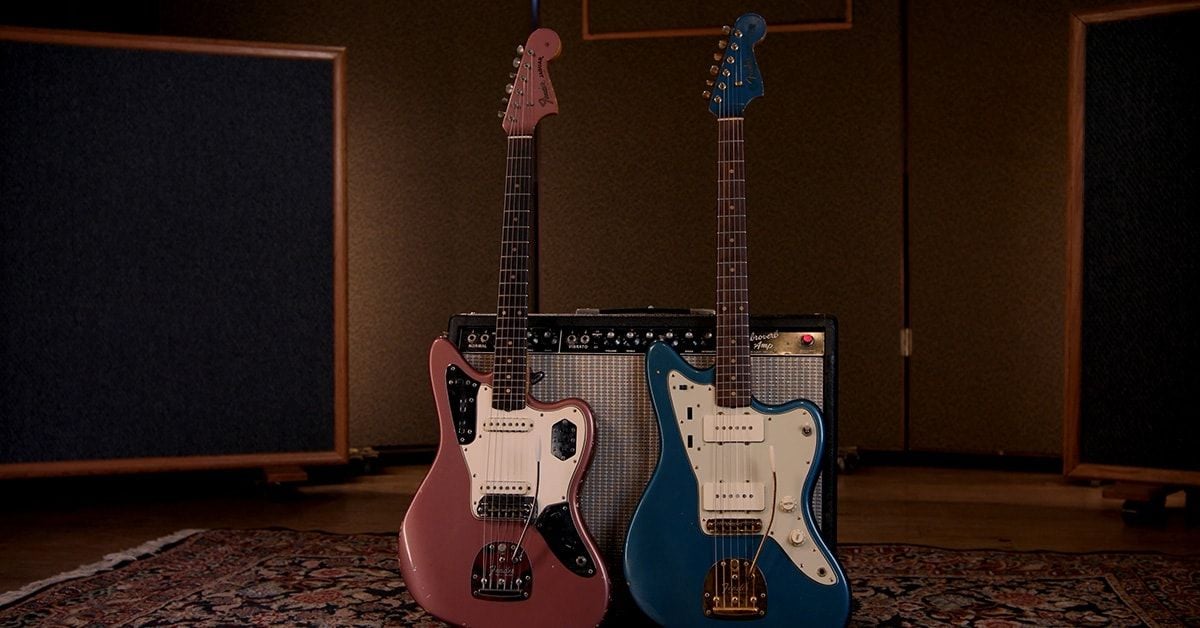

The Fender Jazzmaster and Fender Jaguar share the offset silhouette, the floating-bridge lineage and plenty of visual DNA. But in Mason Stoops’ side-by-side vintage shootout, the differences come through fast. This is less a battle of better versus worse than a study in response, feel and voice.
Playing a 1962 Lake Placid Blue Jazzmaster and a 1964 Burgundy Mist Jaguar, the comparison moves beyond surface-level spec talk, into what actually happens when the guitars hit an amp at Sunset Sound. Stoops walks through history, switching systems, pickup designs and playing feel, but the real takeaway is tonal: These guitars may look related, but they push players in very different directions.
The Guitars in This Shootout
1962 Fender Jazzmaster
- Lake Placid Blue finish
- 25.5" scale length
- Wide single-coil pickups
- Rhythm circuit
- Floating vibrato bridge
1964 Fender Jaguar
- Burgundy Mist finish with matching headstock
- 24" scale length
- Shielded single-coil pickups with metal claws
- Rhythm circuit
- 3-switch control plate and low-cut switch
- Floating vibrato bridge
The Jazzmaster: Wide, Woody and Fluid
Stoops frames the Jazzmaster as a guitar that took classic Fender feel and opened it up with new ideas. The longer 25.5" scale keeps things familiar, but the bridge and wide pickups steer it somewhere else entirely—toward a more open, flowing and harmonically broad sound.
Mason Stoops on the Jazzmaster’s Open, Chiming Voice
“That classic Fender sound is there. But in combination with that new bridge, and especially the vibrato, there’s just this swimmy, really just beautiful openness. It definitely inspires what felt like the ‘surf sound.’ It just makes me want to play big open chords and just hang out on the vibrato forever.”
For Stoops, that sense of openness comes into focus most clearly in the Jazzmaster’s middle position. It keeps the warmth of the neck pickup, adds just enough bridge definition and creates the kind of big, clean rhythm sound that can fill space without losing shape.
“Any time I’m in a session and they want big, clean, flowy, just diamond-like chiming chords that seem to go on forever—to me, that’s middle-position Jazzmaster every time.”
He also makes a point of rescuing the bridge pickup from being overlooked. In his telling, it’s not a shrill afterthought, but a surprisingly useful lead sound that retains the Jazzmaster’s woody, surf-laced identity.
The Jaguar: Shorter Scale, Sharper Edge
Where the Jazzmaster spreads out, the Jaguar tightens up. The shorter 24" scale changes the tension and the playing feel immediately. Stoops hears more slack, more twang and a more exaggerated version of the Fender attack players already know.
Then there’s the hardware and switching. The Jaguar keeps the rhythm circuit but adds the more intricate slider-switch setup, along with the low-cut switch that pushes the guitar even further toward bright, wiry detail. Its pickup construction also helps define the sound, giving it a sharper and more immediate voice.
Mason Stoops on the Jaguar’s Signature Sound
“It’s so trashy and surfy in such a cool way. It’s like a cartoon version of a Fender guitar or something. It sounds like what I think a Fender guitar sounds like.”
That character carries across the Jaguar’s range, from the neck pickup’s offbeat surf texture to the bridge pickup’s cutting, unmistakably Fender bite. Stoops hears the whole guitar as a more stylized, more exaggerated take on the classic Fender voice—tighter, twangier and instantly evocative.
“When I think of the Fender sound, it’s the bridge pickup on a Jaguar. It’s just so relentlessly twangy and fun and kind of rattly. It just sounds like every surf record and every film score all in one.”
Which One Suits You Best?
This comparison lands in a useful place because it avoids forcing the wrong conclusion. The Jazzmaster is not simply the bigger Jaguar, and the Jaguar is not simply the brighter Jazzmaster. Stoops presents them as separate tools with separate musical jobs.
The Jazzmaster stretches wider. It covers more ground, leans into openness and can move through more genres with ease. The Jaguar is more specialized, but that specialization is exactly the point: It brings a wiry, nostalgic, unmistakably Fender cut that can change the emotional temperature of a track fast.
Continue Your Offset Journey
- “Fender Jazzmaster vs. Fender Jaguar: Which One Suits You Best?”
- Explore Fender Jazzmaster guitars
- Explore Fender Jaguar guitars
- Follow Mason Stoops on Instagram
Written By: Guitar Center
The Guitar Center Riffs team is a passionate group of professional musicians, writers and gear enthusiasts. Combining decades of experience onstage, in the studio and behind the counter, they bring expert insight, hands-on reviews and inspiring stories to the Guitar Center community. From breaking down the latest gear to sharing tips that spark creativity, the Riffs Team is here to help every musician—from first-time strummers to touring pros—find their sound.

Be the first to know about exclusive offers, tips and more.

866-498-7882 English
877-687-5402 Español