.jpeg)

Pro Gear Advisers
•866-498-7882
How to Choose the Best Bass Amp for Practice, Recording & Live Performance
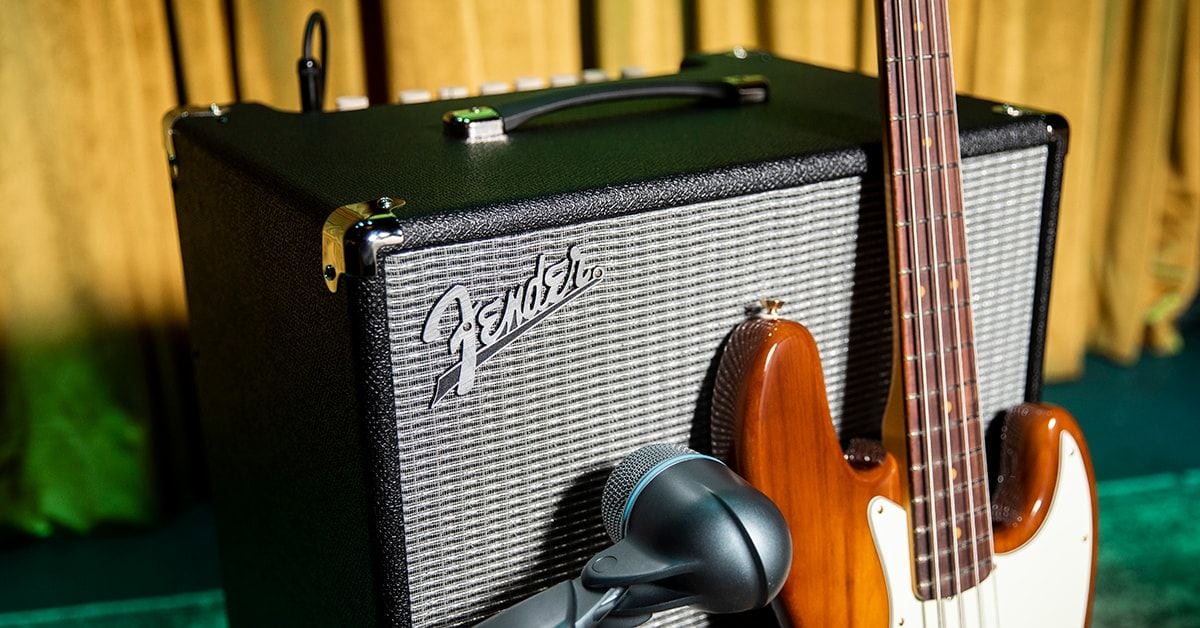

You’re looking for the right bass amplifier to fit your style, sound and specific needs, and you’re in need of some trustworthy intel. Whether you’re just starting out and looking for your first amp, or a seasoned pro looking for the ideal stage or studio rig, we can help you navigate the world of combos, heads, tubes and hybrids to find just the right thump for your sound and budget.
Today, we’ll look at all the basics of bass amplification, from tube and solid-state technology to choosing a combo or head and cabinet. Is the same amp you practice with the right one for the stage? What’s the difference between recording with an amp or a DI? What the heck even is a hybrid amp?
Whether you’re looking for a tried-and-true classic or the latest in thunderous tone-shaping wonders, we can help you locate the right rig for the job.
Table of Contents
How to Choose a Bass Amp
Best Bass Amps for Beginners
Best Bass Amps for Practice
Best Bass Amps for Recording
Best Bass Amps for Live Performance
Finding the Best Bass Amp for You
How to Choose a Bass Amp
The “best” bass amp is the one that fits where and how you play—keeping volume in mind. Before comparing individual models, consider these five factors to narrow the field:
-
Start with your use case: A compact practice amp may be all you need for bedroom playing, lessons or recording. And—while you can certainly perform live with smaller amps—rehearsals, small gigs and larger stages are good use cases for amps with more power, speaker area and connectivity.
-
Choose the right amp type: Bass combo amps place the amplifier and speaker in one cabinet for an easy grab-and-go setup. A separate bass amp head and speaker cabinet give you more flexibility to change your power or speaker configuration later.
-
Match wattage to your volume needs: Lower-powered amps work well at home, whereas rehearsals and performances usually require more wattage and clean headroom. Wattage is only one part of the equation, so consider the speakers, room and rest of the band as well. Check out our helpful bass amp wattage guide below for a more in-depth rundown.
-
Consider speaker size and configuration: An 8", 10", 12" or 15" speaker will each respond differently, dishing out progressively deeper tone and higher output potential the bigger you go. Multiple-speaker configurations can also affect projection and low-end response.
-
Look for useful connectivity: Depending on your needs, handy features may include a headphone output, auxiliary or Bluetooth input, DI/XLR output, effects loop, USB connection, speaker extension output or cabinet simulation.
Bass Amp Wattage Guide
A bass amp’s wattage can help you estimate how much clean volume and headroom an amp may provide, but it doesn’t tell the entire story. Speaker efficiency, cabinet design, room size, PA support and the volume of the other musicians also affect how your amp will sound in the mix. With that in mind, here are some general use cases for wattage ranges.
|
Use Case |
Typical Wattage Range |
What to Know |
|
Bedroom practice |
10–50W |
A practical range for low-volume playing, lessons and headphone practice |
|
Rehearsals and small gigs |
100–500W |
Typically enough to keep up with the rest of the band in many practice spaces and smaller venues, depending on speaker configuration |
|
Larger stages |
500W+ |
Provides more clean headroom and projection and is often paired with larger cabinets or PA support |
A higher wattage rating does not mean an amp has to be pushed to its limits. Many powerful bass amps do the job nicely at lower volume, while giving you room to grow into rehearsals and gigs where you’ll need to move more air.
Bass Amp Features to Look For
Beyond wattage and speaker size, the right features can make a bass amp more useful at home, in the studio and onstage.
-
Headphone output: mutes or bypasses the speaker on many amps so you can practice silently.
-
AUX or Bluetooth input: lets you play along with songs, practice tracks and/or lesson material from a phone, tablet or computer.
-
DI/XLR output: sends a balanced signal to a mixer, audio interface or PA system. This is especially useful for recording and live performance.
-
Effects loop: places effects between the preamp and power-amp stages, which can help delays, reverbs and other effects stay uncolored when the preamp is driven.
-
Overdrive or drive circuit: adds grit, saturation or distortion without needing a separate pedal.
-
Built-in compressor: helps manage signal peaks and makes low-volume content easier to hear for a more consistent attack.
-
Speaker extension output: allows a compatible external cabinet to be connected.
-
Cabinet simulation or IR loading: recreates the sound of a miked speaker cabinet in a direct recording or PA signal.
-
Active/passive input pad: accommodates basses with different output levels and helps prevent high-output active electronics from overloading the input.
Not every player needs every feature. First and foremost, focus on the connections and controls that support the way you practice, record or perform.
Bass Combo Amp vs. Bass Amp Head and Cabinet
A bass combo amp houses the amplifier and speaker in the same cabinet. Combos are convenient for beginners, home practice, rehearsals and grab-and-go gigs because there are fewer pieces to transport and connect. They are also available in a wide range of sizes, from compact practice amps to powerful, stage-ready models.
A bass amp head and cabinet setup separates the amplifier from the speakers. This modular approach gives you the flexibility of choosing the power section and speaker configuration independently, making it easier to adapt the rig, replace individual components or add cabinets over time. Before pairing a head and cabinet, it’s always a sound advice to ensure the cabinet’s impedance and power-handling specifications are compatible with the amplifier.
Best Bass Amps for Beginners
If you’re just starting out, all of this can be overwhelming. Fortunately, we have some good guidelines of what to look for, as well as some choice options for you.
A beginner’s amp is budget-friendly—often less than $200. The wattage typically stays below 50, and your speakers will likely be either 8” or 10”. Inclusion of headphone jacks in the amp are very beginner-friendly, especially for nighttime bedroom practice, and Bluetooth or AUX inputs give you some versatility. All of the beginner options we’re highlighting today feature headphone jacks.
Bass Amp Comparison Chart for Beginners
|
Model |
Wattage |
Speaker |
Controls |
Connectivity |
Price* |
|
25W |
8" custom ferrite speaker |
Volume, Overdrive, Shape, Low, Mid, High |
AUX in, headphone out |
$169.99 |
|
|
25W |
8" Blackstar-designed speaker |
Volume, Drive, Low, Mid, High |
AUX in, headphone out |
$299.99 |
|
|
25W |
8" Fender-designed speaker |
Volume, Overdrive, Bass, Middle, Treble, Contour |
AUX in, headphone out |
$149.99 |
|
|
30W |
8" Ampeg-designed speaker |
Volume, Bass, Midrange, Treble, Super Grit Technology (SGT) overdrive |
0 and –15dB inputs, AUX in, headphone out |
$199.99 |
|
|
10W |
Two 5" VOX Bulldog speakers |
Drive, Bright, Treble, Bass, Volume |
Headphone out |
$169.99 |
Pricing as of July 2026*
Acoustic B25C Bass Combo With Tilt-Back Cab
What to Know:
-
Delivers big, bold bass tone in a compact, affordable package
-
1/8" AUX input to connect a device and jam along with your favorite tunes
-
Tilt-back cabinet lets you keep the rumble off the stage floor
Shop Now: Acoustic B25C Bass Combo With Tilt-Back Cab
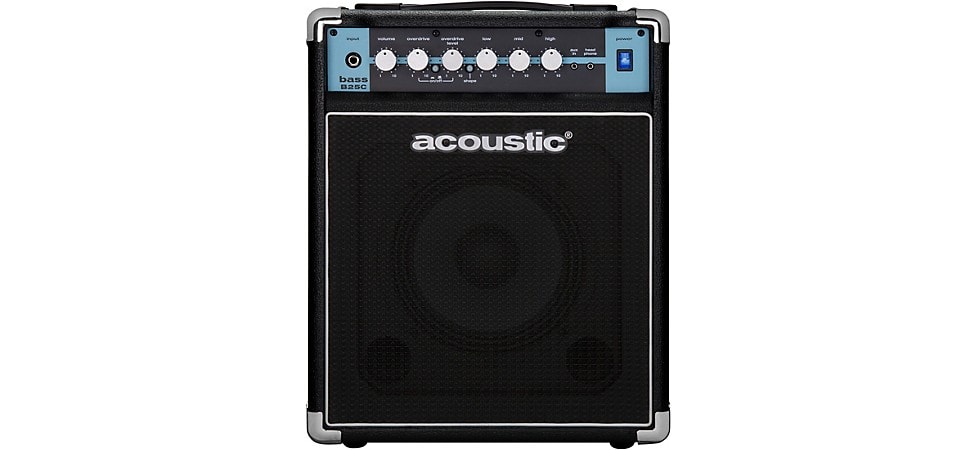
A top choice is the Acoustic B25C 1X8 25W Bass Combo With Tilt-Back Cab. It delivers just the right amount of power for practice and jamming with friends, and easily tilts back like a stage monitor for even better projection from that 8” ferrite speaker. It features simple 3-band EQ control and it also boasts an overdrive circuit and a handy Shape switch that provides quick midrange tone shaping. And the 25 watts of power are just right for getting great tone but not losing your roommates.
Blackstar Debut Bass 25 Marco Mendoza Signature Combo Amp
What to Know:
-
Ultracompact form factor with a streamlined control set
-
1/8" AUX in and 1/8" headphone out
-
Custom red Tolex and Mendoza’s signature Bird logo on the faceplate
Shop Now: Blackstar Debut Bass 25 Marco Mendoza Signature 25W 1x8 Bass Combo Amp
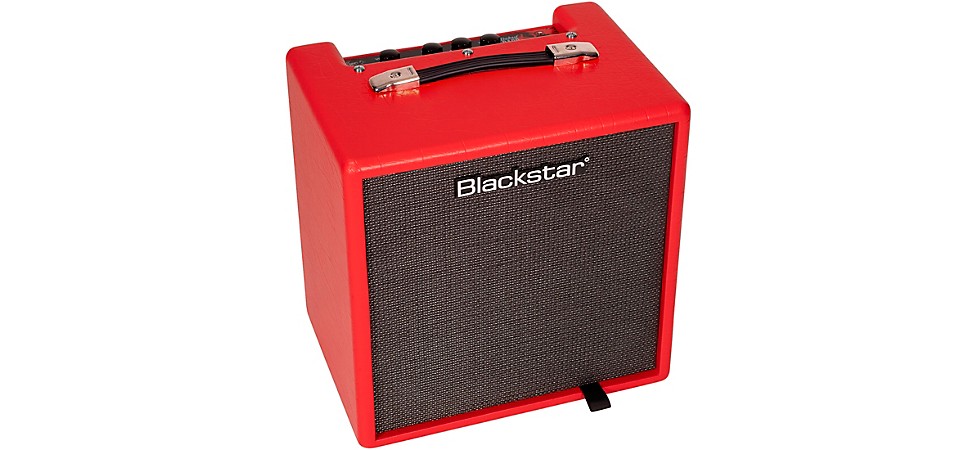
Marco Mendoza’s (Thin Lizzy, Whitesnake, Journey) signature Blackstar Debut Bass 25 combo is the epitome of a great practice amp. It’s small, measuring roughly 14"x15"x10"; it’s lightweight, tipping the scale at 18 pounds; and there are no superfluous features coming between you and inspiring sound. Simply plug in, fiddle with the tone stack and choose between smooth, vintage-inspired cleans or muscular overdrive. As an admirably pragmatic bass amplifier in many ways, Mendoza’s choice of a bright red wrap gives it some attitude.
Fender Rumble 25 Bass Combo Amp
What to Know:
-
No-frills control layout with overdrive circuit and mid-scoop contour switch
-
Custom 8" speaker works well for bedroom jams
-
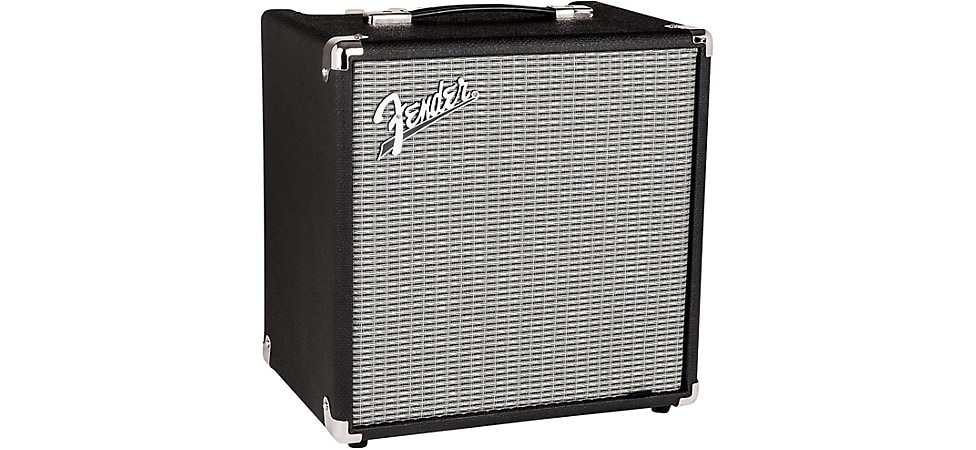
A best-seller at Guitar Center, earning a 4.77/5-star average from over 180 bassists
Shop Now: Fender Rumble 25 Bass Combo Amp
The Fender Rumble 25 1x8 25W Bass Combo Amp is another prime 25-watt, 8” speaker combo. It delivers the trusty round Fender tone we love, and carries a lot of power and volume for its modest footprint.
Ampeg Rocket Bass RB-108 Bass Combo Amp
What to Know:
-
3-band EQ and switchable Super Grit Technology overdrive circuit
-
Equipped with the Ampeg Legacy preamp section
-
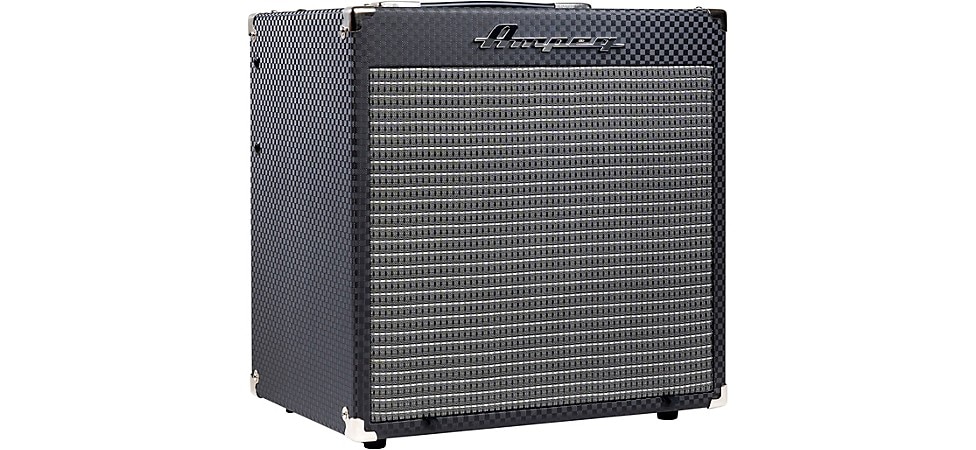
Vintage-inspired aesthetic with a checkered vinyl wrap
Shop Now: Ampeg Rocket Bass RB-108 Bass Combo Amp
Ampeg’s Rocket Bass series is appealing for a lot of reasons—vintage style, portability and heaps of luscious Ampeg bass sound. The Ampeg Rocket Bass RB-108 1x8 30W Bass Combo Amp is a 30-watt beauty that uses the same Ampeg Legacy preamp as pricier models, and includes Super Grit technology for a scrappy overdrive crunch.
VOX Pathfinder Bass Combo Amp
What to Know:
-
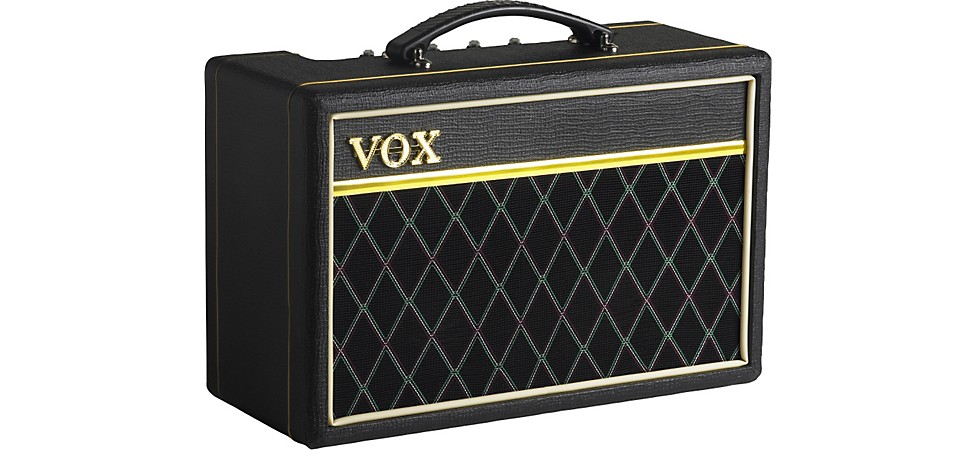
A truly take-anywhere bass combo, weighing only 12 pounds and outputting hefty sonics that belie its frame
-
Open-back cabinet allows low end to “bloom”
-
Drive control gives your bass sound some gritty edge
Shop Now: VOX Pathfinder Bass Combo Amp
The VOX Pathfinder 10W Bass Combo Amp is an offshoot of the widely loved Pathfinder guitar amp (a little solid-state marvel). This bass version boasts two 5” Bulldog speakers that really make the most of the amp’s modest 10 watts. Surprisingly loud and full, it also boasts a Drive option for a little extra something.
Best Bass Amps for Practice
Practice amps are a special and important breed—bigger and more powerful than beginner’s amps so that they can compete with drums, guitars, etc., but not so big that they’re sonic overkill or a nightmare to lug around.
Typical prices hover in the $300–600 range and the wattage often stays in the 100- to 200-watt range, although we’re including some more robust options here. This is where 12” and 15” speakers begin to come into play, in addition to 10” options. Again, headphone outputs and additional input options increase the bang you get for your buck.
Bass Amp Comparison Chart for Practice
|
Model |
Wattage |
Speaker |
Controls |
Connectivity |
Price* |
|
300W |
Two 10" Aguilar-designed speakers |
Gain, Drive, Treble, Mid Level, Mid Freq, Bass, Volume, Mute, –10dB pad |
AUX in, headphone out, dual XLR out, effects loop, USB-C |
$1,499.99 |
|
|
200W |
15" custom neodymium speaker |
Gain, Low, Mid Low, Mid High, High, VLE, VPF, Line Out level |
XLR in, 1/8" out, speakON out, tuner out, effects loop, XLR out |
$769.99 |
|
|
100W |
15" Orange-designed speaker |
Volume, Treble, Middle, Freq, Bass, Blend, Gain |
AUX in, headphone out, effects loop, XLR out |
$699.00 |
|
|
500W |
Two 10" Eminence ceramic magnet speakers |
Gain, Bright, Contour, Vintage, Drive, Level, Bass, Low Mid, High Mid, Treble, Master |
AUX in, headphone, out, effects loop, XLR out, 1/4" speaker out |
$749.99 |
|
|
300W |
Two 10" Peavey-designed speakers |
Gain, Bass, Middle, Treble, Volume, Overdrive, Contour, Mid Shift, Bright, Kosmos-C |
AUX in, headphone out, speakON out, effects loop, XLR out |
$599.99 |
Pricing as of July 2026*
Aguilar Tone Hammer 210 Bass Combo Amp
What to Know:
-
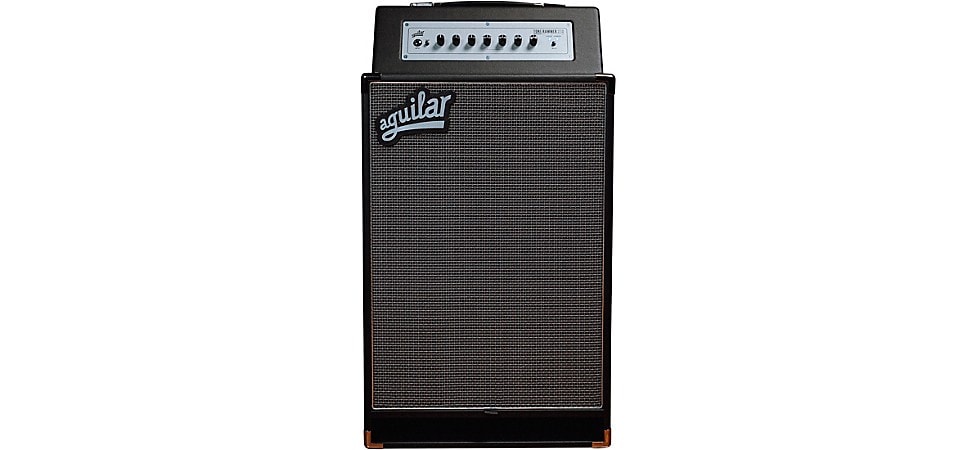
The first Tone Hammer combo, packing Aguilar’s tube-inspired sound into a compact vertical 2x10 cabinet
-
300W solid-state amp informed by flagship Tone Hammer heads
-
Built-in IR loader includes Aguilar Cabinet Suite for realistic direct sounds
Shop Now: Aguilar Tone Hammer 210 300W 2x10 Bass Combo Amp
The Aguilar Tone Hammer 210 is perfect for players who prefer the all-in-one convenience of combo amplification, and especially those who favor gritty, dynamically responsive sounds. A pair of complementary, custom-tuned 10" ceramic speakers reproduce the Tone Hammer’s firm low end, articulate midrange and crisp highs to complete your playing’s sonic picture, whether you pick, slap or pluck. Plus, whenever you need to take a direct signal to FOH or a recorder, you can utilize two XLR outputs and the 210’s onboard impulse responses taken from real Aguilar SL and DB series cabinets. As far as size goes, the Tone Hammer 210 measures 30" tall by 12" deep, so it doesn’t demand too much space on tight stages or in cozy studio corners.
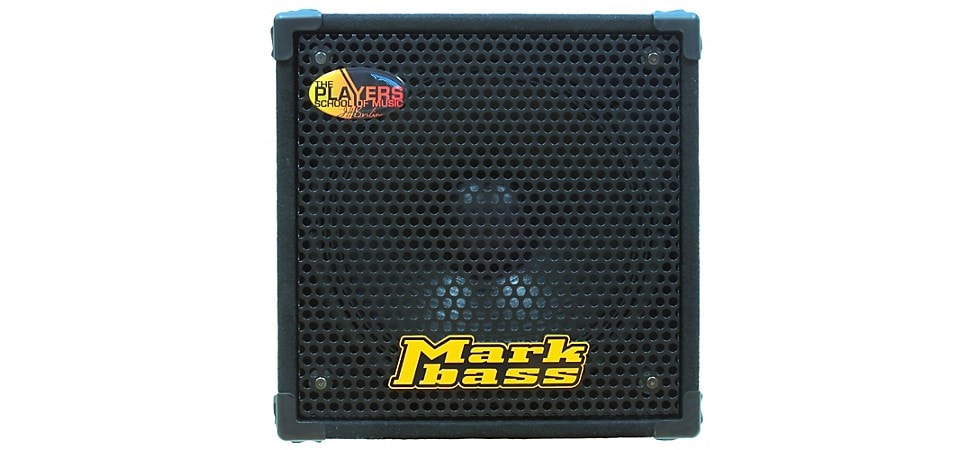
Markbass CMD JB Players School 200-Watt Bass Combo Amp
What to Know:
-
15" speaker produces full-bodied tone without a tweeter
-
Vintage Loudspeaker Emulator (VLE) knob works like a high cut
-
Variable Preshape Filter (VPF) recreates the classic “disco smile” EQ curve, boosting lows and highs while scooping mids
Shop Now: Markbass CMD JB Players School 200-Watt Bass Combo Amp
We recommend the Markbass CMD JB Players School 200W 1x15 Bass Combo Amp. It’s compact enough to work in your room, but with a 15” speaker pumping 200 watts, it packs more than enough punch for a rehearsal. Plus, the XLR output means you can record or run into a PA directly, adding to its versatility. The built-in Markbass Vintage Loudspeaker Emulator (VLE) rounds down your highs, fattening mids and lows, and pumping some nice vintage-style tone.
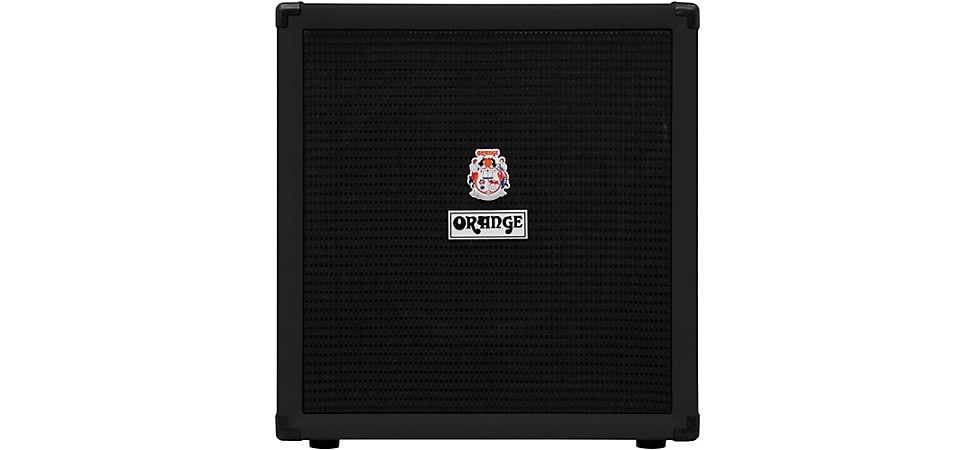
Orange Crush Bass 100 Bass Combo Amp
What to Know:
-
Runs the gamut from round and mellow to distorted and biting
-
Parametric midrange EQ with selectable frequency from 300Hz–2.7kHz
-
Built-in chromatic tuner, and compatible with optional FS-1 footswitch (sold separately)
Shop Now: Orange Crush Bass 100 Bass Combo Amp
The Orange Crush Bass 100 100W 1x15 Bass Combo Amp is the little cousin of powerful and popular Orange 4 Stroke and OB1 series bass amps. It’s powerful enough for small venues, and produces voluptuous bass tone and sonic detail, thanks to active EQ and a bi-amp-inspired Gain and Blend circuit. Oh, did we mention the built-in effects loop and tuner?
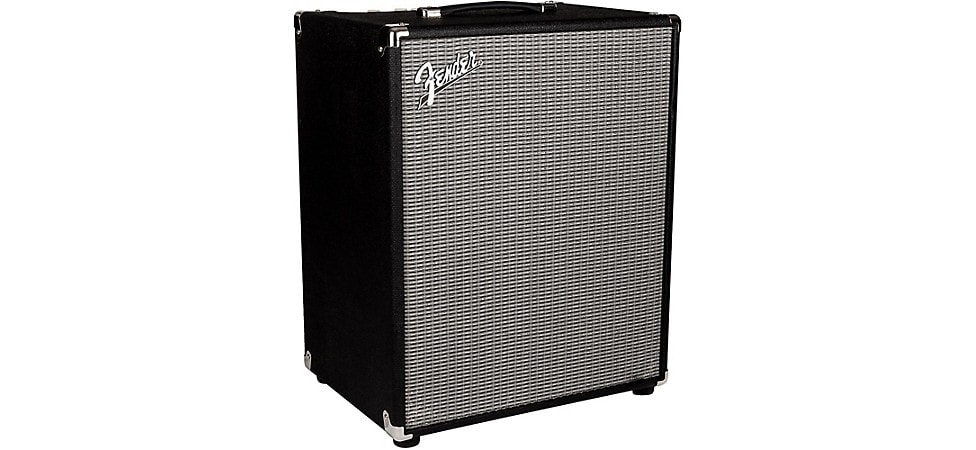
Fender Rumble 500 Bass Combo Amp
What to Know:
-
Three tone voices: Bright (boosted highs), Contour (scooped mids), Vintage (tube-like)
-
Footswitchable overdrive circuit with dedicated Drive and Level controls
-
Compression tweeter delivers crisp, detailed highs and can be turned on or off
Shop Now: Fender Rumble 500 Bass Combo Amp
Fender steps up to the plate again with the Fender Rumble 500 2x10 500W Bass Combo Amp. At first glance, 500 watts might feel like overkill for a practice amp. But at this price, a powerhouse like this that can double as a gig amp is worth noting. It features two 10” Eminence-designed speakers, 4-band EQ, overdrive, an effects loop and a vintage tone switch.
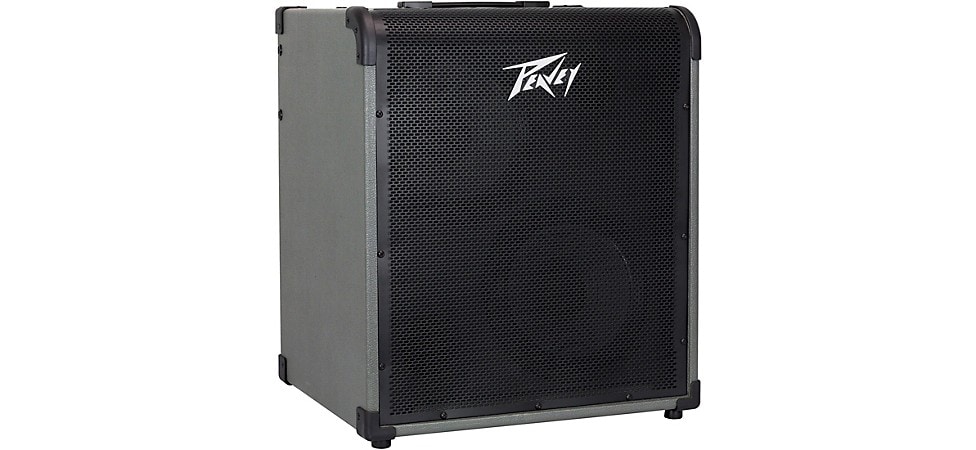
Peavey MAX 300 Bass Combo Amp
What to Know:
-
Dedicated inputs for active or passive pickups
-
Onboard chromatic tuner with mute switch
-
Unique Kosmos-C switch enhances low end with extra harmonic and subharmonic content
Shop Now: Peavey MAX 300 Bass Combo Amp
If you’re looking for rugged and dependable, the Peavey MAX 300 300W 2x10 Bass Combo Amp is your buddy. With a housing built for punishment and Peavey’s DDT speaker protection, which compresses your signal when you’re pushing it hard, this amp can handle nearly anything. Plus, Peavey’s Trans Tube circuitry is designed to provide tube-like warmth with solid-state convenience.
Best Bass Amps for Recording
Quality and sonic personality are at the forefront in choosing an amp to record bass. Before your signal even goes into the board or the computer, you want the best possible sound. Versatility is also huge here, especially if you are a session player recording with different artists in different genres.
Wattage and speaker size can be nearly anything in recording amps, because you’re working in a very controlled environment. This is the first time in this guide we’ll recommend some amp heads, because they work just as well as combos for recording—just remember to budget for a speaker cabinet to go with it.
Bass Amp Comparison Chart for Recording
|
Model |
Wattage |
Speaker |
Controls |
Connectivity |
Price* |
|
900W |
N/A |
Comp, Drive, Level, Mod, Blend, Gain, graphic EQ, Master, Distortion, Bite, Growl |
AUX in, headphone out, MIDI, USB, effects loop, speakON out, XLR out |
$1,499.99 |
|
|
300W |
N/A |
Channel one: Volume, Treble, Midrange, Bass; Channel two: Volume, Treble, Bass |
XLR out, speakON out, 1/4" speaker out |
$3,499.99 |
|
|
800W |
N/A |
Pad, Drive, Level, Bass, Lo Mid, Hi Mid, Treble, Master, Boost, Edge, Bump, Contour, Presence, Mute |
AUX in, headphone out, effects loop, tuner out, speakON out, XLR out |
$1,049.00 |
Pricing as of July 2026*
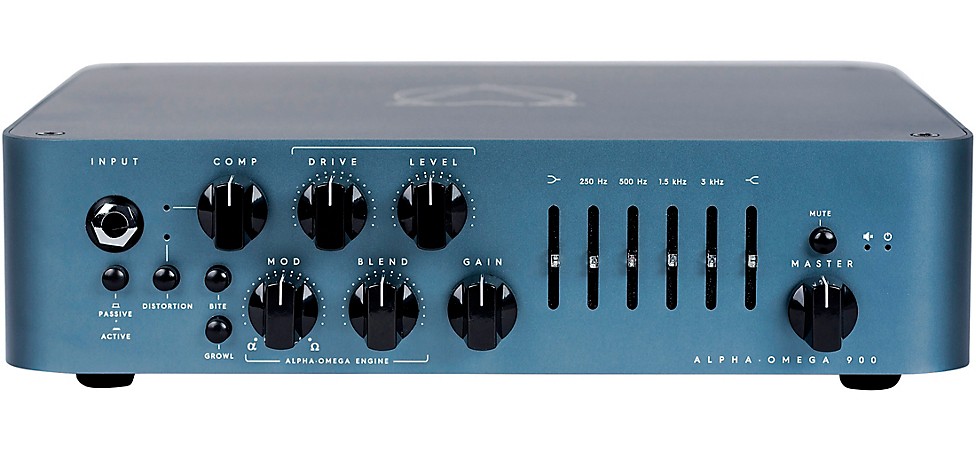
Darkglass Alpha•Omega 900 Bass Amp Head
What to Know:
-
6-band graphic equalizer gives you plenty of tone sculpting from the get-go
-
Alpha • Omega distortion engine goes from mild to wild
-
Pairs with IR-loading Darkglass Suite desktop software
Shop Now: Darkglass Alpha•Omega 900 Bass Amp Head
With a jaw-dropping 900 watts of power, the Darkglass Alpha•Omega 900 900W Bass Amp Head is a beauty of a beast. Darkglass combined elements of their hugely popular Alpha and Omega distortion engines with cutting-edge features, including Bite and Growl modes, built-in compression and an impulse response cabinet simulation that let you store up to three virtual cabinets—that means you can dial in your entire rig sound before it even hits a speaker or a recording device.
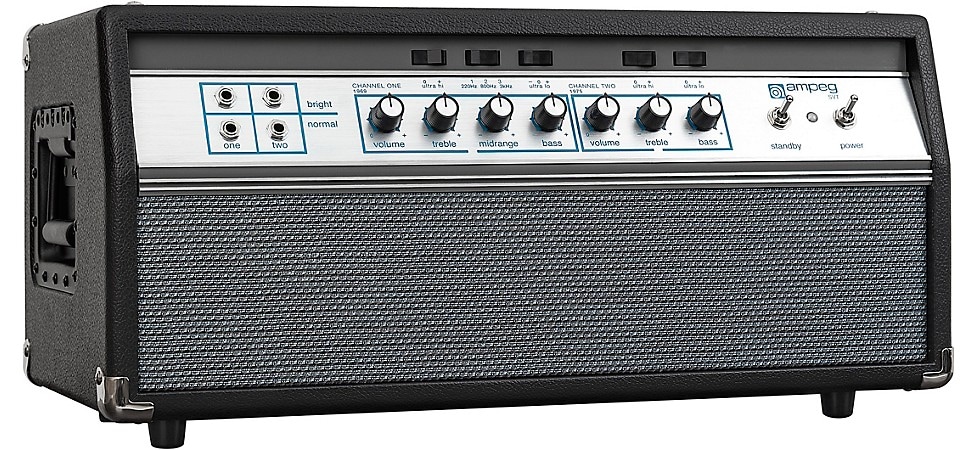
Ampeg Heritage 50th Anniversary SVT Tube Bass Amp Head
What to Know:
-
Two distinct channels with the option to jump them for a third voice
-
Bright and Normal inputs with two jacks each
-
Five rocker switches for fine-tuning tone
Shop Now: Ampeg Heritage 50th Anniversary SVT Tube Bass Amp Head
The Ampeg Heritage 50th Anniversary SVT 300W Tube Bass Amp Head revisits the industry-changing debut of Super Valve Technology—the moment bass players finally had the power to compete with walls of guitar amps. This model features the tone of the 1969 Blueline original and the mid-1970s Magnavox design, plus the option to blend the two. This beauty is made in the U.S.A., and boasts modern improvements, including a fan to promote tube longevity and speakON outputs.
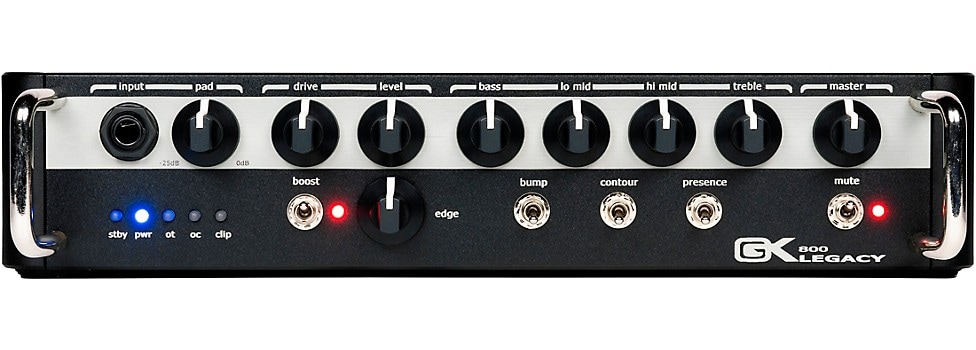
Gallien-Krueger Legacy 800 Bass Amp Head
What to Know:
-
Includes 4-band EQ, plus a footswitch to operate the overdrive circuit
-
XLR DI output with pre- or post-EQ switch
-
Three voicing filters recall classic tones from the ’80s
Shop Now: Gallien-Krueger Legacy 800 800W Bass Amp Head
Gallien-Krueger also revisits a landmark amp with the Gallien-Krueger Legacy 800 800W Bass Amp Head. The 800RB was a breakout hit in the 1980s, admired for its power, clarity and growl. This model captures all of that while adding modern advancements, including gold-plated connectors, to protect against the damage of temperature extremes and vibration from frequent use. It also boasts Bump, Contour and Presence voicing features.
Best Bass Amps for Live Performance
While power is a prime driver in the choice of a gigging bass amp, that doesn’t mean it has to come at the expense of tone and subtlety. The size of the venues you typically play and the amount of traveling you do are important factors, too—you don’t need to lug a giant stack across town to play a coffeehouse, but you’ll struggle to be heard with a small combo in a club with a loud band and boisterous crowd.
Gigging amps generally range from $750 to upwards of $3,000, and if you consider the heads we recommend below, you’ll need to account for the additional cost of a speaker cabinet. Also, some venues provide backline gear, in which case you can just bring your head and plug into their provided cabinet. Call ahead to make sure that their cab will be a good fit for your amp.
Bass Amp Comparison Chart for Live Performance
|
Model |
Wattage |
Speaker |
Controls |
Connectivity |
Price* |
|
700W |
N/A |
Comp, Super Grit Technology, Grit Level, Gain, Bass, Mid, Freq, Treble, Volume |
AUX in, headphone out, effects loop, speakON out, XLR out |
$899.99 |
|
|
500W |
N/A |
Gain, Mid Level, Mid Freq, Bass, Treble, Drive, Volume |
AUX in, headphone out, effects loop, tuner out, USB-C, speakON out, XLR out |
$999.99 |
|
|
300W |
Two 10" neodymium speakers |
Gain, Low, Mid Low, Mid High, High, Old School, Master, Line Out level |
Effects loop, tuner out, speakON out, XLR out |
$1,099.99 |
|
|
500W |
Two 10" Lavoce speakers |
Super Grit Technology, Volume, Bass, Midrange, Treble |
AUX in, headphone out, effects loop, XLR out, extension speaker out |
$749.99 |
Pricing as of July 2026*
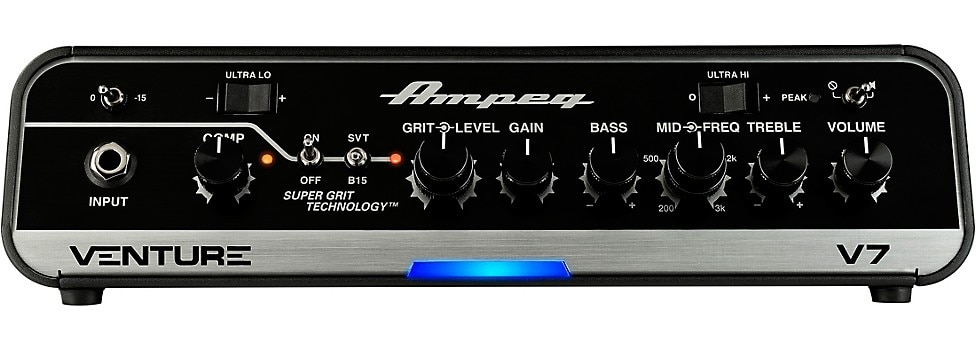
Ampeg SVT-7 PRO Bass Amp Head
What to Know:
-
Super Grit Technology overdrive circuit with SVT and B15 voicings
-
Built-in one-knob compressor
-
700-watt Class-D power section can drive virtually any cabinet
Shop Now: Ampeg Venture V7 Bass Amplifier Head
Compact, lightweight and exceptionally powerful, the Ampeg Venture V7 bass amp head delivers huge sound in a small package. Highlights include the multi-voice overdrive section with saturation styles inspired by classic Ampeg bass amps, as well as an easy-to-use compressor circuit and sweepable midrange frequency to really hone your tone. Its balanced D.I. output is perfect for reliably sending a signal straight to front-of-house or to a recording device in the studio, but you’ll probably still want to hook up a matching cabinet and let the Venture V7’s 700 watts of Class-D power move some serious air.
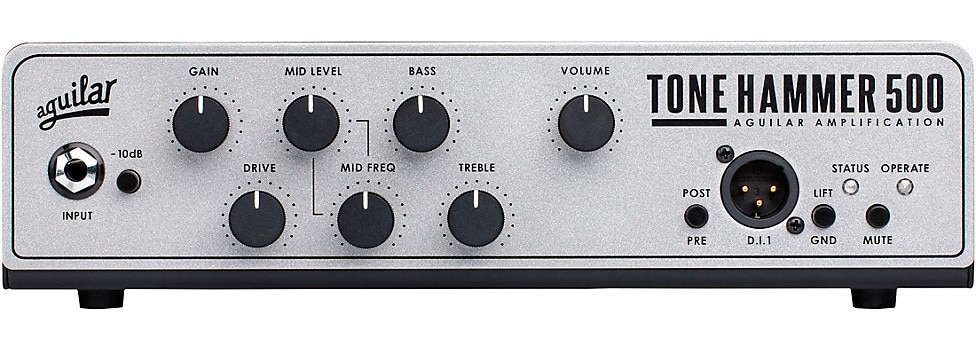
Aguilar Tone Hammer 500 Bass Amp Head
What to Know:
-
3-band EQ with a selectable midrange frequency
-
Drive control adds distortion and valve-style grit to the signal
-
USB-C connectivity and three onboard IRs for recording and performing flexibility
Shop Now: Aguilar Tone Hammer Bass Amp Head
The Aguilar Tone Hammer 500 Bass Amp Head is based on their popular Tone Hammer pedal, which is one of the most respected, tone-saving DIs on the scene. This head combines the pedal’s tonal versatility and gain-shaping circuitry with 500 watts of pure power. Whether you prefer velvety round tone, biting overdrive or cutting solo bass sounds, this puppy can give it to you. It boasts both speakON and XLR outputs, meaning you can run it directly into the PA, just like a DI.
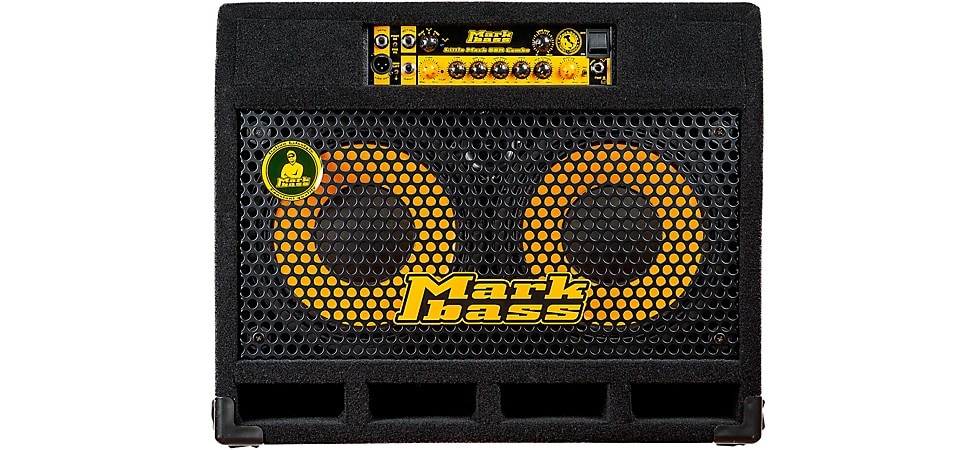
Markbass CMD 102P Bass Combo Amp
What to Know:
-
Old School knob filters high frequencies for a round, smooth sound
-
Bi-band limiter offers fast, dynamic response and a more natural top end
-
4-band EQ with ±16dB boost/cut
Shop Now: Markbass CMD 102P Combo Amp
In the combo arena, the Markbass CMD 102P provides 300 watts of power courtesy of two 10” neodymium speakers in a housing that tilts back like a stage monitor for fantastic projection. It makes the most of its updated 4-band EQ, and it features a piezo tweeter to project your treble and high mids, cutting through competing sound.
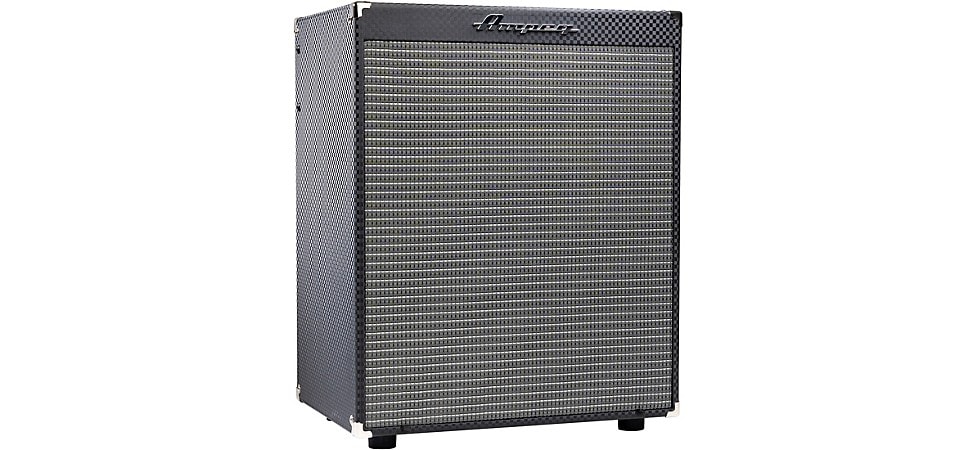
Ampeg Rocket Bass RB-210 Bass Combo Amp
What to Know:
-
Gig-ready oomph weighing in at only 39 pounds
-
Ampeg Legacy preamp with 3-band EQ
-
’60s-style black-checkered Tolex and sparkle grille cloth
Shop Now: Ampeg Rocket Bass RB-210 Bass Combo Amp
The Ampeg Rocket Bass RB-210 2x10 500W Bass Combo Amp has vintage good looks, Super Grit overdrive and two 10” Eminence speakers to proudly broadcast 500 watts of power. This combo captures all the best elements of gigging, recording and practice amps, with headphone out, XLR out and AUX input.
Finding the Best Bass Amp for You
Your ideal bass amp depends on where you will use it most. A compact combo may be the right fit for home practice, lessons or recording, while louder rehearsals and live performances may call for more wattage, speaker area and clean headroom. If you gig often, you may also prefer the flexibility of pairing a separate bass amp head with one or more cabinets.
Compare Guitar Center’s selection of bass combo amps, bass amp heads and bass speaker cabinets to find a rig that matches your volume needs, sound and preferred setup. Visit your local Guitar Center and try several amps with your own bass. While descriptions and reviews can give you a general idea and narrow down your search, the best way to compare how each amp responds to your touch, handles the low end and feels at the volume you expect to use.
Also, the classic amps we mentioned at the beginning often pop up in our vintage collection, and we’re always adding to our arsenal of used gear, so keep an eye out.
Written By: Max McAllister
Max McAllister is an audio engineer, guitarist and writer. At the Brewery Recording Studio, he earned engineering credits on Kid Cudi’s Man on the Moon III, Duckwrth’s SuperGood and the LeBron James Space Jam compilation, among others. Max previously wrote for Produce Like A Pro, where he authored over 600 articles, and has also contributed to Adorama’s 42West. He’s proudly served Guitar Center as a senior writer since 2023.
Recently Added to Buying Guides
Be the first to know about exclusive offers, tips and more.

866-498-7882 English
877-687-5402 Español