.jpeg)

Pro Gear Advisers
•866-498-7882
Yamaha DXR mk3 Powered Speakers: Inside the Next Generation of Portable PA

For years, the evolution of portable PA seemed easy to measure. More output. Less weight. Better drivers. Smaller amplifiers. Every new generation promised louder sound from a more compact box.
Today’s powered speakers are evolving in a different direction.
Yamaha’s new DXR mk3 series reflects that shift. While the hardware has certainly evolved, the bigger story is how much of the work once handled by racks of processing—and sometimes an experienced system engineer—is now moving inside the speaker itself. To better understand that evolution, I sat down with Yamaha Product Manager Andres Franco for a conversation that quickly became about much more than a new product launch.
Raw performance still matters, but increasingly it’s the intelligence inside the cabinet that defines the user experience. Built-in DSP, wireless control, automated optimization and increasingly sophisticated system management are changing what musicians, DJs and production crews can expect from a portable loudspeaker.
Table of Contents
Meet the Yamaha DXR mk3 Series
From Heavy Amp Racks to Intelligent Powered Speakers
Powered Speakers Are Becoming Their Own System Engineers
D-Remote Makes System Engineering More Accessible
Yamaha’s Goal Isn’t More Features—It’s Better Workflow
What Changed Inside the DXR mk3 Cabinet?
The Yamaha and NEXO Partnership Continues to Shape the Platform
Where Powered PA Systems Go Nextr
Final Thoughts: Smarter, Not Just More Powerful
Meet the Yamaha DXR mk3 Series
Before discussing specifications, I wanted to understand the thinking behind Yamaha’s newest powered speakers. Franco is uniquely positioned to provide that perspective. After spending a decade at Yamaha, he joined d&b audiotechnik, where he spent nearly five years before returning to Yamaha in late 2024 as senior product marketing specialist for the company’s powered loudspeaker lineup. That journey gives him a perspective shaped by both Yamaha’s own engineering culture and one of the industry’s leading touring-audio manufacturers.
When I asked Franco if his time at d&b audiotechnik had influenced how he saw Yamaha's product line, he was quick to answer.
"For sure. Being a product manager for all the powered speakers that Yamaha—and all the passive speakers, as well as the Nexo SKUs, it definitely gives me that different perspective to think about."
The DXR mk3 series (DXR10mk3, DXR12mk3 and DXR15mk3) represents the latest generation of Yamaha’s flagship portable powered loudspeakers for musicians, DJs, production companies and installed sound applications. Available in multiple full-range models along with matching powered subwoofers, the series builds on the foundation established by the original DXR and second-generation DXR mkII while introducing updated DSP, new Drive Motion Calibration (DMC) processing, automatic vertical and horizontal cabinet detection, redesigned low-frequency ports and wireless system control through Yamaha’s new D-Remote app.
Those features are important, and we’ll look at each of them in the sections that follow. But during my conversation with Franco, it quickly became clear that simply walking through a list of new specifications would miss the larger story.
Nearly every answer—whether we were discussing DSP, wireless control, cabinet design or product development—kept circling back to the same idea: making professional sound reinforcement easier to deploy, easier to operate and easier to trust under real-world conditions.
In other words, the story isn’t simply that Yamaha built another powered speaker. It’s that powered loudspeakers themselves are changing. Tasks that once required external processors, separate amplifiers or an experienced system engineer are increasingly handled inside the cabinet itself, often automatically and, ideally, invisibly to the user.
The DXR mk3 isn’t interesting because it adds one more feature to a spec sheet. It’s interesting because it reflects where portable PA appears to be heading—and why manufacturers like Yamaha are investing as much effort in workflow and system intelligence as they are in amplifier power and acoustic performance.
That’s the story I wanted to explore.
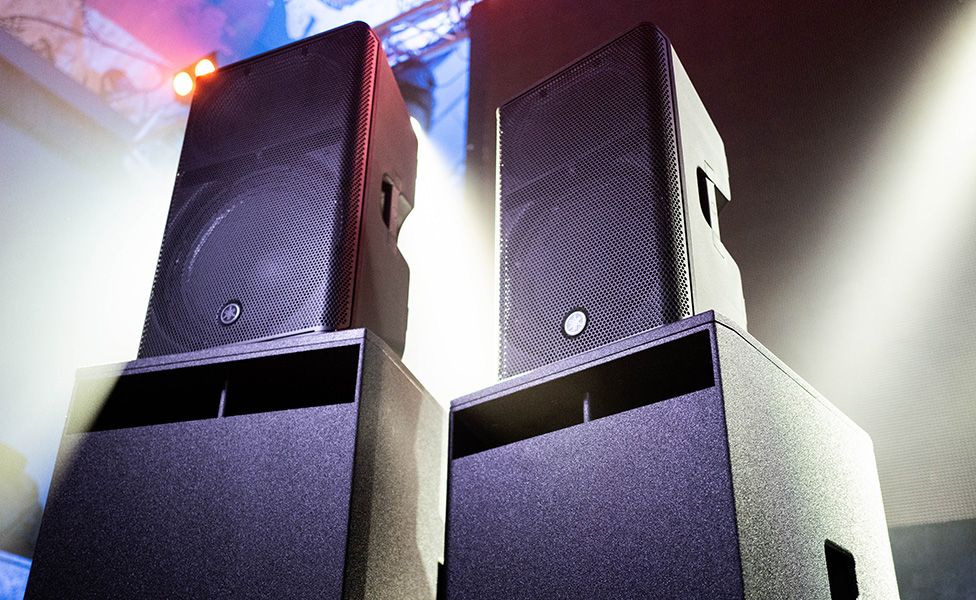
Pictured: Yamaha DXR15mk3 and DXR12mk3 Loudspeakers on DXS15mk3 15" and DXS12mk3 12" Subwoofers
From Heavy Amp Racks to Intelligent Powered Speakers
Not all that long ago, assembling a portable PA meant more than choosing the right speakers. It meant matching loudspeakers with external power amplifiers, selecting crossovers, configuring signal processing and hauling everything to the gig in one or more equipment racks. As systems grew larger, so did the amount of expertise required to deploy them effectively.
Yamaha’s own product history reflects that evolution. The company’s passive Club Series loudspeakers became staples in countless rehearsal rooms, clubs and portable sound systems, while later combinations of Club Series cabinets, dedicated amplifiers and outboard processing offered users higher performance through carefully matched system components. As Class-D amplification became more efficient and DSP technology matured, much of that external hardware gradually moved inside the loudspeaker itself.
The result wasn’t simply a more convenient PA. Powered speakers reduced setup time, eliminated amplifier matching and allowed manufacturers to optimize the amplifier, drivers and signal processing as a single integrated system. Instead of asking users to assemble a collection of compatible components, engineers could design the entire signal chain from the input connector to the loudspeaker cone.
Today’s powered speakers continue that progression. The emphasis is no longer just on integrating amplifiers and DSP into the cabinet, but on using that processing power to simplify deployment, improve consistency and make professional-quality sound reinforcement more accessible. It’s within that broader evolution—not simply as the next model in a product line—that the DXR mk3 series is best understood.
Powered Speakers Are Becoming Their Own System Engineers
For much of the history of professional sound reinforcement, loudspeakers were the end of the signal chain. The real decision-making happened elsewhere—in amplifier racks, digital processors and, ultimately, in the hands of the system engineer responsible for configuring and tuning the system.
That division of labor is beginning to change.
Modern powered loudspeakers don’t simply amplify an incoming signal. They continuously monitor operating conditions, apply sophisticated DSP, protect their own components and, in many cases, adapt automatically to how they’re being deployed. As processing power has increased, manufacturers have gained the ability to move more of that intelligence into the loudspeaker itself.
Franco sees that evolution continuing. One of the marquee additions to the DXR mk3 is Yamaha’s new D-Remote app, but he views it as more than a convenience feature. By moving speaker management, EQ, delay and system grouping onto a phone or tablet, he says it gives users the opportunity to become “a mini system engineer.”
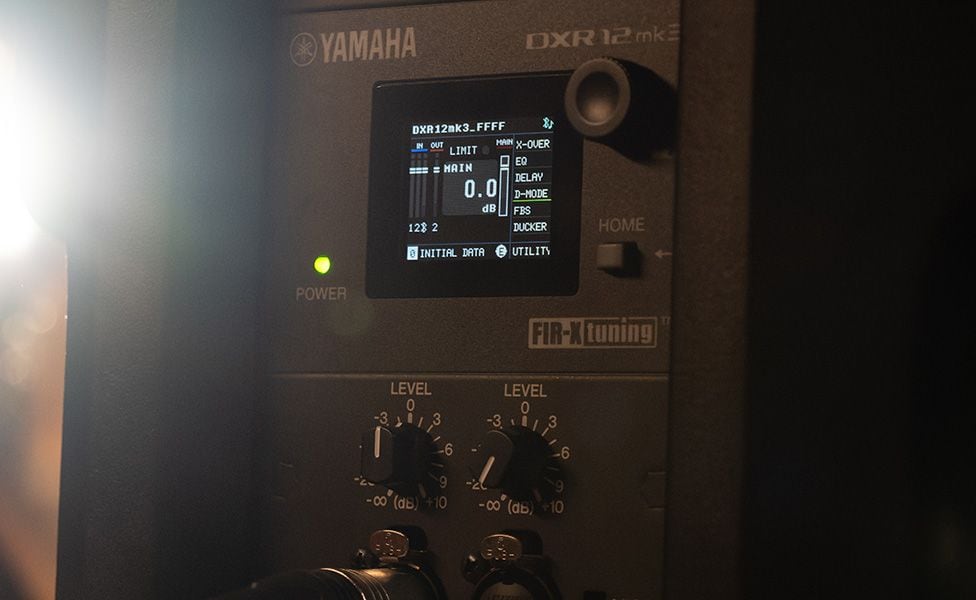
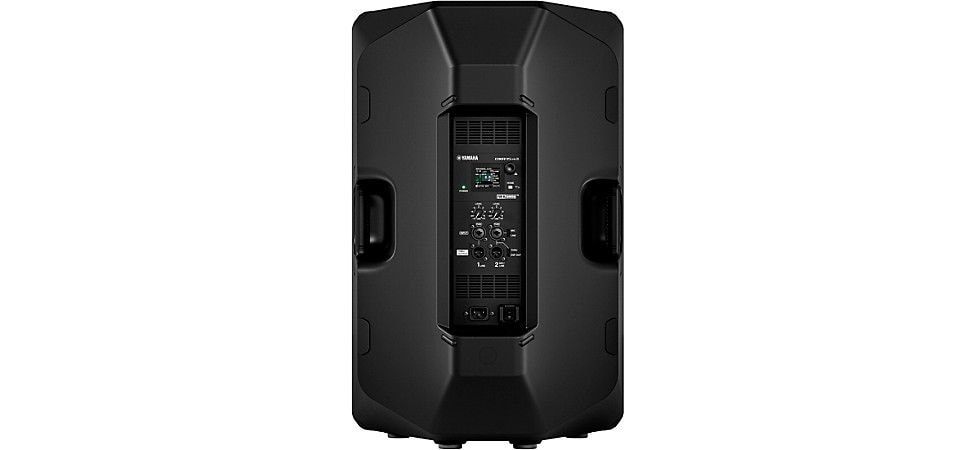
Pictured: Yamaha DXR12mk3 Rear Control Panel
That’s a revealing choice of words. The goal isn’t to replace experienced system engineers. Large productions will always benefit from skilled professionals. Instead, the idea is to encapsulate more of that expertise within the loudspeaker itself, making sophisticated deployment techniques available to musicians, DJs, houses of worship and small production companies that may not have a dedicated audio engineer for every show.
One example is Yamaha’s new Drive Motion Calibration (DMC), which continuously monitors the movement of the low-frequency driver and adjusts its behavior in real time. Rather than treating speaker protection as a simple limiter that reacts after the fact, DMC is designed to anticipate changing operating conditions and help maintain consistent performance while protecting the transducer.
But Franco was careful not to present DMC as an isolated feature. Instead, he described it as part of a broader shift toward loudspeakers that increasingly manage themselves, allowing users to spend less time thinking about system configuration and more time focusing on the event itself.
That distinction may be the most significant change in portable PA over the past decade. Earlier generations of powered speakers replaced external hardware. Today’s generation is beginning to replace some of the expertise that hardware once required to configure and operate effectively.
The goal isn’t to eliminate the role of the system engineer. Large-scale productions will always benefit from experienced professionals making critical decisions. Instead, technologies like DMC represent an effort to make more sophisticated engineering available to everyone—from solo performers and DJs to houses of worship, schools and production companies deploying smaller systems.
D-Remote Makes System Engineering More Accessible
When I asked how this approach to powered speaker design was most embodied in the DXR mk3 series, Franco didn't hesitate.
"One of the newest features that came out for DXR—but this specific feature is going to carry over to the newer potential powered speakers coming out—is D-Remote."
A cross-platform application you'll be able to run on your mobile device (Android, iPhone or iPad), D-Remote promises a level and depth of control we haven't seen before in an app for portable PA gear. And Franco believes it's the "killer app" for the DXR mk3.
"You can control the different parameters of each speaker—whether it's EQ, delay, if it's going to be in front-of-house mode, monitor mode, whatever."
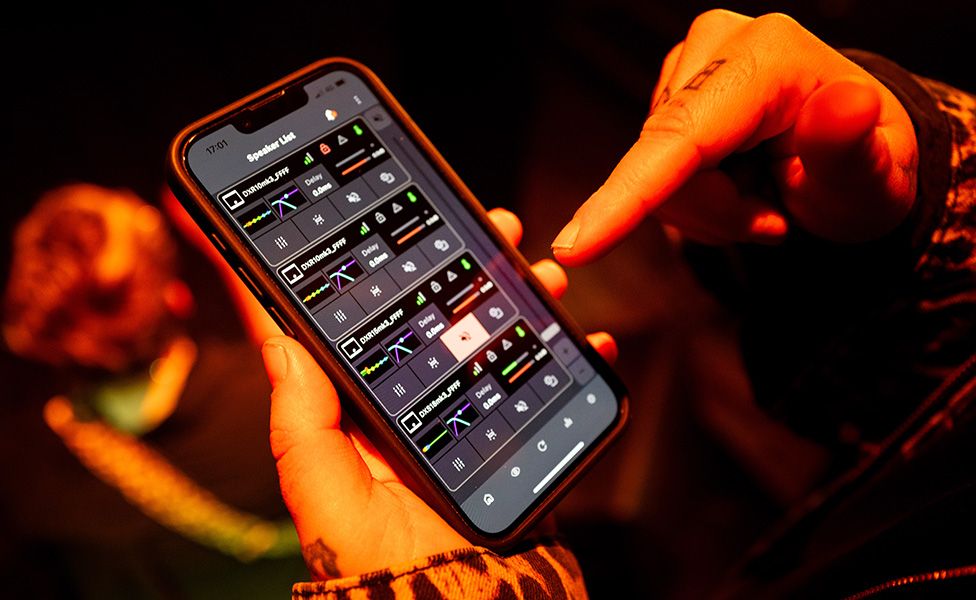
Pictured: Yamaha D-Remote App
D-Remote also supports speaker grouping, allowing users to create linked level controls for mains and subwoofers from a single interface.
One of the workflow improvements Franco is most excited about is delay alignment for larger systems. His enthusiasm is palpable as he explains. "Say you have your set of mains at the stage, then you have a set of delay speakers—you have the ability to go into the app, shoot pink noise and listen to what that distance is. And then instead of you having to go climb a ladder—say, for example that speaker's floating on a piece of truss—you could literally just get the app and find the delay for that specific speaker and add that in. It's built into the speakers."
That seemingly simple example illustrates a broader shift in powered loudspeaker design. D-Remote doesn’t add capabilities that touring system engineers have never had. Instead, it puts those capabilities into a form that’s faster, easier and far more approachable for musicians, DJs, houses of worship and small production companies. Rather than replacing the system engineer, it lowers the barrier to thinking like one.
Yamaha’s Goal Isn’t More Features—It’s Better Workflow
If you’ve been following the evolution of powered loudspeakers, you’ll know that Bluetooth connectivity and wireless control aren’t new ideas. That’s not really the story here. The more interesting question is why Yamaha chose to implement them.
Throughout our conversation, Franco kept returning to the same theme. Features like D-Remote, onboard DSP and automated system management weren’t conceived as technology demonstrations or marketing checklist items. They were designed to reduce friction—to eliminate unnecessary trips up ladders, simplify deployment and let engineers, musicians and production crews spend less time managing equipment and more time listening.
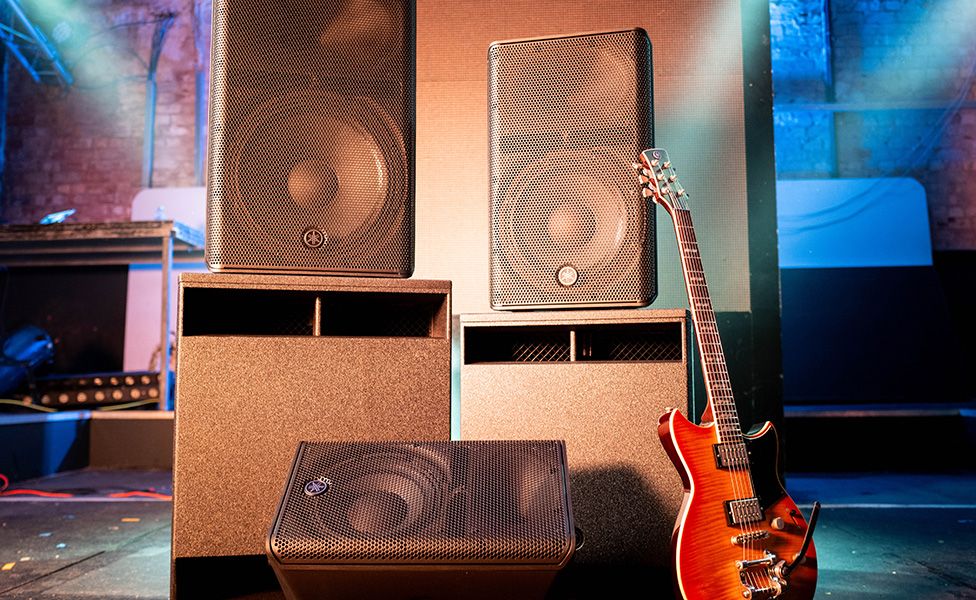
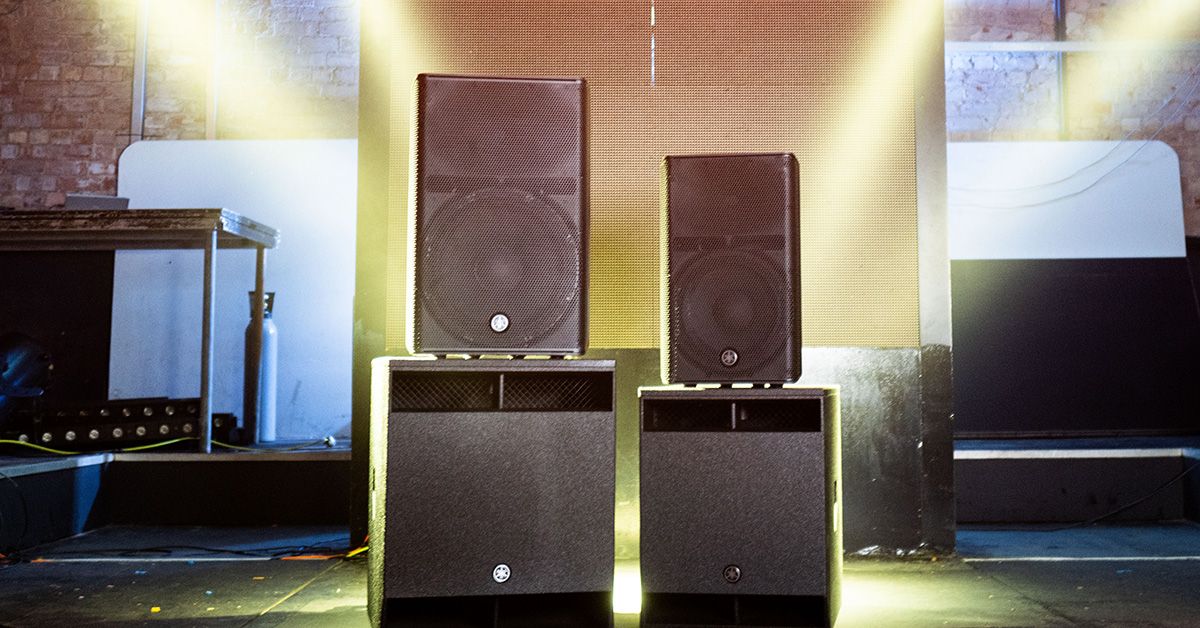
Pictured: Yamaha DXR15mk3, DXR12mk3 and DXR10mk3 Loudspeakers with DXS15mk3 15" and DXS12mk3 12" Subwoofers
In other words, Yamaha’s goal isn’t simply to add more features. It’s to make the workflow feel more natural.
One specific example that intrigued me was the new DMC (Drive Motion Calibration) feature, which continuously monitors and corrects low-frequency driver behavior in real time. Powered by a new 32-bit floating-point DSP running at a 96kHz sample rate, DMC uses a proprietary algorithm tuned to Yamaha’s custom drivers to help maintain consistent low-frequency performance while reducing distortion—even when the speaker is being pushed hard.
Add in other new features like automatic cabinet orientation detection for seamless switching between monitor and front-of-house modes, along with an intelligent Feedback Suppressor, and a pattern begins to emerge. Yamaha isn’t adding features simply because the technology exists. It’s using onboard processing to automate routine engineering decisions so musicians and engineers can spend less time configuring the system and more time focusing on the performance.
What Changed Inside the DXR mk3 Cabinet?
Of course, software can only take you so far. If the DSP is the DXR mk3’s brain, the cabinet and driver system are still its body—and Yamaha didn’t leave those untouched, either.
Franco points to the redesigned bass-reflex ports as one of the two or three most significant engineering changes in the DXR mk3. “They’ve redesigned the ports so there’s less turbulence flying through the speaker. It keeps the low end very consistent and really cleans up that distortion.”
That may sound like a subtle refinement, but it’s the sort of engineering change that pays dividends every time the speaker is pushed hard. By smoothing the airflow through the cabinet, Yamaha reduced one of the physical limitations that can compromise low-frequency performance at higher output levels.
Yamaha wisely left one of the DXR series’ best ideas intact: the symmetrical cabinet design. By allowing mirrored placement when used as a pair of floor wedges, the DXR mk3 creates a more uniform monitoring field across the front of the stage rather than favoring one side or the other. Hey, when something works, you don't change it just because you can.
But there's a kicker here. Combined with the new automatic orientation detection mentioned in the last section, it’s another example of Yamaha refining the deployment experience rather than reinventing it. No more remembering to flip a switch between FOH and monitor modes. Set the speaker where you need it, and it takes care of the rest. It’s a small touch, but it’s exactly the kind of thoughtful refinement that has quietly become the theme of the entire DXR mk3 redesign.
You’ll notice we haven’t spent much time talking about wattage or maximum SPL. That’s not because the DXR mk3 doesn’t have a 2,000-watt Class-D amplifier or deliver more than 130dB of peak SPL—it does. But so does just about everyone else these days. The Wattage Wars and SPL Olympics have been going on for decades.
Bigger numbers don’t automatically make a speaker easier to deploy, more reliable or better sounding. What makes the difference is how thoughtfully the engineering comes together to solve real-world problems. And that’s something Yamaha has quietly been doing for a very long time.
The Yamaha and NEXO Partnership Continues to Shape the Platform
One of Yamaha’s greatest strengths has always been knowing when it doesn’t have to reinvent the wheel. Sometimes the smartest engineering decision isn’t inventing a new technology but recognizing a great one when you see it and finding a way to bring it into your own products.
That philosophy is perhaps best illustrated by Yamaha’s long relationship with NEXO Professional Audio. Yamaha first began collaborating with the French loudspeaker manufacturer in 2005 before acquiring the company three years later. While NEXO may not be a household name, unless you live in a house full of professional live sound engineers, it has spent decades developing loudspeaker technology for some of the world’s largest concert tours and fixed installations. That expertise has steadily found its way into Yamaha’s own live sound products—including the DXR series.
Franco describes the relationship as far more than a corporate ownership chart. “Yamaha Japan and NEXO constantly have meetings,” he explains. “They bring those two together … and they can essentially create great products going forward.”
Ask Franco what drives those conversations and his answer isn’t a discussion of DSP, cabinet geometry or amplifier topology. It’s much simpler.
“The first key to developing a product is, ‘How is this going to help the customer?’”
That’s a surprisingly revealing answer. Throughout our conversation, whether we were discussing D-Remote, Drive Motion Calibration, cabinet redesign or deployment workflow, Franco kept returning to the same idea. The technology wasn’t the destination. It was simply the means to making the job easier for the person using it.
Those discussions have most definitely paid off as Franco observed about the original DXR series, "Those created a really good collaboration between NEXO and Yamaha, bringing the electro-acoustic side of NEXO and the manufacturing side of Yamaha together."
Where Powered PA Systems Go Next
After spending an hour talking about workflow, DSP and deployment, I wanted to know what Franco thought the next major leap would be. If powered loudspeakers have already become intelligent systems, what still separates today’s designs from the ideal loudspeaker?
I expected us to disappear into the weeds discussing AI, ever-more-powerful DSP and increasingly sophisticated networking. Instead, Franco surprised me with a much simpler answer.
He pointed to sound reinforcement company L-Acoustics, referencing its L2 and new L1 systems—not because they’re competitors, but because they’re tackling the same problem from a different direction. As he put it, “They will probably revolutionize and change the idea of a line array.”
That problem isn’t making speakers louder. It’s making them smarter about where the sound goes.
Franco argues that the real frontier is better control over the sound field. Rather than simply producing more output, the goal is to deliver more consistent sound throughout an entire venue. Modern beam-steering techniques make it possible to shape where energy is projected so listeners experience nearly the same tonal balance and sound level whether they’re in the front row or halfway to the back wall.
And that’s the target on the horizon—more consistent coverage, more predictable sound and systems that are easier to deploy and control. If the DXR mk3 shows where powered loudspeakers are today, that vision offers a glimpse of where they’re headed next.
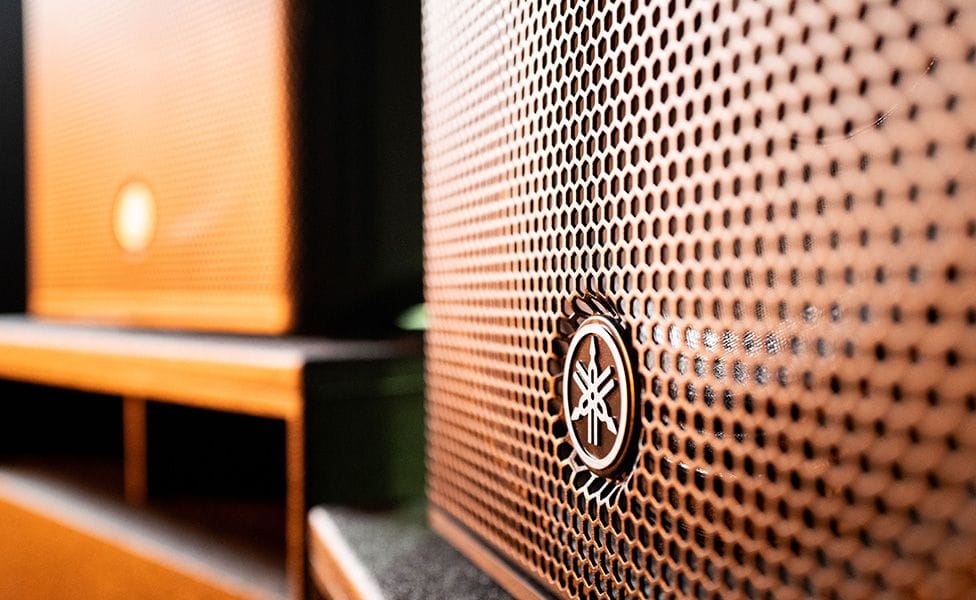
Pictured: DXR12mk3 Yamaha Branding
Five Features Working Musicians Will Notice
-
D-Remote — Control multiple DXR mk3 speakers from your iOS or Android device without climbing a ladder or walking back and forth across the venue. It’s a genuine workflow improvement, especially when you’re tuning a system from the audience position instead of beside the speaker.
-
Auto V/H Orientation Detection — Built-in sensors automatically recognize whether the speaker is being used vertically for front-of-house or horizontally as a floor monitor, then switch to the appropriate DSP mode. One less setup step means one less thing to forget during a hurried load-in.
-
Delay — Onboard delay makes it easy to time-align speakers in distributed systems or delay fills without adding an external processor. Even for smaller gigs, it’s another tool that helps keep sound coherent across the room.
-
Redesigned Cabinet and Bass Reflex Ports — Yamaha reshaped the bass-reflex ports to reduce turbulence at higher output levels, helping maintain cleaner, more consistent low-frequency performance when the speaker is working hard. It’s one of those engineering changes you may not see, but you’re likely to hear.
-
Drive Motion Control (DMC) — Yamaha’s intelligent DSP monitors woofer behavior in real time and adjusts output to help maintain low-frequency clarity while reducing unwanted cone excursion and distortion. The result is bass that stays tighter and more controlled, especially at higher playback levels.
Final Thoughts: Smarter, Not Just More Powerful
There’s an old engineering maxim that says the best technology is the technology you don’t notice. It simply gets out of your way and lets you do the thing you actually wanted to do in the first place.
After an hour with Franco, I came away thinking that’s really the story of the DXR mk3. Yes, it’s more powerful. Yes, it’s smarter. Yes, the DSP is more sophisticated than ever. But none of those things matter on their own. They matter because they remove one more distraction between the engineer and the audience.
For all the industry’s fascination with watts, SPL and feature lists, the future of powered loudspeakers may turn out to be surprisingly humble. Not louder. Not flashier. Just a little easier to deploy, a little easier to trust and a little more likely to disappear into the background, leaving nothing between the performer and the people who came to hear them.
And, ultimately, isn’t that what sound reinforcement was supposed to do all along?
Written By: George Van Wagner
George Van Wagner is a writer and editor for Guitar Center, where he has worked since 2007. A multi-instrumentalist, freelance recording engineer, arranger, composer, writer and all-around tech geek, he has over 30 years of experience in the musical instrument industry at companies like Midiman/M-Audio and Line 6, doing everything from customer service and writing user manuals to working in product development. He is currently gigging around Los Angeles with Gruppo Subconscious and Bobby “Hurricane” Spencer.
Be the first to know about exclusive offers, tips and more.

866-498-7882 English
877-687-5402 Español