

Pro Gear Advisers
•866-498-7882
Vintage Spotlight: 1978 Gibson Les Paul Custom
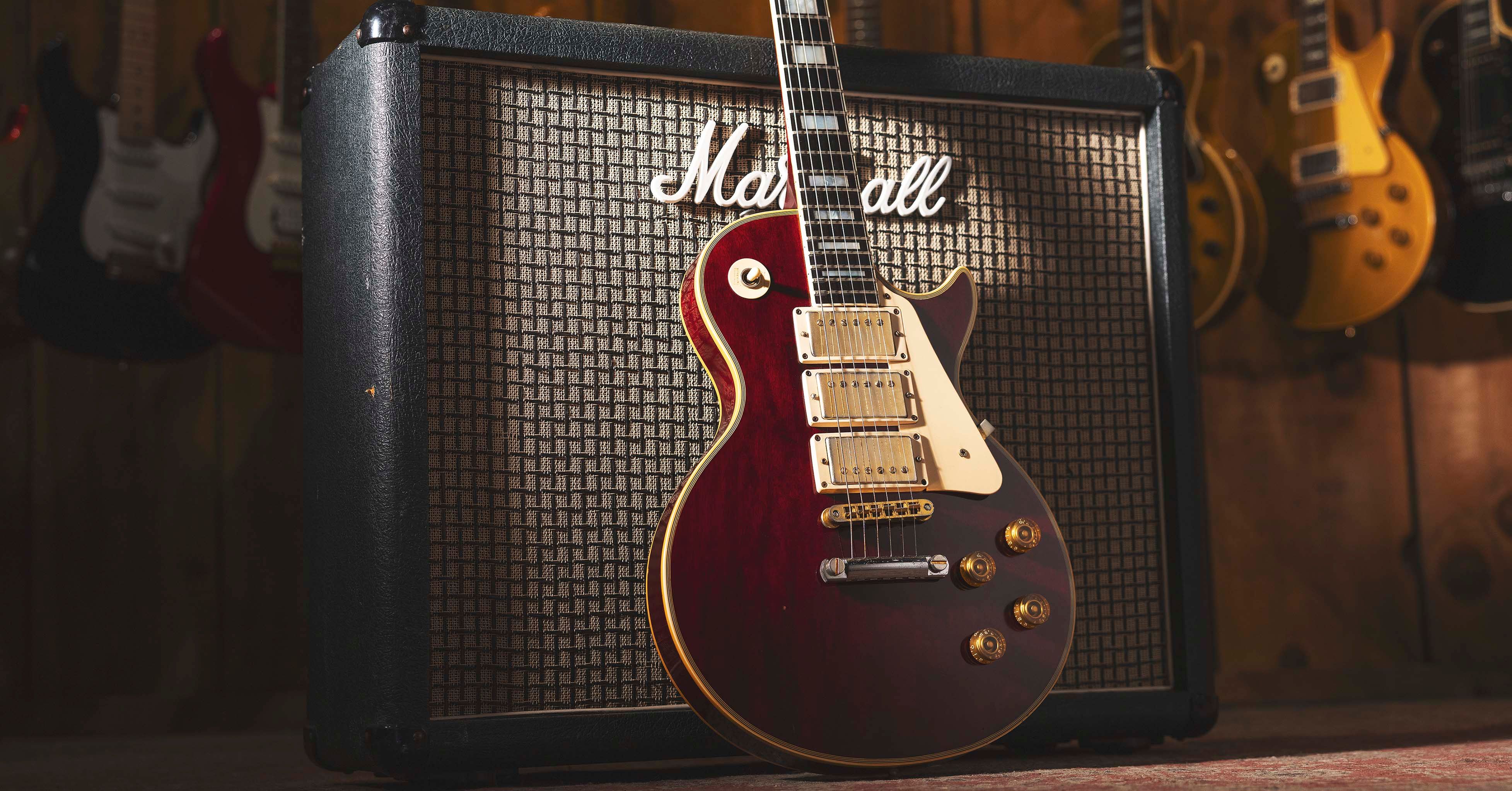

The list of guitar heroes who’ve brandished a Gibson Les Paul Custom is long, and it includes those who’ve simply kept one in rotation and others who adopted the model as their unofficial “signature.” To name a handful: Mick Ronson, Peter Frampton, Robert Fripp, Randy Rhoads, John Sykes, Zakk Wylde, Adam Jones, James Iha, Jerry Cantrell, Kim Thayil, Chris Cornell and Bill Kelliher have all called upon the mighty Les Paul Custom for its undeniable swagger and rich, powerful sound.
Among the remarkable vintage instruments to recently pass through Guitar Center’s flagship Hollywood store was a stunning 1978 Gibson Les Paul Custom in Wine Red, sporting a rare-for-the-era three-humbucker configuration. We’ve probably all seen more traditionally appointed vintage Ebony Customs than we can count, but this particular model—with its cream pickguard and pickup rings, plus the trio of humbuckers—is distinctively cool.
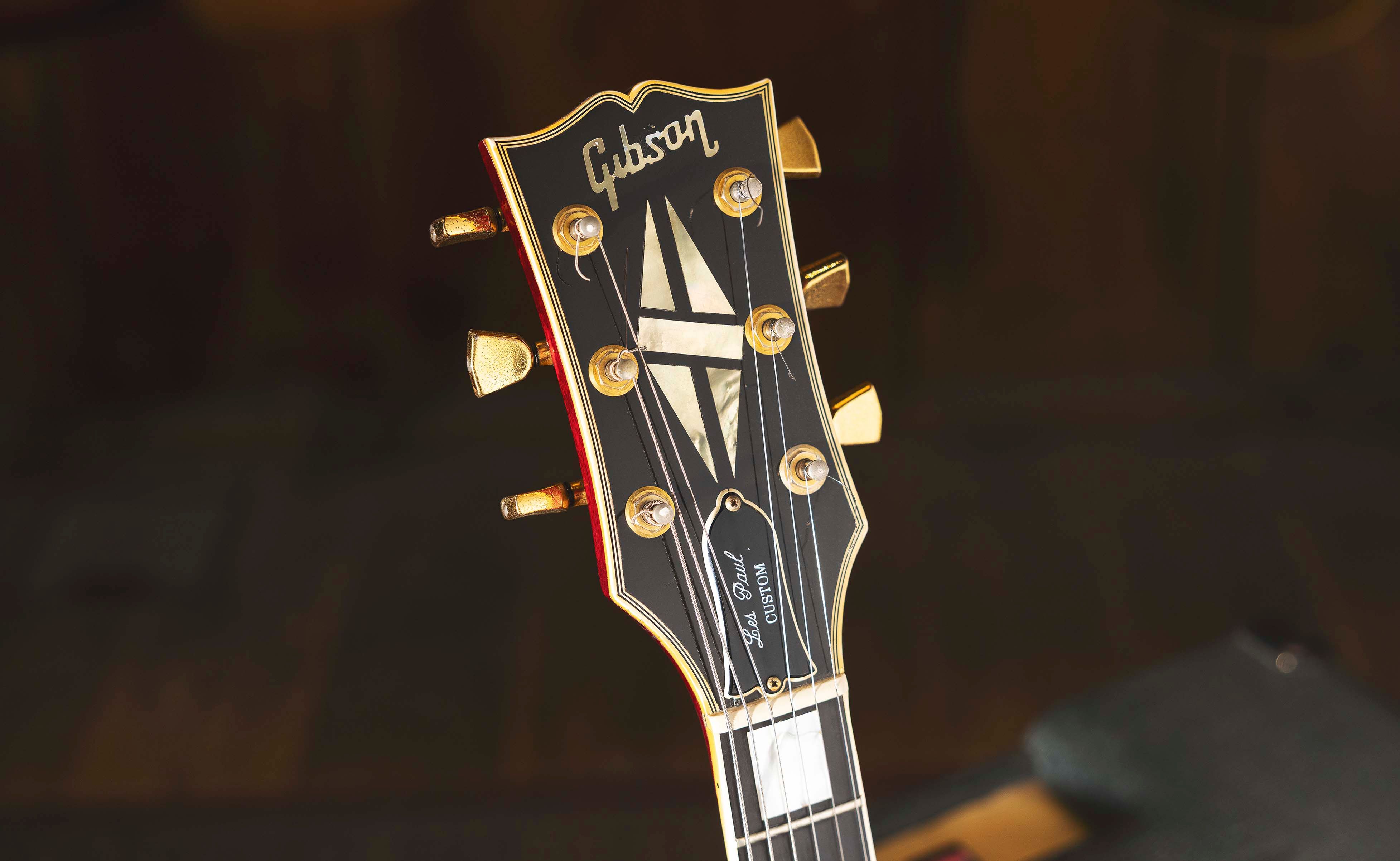
Pictured: 1978 Gibson Les Paul Custom Headstock
Impressions of the 1978 Gibson Les Paul Custom
Admittedly, it had been a few years since I’d personally visited the Platinum and Vintage Room at Guitar Center Hollywood. And frankly, I’d forgotten just how awesome it is: dozens of high-end instruments displayed floor to ceiling, surrounded by equally impressive amplifiers, all being ogled by starry-eyed dreamers—me included. It’s a special place, no doubt, and rivals any collection you can imagine. Call it a gallery, a museum, a playground, whatever you wish—it’s guitar nerd Valhalla.
I spotted this ’78 Les Paul Custom almost immediately. It was situated alongside several other LP Customs, most within about a decade of each other in age. If you closed your eyes and picked one at random, you’d walk away with something fabulous—gorgeous, all of them, but the ’78 certainly stood out.
I referenced “How to Decode Gibson Serial Numbers” and discovered this guitar was born March 16, 1978, in Nashville, Tennessee. That places it pretty much smack dab in the middle of the Norlin era, so I had some questions about construction.
For more on what the Norlin era meant for Gibson guitars, check out our story on “The History and Evolution of the Gibson Les Paul.”
Body and Neck
First was whether it had a “pancake” (or “sandwich”) body. When Norlin took over, they shifted away from two-piece maple tops and solid mahogany slabs, instead building Les Pauls with layered bodies. You’d have a maple top—those also became three pieces now—then a thin layer of maple sandwiched between two pieces of mahogany for the body.
At the time, Gibson claimed this added structural integrity to the instrument, but it was likely a cost-cutting measure meant to repurpose mahogany scraps that weren’t thick enough for a whole Les Paul body.
I went in with an understanding that Norlin phased out pancake bodies by 1977 (confirmed by Guitar Center’s knowledgeable Vintage Room associate Whitney Lockert), but there are always exceptions and anomalies.
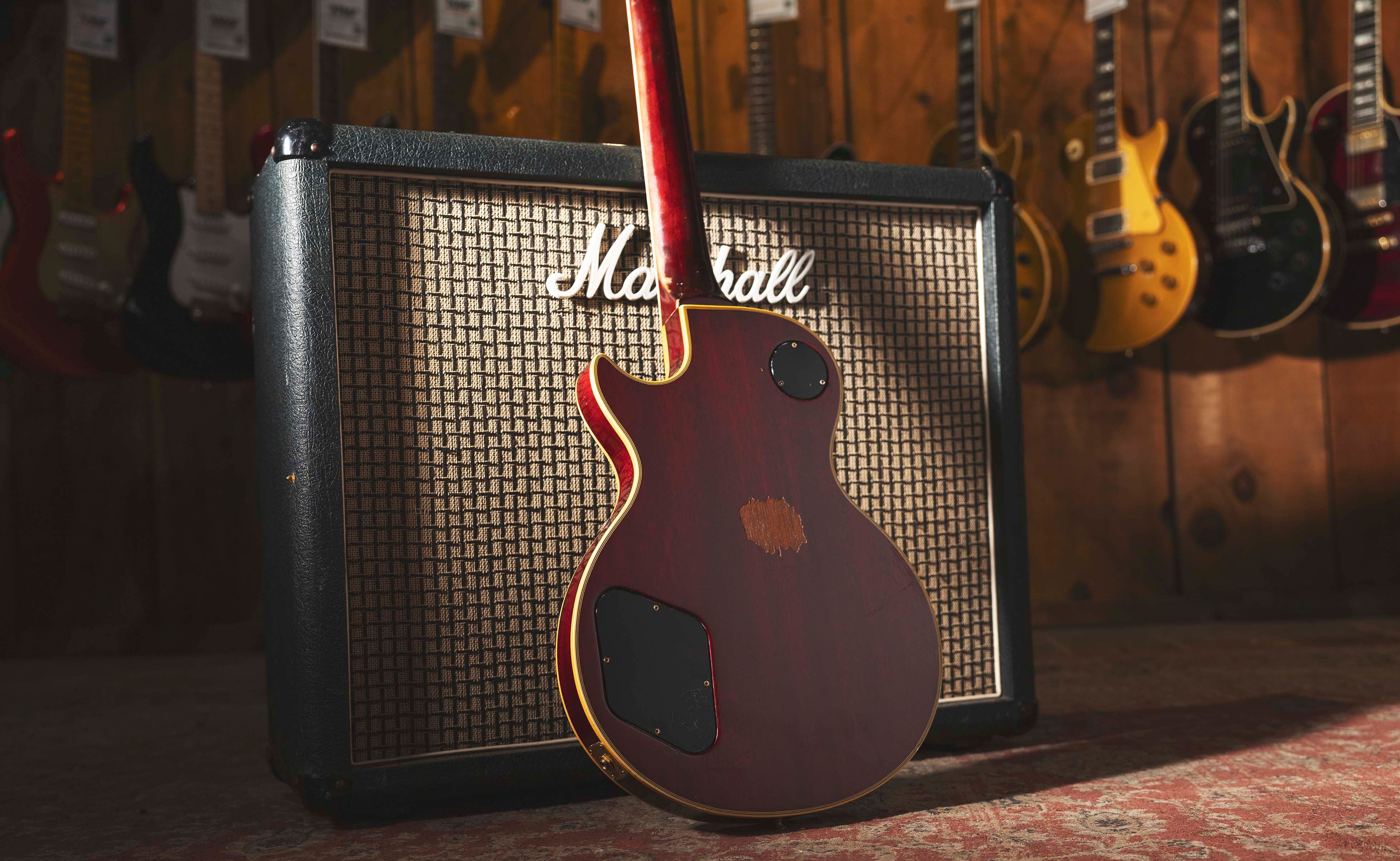
Pictured: 1978 Gibson Les Paul Custom Body and Neck
Could this early ’78 be a sandwich-bodied straggler? With no visible seams, I verified solid mahogany construction.
The next consideration was the neck. By the mid- to late 1970s, Norlin had transitioned from mahogany to maple—and from solid to three-piece laminated—necks. This 1978 indeed features a three-piece maple neck, complete with the era-specific, headstock-reinforcing volute. Maple, in this case, gives the guitar a slightly brighter, snappier attack compared to the mahogany-necked Les Pauls many of us are accustomed to.
Of course, it still has an ebony fingerboard with the lovely, chunky mother-of-pearl block inlays for which Customs are known.
Electronics
As far as electronics go, this model is equipped with three Gibson T-Top humbuckers. These are low to medium output, and compared to a PAF, they’re a bit tighter and more articulate—brighter, really, because they’re not so rich in low mids. Somewhere along the line, the metal grounding tray inside the electronics cavity was removed, though it is included inside the guitar’s original chainsaw case (red interior with a molded Gibson logo—not the badge that tends to fall off). And that brings us to the instrument’s overall integrity.
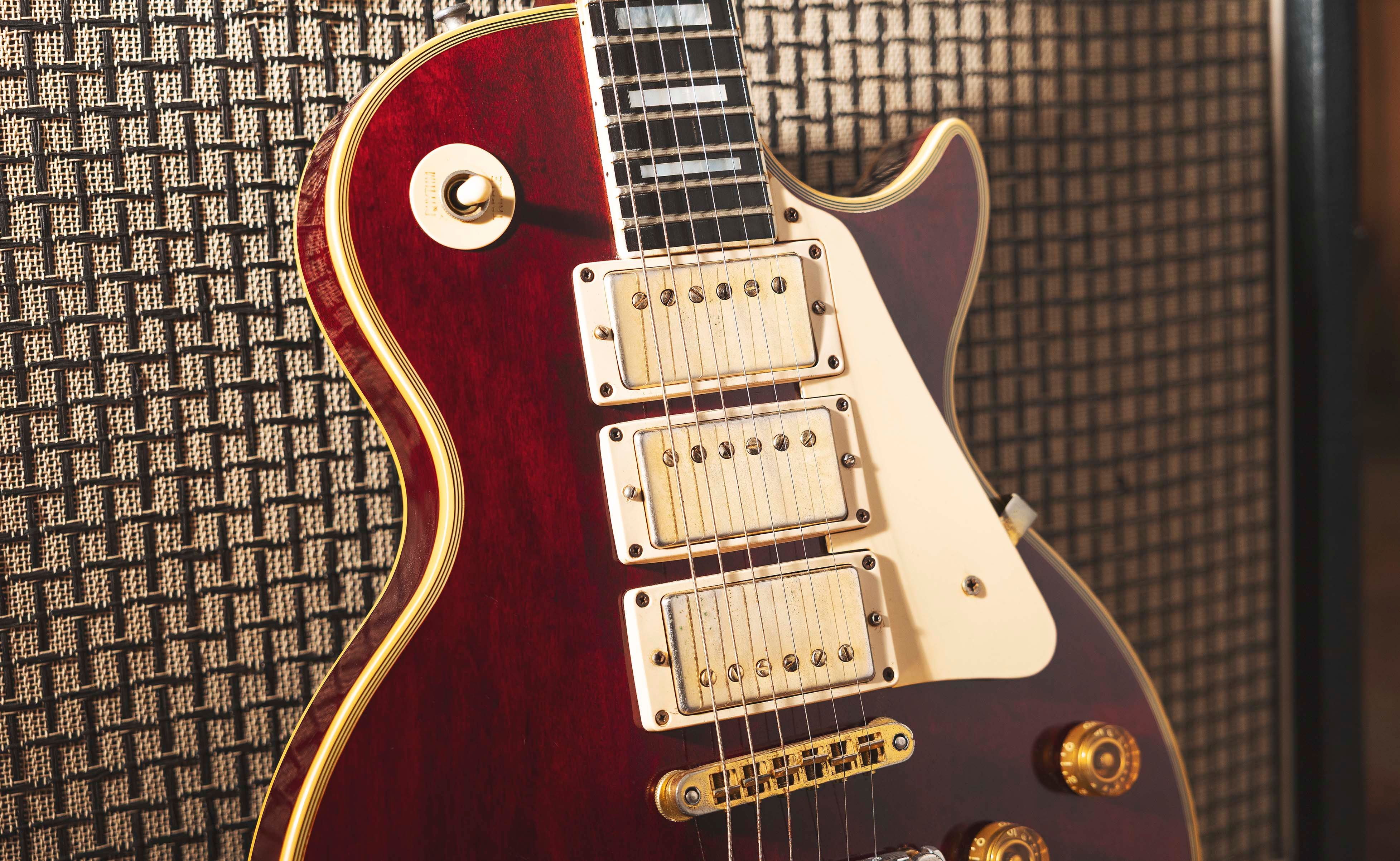
Pictured: 1978 Gibson Les Paul in Wine Red
Originality and Condition
This 1978 Gibson Les Paul Custom is all original, with one possible exception: The stopbar tailpiece may have been replaced. It’s shiny chrome—not gold like the rest of the guitar’s hardware—and it reads more like a replacement than patina to me. The tailpiece posts, however, remain an aged gold.
Finally, we have vintage condition to discuss.
I’d say this guitar is in “player” shape. It’s been used, not abused, over the years, and has its share of scars. Most noticeably, there is a spot of buckle rash on the backside, where the finish has completely chipped away to reveal a patch of naked mahogany (nearly identical to a blemish on my 1991 Gibson Les Paul Custom). The treble side of the neck has some finish wear as well, but nothing you’d get your hand stuck on.
The frets are in good shape, there are no repairs to speak of, and none of the dings or dents have any impact on sound or playability. This guitar isn’t beat to hell, nor is it a case queen; it simply deserves to be played.
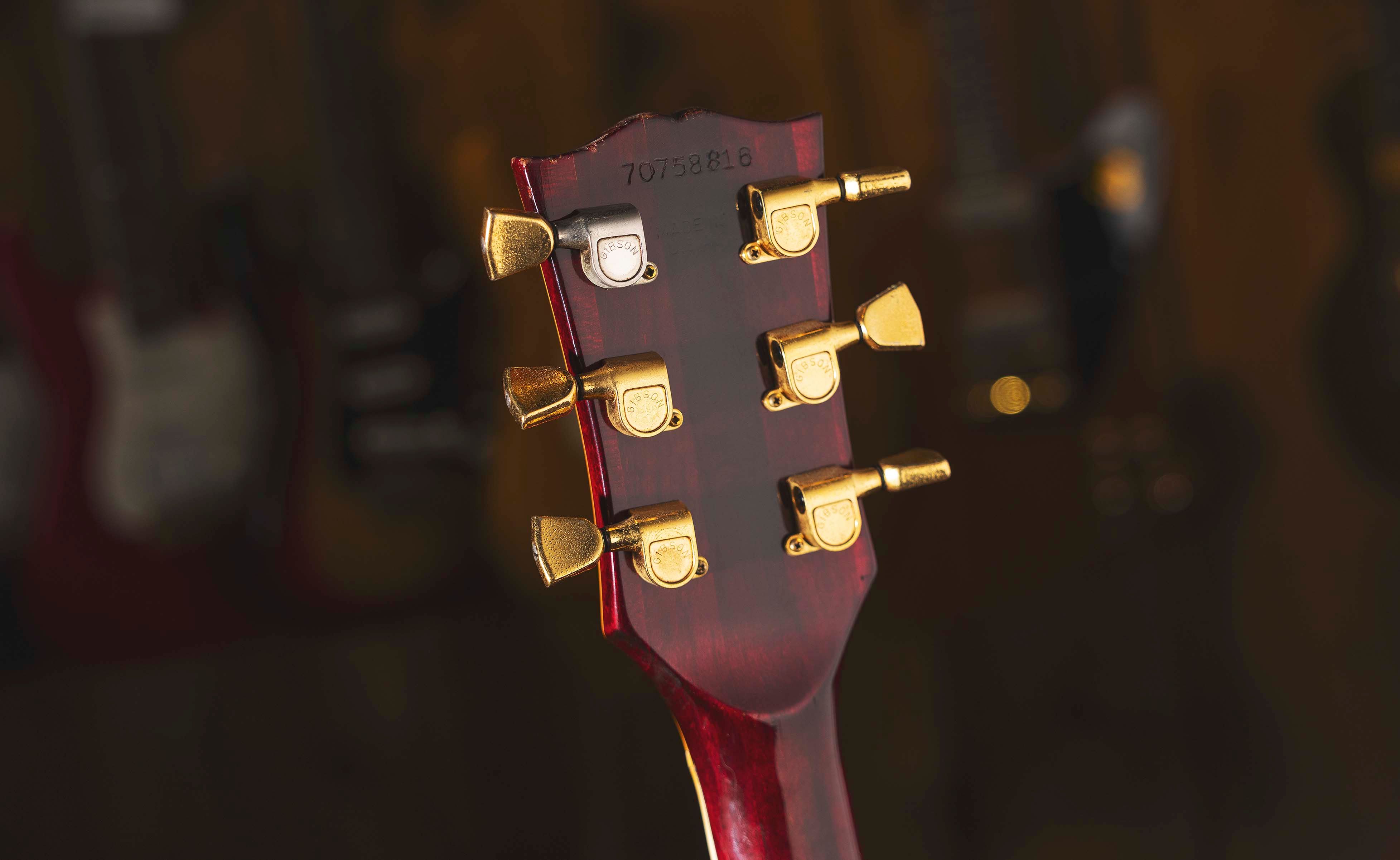
Pictured: 1978 Gibson Les Paul Tuners
Closing Thoughts
I’m a huge sucker for Les Paul Customs—I own a 1986 in Wine Red as well as my ’91 Ebony model—and this ’78 is badass. I love the “more is more” three-humbucker configuration, and the cream pickguard and pickup rings on this one are an impactful aesthetic departure from black. It has great weight to it and feels solid like a great vintage Les Paul should.
This guitar has clearly been a workhorse for almost 50 years, and I hope it serves whoever gets it for 50 more.
Full Disclosure
I’m a left-handed guitarist, so my time was spent gathering impressions of this 1978 Gibson Les Paul Custom rather than outright extended jamming on it. I was essentially crosschecking historical norms with what I could observe.
For any fellow southpaws, though, there were 10 super cool lefties on display in the Platinum and Vintage Room, which I naturally gravitated toward. I had to remind myself why I was there.
Written By: Max McAllister
Max McAllister is an audio engineer, guitarist and writer. At the Brewery Recording Studio, he earned engineering credits on Kid Cudi’s Man on the Moon III, Duckwrth’s SuperGood and the LeBron James Space Jam compilation, among others. Max previously wrote for Produce Like A Pro, where he authored over 600 articles, and has also contributed to Adorama’s 42West. He’s proudly served Guitar Center as a senior writer since 2023.
Recently Added to Gear Tips
Be the first to know about exclusive offers, tips and more.

866-498-7882 English
877-687-5402 Español