

Pro Gear Advisers
•866-498-7882
Vintage Spotlight: 1969 Fender Rosewood Telecaster
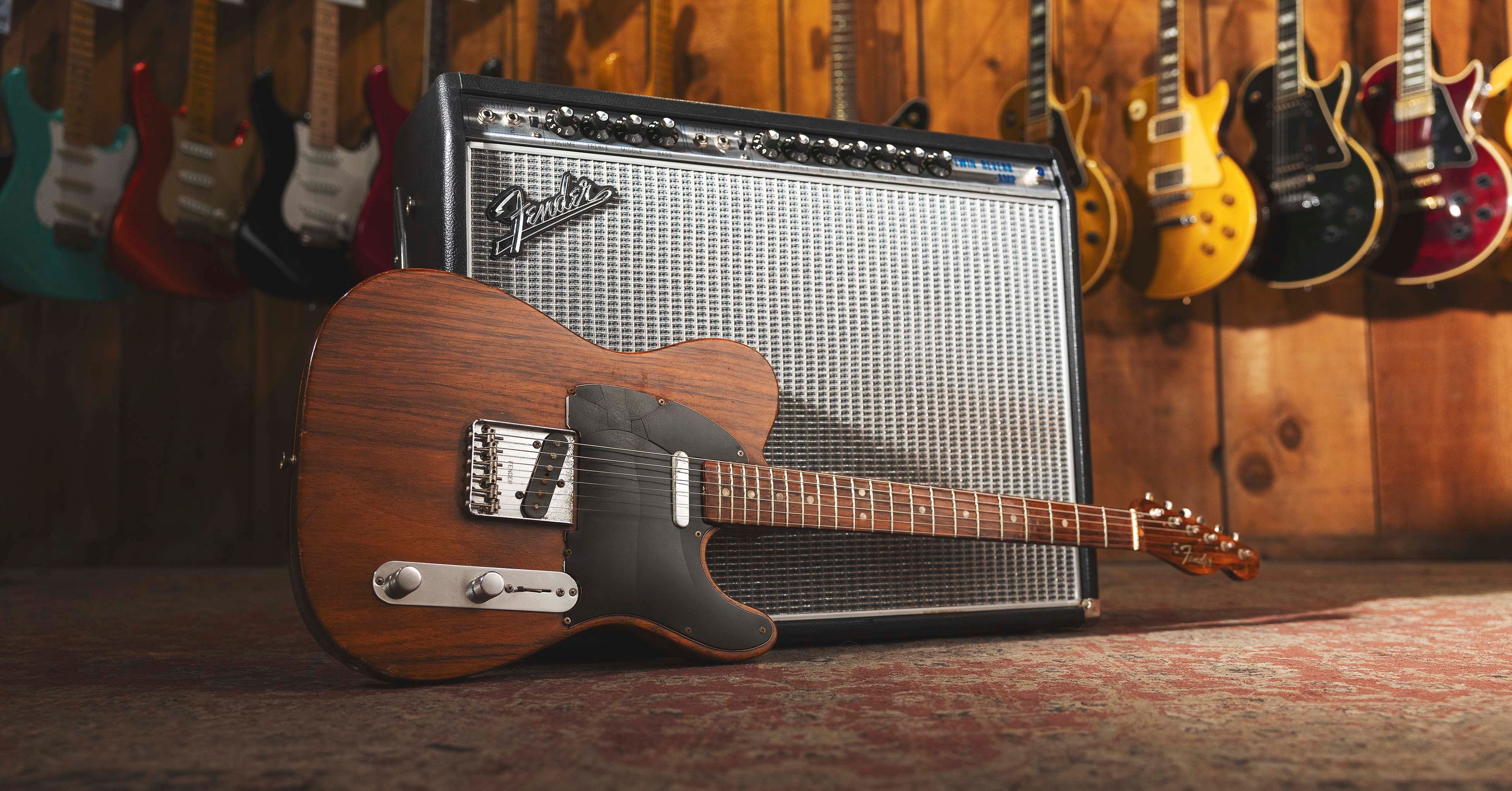
There are few electric guitars as iconic as the prototype Fender Rosewood Telecaster played by George Harrison during the Beatles' final live performance on the rooftop of their Apple headquarters on London's Savile Row in January 1969. Harrison also used the guitar during the sessions for Let It Be, the band's final released studio album, although its appearance on the recordings themselves—and on Abbey Road—remains a subject of debate.
In this article, we'll take a quick look at the history of the Fender Rosewood Telecaster and, more importantly, get hands-on with a 1969 example currently residing in the Guitar Center Vintage Room at our flagship Hollywood store. Along the way, we'll also talk with Guitar Center Vintage repair tech Dave Maddux, who's been inside both Harrison's original prototype and this particular 1969 instrument.
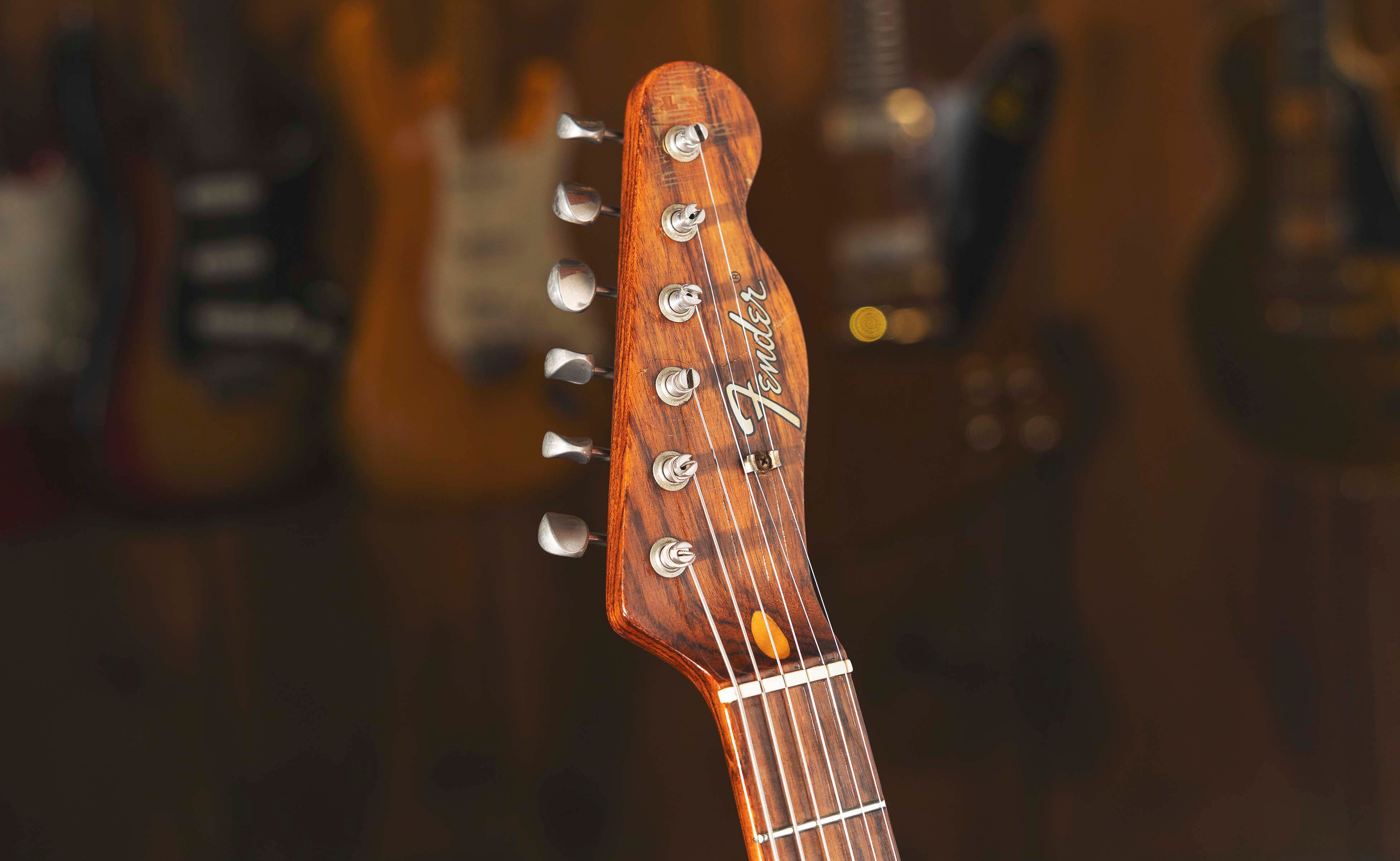
Table of Contents
An Abbreviated History of the Fender Rosewood Telecaster
The history of the Fender Rosewood Telecaster starts, as any good story does, with the people who created it. In this case, that would be a legendary guitar designer and a Fender builder who would go on to become a legend in his own right.
Who Built the Fender Rosewood Telecaster?
For Roger Rossmeisl, guitar design was in his blood. His father was a well-known jazz guitarist and luthier in Germany and had sent his son to a prestigious instrument-making school in Mittenwald, Germany, where Rossmeisl earned a master’s degree and certification as a Gitarrenbaumeister or "master guitar maker." In the early 1950s, he emigrated to the U.S., working first for Gibson and then for Rickenbacker, where he designed the 300 series of electric guitars and also trained a young Semie Moseley, who would go on to found Mosrite Guitars. In 1962, he was hired by Leo Fender, initially to design a series of acoustic guitars for the company (including the totally trippy Wildwood series, which used wood from trees that had been injected with various colored dyes).
It was in his capacity as an acoustic designer that Rossmeisl hired a young man named Philip Kubicki to help design and build acoustic guitars, eventually promoting him to the position of his chief R&D assistant. Kubicki would go on to found his own company and design the legendary Factor electric bass series.
Don Randall, Leo Fender's longtime business partner and the architect of the company's sales and marketing success, approached the Beatles in 1968 about using Fender equipment. As part of this plan, he turned to Rossmeisl and Kubicki to build a unique guitar for George Harrison as well as provide the Beatles with amps, PA gear and other equipment. In fact, in some of the photos and film footage from the Let It Be and Abbey Road sessions, you can see the Fender gear, complete with hang tags, in the studio.
Rossmeisl was at the same time working on the design of what would become the Telecaster Thinline and had already designed the Fender Coronado two years earlier (an often overlooked gem), and Fender had been experimenting with materials. Whether the idea to build a Telecaster completely out of rosewood (well, almost completely) came from Rossmeisl or was a decision made higher up the food chain at Fender appears to be lost in time, but the result was a Rossmeisl design that was built primarily by Kubicki under Rossmeisl's oversight.
How Was the Fender Rosewood Telecaster Built?
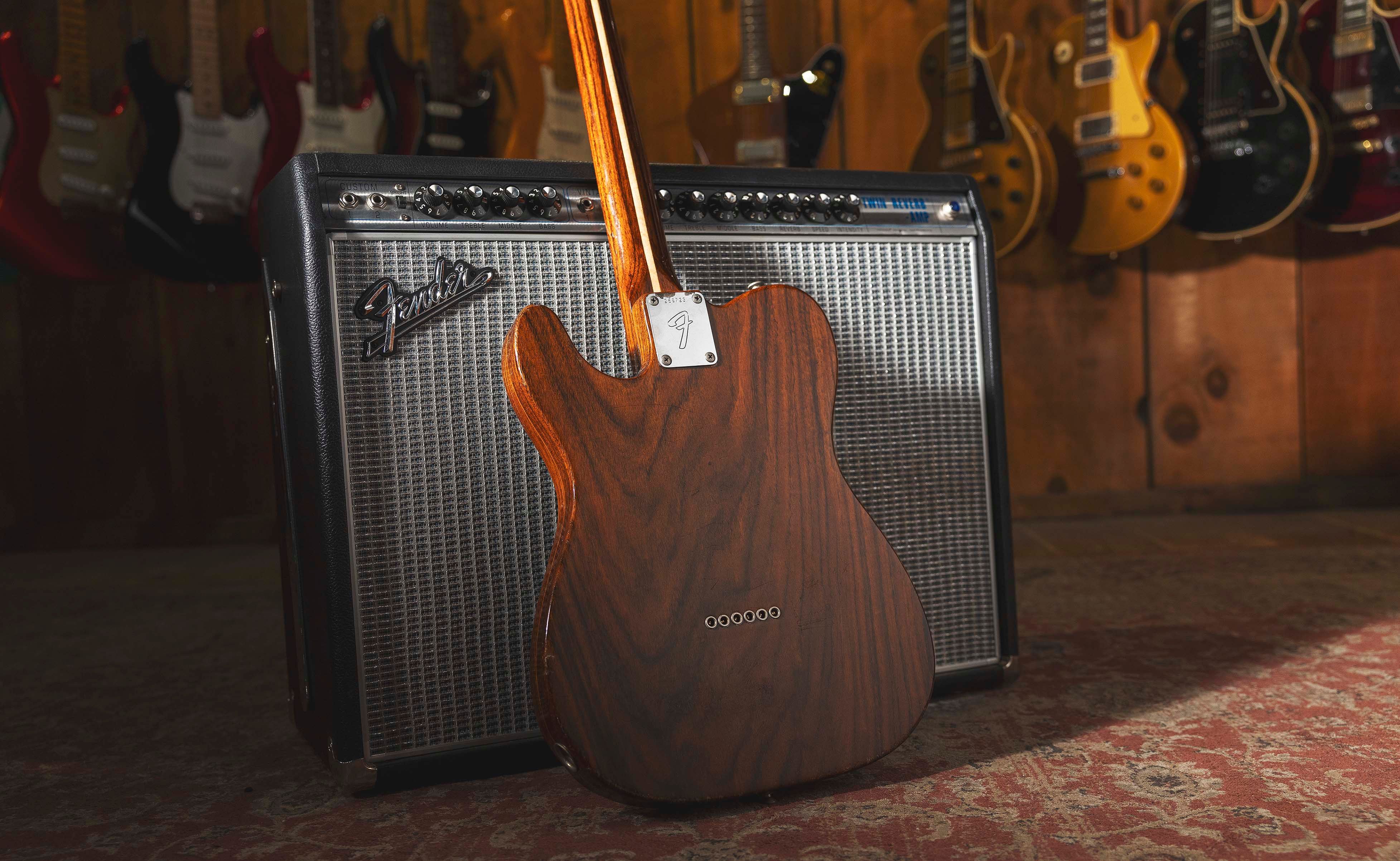
The laminated construction—two pieces of rosewood with a thin maple layer in the middle—may have been aesthetics, ease of construction, the lack of sufficiently thick rosewood stock to build a one-piece body, or some combination of all of these plus other factors. Personally, I tend toward all of the above plus the fact that the laminated construction would be much easier to chamber.
Two prototypes were built in 1968, and according to Kubicki, the best components from each were combined into the guitar presented to Harrison late that year. Harrison famously played the instrument during the Beatles' rooftop performance at Apple headquarters in January 1969, giving the unusual Telecaster a permanent place in rock history.
Fender introduced the production Rosewood Telecaster in 1969. Expensive, unusually heavy and produced in limited numbers, it never became a mainstream model. It disappeared from Fender's price lists in 1970, briefly returned in 1972 and was gone again by early 1973. Although Fender USA and Fender Japan have revisited the design several times since, original examples remain relatively rare.
Hands-on With a 1969 Fender Rosewood Telecaster
As I've mentioned elsewhere, one of the things I love about my job is that I get to play some of the coolest guitars on the face of the earth as they pass through the doors of the Hollywood Vintage Room. It's a real privilege and always kind of a thrill to play guitars that, in my ordinary life, I'd never be able to even think about owning without a second mortgage and the sale of an organ or two.
Another advantage is that I get to ask questions of people who really know vintage instruments inside and out. In this particular case, that's David Maddux, who was with Fender from the early 1970s well into the FMIC era. Maddux was one of the four people who made the shift from the old Fullerton factory to the original tiny factory in Corona, California, and was involved in the design of the Fender Custom Shop and the original Fender factory in Ensenada, Mexico. These days, he's the man who maintains and repairs guitars for the Hollywood Vintage Room. For a little more background on Maddux, check out this interview with him on the Inside the Noise with Gabe Dalporto podcast.
Maddux is one of the few people who have been inside the original Rosewood Telecaster prototype made for George Harrison when it was back at Fender for repair at one point. In fact, as he mentions in the interview linked above, his initials are carved into the pickup cavity of the guitar. So, there being nothing better than a first-hand source, I had a couple of questions for him about the prototype and in what ways, if any, it differed from the production versions, specifically the 1969 example I was about to pick up and play.
Having come across a couple of sources that said Harrison's guitar was not chambered, my first question was whether or not that was true. Maddux's response was that it was, in fact, chambered—in exactly the same way as every production guitar that he had ever personally seen—and that, apart from the choice of woods and the chambering, it was otherwise pretty much a stock Tele.
My second question was about whether, as a couple of online sources had suggested, some of the early models used 1 megohm pots instead of the standard 250k. Maddux's response was a quick head shake and a "They should all have been spec'd as 250k. 1 megohm would have been painfully bright." It is recorded that Fender did switch to 1-megohm pots for Telecaster electronics during that period, so it is possible that some guitars may have them. I didn't have the chance to open the control cavity and check here. Mea culpa.
So, that being settled, I sat down with the guitar.
The first thing I noticed was that it was far lighter than I expected and internet lore would have you believe. Not to say that it was light, but it was ES-335 heavy, not OG Les Paul heavy. It was also very well balanced, neither neck nor body heavy. I (and, more importantly, my aging back) would have no objection to playing this guitar for three or four sets. When I tapped the front and back of the guitar, it was easy to tell where and pretty much how deeply it had been chambered to get the weight down.
Another side effect of the chambering is that it makes this an exceptionally resonant guitar from an acoustic standpoint. I could easily feel the body vibrating against my body as I played it. My conjecture would be that this would also aid in sustain when played amplified at volume (I did not turn up to gig volumes in the Vintage Room, just to spare the ears of the other people in the store). It certainly made for a very lively acoustic tone and a comfortable bond between guitar and player.
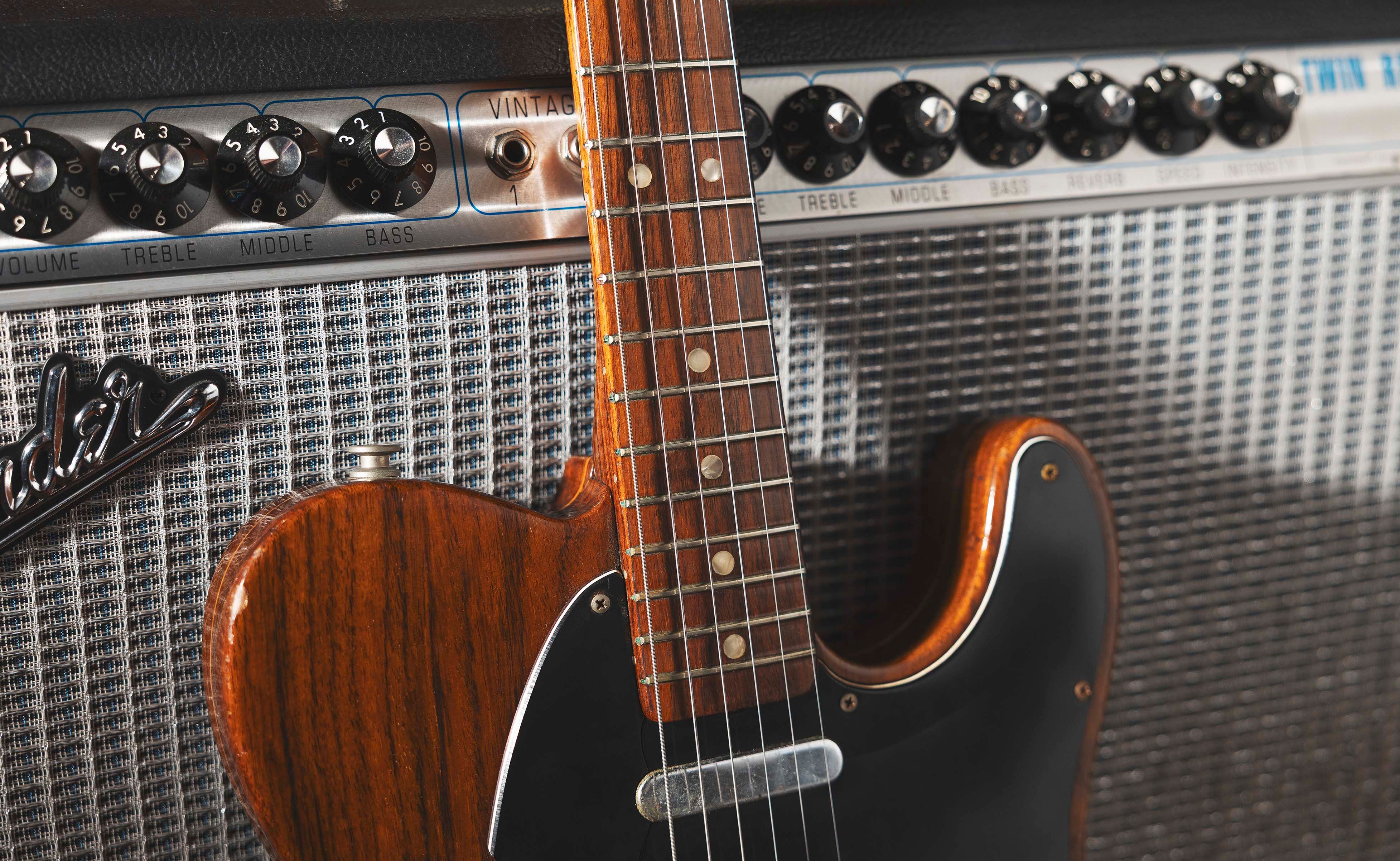
The neck was extremely comfortable and, since I'm used to vintage Fender neck radii, I was having a swell time messing around with oddball chord voicings, voice leading and that type of geeky guitar stuff. While I've encountered plenty of vintage pieces that are exceptional, this is one that I would take out and play on a regular basis. And, not to be too much "music woo" about it, I got the feeling that had been the case with this one. It felt as if it had been a player's guitar, not a guitar hung on the wall and never used.
Plug it in? It's stock Tele electronics and so it sounds like a Tele with maybe a little extra sustain and shade of warmth you don't get from alder or ash. But since I regard the Telecaster as one of the best all-around electric guitars, that's a good thing—a very good thing.
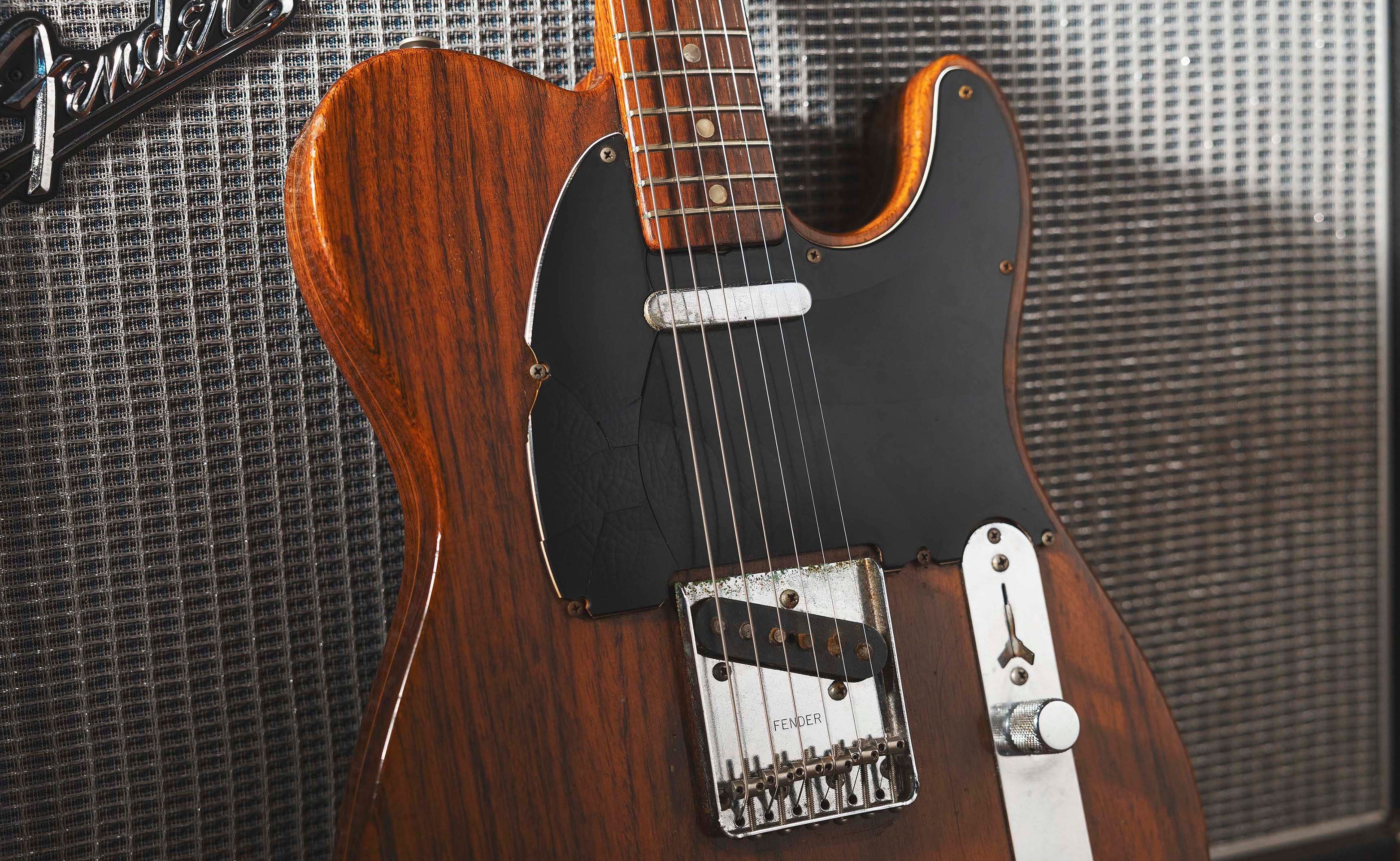
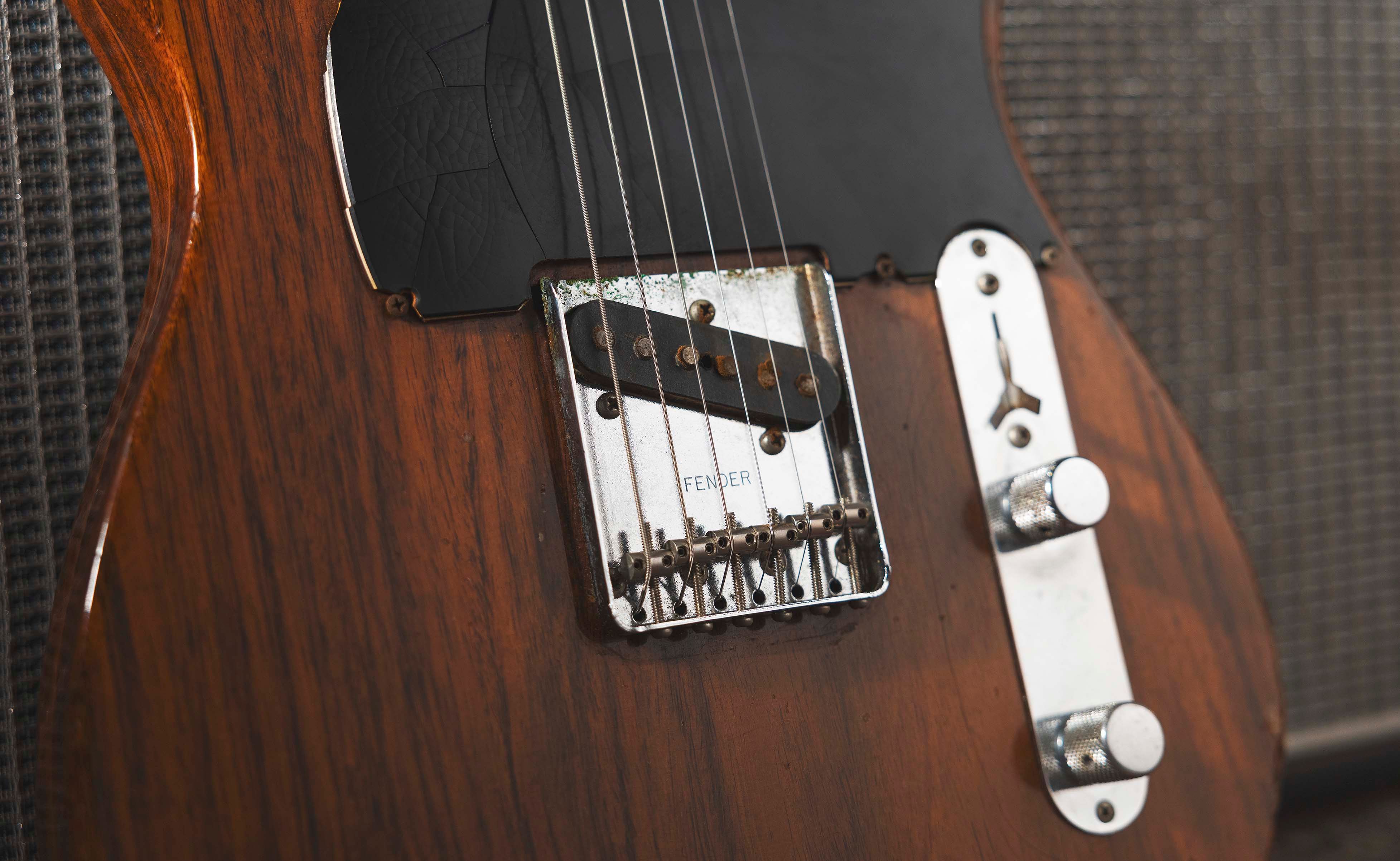
A couple of notes about the guitar's condition before we put this one back on the wall. As a guitar that was obviously played a lot, it has a ding here and there, which you'd expect. There are a couple of changes from its original condition as well. The pickguard looks as if it may have been replaced, as it's a black/white/black three-ply, and the original guitars had an all-black pickguard. The tuners were swapped out, although they remain Kluson Deluxe-style split shaft. Finally, the original 3-saddle Telecaster bridge has been swapped out for a later 6-saddle version. This last was a very common upgrade in the days before the advent of compensated Tele saddles.
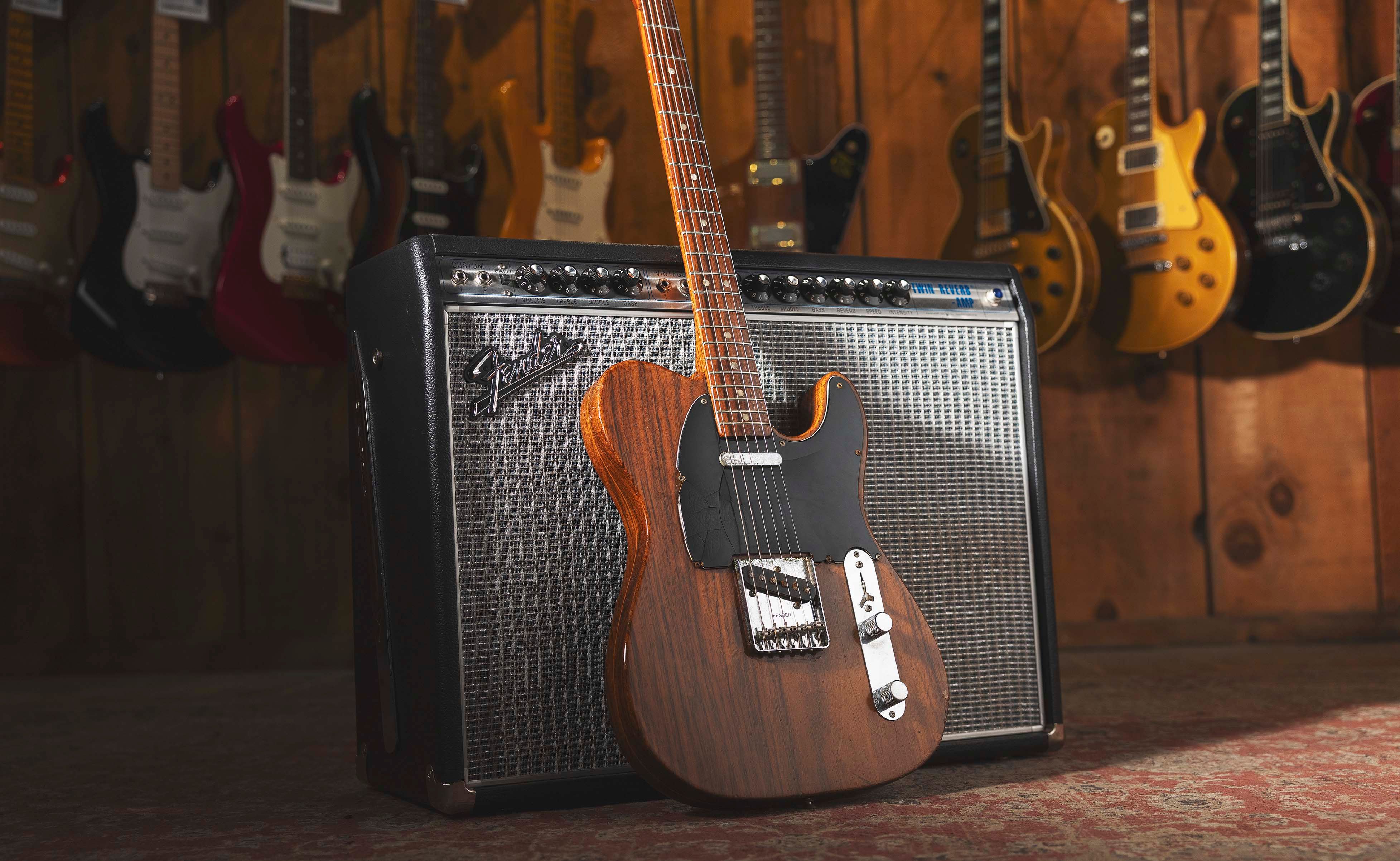
Pictured: Vintage 1969 Fender Rosewood Telecaster
As always, it's an absolute thrill to be able to get my hands on one of these vintage treasures, and this one was no exception, hitting a little closer to home than usual. In the late 1970s, when I was on the road with a band, I had a guy offer to sell me one for $200. Since we didn't get paid until the end of the week at the club, I told him I wanted it and would pay him a little extra if he came back with it on Saturday night when we finished up our two-week run. I never found out if he showed up that night or not. A biker brawl trashed the club that night and, if he had any sense, he would have turned around and left without getting out of the car. So, this was as close to that guitar as I'm likely to get in this lifetime. And I am very glad to have played this one as well as having one of those road stories to tell.
Written By: George Van Wagner
George Van Wagner is a writer and editor for Guitar Center, where he has worked since 2007. A multi-instrumentalist, freelance recording engineer, arranger, composer, writer and all-around tech geek, he has over 30 years of experience in the musical instrument industry at companies like Midiman/M-Audio and Line 6, doing everything from customer service and writing user manuals to working in product development. He is currently gigging around Los Angeles with Gruppo Subconscious and Bobby “Hurricane” Spencer.
Recently Added to Gear Tips
Be the first to know about exclusive offers, tips and more.

866-498-7882 English
877-687-5402 Español