.jpeg)

Pro Gear Advisers
•866-498-7882
How to Decode Gibson Serial Numbers
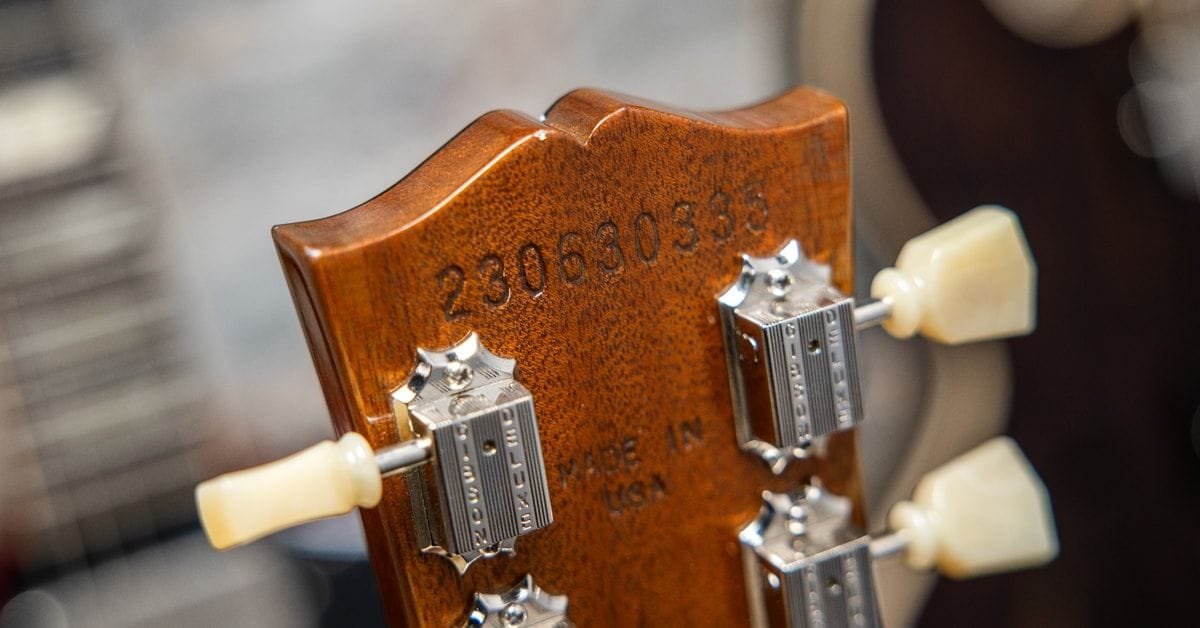

One of the most common methods of determining when and where your favorite guitar was made is to check the serial number. In some cases, though, that's not always quite enough to determine it beyond doubt—especially with venerable brands like Gibson Guitars, who have gone through a variety of serialization schemes since Orville Gibson started making instruments in the late 1800s.
In this article, we hope to clear up some of the mystery behind Gibson's serial number systems and show you how to find the serial number to get a reasonably accurate idea of your Gibson guitar's birthday (save us some cake).

Pictured: Gibson ES-335 '60s Block Headstock
Quick Guide: How to Decode a Gibson Serial Number
-
Find the serial number, usually on the back of the headstock (or inside the body on older acoustics and hollowbodies).
-
Identify the era of the guitar, since Gibson used different serial number systems across different decades.
-
For 1977 and newer models, check the eight-digit format where the first and fifth digits indicate the year.
-
Cross-check the serial number with physical clues like the logo, “Made in USA” stamp, volute and potentiometer codes.
-
For vintage or uncertain instruments, consult a qualified repair tech or vintage specialist.
For example, here’s how we decode a serial number such as 81237567 from Gibson’s modern eight-digit system:
-
First & fifth digit (8 & 7) → 1987
-
Second through fourth digits (123) → 123rd day of the year (May 3)
-
Last three digits (567) → 567th instrument made that day
Wrapping it all up: For many Gibson guitars made from 1977 onward, the first and fifth digits identify the production year, the second through fourth digits identify the day of the year, and the final digits indicate production rank or batch information—depending on the period.
Where to Find a Gibson Serial Number
Most Gibson electrics you’ll encounter feature a stamped serial number on the back of the headstock. For some older acoustics and hollowbodies, you may find it on a label inside the guitar’s body.
If you’re trying to locate a Factory Order Number for further help authenticating your instrument, check the neck block or interior cavities. Finally, you can also verify potentiometer codes inside the control cavity as a supporting clue to date your guitar.
Table of Contents
- How to Date a Gibson Guitar
- Why Gibson Serial Numbers Are Only a Starting Point
- Physical Clues That Help Date a Gibson Guitar
- How to Cross-Check a Gibson Serial Number
- Gibson Serial Numbers by Decade
- Gibson Serial Number Prefixes
- Gibson Serial Number Date Ranges
- Why It Matters
- How to Confirm Your Gibson Guitar’s Manufacturing Date
- Gibson Serial Number FAQs
How to Date a Gibson Guitar
Gibson’s history stretches back to the late 19th century, when Orville Gibson first began crafting his innovative carved-top mandolins and guitars in the 1890s. Over the decades, the company evolved from a small workshop to one of the most revered names in the guitar world. With that long legacy comes an intricate web of serial number systems—some straightforward, others downright perplexing.
If you’re trying to date a Gibson guitar, whether it’s a Gibson Hummingbird acoustic, an ES-175 archtop or a Flying V, the serial number is the logical first stop, but it’s rarely the whole story. Overlapping number ranges, factory inconsistencies and even modern reproductions can make it tricky to pinpoint an exact manufacturing date. That’s where physical features—things like headstock logos, the presence of a volute and potentiometer date codes—become critical in verifying an instrument’s history. Considering all of this, our director of Used & Vintage, Jack Hetherington, adds the caveat that you need to gather as many other clues as you can to come up with a reasonable guess as to any precise date. In some cases, the best you can do is establish a potential window.
Why Gibson Serial Numbers Are Only a Starting Point
Gibson has changed its serial number system numerous times and not always with perfect continuity. The earliest Gibson instruments, built between 1902 and the late 1940s, had serial numbers stamped inside the body, often on a paper label. These numbers ran sequentially, but they weren’t always consistently applied—especially during periods of increased demand.

Pictured: Gibson Custom 1961 SG Standard Reissue Headstock Serial Number
By the 1950s, when Gibson introduced the Les Paul, serial numbers became more standardized, though not without their quirks. In the late ’50s, for example, serial numbers were ink-stamped on the back of the headstock, often in a font that faded over time. By the early 1960s, Gibson introduced a new serialization system, but it proved less reliable—numbers were sometimes reused, leading to overlaps where multiple guitars from different years carried the same serial number. If you’re trying to date a Gibson from this era, the serial number alone can only take you so far.
The 1970s marked another turning point. In 1970, Gibson began stamping “Made in USA” on the back of headstocks, making it easier to differentiate earlier models from newer ones. A more structured serial system was introduced in 1977—an eight-digit format where the first and fifth digits represented the year of manufacture. This system has remained in use (with refinements) ever since.
Physical Clues That Help Date a Gibson Guitar
Since serial numbers can be inconsistent, smart collectors and players rely on physical details to verify an instrument’s age. Some of the most reliable indicators include:
Headstock Logos:
-
Early Gibson instruments from the 1920s and ’30s carried the words “The Gibson” in a stylized slanted script. By the late 1920s, this transitioned to a horizontal orientation.
-
After World War II, Gibson modernized the logo, tweaking it slightly over the years. One notable change? The dot over the “i” in “Gibson” disappeared for several years before returning in 1972.
Neck Volute:
-
In the late 1960s, Gibson, then under the ownership of Norlin, introduced a volute—a small, reinforced bump at the back of the headstock where the neck meets the head. This was designed to prevent breakage at a notoriously weak spot, and its presence is a key indicator of late-60s and ’70s Gibsons.
“Made in USA” Stamp:
-
Introduced in 1970, this stamp signifies that the guitar was manufactured in Gibson’s U.S. factories, distinguishing it from earlier models that lacked the marking.
Potentiometer Codes:
-
Inside the control cavity, potentiometers (the volume and tone controls) often have stamped codes, like “137YYWW” (where “YY” represents the year and “WW” the week of production). While these codes don’t indicate the final assembly date, they provide a useful reference point; if a pot was made in 1968, the guitar couldn’t have been built before then.

Pictured: Gibson Branded Potentiometer
How to Cross-Check a Gibson Serial Number
Dating a Gibson is rarely as simple as checking a number in a database. Instead, it’s about detective work—matching serial numbers with physical features to build a full picture of the guitar’s origin. If the serial number suggests 1969, but the guitar has a volute (which didn’t appear until the late ’60s), you might be looking at a 1970 or later model. If the headstock logo style points to the early ’50s, but the serial number doesn’t align, it’s worth verifying with potentiometer codes inside the control cavity.
Every Gibson has a story. By combining serial numbers with telltale design elements, you can not only pinpoint when your instrument was made but also appreciate the long and sometimes convoluted history of Gibson’s production methods. Whether you’re dating a vintage Les Paul, an ES-335 or an SG, the key is to gather all the available clues—and let them tell you the full story.
Gibson Serial Numbers by Decade
Gibson’s approach to serial numbers has been anything but straightforward. Over the decades, they’ve changed formats multiple times, occasionally reusing numbers or applying them inconsistently. While serial numbers provide a useful starting point, understanding how Gibson’s system evolved is key to pinpointing an instrument’s era.
Gibson Serial Number Prefixes
While Gibson primarily used numeric serials, there were specific periods when letter prefixes were introduced. Here’s a quick reference:
-
FON Letter Prefixes (Pre-1961): Factory Order Numbers (FONs) were used alongside serial numbers, often stamped inside acoustic guitars and hollowbodies.
-
“A” Prefix (1950s): Found on archtops and acoustics from 1947 to 1961.
-
“Y” Prefix (1973–1975): Some models used a Y + 6-digit system in this period.
-
“B,” “C,” “D” Prefixes (Mid-1970s): These appeared inconsistently on some lower-cost models.
-
“R” Prefix (1980s-Present): Used for reissues and Custom Shop guitars.

Pictured: Gibson ES-335 Headstock Serial Number
Gibson Serial Number Date Ranges
Here’s how Gibson’s serial number systems evolved through the decades:
|
Era |
Serial Number Format |
Where to Look |
Notes |
|
1902–1947 |
Sequential numbering; Factory Order Numbers (FONs) |
Stamped or written inside the body; FONs were often stamped on the neck block |
Often inconsistent; cross-check with construction details |
|
1947–1961 |
Six-digit numbers, FONs, letter prefixes |
Headstock or inside body |
Common on early solidbody, acoustic and archtop models |
|
1961–1969 |
Six-digit serials |
Back of headstock |
High overlap; serial alone may not confirm exact year |
|
1970–1975 |
Six-digit serials, “Made in USA” stamp, some prefixes |
Back of headstock |
Use volute and stamp as supporting clues |
|
1977–present |
Eight-digit system |
Back of headstock |
First and fifth digits indicate year; second thru fourth digits indicate day of year; last three digits indicate production rank |
Why It Matters
Understanding Gibson’s serial number evolution is essential for dating guitars accurately. Because of overlaps and inconsistencies—especially in the 1960s and 1970s—it’s always best to cross-check with other identifying features like headstock logos, potentiometer codes and construction details.
By using this serial number guide in conjunction with physical indicators, you can confidently determine where—and when—your Gibson was made.
How to Confirm Your Gibson Guitar’s Manufacturing Date
You should now have a basic understanding of not just Gibson serial numbers, but also of other physical factors that can help you pinpoint when your Gibson guitar was built. This is an excellent starting point, and depending on your unique instrument, you might close the case here.
However, since some of those important dating clues—such as potentiometer codes and internal date stamps—involve some disassembly of the instrument, we can understand you might be a bit shy to break out the toolkit and get to work. In this situation, you can visit the Guitar Center Repairs desk at your local store. One of our skilled techs would be more than happy to help you investigate.
If perusing this article has fired your curiosity about Gibson electric guitars—and we hope it has—we recommend checking out our Riffs articles on similar topics, like “How to Buy a Vintage Gibson Les Paul,” “The History and Evolution of the Gibson Les Paul” and “The History of the Gibson ES-335.”
We think that the more you know about your instrument, the more you’ll play and appreciate it, so learn, grow and, most importantly, make some musical noise.

Pictured: Orange Drop Capacitor
Gibson Serial Number FAQs
Finally, here are some quick answers to common questions about figuring out Gibson serial numbers.
How can I find out when my Gibson guitar was manufactured?
To determine your Gibson guitar’s production date, locate the serial number, typically found on the back of the headstock or inside the body for older models. You can use Gibson’s official Serial Number Search tool to decode the serial number and find the manufacturing date.
Where is the serial number located on a Gibson guitar?
Gibson serial numbers are usually located on the back of the headstock. In some older models, especially acoustics and hollowbodies, the serial number may be found on a label inside the guitar’s body.
What does the “Made in USA” stamp on my Gibson guitar signify?
Starting in 1970, Gibson began stamping “Made in USA” on the back of the headstock to indicate American manufacturing. This stamp helps differentiate guitars made in the U.S. from those produced elsewhere or before 1970.
How do I decode a Gibson serial number from the 1990s?
In the 1990s, Gibson used an eight-digit serial number system where the first and fifth digits represent the year; the second, third and fourth digits indicate the day of the year; and the last three digits denote the production rank. For example, a serial number starting with “90512” would indicate the 51st day of 1992. For a detailed explanation, visit Gibson’s Serial Number Search page, linked above.
Can I verify my Gibson guitar’s authenticity using the serial number?
While the serial number provides clues about your guitar’s age and origin, it’s not solely sufficient to confirm authenticity due to potential forgeries. It’s advisable to examine other factors, such as craftsmanship or hardware. You may even want to consult with our experts at Guitar Center Vintage.
Written By: George Van Wagner
George Van Wagner is a writer and editor for Guitar Center, where he has worked since 2007. A multi-instrumentalist, freelance recording engineer, arranger, composer, writer and all-around tech geek, he has over 30 years of experience in the musical instrument industry at companies like Midiman/M-Audio and Line 6, doing everything from customer service and writing user manuals to working in product development. He is currently gigging around Los Angeles with Gruppo Subconscious and Bobby “Hurricane” Spencer.

Be the first to know about exclusive offers, tips and more.

866-498-7882 English
877-687-5402 Español