.jpeg)

Pro Gear Advisers
•866-498-7882
Top 5 Electric Guitars for Beginners
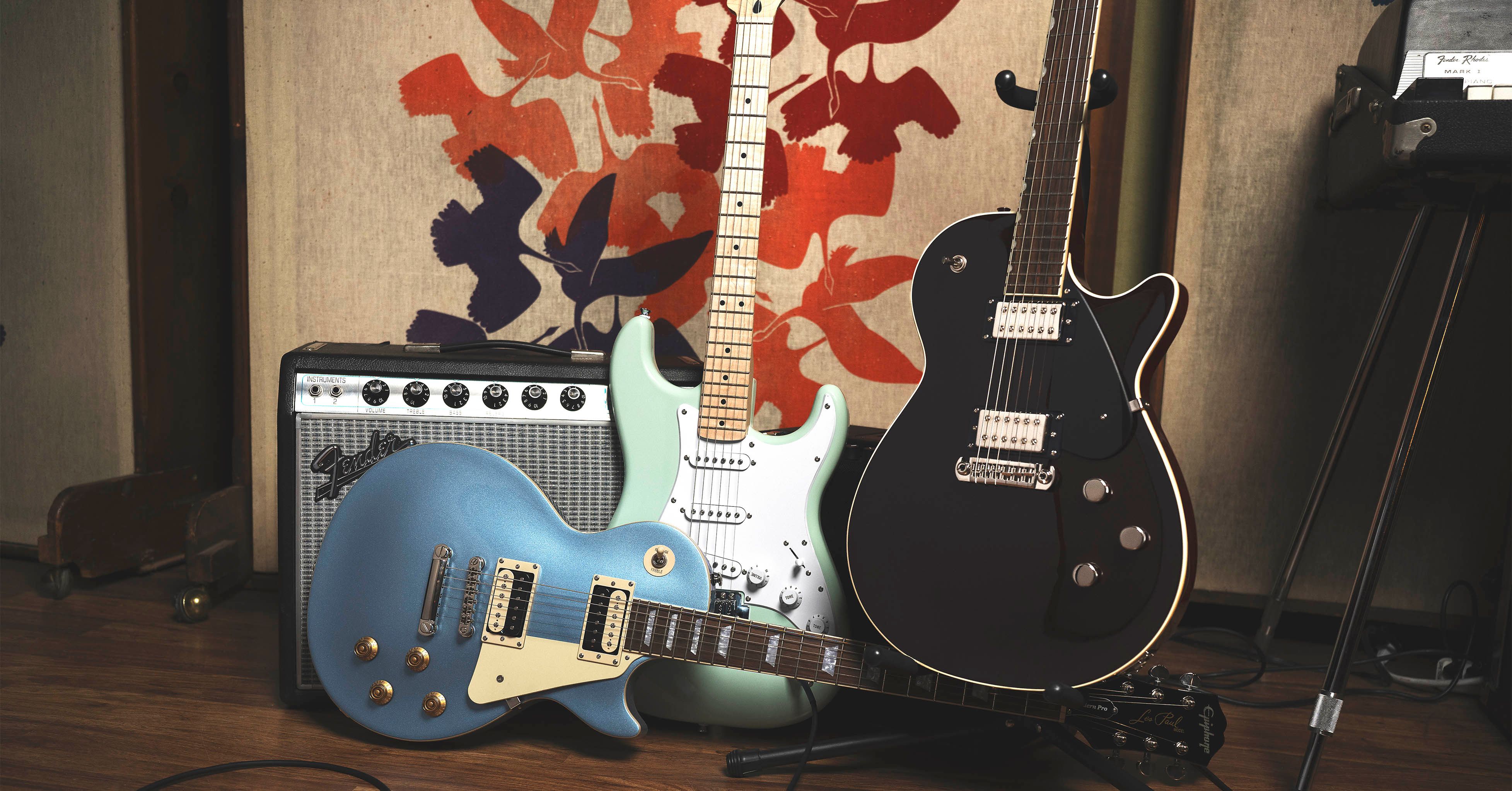

Buying your first electric guitar should feel like an exciting start to a life-changing adventure, not a soul-draining research assignment requiring you to decipher spec sheets. The very best beginner electric guitars make the early stages easier. They feel comfortable in your hands, give you sounds you want and leave enough room to grow as you progress.
That doesn’t mean every new player needs the same guitar.
Some will immediately recognize the glassy snap of a Stratocaster or the trebly twang of a Telecaster. Others hear themselves through the thicker voice of humbuckers, the distinctive crunch of a Les Paul or the high-output punch of a Jackson Dinky.
And then there’s the X factor. What are you drawn to? What inspires you to pick up the guitar and play? Only you can answer that—but we can give you a lay of the land before you get started trying them out for yourself.
Our top five electric guitar picks for beginners cover some serious ground, suiting a vast array of genres and playing styles.
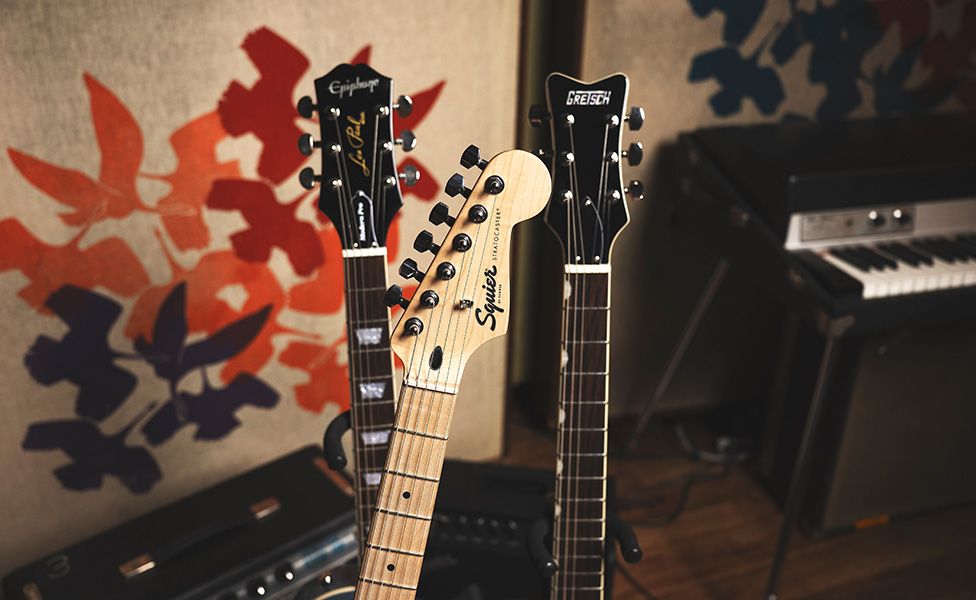
Pictured: Epiphone Les Paul Modern Pro, Squier Sonic Stratocaster and Gretsch Electromatic Jet Headstocks
How We Picked These Guitars
These are five of our best-selling electrics in beginner guitar territory. First-time electric guitar players tend to go for instruments with approachable playability, pickup configurations that work well with their desired sound and, of course, iconic guitar shapes that their guitar heroes play. All of these designs have enduring appeal, so your first guitar doesn’t have to become your former guitar once your playing takes off.
The Best Electric Guitars for Beginners
Squier Sonic Stratocaster
What to Know:
-
Thin, lightweight poplar body with a comfortable C-shaped maple neck
-
Three ceramic single-coil pickups with five-way switching
-
Vintage-style synchronized vibrato—which Fender famously misnomers “tremolo”

Few guitars are as synonymous with the quintessential electric guitar shape as the Fender Stratocaster. Squier—the affordable division of Fender—offers a Sonic Strat that gives new players an approachable foray into the Stratocaster world. The Squier Sonic Strat’s thin, contoured body is easy to settle into, while the C-shaped neck keeps the fretting experience welcoming as you work from open chords toward scales, bends and your first solos.
Three ceramic single-coils and a five-way switch are where the magic happens when you’re plugged into an amplifier. You can move from a brighter bridge sound to rounder neck tones and the unmistakable snap of the in-between positions without touching an amp setting. Inspired by Hendrix’s dive bombs on a Strat? The Sonic Strat has a synchronized tremolo when you’re ready for a little pitch-bending bedlam.
Squier Sonic Telecaster
What to Know:
-
Thin, lightweight poplar body and slim C-shaped maple neck
-
Two Squier single-coil pickups with three-way switching
-
Six-saddle hardtail bridge

Long story short, Fender hit a home run on the first pitch with the Telecaster. The Squier Sonic Telecaster retains the minimalist magic of that seminal solidbody model at a very accessible price. Want fewer knobs between the riff in your head and the sound coming out of your amp? The Sonic Tele keeps the controls refreshingly direct: two single-coils, a three-way switch, one volume and one tone knob. Start with the bridge pickup for that archetypical Tele “twang,” switch to the neck when you want something rounder or park the selector in the middle to hear both together.
Its slim C-shaped maple neck also makes the Sonic Telecaster a comfortable place to learn the physical side of playing. Unlike the Strat above, there’s no vibrato system to contend with; the six-saddle, top-load hardtail bridge is a simple foundation for getting acquainted with tuning, intonation and string changes. Sometimes, a guitar that stays out of your way is exactly what you need to keep moving forward.
Epiphone Les Paul Modern Pro
What to Know:
-
Mahogany body with maple cap and set mahogany neck
-
Two Alnico Classic PRO humbuckers with push/pull coil splitting
-
’60s SlimTaper C neck profile and 24.75" scale length

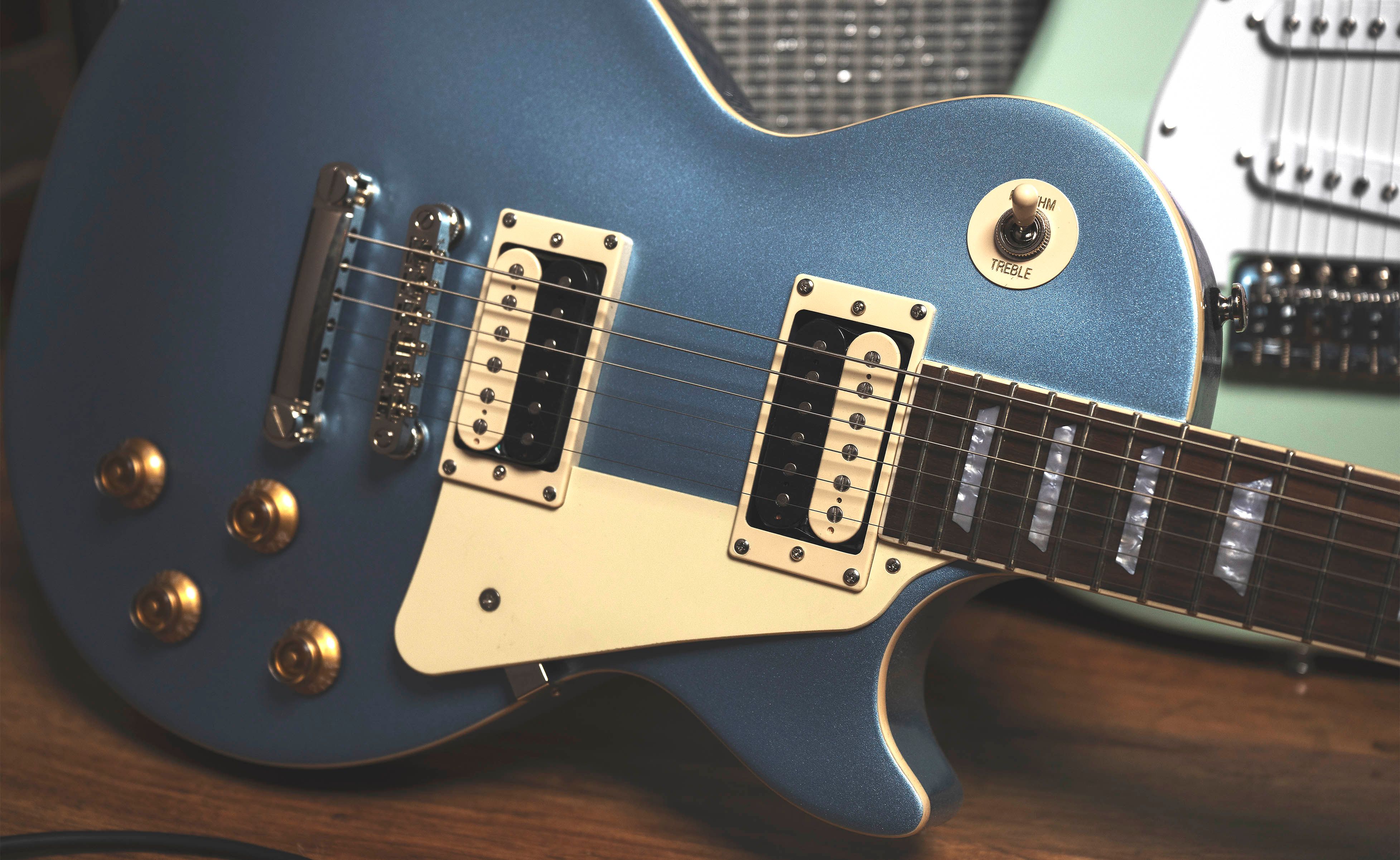
There’s something deeply satisfying about striking a big open chord on a Les Paul guitar and hearing it fill the room. Epiphone—who makes many of Gibson’s more affordable models—offers a Les Paul Modern Pro brings that experience to new players with the winning, time-honored mahogany-and-maple tonewood pairing, a 24.75" scale length and a pair of Alnico Classic PRO pickups. These Classic PRO humbuckers deliver the fuller voice many players associate with the Les Paul family, whether you’re keeping the amp clean or beginning to explore overdrive.
There’s more going on beneath the classic outline, too. Push/pull volume controls split the humbuckers for leaner single-coil sounds, while phase switching opens another tonal avenue to explore as your ear develops. The ’60s SlimTaper C neck keeps the playing feel relatively streamlined, making this Guitar Center-exclusive Les Paul an enticing first guitar for someone who wants plenty left to discover after their initial guitar lessons.
Gretsch Electromatic Jet
What to Know:
-
Chambered mahogany body with a solid maple top
-
Pair of PureVolt Twin Six humbuckers with coil-splitting capability
-
24.875" scale length with a bound rosewood fingerboard

A little chambered resonance can make an electric guitar feel lively before you’ve even plugged it in. The Gretsch Electromatic Jet pairs a lightweight chambered mahogany body with a solid maple top, giving beginners a substantial-feeling instrument without handing them a heavier solidbody.
Plug in, and its high-fidelity, punchy PureVolt Twin Six humbuckers give you a choice between warm neck pickup sounds, a tighter, more trebly bridge attack—or a blend of both. Oftentimes, as you roll back volume, the higher frequencies are the first to go, leaving you with a darker tone. This Electromatic Jet solves that with its push/pull coil splitting, which converts your humbucker’s signal into a single-coil sound, while a treble-bleed circuit helps maintain clarity as you turn down.
Jackson Dinky JS22
What to Know:
-
12"–16" compound-radius rosewood fingerboard with 24 jumbo frets
-
Two Jackson high-output humbuckers
-
Two-point vibrato built for deep pitch bends

Shop Now:Jackson Dinky JS22 in Snow White
If your axe-slinging daydreams involve ground-shaking palm-muted chugging, mind-melting solos and a gain-heavy crunch, the Jackson Dinky JS22 speaks your language. This guitar is what is known as a “Superstrat,” as it inherits the classic Strat-style shape while loaded with high-octane features that cater to speed demons and headbangers. Its 24-fret maple speed neck’s 12"–16" compound-radius fingerboard is increasingly flat as you head toward the upper frets, making it easier for you to string bend freely up high.
A pair of Jackson hot humbuckers can kick your overdriven sound into high gear. A simple three-way pickup selector and master volume and tone controls also help shape your sound. There’s also a two-point fulcrum vibrato when you’re ready for dive bombs and reverse dive bombs.
Start Your Electric Guitar Journey
No matter the style, feel or sound you’re after, these five electric guitars will give you a great starting point in your search for your perfect fit. As any experienced guitarist can attest, nothing beats trying out a few in person to learn which resonates most with you. Your nearest Guitar Center store or helpful Gear Adviser can help you narrow down your search for not only your first electric guitar, but also practice amps, cables, pedals and all the accessories you’ll need to get rocking.
FAQs About Beginner Electric Guitars
What is the best type of electric guitar for a beginner?
There isn’t one body shape or pickup configuration that every beginner should choose. Comfort matters, but so does excitement. A Stratocaster-style guitar offers lots of pickup combinations, a Telecaster keeps the controls streamlined, and guitars with humbuckers can provide a thicker sound that works especially well when you add distortion. If possible, try several styles and pay attention to which one makes you want to keep playing. For an even deeper dive into beginner-friendly electric guitars, check out The Best Electric Guitars for Beginners.
Are electric guitars easier to learn on than acoustic guitars?
They can be. Electric guitars commonly use lighter strings than steel-string acoustics, and their slimmer bodies can feel more comfortable to hold. Amplification also means you don’t have to attack the strings hard to hear yourself clearly. The trade-off is that you’ll need an amp and instrument cable and to get started.
What do I need with my first electric guitar?
At minimum, you’ll want an amplifier and instrument cable along with your guitar. Picks, a tuner, spare strings and a strap are useful additions, and a gig bag or case is worth considering if your guitar doesn’t include one. Headphones can also be helpful if you choose an amp with a headphone output.
Should a beginner choose single-coil or humbucker pickups?
Follow the sounds that made you want to play guitar in the first place. Single-coils tend to emphasize clarity, attack and sparkle, while humbuckers generally sound fuller and reject the 60-cycle hum that traditional single-coil designs can be susceptible to. Neither is inherently better for learning. Some guitars also provide coil splitting or multiple pickup combinations, letting you explore both broader and leaner sounds as your ear develops.
For a deeper dive into the differences between pickup types, check out our “Comparing Guitar Pickups: Humbucker vs. Single-Coil vs. P90” article.
How much should I spend on a beginner electric guitar?
Spend enough to get an instrument that feels comfortable, stays in tune reasonably well and makes you excited to practice. Entry-level guitars have improved considerably, so starting out doesn’t require a professional-level budget. If you have more to spend, features such as upgraded hardware, electronics or construction can give you a guitar with plenty of room to grow.
Do beginner electric guitars need to be set up?
Any guitar can benefit from a good setup. String height, neck relief and intonation all affect how an instrument feels and plays, and those things matter even more while you’re building finger strength and technique. If your new guitar feels unusually difficult to fret, buzzes excessively or refuses to play in tune up the neck, having its setup checked can make practicing much more enjoyable.
Written By: Drew Beaupré
Drew Beaupré is a multi-instrumentalist, audio engineer and writer. With a bachelor’s in psychology from Purdue and background as a gigging guitarist and drummer, he began his audio career at the world-famous Westlake Recording Studios, before venturing into live sound engineering for clients such as KCRW, Santa Monica College, CSULA and Nyjah Huston—eventually becoming studio manager at Guordan Banks’ Bank On It Studios in downtown L.A. He also has worked extensively with the industrial band Ministry, as an engineer at Al Jourgensen’s studio, as well as domestic and international touring stage tech for DJ Swamp and Joey Jordison. Prior to writing with Guitar Center, Drew has written for Fender and various music blogs.
Recently Added to Buying Guides


Be the first to know about exclusive offers, tips and more.

866-498-7882 English
877-687-5402 Español