Guitar Center logo
gear advisor icon
Pro Gear Advisers
866-498-7882


Harmonicas

Whether you’re playing a soulful blues solo or adding texture to a folk tune, the harmonica is one of the most expressive, portable instruments you can own. With deep roots in American folk, blues, rock, country and jazz, this pocket-sized powerhouse has shaped the sounds of artists from Bob Dylan and Stevie Wonder to Toots Thielemans, Linda Tillery and Lee Oskar. At Guitar Center, you’ll find harmonicas for every genre, playing style and skill level—along with all the key types, tunings and materials that make each one unique.

121-144 out of 191 products
Special Financing Available
Learn More
$41.00/mo.‡ with 48-month financing*
Learn More
Special Financing Available
Learn More
Special Financing Available
Learn More
Special Financing Available
Learn More
Special Financing Available
Learn More
$11.00/mo.‡ with 48-month financing*
Learn More
Special Financing Available
Learn More

Price Drop

Special Financing Available
Learn More
Special Financing Available
Learn More
Special Financing Available
Learn More
Special Financing Available
Learn More
Special Financing Available
Learn More
Special Financing Available
Learn More
Special Financing Available
Learn More
Special Financing Available
Learn More
Special Financing Available
Learn More
Special Financing Available
Learn More
Special Financing Available
Learn More
Special Financing Available
Learn More
$17.00/mo.‡ with 48-month financing*
Learn More
Special Financing Available
Learn More
Special Financing Available
Learn More

121-144 out of 191 products

About Harmonicas:

The harmonica is one of the most fun and recognizable instruments, used worldwide in nearly every musical genre, most notably in blues, American folk music, jazz, country and rock ‘n’ roll. A harmonica is played by directing air into and out of one or more holes along a mouthpiece. Behind the holes are chambers containing at least one reed, and when the free end is made to vibrate by the player's air, it alternately blocks and unblocks the airway to produce the harmonica’s signature sound. There are many types of harmonica, including diatonic, chromatic and tremolo versions.

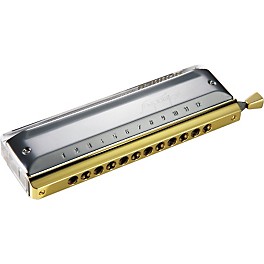
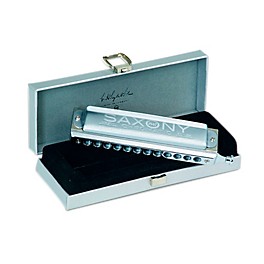
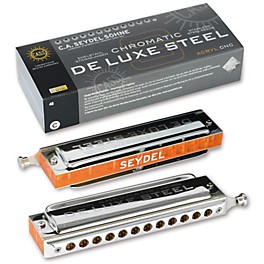
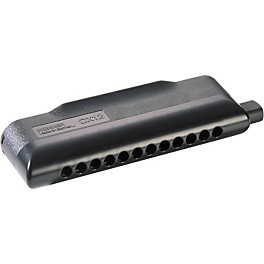
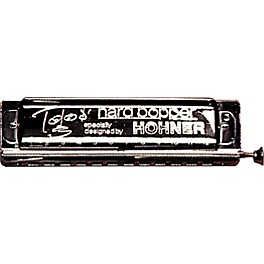
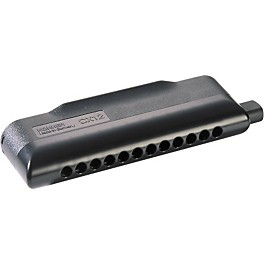
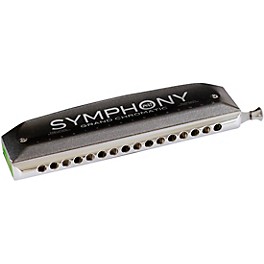
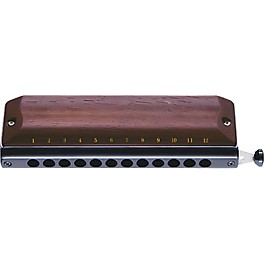
A chromatic harmonica uses a button-activated sliding bar to redirect air from the hole in the mouthpiece to the selected reed-plate. When the button is not pressed, an altered diatonic major scale of the key of the harmonica is available, while depressing the button accesses the same scale a semi-tone higher in each hole. Thus, a chromatic harmonica is capable of playing the 12 notes of the Western chromatic scale.

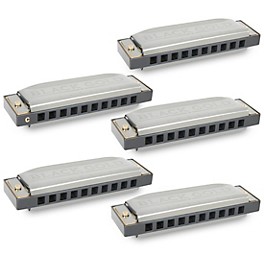
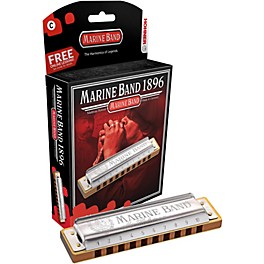
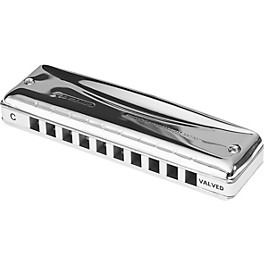
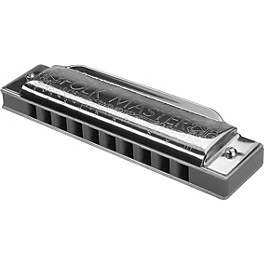
A diatonic harmonica is the most widely known type of harmonica. The standard diatonic harmonica is designed to allow a player to play chords or melodies in a single key. Because they are designed to be played in a single key at a time, diatonic harmonicas are available in all keys. Depending on the region of the world, "diatonic harmonica" may mean either the tremolo harmonica (in East Asia) or blues harp (in Europe and North America).

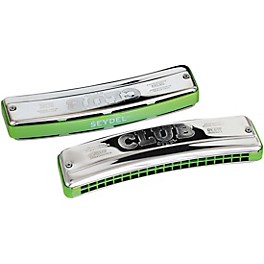
The tremolo harmonica's distinguishing feature is that it has two reeds per note, with one slightly sharp and the other slightly flat. This provides a unique wavering or warbling sound created by the two reeds being slightly out of tune with each other. The Asian version, on which all 12 semitones can be played, is used in a large amount of East-Asian music, from rock to pop music.

Notable musicians famously associated with the harmonica include Bob Dylan, Bruce Springsteen, Mick Jagger and Brian Jones of The Rolling Stones, Huey Lewis, Peter Green of Fleetwood Mac, Roger Daltrey of The Who, Steven Tyler, Robert Plant, Bono and Billy Joel. Whatever your style or musical preference, a harmonica makes a great addition to any player’s arsenal.