

Pro Gear Advisers
•866-498-7882
Vintage Spotlight: 1966 Rickenbacker 360/12 Electric Guitar
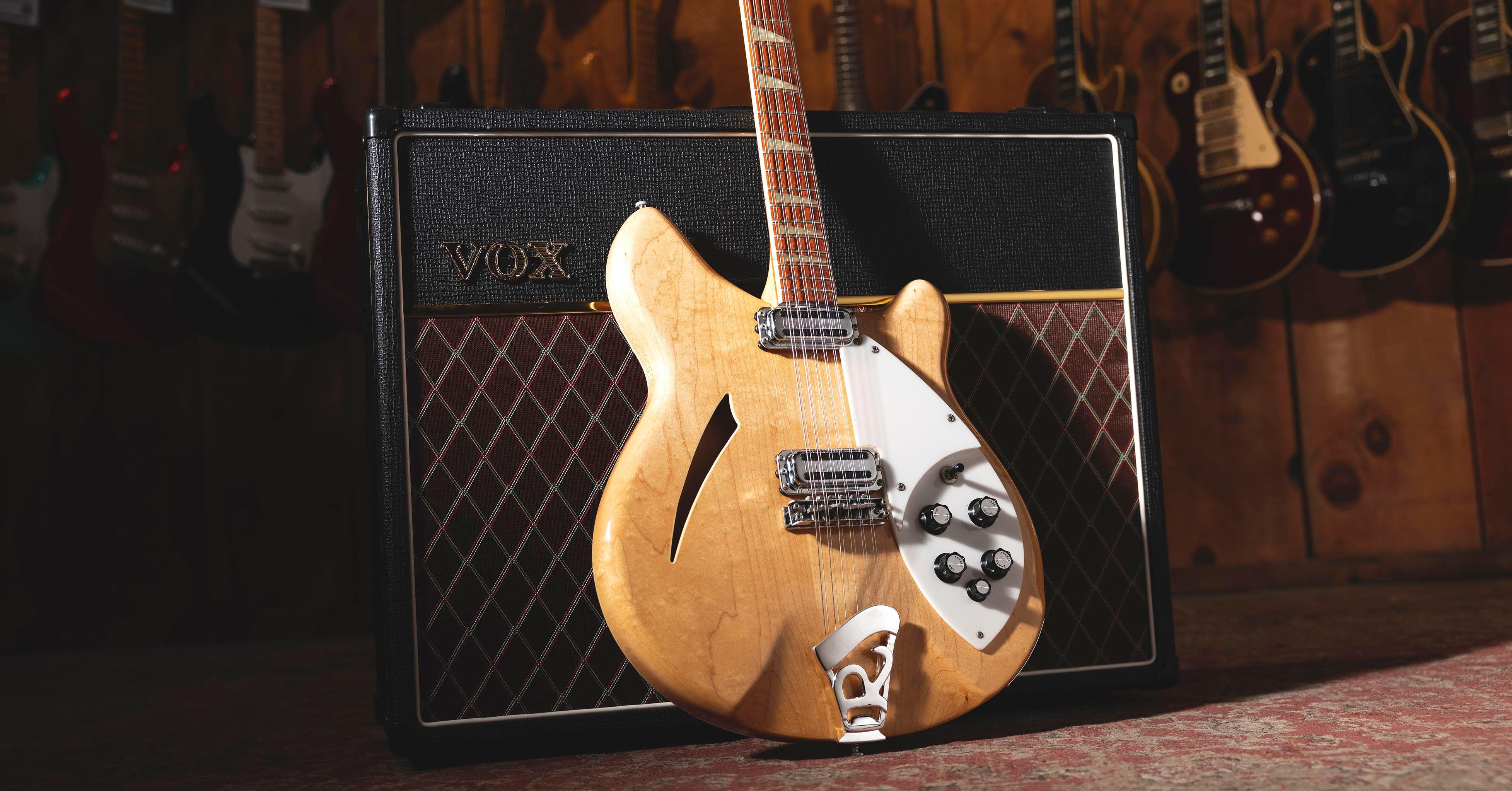

From country legends and rock icons to jazz players and pop stars, the sound of an electric 12-string guitar has frequently been a part of the mix. Perhaps the most iconic example is the Rickenbacker 360/12. In the hands of players like George Harrison and Roger McGuinn, it became (beware: hackneyed cliche ahead) the voice of a generation.
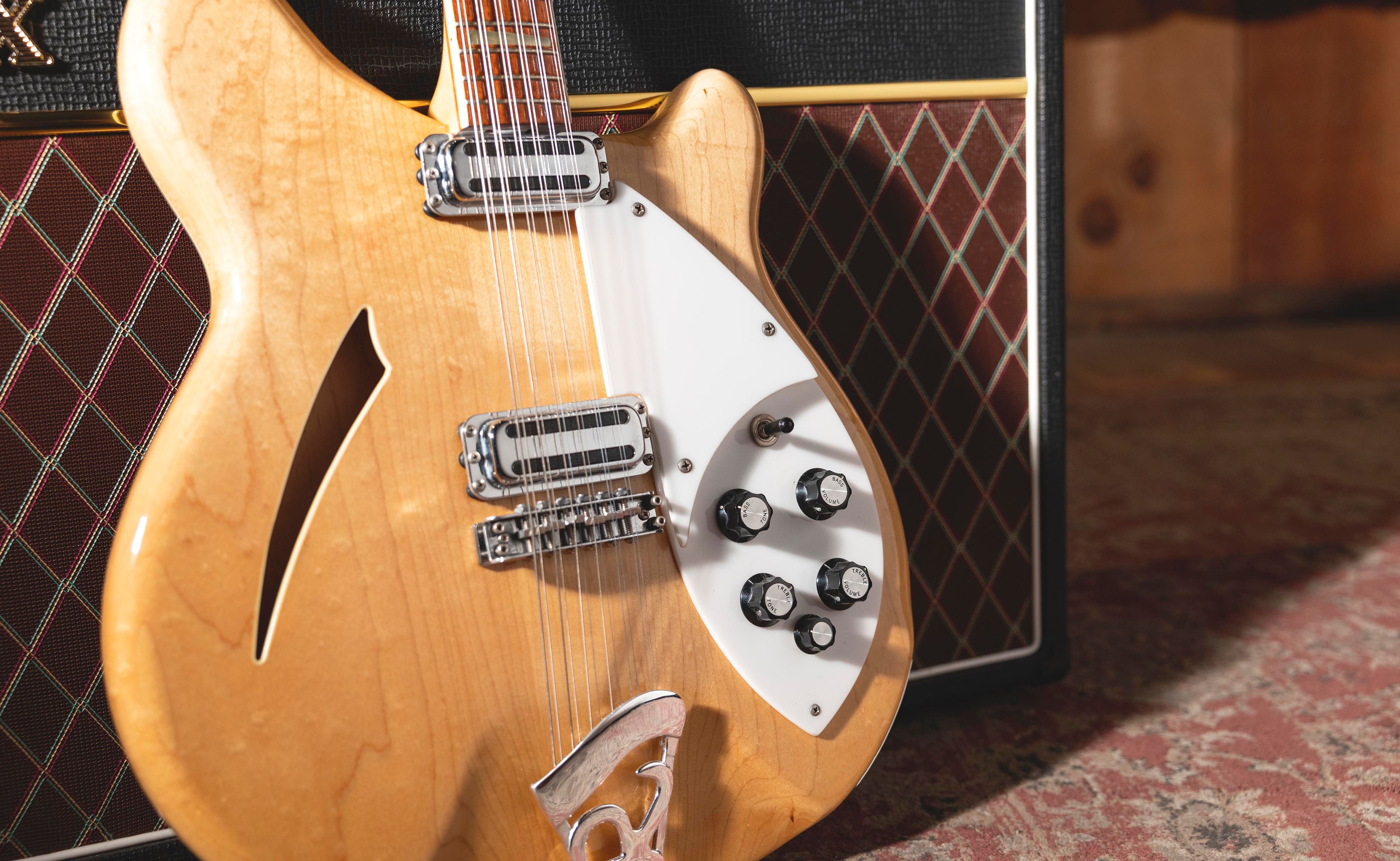
In this article we're going to take a look at a stunningly mint 1966 Rickenbacker 360/12 that currently resides on the wall of the Vintage/Platinum Room at Guitar Center Hollywood, and provide a brief history of how it came to be.
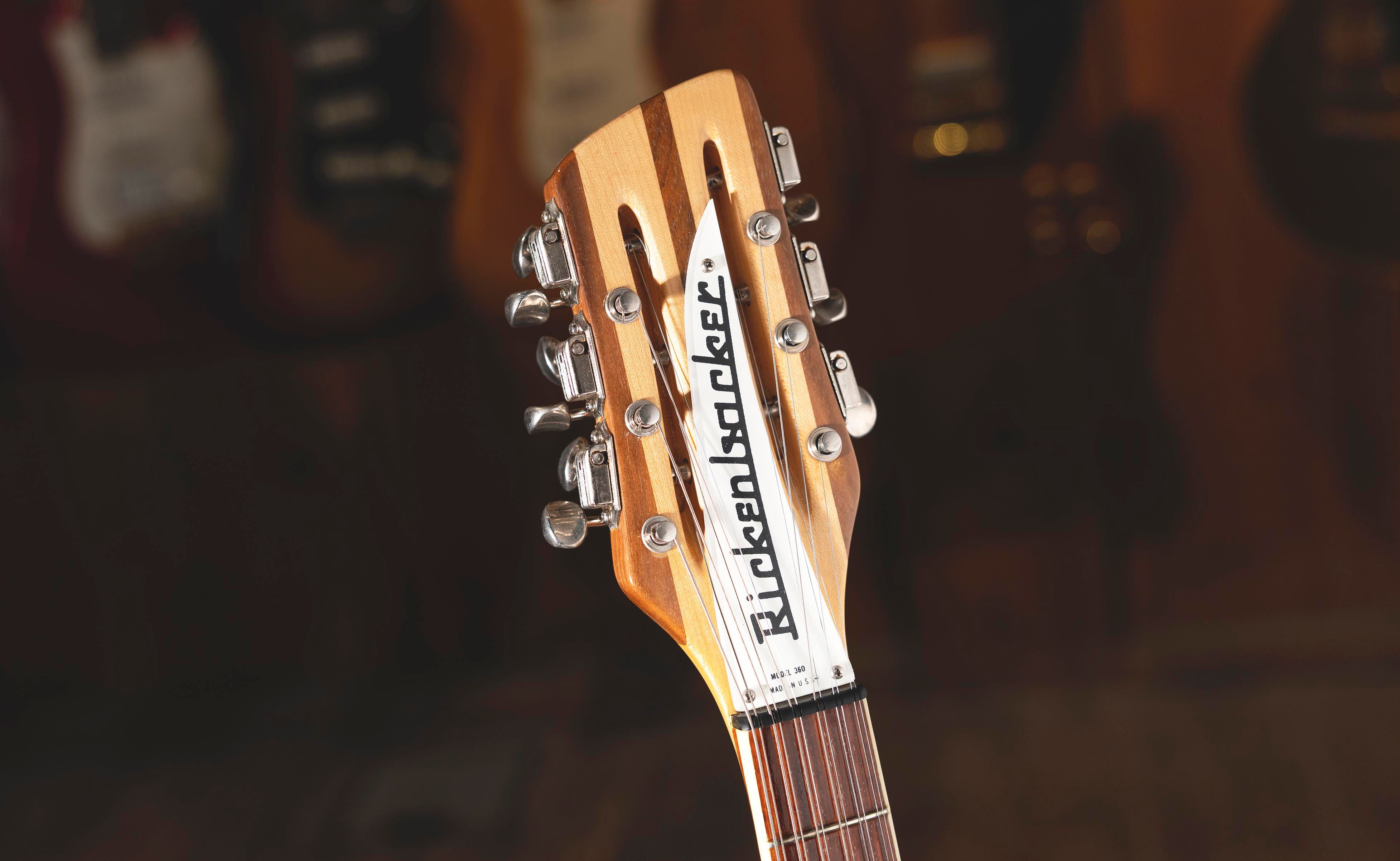
Table of Contents
A Brief History of the Rickenbacker Electric 12-String
Hands-on With a 1966 Rickenbacker 360/12 Electric Guitar
Conclusion
A Brief History of the Rickenbacker Electric 12-String
A Quick Timeline of the Rickenbacker 12-String
1954–1962: Roger Rossmeisl develops Rickenbacker’s distinctive guitar designs, including the Capri models introduced in 1958—the foundation for the 360/12.
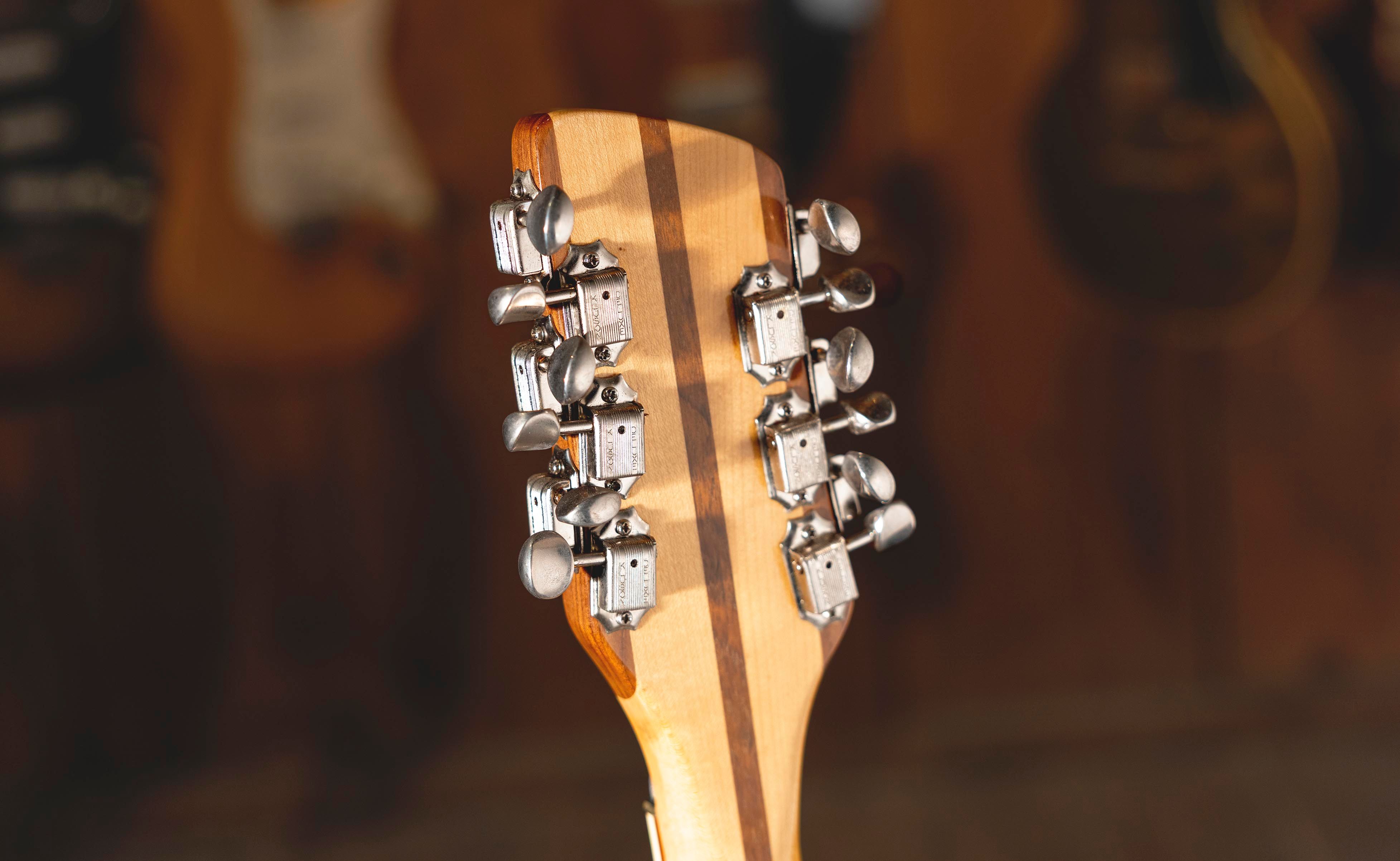
1963:C. Hall commissions an electric 12-string. Dick Burke devises the compact headstock with six conventional tuners and six mounted through recessed slots, preserving the familiar Rickenbacker outline.
1963: The first prototype goes to Las Vegas performer Suzi Arden. Its conventional octave-string arrangement differs from the reversed octave pairs—properly called “courses”—that become a Rickenbacker trademark.
February 1964: Hall presents George Harrison with an early 360/12 during the Beatles’ first American visit. Harrison puts it to work almost immediately after returning to England.
1964: “You Can’t Do That,” “I Should Have Known Better” and “A Hard Day’s Night” introduce millions of listeners to the sound. Rickenbacker also introduces the rounded-top 360/12, while continuing to offer the earlier double-bound body style.
Summer 1964: After seeing Harrison in A Hard Day’s Night, Jim McGuinn buys a Rickenbacker 12-string and makes it central to the emerging Byrds sound.
1965: The Byrds’ “Mr. Tambourine Man” makes the Rick 12-string a defining voice of folk rock. Harrison continues exploring its possibilities on “Ticket to Ride” and, with his second 360/12, “If I Needed Someone.”
1966: The pristine Mapleglo 360/12 featured here leaves the factory, with the rounded body, compact headstock and unmistakable sound firmly established.
Well-known Rickenbacker 12-string artists:
George Harrison—The Beatles
Jim/Roger McGuinn—The Byrds
Carl Wilson—The Beach Boys
Tom Petty and Mike Campbell—Tom Petty and the Heartbreakers
Peter Buck—R.E.M.
Johnny Marr—The Smiths
Rickenbacker didn’t invent the electric 12-string, and it wasn’t even second or third to the party. First came the Stratosphere Twin, an oddball Missouri-built double-neck whose 12-string neck was tuned in thirds for one-man harmony leads. Jimmy Bryant mastered it on 1954’s “Stratosphere Boogie,” while Chet Atkins sensibly retuned his to standard octaves so he could fingerpick. Gibson followed in 1958 with the EDS-1275 double-neck, and Danelectro with the Bellzouki, co-designed by New York session ace Vinnie Bell (who would later give the world the Coral Electric Sitar). Yet it was Rickenbacker’s 12-strings that would prove the most influential and successful of their kind in the decades to come.
We've discussed some of Rickenbacker history before our Vintage Spotlight on a 1967 4005 bass, so we won't rehash all of that here. But we will refresh your memory on the cast of characters and how the Rickenbacker 12-string came to be.
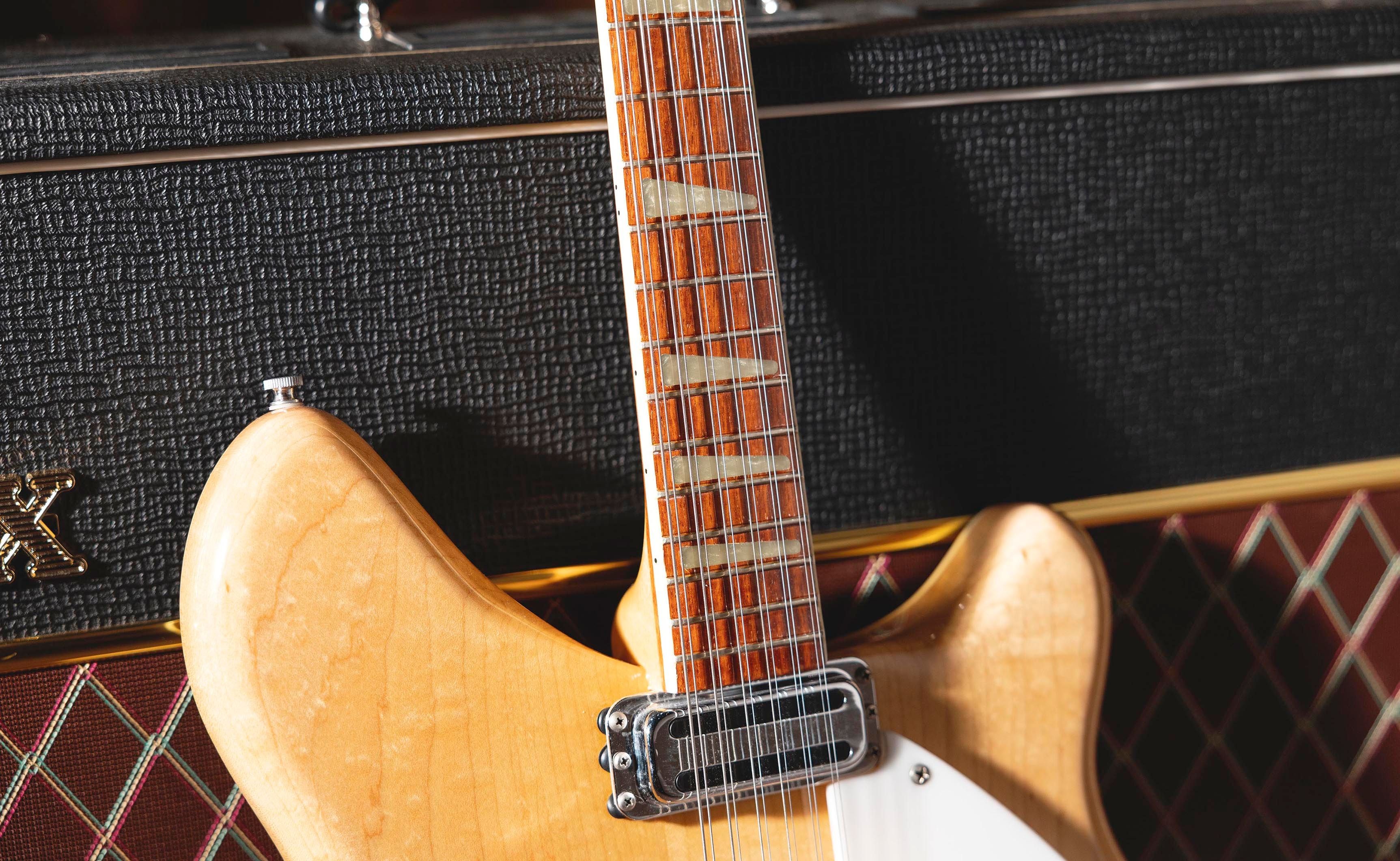
As with the 4005 bass, the Rickenbacker 12-string was an interaction of company owner F.C. Hall, designer Roger Rossmeisl and wood shop foreman (soon to become factory manager) Dick Burke.
Rossmeisl had designed most of the electric guitars that came out of the Rickenbacker factory between 1954 and his departure for Fender, just down the road in Fullerton, California, in 1962. Among these designs were the Capri models that would evolve into the 300 series, including the Model 360 that the first 12-string prototypes would be based on.
In 1963, Hall had looked at the growing market for acoustic 12-string guitars due to the folk music boom of the time. He began contemplating whether an electric 12-string would be a good extension of the Rickenbacker product line. The big challenge was going to be how to make a 12-string headstock that wouldn't overly distort the unique Rickenbacker headstock shape. Hall gave the assignment to Burke, who was at that time head of the wood shop at the factory.
Burke did not want to elongate the headstock to accommodate the extra tuners that would be required. After some experimentation, he came up with the concept of mounting six tuners in the "normal" position. Then, by routing out two parallel slots partway through the front of the headstock Burke mounted the tuning keys for the second string of each course facing "backwards" like the tuners on a slot headstock guitar. It was an elegant solution that preserved the Rickenbacker headstock shape. This also helped to keep the overall guitar's balance more in line by not adding the weight an elongated headstock would have.
Burke also made other changes over the years, thinning the body depth and changing the sharp, bound edges of the top of the guitars to rounded ones in response to complaints about playing comfort. While the double-bound version would still be available on special order, it didn't take long for that "round-top" design to become the standard.
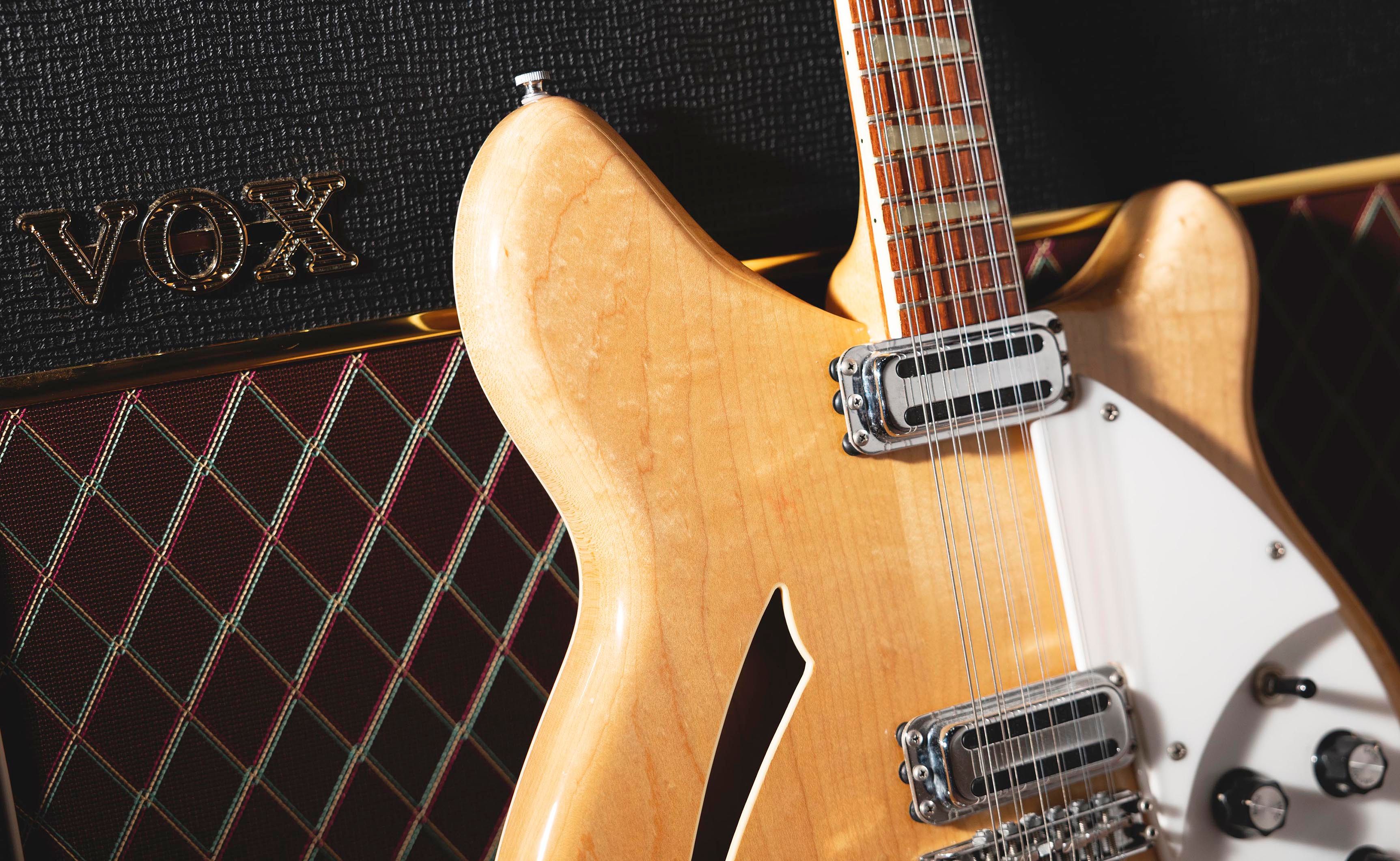
The first prototype was finished in July of 1964 and was placed with country artist Suzi Arden, who had a residency at the Golden Nugget in Las Vegas that November. Arden had been playing a Martin 12-string acoustic with a pickup in her act and instantly fell in love with the Rickenbacker, saying she liked it so much that she wouldn't give it back. Interestingly, Arden's 12-string had the standard 12-string arrangement with the octave strings before, rather than after, the low string of each course, and this is the only known example of this configuration. But the time the second two prototypes were built in early 1964, the string order had been changed to have the low string of each course being picked/plucked first. This string order is one of the important aspects of the sound of the Rickenbacker 12-string.
By early 1964, Hall was aware of the Beatles' growing popularity and had seen photographs of John Lennon playing his Rickenbacker 325, purchased by Lennon during the band's residency at the Kaiserkeller in Hamburg. He made the decision to try and place some instruments with the Beatles and placed a call to their manager, Brian Epstein, making an appointment to meet with the Beatles in New York City during their first American visit.
While planning to bring a new 325 for Lennon and one for Harrison as well, Hall brought along a prototype 360/12. Harrison was not feeling well and so had stayed at the hotel instead of going to the meeting. Lennon played the 12-string and thought it would be perfect for Harrison, so asked Hall if they could take the guitar back to the hotel to show him. Harrison loved the guitar immediately.
On returning to the U.K. after the tour, Harrison immediately put the guitar to work in the studio for the recordings or "You Can't Do That,' "I Should Have Known Better" and the famous opening chord of "A Hard Day's Night." Guitarists who had never heard an electric 12-string before were scrambling to figure out what this new sound was and Melody Maker magazine dubbed the guitar, "the Beat Boys secret weapon." Harrison would continue to use the 360/12 on recordings like "Ticket to Ride," "If I Needed Someone" and (deep cut alert) the first version of "And Your Bird Can Sing" which can be found on the "Super Deluxe" version of Revolver and on the Anthology 2 album under the title of "And Your Bird Can Sing (First Version/Take 2)."
Back in the States, a young guitarist named Jim McGuinn (who would later become Roger) who'd been playing acoustic 12-string guitars with a band that was about to rename themselves The Byrds, heard that sound, then saw Harrison playing the 360/12 in A Hard Day's Night and decided that it was the sound he was looking for, so he ordered a 360/12 of his own, which was prominently featured on the band's debut album and single, Bob Dylan's "Mr. Tambourine Man."
Due to the influence of those two bands, the Rickenbacker 12-string became the electric 12-string of choice for many players and, to this day, is the most popular electric 12-string on the market. John Hall, F.C.'s son and current owner and CEO of the company, has said that Rickenbacker retains roughly 80% of the electric 12-string market and that the 360/12 remains their strongest selling model.
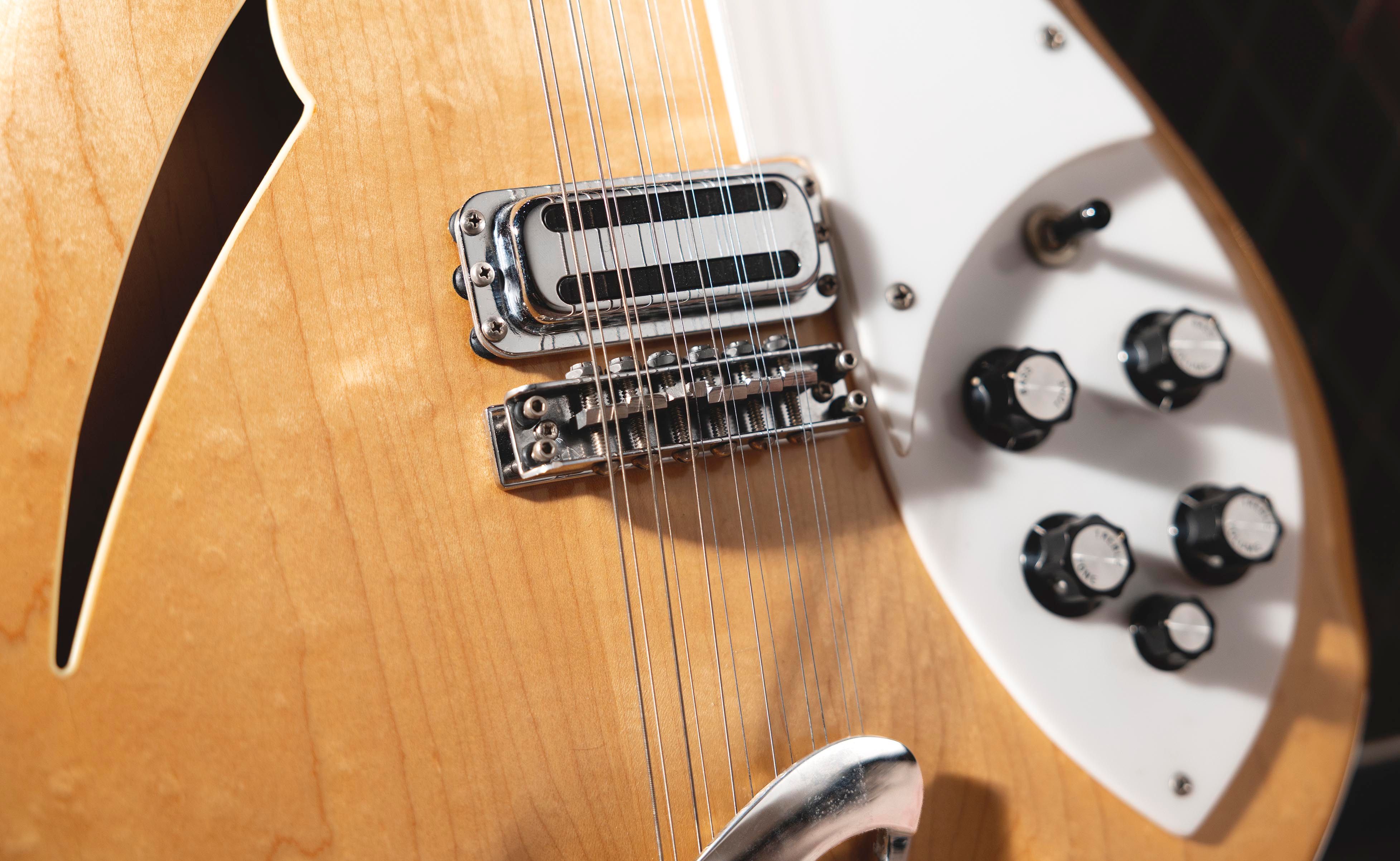
Over the years, the 360/12 has undergone a handful of changes, the biggest being the round-top, thinner body design and changes to the pickups, but it has essentially remained the same guitar. One feature Rickenbacker offered early on was Rick-O-Sound, which provided a second output jack for a “stereo” effect. Rather than capturing a true stereo image, it allowed the pickups to feed separate amps, much like Gibson’s stereo-equipped ES-345 and ES-355 guitars. Rickenbacker’s touch of genius was using the blend knob, which supplemented the pickups’ normal volume and tone controls, to adjust the balance between the two amps when Rick-O-Sound was in use (more about Rick-O-Sound's blend control in the hands-on section).
The number of players who have used Rickenbacker 12-string guitars over the six+ decades since its introduction is extensive. We've mentioned a few in the quick timeline above, and leave it to you to dig up more, if you're so inclined.
It was at this point that I headed to Hollywood to pick up the guitar in question so I could let you know what I think of it.
Hands-on With a 1966 Rickenbacker 360/12 Electric Guitar
On getting the 1966 Rickenbacker 360/12 off the wall in the Hollywood Vintage Room, my first thought was that I have never seen a 60-year-old guitar in such pristine shape. The finish was immaculate and I didn't see a single scratch, much less a ding, anywhere on the guitar. Yet it didn't have the feel of a guitar that had been sitting in the case for decades not being played. So big kudos to whoever the previous owner(s) were for taking such good care of it.
Playing unplugged, the guitar was lively and responsive, the slender Rickenbacker neck was easy to play and the intonation was, as near as my naked ears could tell, spot on. Having set up multiple Rickenbacker 12-strings over the years, I was expecting potential intonation issues from each pair of strings sharing a saddle, so this was a pleasant surprise. The octave G string was even tuned a few cents flat—a familiar setup trick so that it plays better in tune as you move up the neck (a trick that applies to pretty much any 12-string guitar, btw).
On plugging into a hand-wired Fender Deluxe Reverb reissue, I proceeded to zone out playing my assortment of 12-string licks and attempting a solo guitar version of Billy Strayhorn's "Take the 'A' Train." I was paying particular attention to how to dial the tone using the guitar's five control knobs. Even running through a single amp rather than the dual amps the guitar's Rick-O-Sound setup would have allowed, I was able to get some great tones using the blend knob and some judicious touches on the bridge pickup's tone knob. My favorite was with the switch in the middle position, the tone slightly rolled back on the bridge pickup and the blend knob slightly toward the bridge pickup. This gave some added depth and body to the tone, while retaining the articulation and "jangle" that is the hallmark of the 360/12.
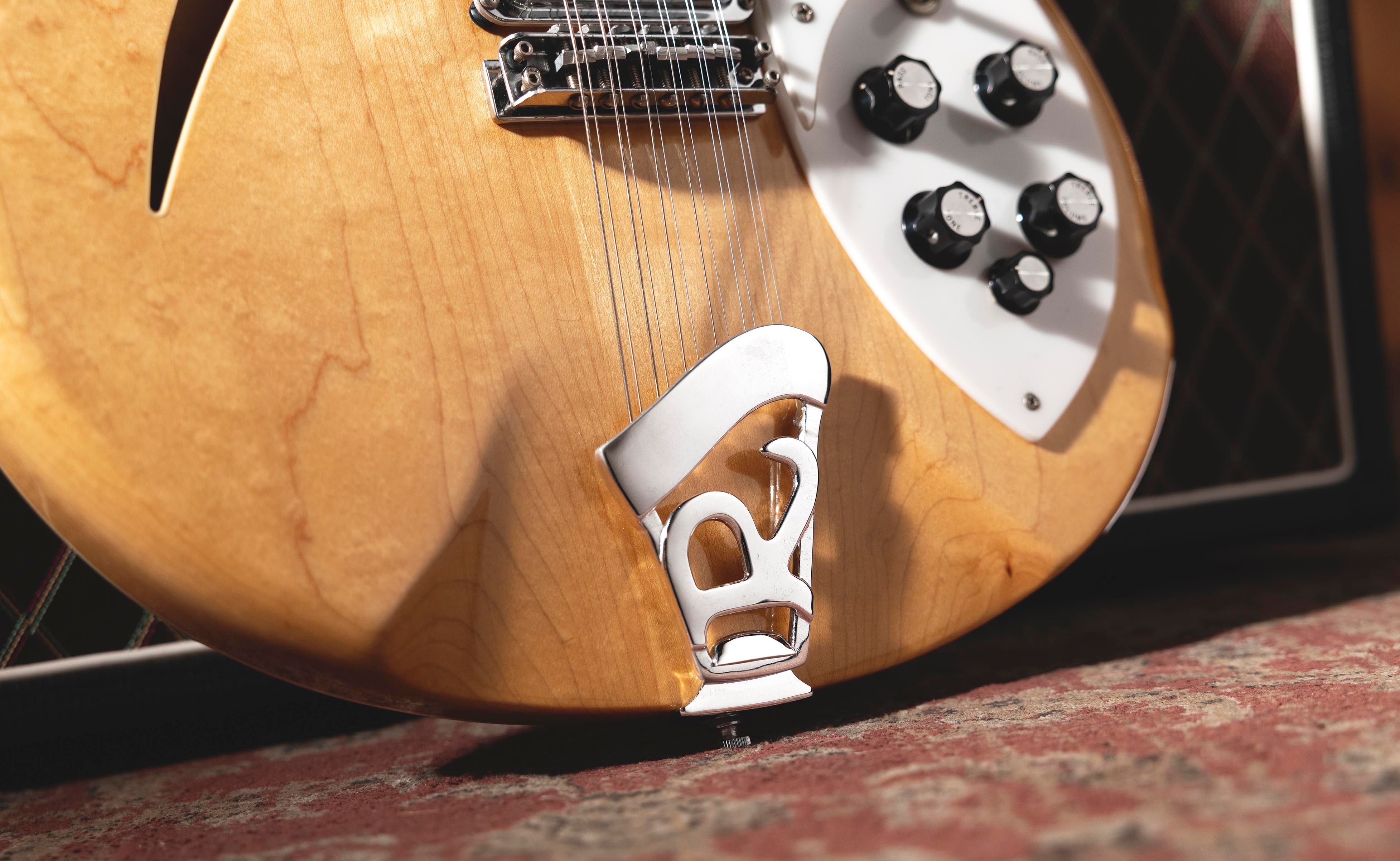
Speaking of "jangle," there was plenty of that on tap, even without a compressor (which was the studio trick that made the Byrds' 12-string sound so distinctive—to the point where Roger McGuinn would later have Rickenbacker install a compressor circuit inside his signature guitar to get that sound in live performance).
This guitar was a joy to play and it was hard to put it down. Eventually, though, I had to give customers trying out other guitars a turn.
As a side note, while I was there I also checked out a 360/12 with the 12 to 6-string converter comb installed. It's a weird sensation to feel 12 strings, but only hear six. And, because the disengaged strings are still sitting flat on the fretboard, it makes bending notes problematic, if not impossible.
Conclusion
Playing this pristine example and digging into the history, it was easy to see how and why the Rickenbacker electric 12-string models became legendary and remain in demand to this day. Of the four Rickenbacker 12-strings in the vintage room when I was there, this ’66 model stood out as the finest example of what drove musicians to pick one up over the decades since its introduction.
As always, I'm glad to be able to play these rare instruments and share that with you. If there are any particular vintage guitars you'd like to see covered in these Vintage Spotlight articles, please let us know and give me a chance to get hands on the guitars we all dream about. And be sure to check out our full Vintage collection online, or stop by your local Guitar Center to see what's on hand there.
Written By: George Van Wagner
George Van Wagner is a writer and editor for Guitar Center, where he has worked since 2007. A multi-instrumentalist, freelance recording engineer, arranger, composer, writer and all-around tech geek, he has over 30 years of experience in the musical instrument industry at companies like Midiman/M-Audio and Line 6, doing everything from customer service and writing user manuals to working in product development. He is currently gigging around Los Angeles with Gruppo Subconscious and Bobby “Hurricane” Spencer.
Be the first to know about exclusive offers, tips and more.

866-498-7882 English
877-687-5402 Español