


Pro Gear Advisers
•866-498-7882
Why Analog Still Matters: Inside the Design Philosophy of Soundcraft's Signature Plus Mixers
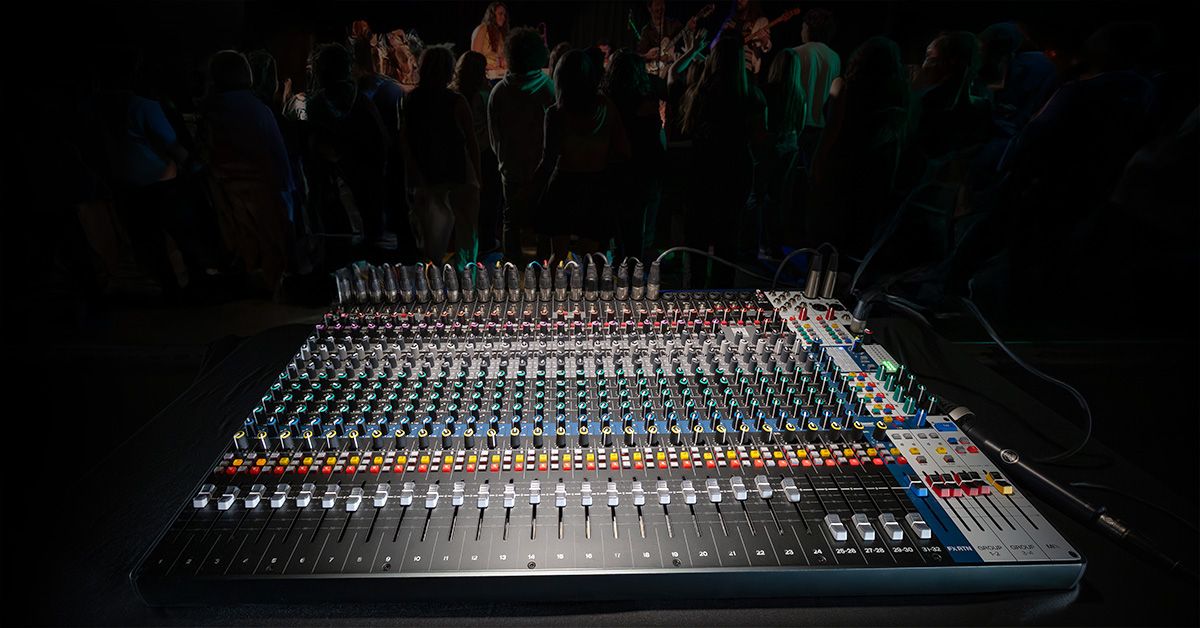
Research tells us the large-format mixing boards you see in theaters, concert halls and arenas are now more than 90% digital. While there are no definitive survey results on mixing systems in home studios, available evidence estimates the vast majority of creators with personal recording spaces work exclusively on a DAW or pair a DAW with a hardware controller. Even in small clubs and bars, it is increasing common for a soundperson to mix gigs using an iPad or other mobile device. In fact, industry assumptions speculate that less than 2% of workflows are based primarily around an analog mixer.
Much like the “impact winter” that lead to the extinction of the dinosaurs, you would think audio manufacturers would scan the glacial analog mixing landscape and pivot to producing digital solutions.
But not Soundcraft.
The British pro audio company is betting analog mixers are much like the avian dinosaurs that survived the prehistoric extinction event and can still offer sonic and workflow benefits to creators.
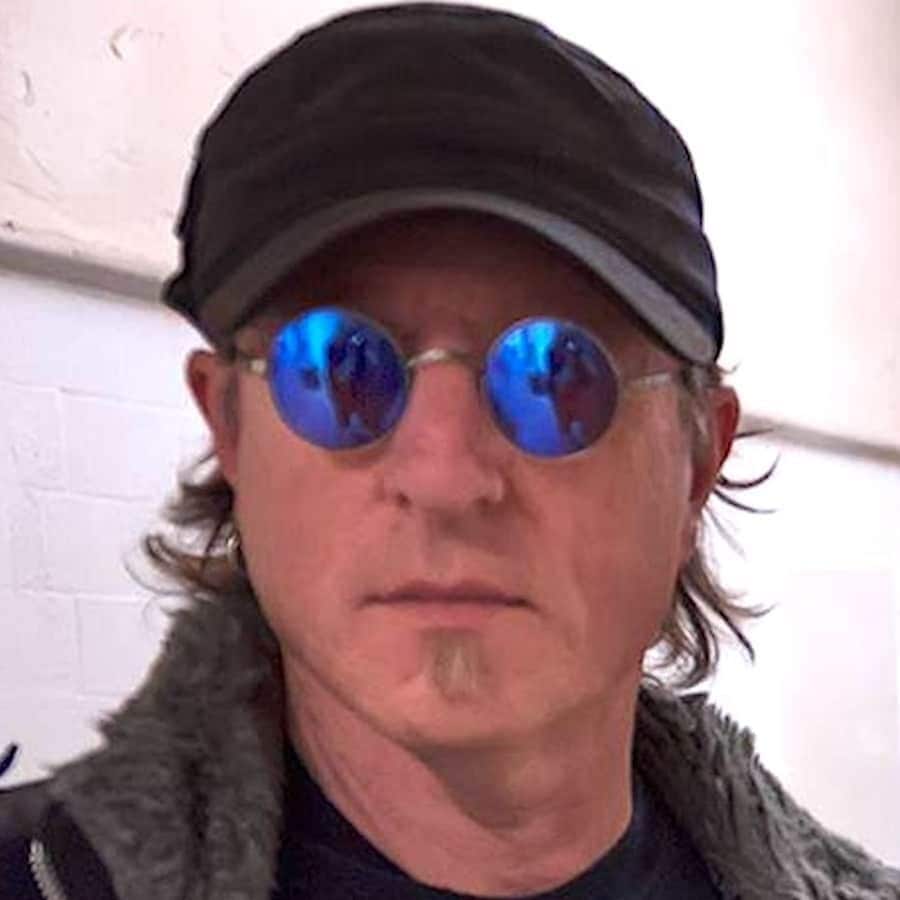
“Analog mixers are immediate,” says Soundcraft Product Manager Scott Wood. “They are one surface with one set of controls—no multiple layers or pages. Do you really want to work with a workstation with all of its layers and a console with all of its layers, or do you just want a console that can manage your routing and monitoring while your workstation is doing all the tricky stuff? I believe the best mixer is the one that helps engineers spend less time looking down at a control surface and more time listening to a performance.”
In this interview, Wood explains the critical importance of a professional workflow and how it informed the development of Soundcraft’s Signature Plus analog mixers. The new series currently offers four formats to serve everyone from singer-songwriters to bands, venues and recording studios: Signature Plus 12, Signature Plus 16, Signature Plus 22 and Signature Plus 32.
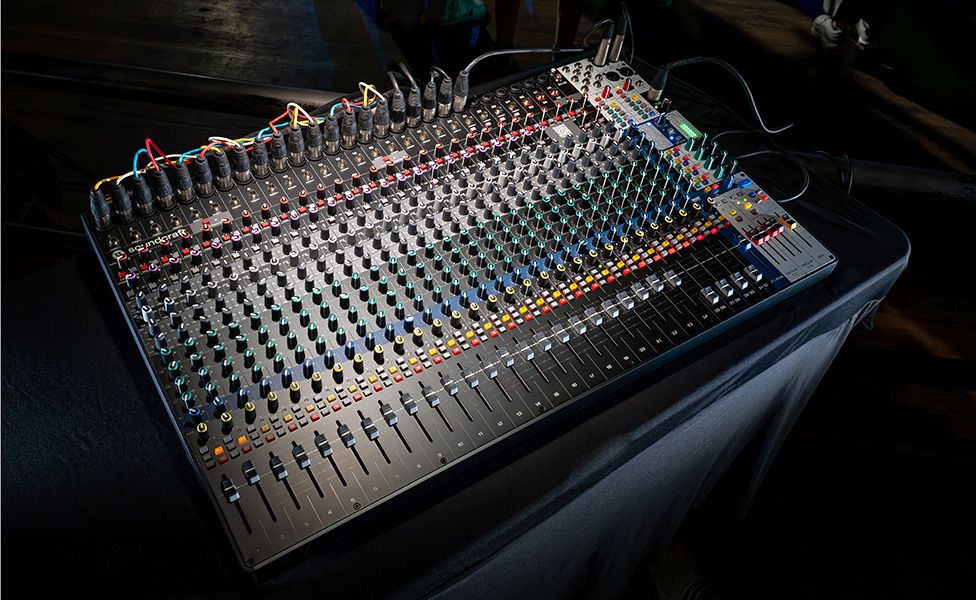
In a world pretty much dominated by digital consoles, it seems pretty “punk rock” for Soundcraft to introduce an analog mixer.
Scott Wood: That's probably the first question everybody asks: "A new analog mixer? Who's making analog mixers these days?" The answer is Soundcraft still sees three distinct types of users. There are engineers who want a fully analog workflow. There are users who prefer layered digital consoles. And there are people who want completely software-based mixing. Soundcraft makes mixers for all three approaches.
However, analog still offers one major advantage that no touchscreen or layered interface can replace—one surface, one set of controls and one layer. The simplicity becomes especially valuable in environments where different people may operate the console throughout the week. For example, in a house of worship, you may have volunteers, assistants or multiple staff using the console. Different people may run Sunday’s service than a Tuesday night event. There's a real advantage to analog there.
Was there a specific user demographic in mind when you developed the Signature Plus mixers?
That was one of the things I wanted to expand. People often assume compact analog mixers are only for small project studios. In reality, they serve a huge variety of users, such as coffeehouse duos, schools, corporate AV, broadcast. project studios, churches and festival stages. So, it's not just a band onstage—it's all these different workflows that use small analog mixers.
Could you give me an example of how you define “professional workflow?”
To me, it's very simple. I want to know something is wrong before anybody else does. I want to see what's going on, and I want to hear what's going on before the audience hears what's going on. I want to hear what's going on before the producer hears it. I want to hear what's going on before the artist hears it in their headphones. Everything else follows from that. If an engineer spends too much time looking down at a control surface, they've already lost valuable awareness of what's happening onstage. Everything important is happening onstage.
How did Soundcraft actually build that workflow philosophy into the hardware?
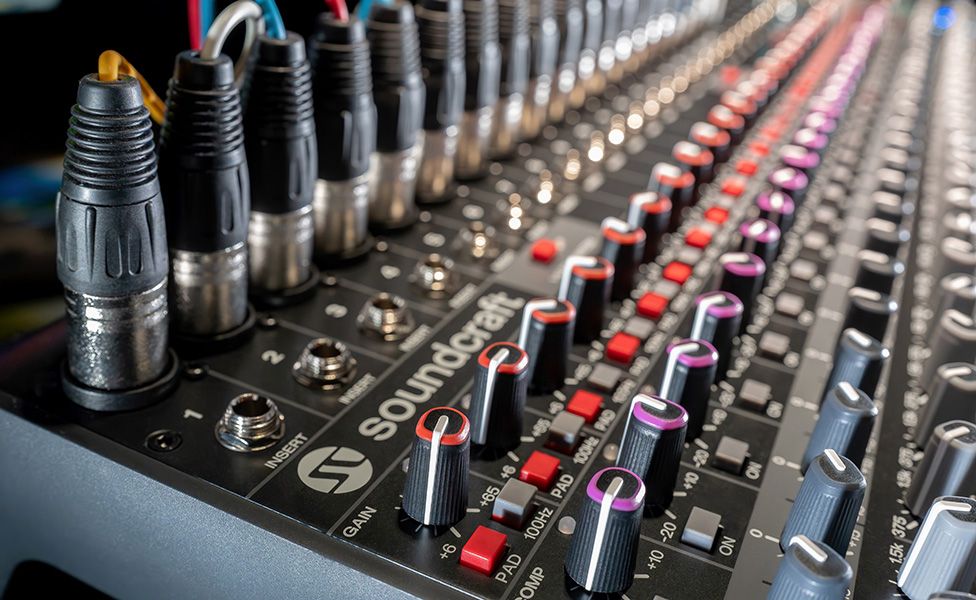
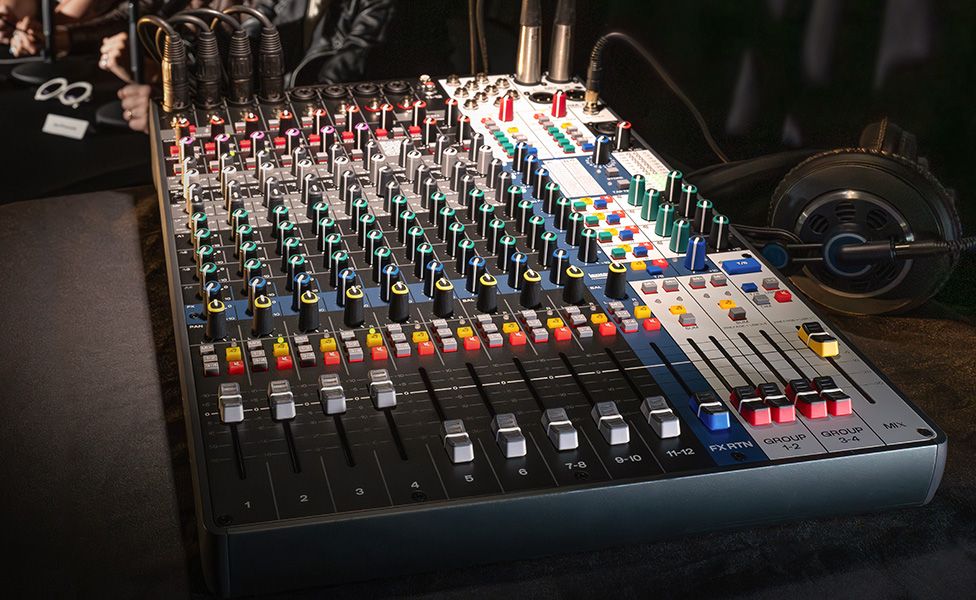
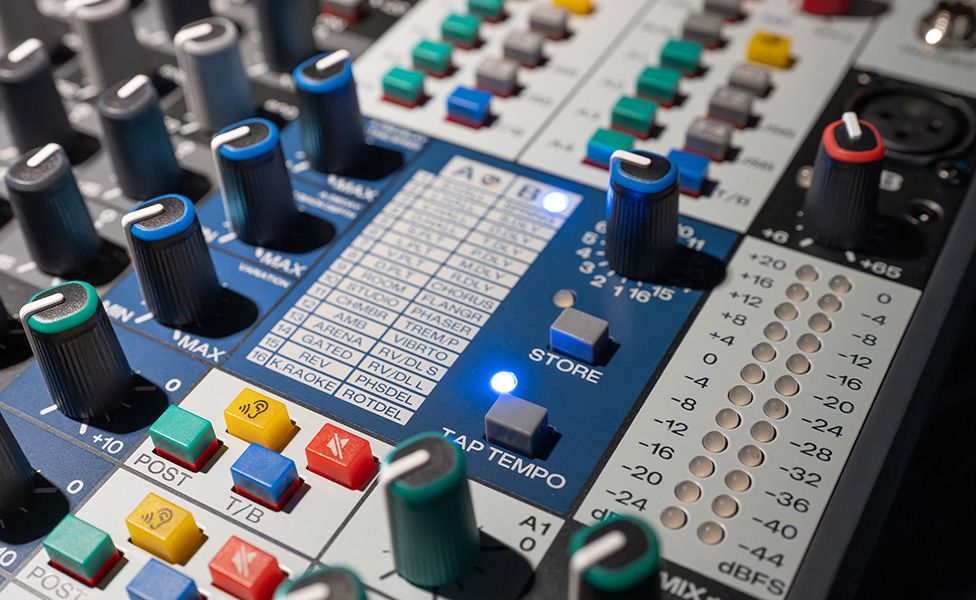
By reducing the amount of time engineers have to think about the console. For example, Signature Plus introduces tactile controls designed to be recognized by feel rather than sight. We did things like the square-circle knobs, so you can actually feel them with your fingers while you're looking at the stage. Also, buttons are color-coded instead of blending into a sea of identical gray switches. You can quickly scan the console and immediately see what's active and what isn't.
For example, let’s take a performer doing a duo show at a coffee shop. He may have the console next to him, and he's controlling his mic and guitar, his partner’s mic and guitar, and the speakers. He also has to communicate with his partner and the audience with his eyes, hand movements, foot tapping and so on. He needs to be able to perform. So, he has to be able to look down at the console, make an adjustment and get back to the music before the next downbeat.
What mic preamps were installed into the Signature Plus series mixers?
The microphone preamp is really where a console develops its personality. The input channels on the Signature Plus have Ghost mic preamps from our Ghost consoles—which are one of our best studio consoles ever. In fact, my favorite thing about the Signature Plus series is probably the mic preamps. They offer 65dB of gain to handle all types of input signals, and when you push the level, the preamp softens the peaks rather than getting brittle. You can get up to around +60dB of gain before you start hearing any harshness. The Ghost preamp is remarkably forgiving.
You also included dbx OverEasy compression on every mono channel.
Yes. We wanted simplicity and speed, and we offer the kind of compression engineers actually use. It’s a one-knob compressor. Instead of requiring users to dial in multiple compressor parameters, Soundcraft adopted the classic dbx OverEasy approach—it’s basically a dbx 163 simulation—because most of the time you either need really light compression or really heavy compression. You want the soft one for most things, such as voices, acoustic guitars and keyboards, and the hard one for rock guitars and kick drums. It's just like a little bit of love you may not notice on a single track, but spread across an entire mix, it’s going to bring more of that British-like character. Even if the compressor button is off, you’re still going to get that second harmonic and its warmth and fullness.
Soundcraft also placed insert points on every mono channel. Why are they still important?
Never underestimate insert jacks. Whatever you need, you can put in there—a de-esser, a Universal Audio 1176 Studio Compressor pedal or any other guitar stompbox. The insert point becomes an extension of the console. I think it’s one of the most powerful features on the console.
Could you explain the “Simple Success Metering” concept of the Signature Plus mixers?
Traditional LED ladders work, but they require attention, and attention to metering is a luxury many live engineers don't have. Instead, Signature Plus condenses each stage of gain structure for the inputs and outputs to a single glance—one LED that reacts with green, yellow and red colors. If everything is yellow, I know my gain staging is probably right. If something falls outside that range, I've got a problem I need to address. This is a massive advantage to a professional workflow where I may have ten seconds per minute to operate the console in performance situations. I get 50 seconds to assess what’s happening on the stage and ten seconds to adjust the mixer, because my job is to keep those delicate little birds happy and performing at their top level. So, that’s what we call SSM, or Simple Success Metering.
Soundcraft also deployed that simplified workflow for monitor sends with its Mix to Aux feature. What’s the main benefit there?
Speed. When musicians ask for monitor adjustments, they almost always ask for the same thing: “Just give me the band mix.” So, Signature Plus includes a dedicated Mix to Aux function that immediately copies the front-of-house mix into the monitor sends. Then, the engineer can make quick and effective personal adjustments from that starting point.
For example, I can say, “Okay, here’s the mix. What else do you want in your monitors?” A guitarist might say, “I need a little more Janet.” Or a drummer might ask for more kick drum. I can give them whatever they want almost immediately without having to change anything else in the mix. You know, “Okay, are you good?” If you need to do monitors in 30 seconds, this is the fastest way to do it.
There’s also a dedicated Listen button for each of the auxes, so I can hear adjustments in my headphones without interrupting the main mix. This is a feature you get on $40,000 consoles, but I’ve never had it in a $1,000 model before.
HARMAN International, the company that owns Soundcraft, is a huge corporation with expertise far beyond pro audio. Did any other divisions inform the development of Signature Plus?
Absolutely. One unexpected source of inspiration came from HARMAN's automotive engineering teams. You see, we were having problems with the Soundcraft Ui24R mixer/multitrack recorder in Brazil and South Asia, where the product is operating outdoors in high humidity for hours and hours.
So, I went to our HARMAN Becker Automotive Systems group in Germany, and asked, “How do you keep a car running at 130 degrees?” They said, “Oh, we use this op-amp, and these ICs, and we don’t use this or that, because this is your temperature when the car is parked, and this is your operating temperature.” I was like, “Thanks. That’s the experience. Live and learn.”
So, we did some of those things and return rates for the Ui24R dropped significantly once we started using those automotive-level components. When it got to the Signature Plus, we didn’t want to make a same-same console. We wanted it to be a 2026 concept. We took all of the experience of HARMAN from stages big and small, automotive, luxury and DSP to build the Signature Plus series.
You once said an engineer's real job isn't operating a console. What do you mean by that?
My job isn't really mixing. My real job is taking care of the people onstage. If the musicians are comfortable and the audience never notices a technical problem, then the engineer has succeeded. It also helps to never forget the audience is facing the performers onstage and their backs are to you.
Given all of your experience, did you find that a particular design philosophy guided the Soundcraft Signature Plus project more than anything else?
One of the things somebody once told me was, “What if you just gave people what they want?” That idea ended up influencing my approach to product development: Instead of determining what technology can do, ask what people actually need. The other aspect of that lesson has stayed with me for decades—listening. Listening to customers. Listening to engineers. Listening to musicians. Overall, we just kept listening to people, and through that, the Signature Plus really came down to two ideas. The first is providing “Creative Analog Character” via the Soundcraft Ghost mic preamps, Sapphyre EQ, dbx one-knob compression and the channel insert points. The second is “Professional Workflow” from the metering, tactile controls, color coding, monitoring routing, talkback system and Listen bus. Everything works together to let engineers spend less time operating a console and more time supporting a performance. Technology should quietly let creativity take center stage.
Written By: Michael Molenda
Michael Molenda is a content strategist, editor and writer for Guitar Center, where he has worked since 2022. He is the longest-serving Editor in Chief of Guitar Player (1997-2018), and former Editorial Director of Bass Player, EQ, Keyboard, Electronic Musician, Gig and Modern Drummer. A guitarist, drummer, bassist and producer, Mike co-owned three pro recording studios in San Francisco, and performs with Surf Monster and The Trouble With Monkeys.
Be the first to know about exclusive offers, tips and more.

866-498-7882 English
877-687-5402 Español