

Pro Gear Advisers
•866-498-7882
Inside the Electro-Voice EVOLVE G2 Column PA Systems
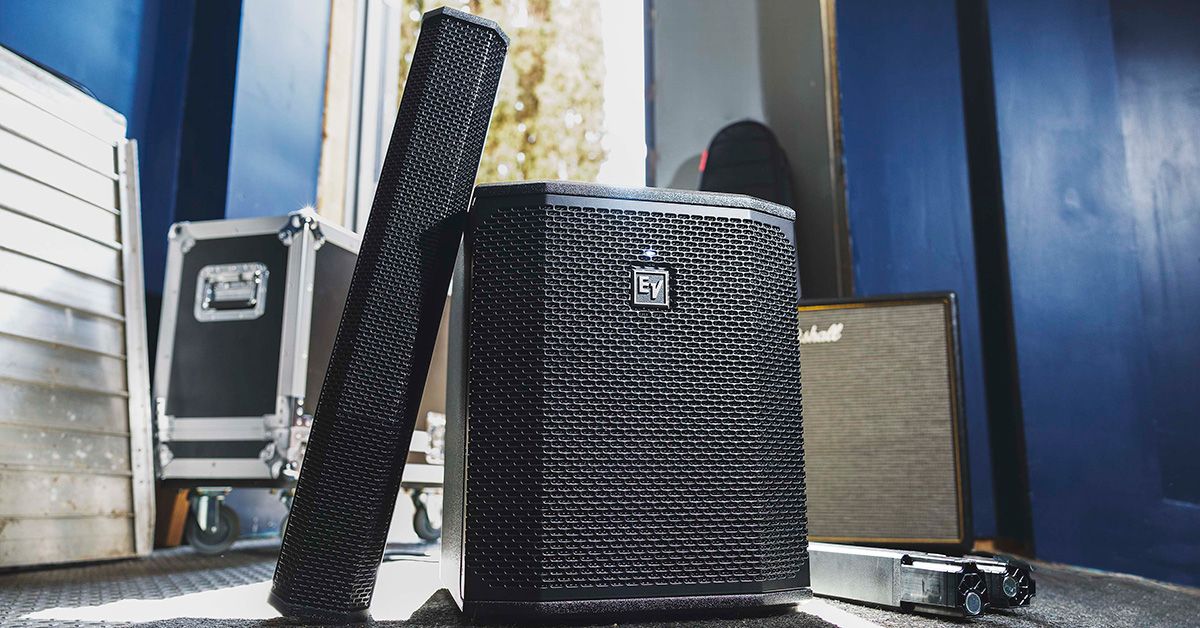

For the second generation of its EVOLVE column PA systems, Electro-Voice didn’t set out to replace a winning formula that musicians, DJs and live sound engineers already loved. Instead, EV looked closely at customer feedback and focused on making the platform more powerful, flexible and easier to use.
The resulting EVOLVE G2 lineup builds on the sound and portability of the original systems with increased amplifier power, updated DSP, expanded effects, improved Bluetooth performance and a redesigned QuickSmart mobile app. Across the EVOLVE 30M, 50 and 50M G2 models, Electro-Voice also added new routing and mixing options designed to get you and your audience great sound easier and quicker than ever.
In this Guitar Center-exclusive interview, Electro-Voice’s Director of Product Management, Portable Sound, Andrew Grunloh walks us through the thinking behind EVOLVE G2, what shaped its development, what’s changed in the QuickSmart app and how each model fits into the broader EVOLVE ecosystem.
What was your approach to the second generation of EVOLVE, and how pivotal was customer feedback when making those decisions?
Andrew Grunloh: Especially with a gen 2 product, you want to make sure the sequel is better than the first. We definitely want it to be Indiana Jones and The Last Crusade and not Kingdom of the Crystal Skull, right?
We wanted to make sure we did this right. So, we really did put a lot of time going through user reviews online, pulling social media quotes, talking to our key partners like Guitar Center, as a great example, and talking to end users directly at trade shows, out on the street, when we'd see them being used, as well as our influencers and ambassadors.
We really knew that this is a product that people are passionate about, and that we have to ultimately do what the customers want us to do with this. A lot of what they said was, "Hey, this is great. It's one of the best sounding—if not the best sounding—columns. Can you just give us more of that great EVOLVE sound, that great coverage? Don't change the recipe, just strengthen it."
We got feedback on things like the Bluetooth range, DSP and effects that they wanted to see improved, as well as some other usability features. We took all of those and put them into this G2.
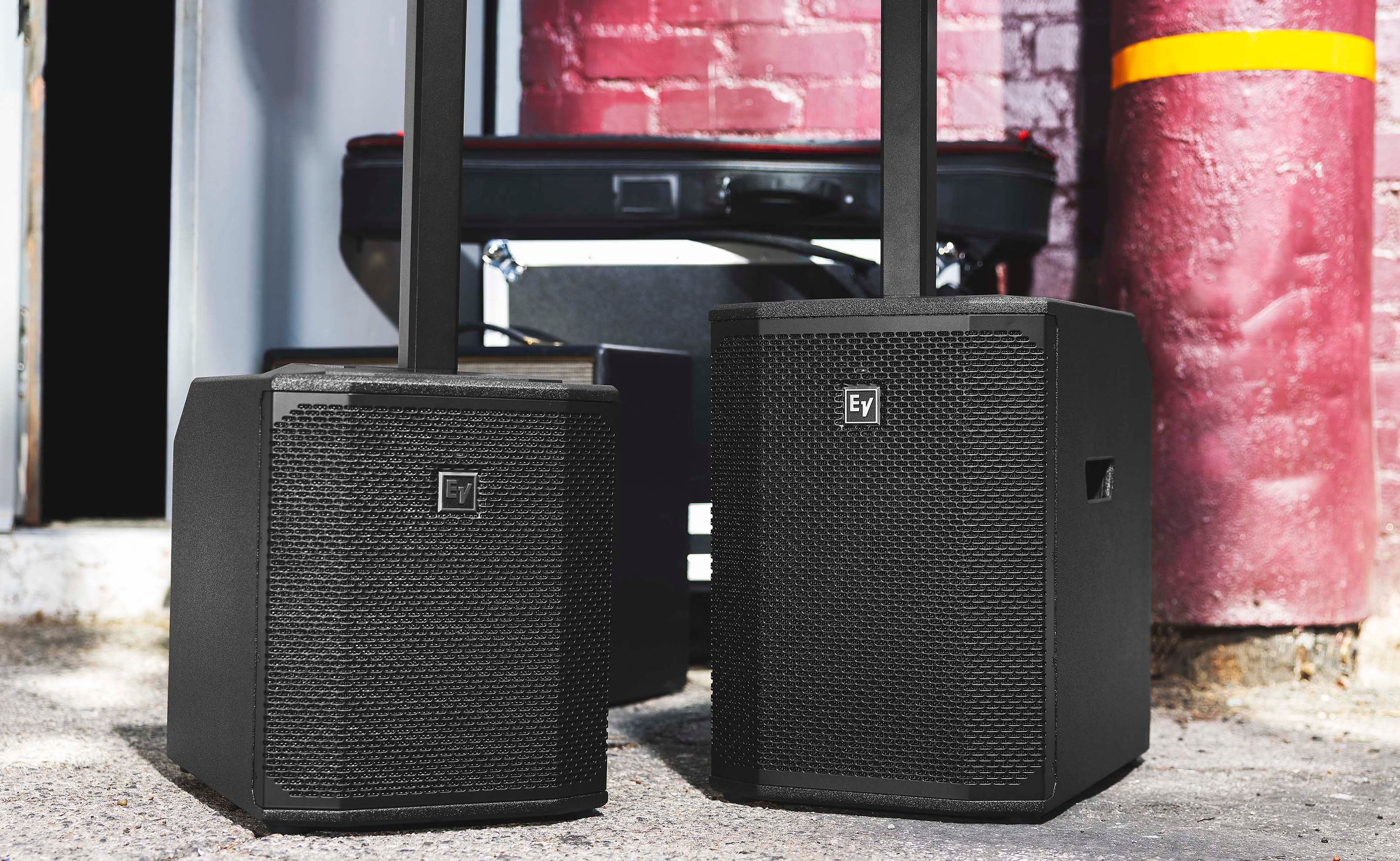
Pictured: Electro-Voice EVOLVE 30M G2 and 50 G2 Portable Column PA Systems
Speaking of improved features, what would you say are the top three highlights in the EVOLVE G2 lineup?
The first one I would say is the overall DSP overhaul. There's the QuickSmart mobile app. There's also a big update making it easier to add and control the effects and other features customers wanted.
On the mixer models, there are more effects and more combinations possible. We did that by increasing the DSP power and memory on the M models.
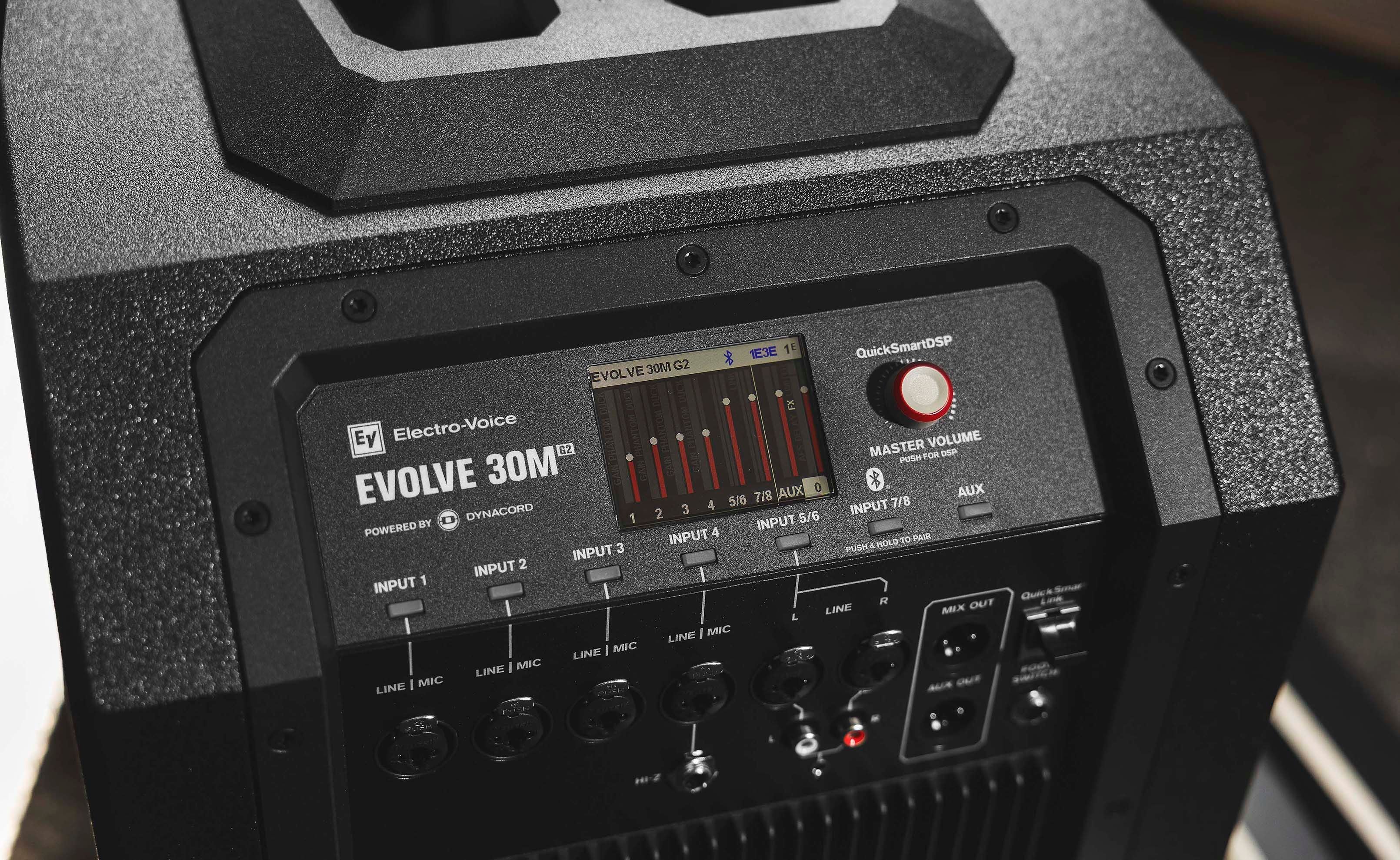
We added a lot of features in the mixer itself to improve signal routing. So, if you wanted pre- and post-fader AUX sends, or you wanted to send a separate mix with independent level control for, say, a remote speaker, we did a lot of those things in the menu to make that more flexible.
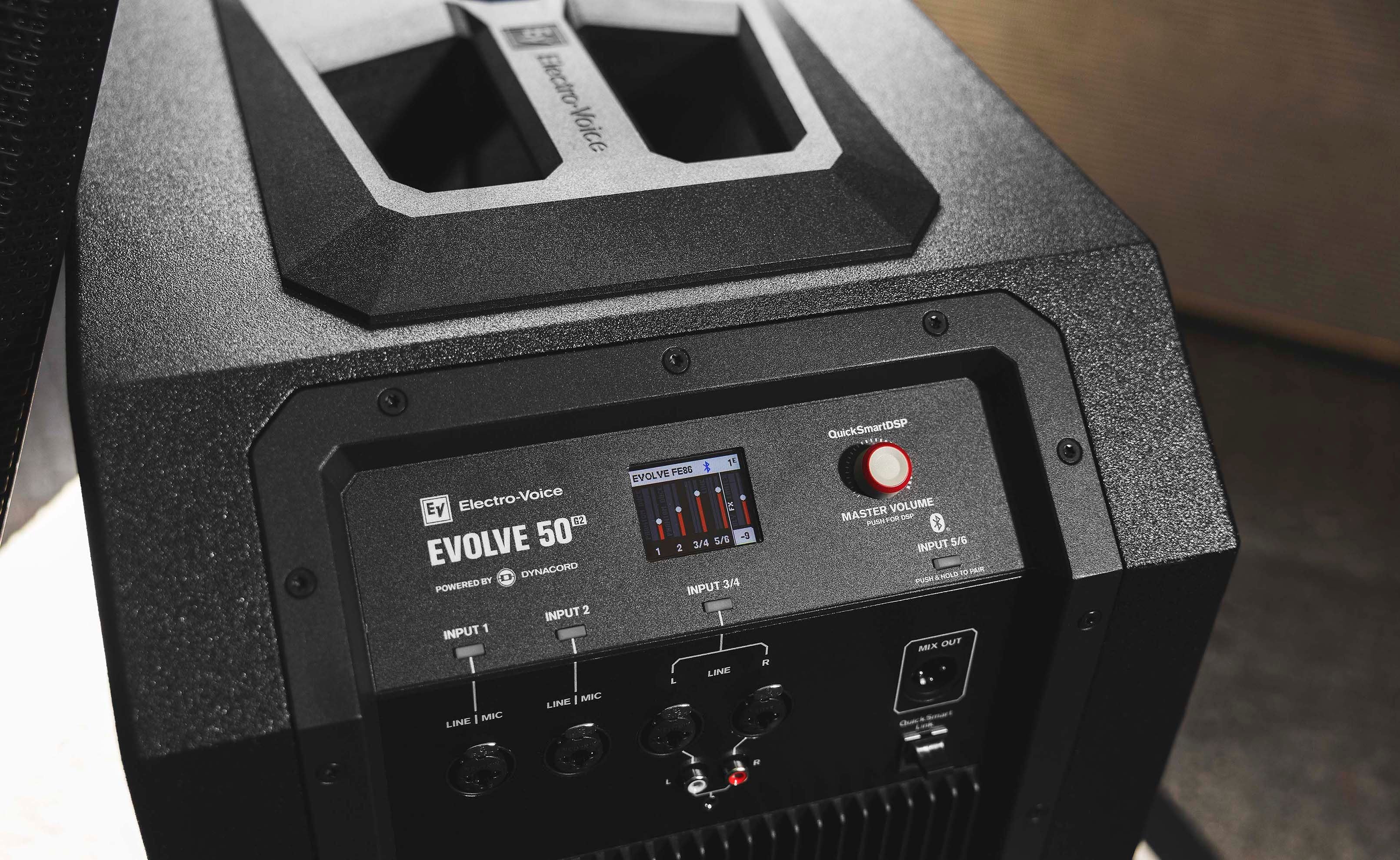
Then, to make it easier to use, we updated the QuickSmart app so that the mixer layout is much more intuitive, especially with the QuickSmart link feature added to all models. Now, when you're using the mixer app, you can see all of those inputs as a single, large virtual mixer.
Customers really like the sound—they just wanted more of it. We increased the amplifier power, and that results in two dB more in each model across the board.
We also applied our Venturi port technology to all of the submodules. So that results in cleaner, deeper, more impactful bass coming out of the woofer. We made it smarter, we made it easier to use and we improved the acoustics without changing the overall winning recipe.
You mentioned a few of the newer features on QuickSmart mobile app. Can you tell us a bit more about the updated app?
Yeah, absolutely. The overall app interface and mixer interface has been updated. We assigned a dedicated UX team to look at every button, knob and fader, and really determine if this is optimized for how it's used. We talked to solo musicians, DJs and even rental companies and people doing event production to see how they're using it, and what functions that they really wanted.
There's that link system control that I briefly mentioned earlier. When you are using the QuickSmart link on, say, two EVOLVE 50Ms, you now can see all of those inputs together on one mixer. You don't have to flip through pages like you used to.
As for the hardware, it has improved Bluetooth range. Then, in the app, we've also improved the pairing process so that it is much more intuitive. It’s essentially searching a lot faster for those connections and identifying them and linking to them much more quickly.
What's also really cool about the app is, with these updates, it actually still works on gen 1 products or EVERSE or XLX-G2. You don't necessarily get the new features—the features on those products stay the same—but you do get the advantage of the improved user interface.
We also did a lot on signal routing—these are things that are definitely new to G2 and very specific. There is now the option for an advanced user, if they want to allow a separate input gain. The old version just had a single fader for level control, so it's super easy for somebody who just wants something fast—or maybe they're a new user. But for that power user who wants that dedicated input gain control, they can toggle that on, which then means you have input gain to set your mic level and a fader for level control, which then means you can have pre- and post-fader AUX sends.

Then, if you're doing a monitor mix, your main mix levels don't affect your monitor levels. That allows you as well to do pre- and post-fader sends on the main output as well.
Let's say you're using the main out to feed another set of speakers in another room. Adjusting the level on, say, your primary system doesn't necessarily adjust the level on the secondary system. You have that option to toggle those and get that added flexibility.
We've added the ability to enable or disable the effects on the AUX mix. So, if you want reverb on your AUX for monitors, you can. Or if you don't want reverb on your monitors, you can turn that off.
Another option that wasn't available before is you can pre and post the main EQ as well. So, if you're a wedding DJ and you're capturing the ceremony, and you want to send that out to record, you can still EQ the room without having that EQ applied to your recording.
And then, thanks to user feedback, we've implemented a vertical mixing mode with faders, so you can just slide left and right with your thumb and use the whole mixer that way.
Great to see such a comprehensive approach there. You also mentioned a wider variety of effects. Can you tell us about those?
There are now more reverbs and delays, as well as the ability to add reverb and delay together, for which we had some limitations on the previous generation. Those are very basic, memory-heavy algorithms. So, by bumping up the DSP and memory on the gen 2 models, you're able to basically have longer reverbs and then pair them with delays.
On the Mixer models, we've included automatic feedback suppression. Because we have that more powerful DSP in there, we can do that. The M models of course have more effects because of the mixer and bigger DSP.
On the EVOLVE 50, what's new is we're adding at least one bank of effects. It is a simpler, more straightforward PA model, but there are still users who said, "Hey, just give me a reverb. Give me something simple so I can just add a little bit of effects to my sound." So, the EVOLVE 50 now has effects where it didn't previously.
And the EVOLVE 50 G2 also has the QuickSmart Link feature. So, if you combine a 50 and 50M, you can use those two combined inputs, or those two inputs from the Evolve 50 with your total system.
You mentioned using a 50 and 50M simultaneously. What about combining G1 and G2 components?
I do get asked a lot about backwards compatibility—if you have mixed inventory. Somebody owns an EVOLVE 50 now and the G2 comes out and they're like, “Hey, I want to buy another EVOLVE 50. Do I have to replace my old one?” We made sure the cosmetics were improved and updated, but that it didn't look out of place alongside the previous generation, so you can simply add to your inventory.
It is totally safe if you accidentally grab the wrong column and subwoofer and you get to your gig and you go, "Oh no, I got a G2 top on a G1 sub." Everything's safe. Obviously, the G2 column is optimized acoustically for the G2 sub, but they're not going to sound bad if you have a G1 column and G2 sub. Everything will still sound good.
If you're just looking to expand your system, that's easy to do. Accessories like the roller cart, or dolly, work with both G1 and G2. The short distance pole stays the same from G1 to G2, and that works on the 30M, 50 and 50M. If you have those accessories already, they work. But if not, you can buy them and they're forward and backward compatible.
On the aesthetic design, you'll notice that it does match with the EVOLVE 70 and 90 (for which there are only G1 models currently). We designed this whole family together. For anybody who has a 70 and 90 and maybe wants a 30M for maybe a side fill or something, everything was designed to look and work together as a family. You'll notice the top handle design has that improved ergonomic factor on all the models now.
Even the DSP layout is very similar between the 70, 90 and the G2s. Some of these features like the pre- and post-fader sends for the mix out—those were actually included in the 70 and 90, and then we carried them into these G2 models.
What's really important is we think about everything holistically as an ecosystem. For customers who are looking for a column, we have everything between that 30 all the way up to the 90 in different sizes and for different applications. It's really about having the right solution for the right customer where they're at.
Factoring in the spectrum of models that you've got in the G2 lineup, who would you say each one is for?
The EVOLVE 50 is really a simpler user interface. It's more of a straightforward PA. Yes, solo musicians will use it, but I think it's really geared toward your DJ who's using it as a front of house, or your event production or rental company where you just need a simple, straightforward workhorse column system. It's in the middle of our entire EVOLVE range, in terms of sizes with that 12" woofer. It's very cost competitive as well.
The 30M, being a more compact unit, is definitely geared more toward smaller performances, especially with the two-piece pole and the column that fits into the backpack. It’s really focused on that solo musician who's going to play at the coffee shop or the brewery. It's super portable. It has the built-in mixer, so it’s got those additional features for them if they are playing in a duo or a trio. They can add extra microphones or musical instruments into the system. And it's easy to expand with the QuickSmart link as well. So, if they do have a bigger gig, they can bring two or rent one to expand.
The EVOLVE 50M is kind of a mix. When we talked to our users on the G1, we were really surprised how many DJs adopted the 50M model. Many had one 50M and maybe a 50 in their system because they wanted that extra flexibility to throw on an extra microphone or two for the ceremony. Maybe their wedding ceremony has a solo musician playing along with somebody singing. They wanted a little bit more output than the 30M.
But then we see a lot of use with bands. We see situations like a three-, four- or five-piece band where you have more instruments, you need those extra inputs, and you want to throw effects and maybe run a monitor mix. So, that's where I see the 50M being used—kind of split equally between DJs and musicians and bands. It also gets its use in rentals, but I'd say the 50 is probably what I see used most by people who are renting the gear out.
Written By: Drew Beaupré
Drew Beaupré is a multi-instrumentalist, audio engineer and writer. With a bachelor’s in psychology from Purdue and background as a gigging guitarist and drummer, he began his audio career at the world-famous Westlake Recording Studios, before venturing into live sound engineering for clients such as KCRW, Santa Monica College, CSULA and Nyjah Huston—eventually becoming studio manager at Guordan Banks’ Bank On It Studios in downtown L.A. He also has worked extensively with the industrial band Ministry, as an engineer at Al Jourgensen’s studio, as well as domestic and international touring stage tech for DJ Swamp and Joey Jordison. Prior to writing with Guitar Center, Drew has written for Fender and various music blogs.

Be the first to know about exclusive offers, tips and more.

866-498-7882 English
877-687-5402 Español