

Pro Gear Advisers
•866-498-7882
MUNA Breaks Down the Recording of "Dancing on the Wall"
Inspiration can happen anywhere. And anytime.
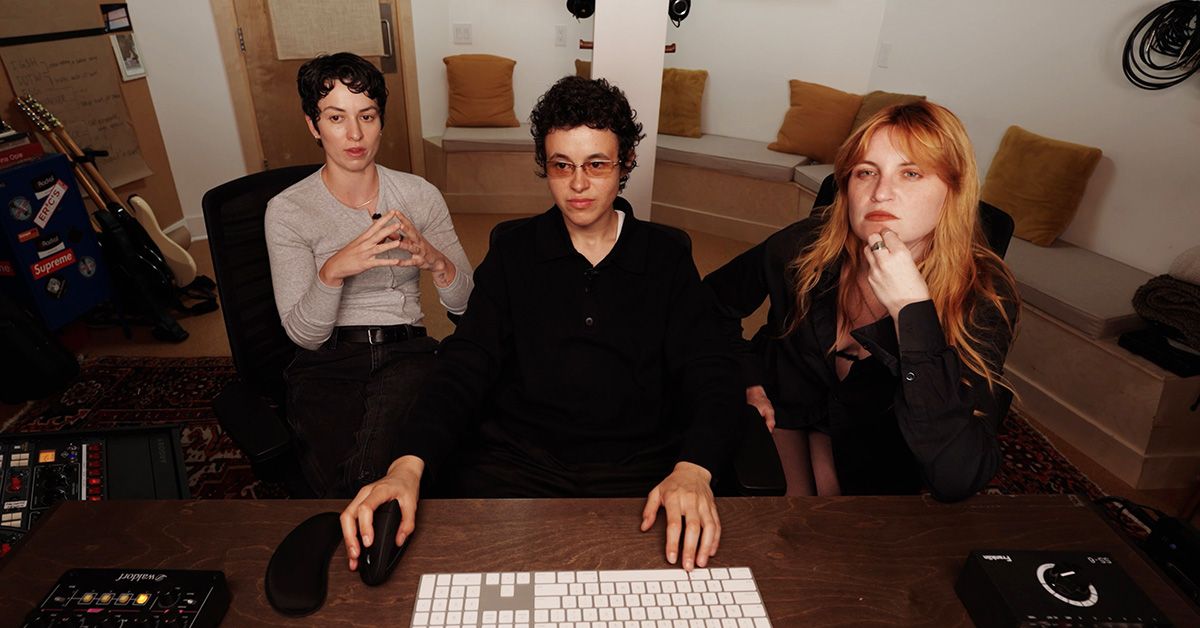
For the members of MUNA—Katie Gavin, Josette Maskin and Naomi McPherson—songs can begin with a voice memo recorded while half-asleep, an idea alighting while walking through a park or from a previously abandoned musical part waiting years to find the right song.
In this exclusive Guitar Center studio session, MUNA pulls apart "Dancing on the Wall" track by track, revealing how creative production choices, experimentation and a few “gifts” from the muse came together to build the finished song.
Starting a Song With a Nature Walk and a Voicemail
“‘Dancing on the Wall’ was a song I started writing while I was walking through the Shelby Bottoms Nature Center in Nashville,” remembers Gavin. “I had the basic structures for the verse and chorus figured out—although every line in the chorus was different. Josette heard the song, and was like, ‘This is good, but you need to clean it up. The first demo of the song is from February 2025. I played it on acoustic guitar, and it sounds pretty different. I also had a funny voice memo I recorded at 2 am when I had a breakthrough about the melody. I woke up from being asleep and sang the melody idea. This happens fairly often when you’re ruminating about a song and something wake ups and you immediately record it. This time, however, it turned out my voice was two octaves lower than normal [laughs]. So, that’s what we had. But once I put it in Naomi’s hands, it started sounding a lot more like what the final version became.”
Building Bigger Sounds
“The thing I feel like we've learned over time—and that Naomi is particularly good at—is to start with something digital, like a sample,” says Maskin. “Then, we think, ‘How can we either enhance the digital-ness of the sound or add ways to make it appear bigger. Like, there's a sample we have that’s from an actual orchestra, and we layered it on top of synth strings and put the sound into a real amp miked up in a room. It's the combination of these different elements that can give a sound a dynamic sense of life.”
Crafting ’80s Guitar Tones
“Josette came up with this unrelenting guitar part that I love so much,” says McPherson. “We recorded it through an old Scholz Rockman X100.”
“The Rockman became everything to us,” adds Maskin. “It sounds like the ’80s in a box.”
“The Rockman has basically three settings—Clean, Edge and Distortion,” explains McPherson. “Not many choices, but it just sounds amazing. It gives you this really cool kind of thin, chorus-y slappy spanky sound—it’s just great. We also reamped it and recorded the sounds using different microphones. We even had a mic set up in the bathroom. You’re never safe around here.”
Lifting Up the Chorus
“This is big in all MUNA songs—every chorus needs a lift,” explains Maskin. “So, we add something that has sparkle. Maybe for the first chorus we're playing a part that’s in a lower octave and then we add something an octave higher for the next chorus. A lot of the synths also do that. It’s like classical pop music where you make the chorus feel like a more explosive moment.”
“Classic pop—not classical pop,” corrects McPherson.
“We try to make it sound like things are thriving and getting bigger by the time the chorus appears,” continues Maskin. “We want things to feel huge and yet still have everything support the vocal and the melody.”
A Guitar Center Studio Story
“The production of ‘Dancing on the Wall’ was possible mainly because of what the good folks at Guitar Center allowed us to do,” says McPherson. “We were able to have enough gear to capture things in so many different ways and put things together in so many different ways to expand our sonic palette beyond what we were able to achieve on our first three records.”
Written By: Michael Molenda
Michael Molenda is a content strategist, editor and writer for Guitar Center, where he has worked since 2022. He is the longest-serving Editor in Chief of Guitar Player (1997-2018), and former Editorial Director of Bass Player, EQ, Keyboard, Electronic Musician, Gig and Modern Drummer. A guitarist, drummer, bassist and producer, Mike co-owned three pro recording studios in San Francisco, and performs with Surf Monster and The Trouble With Monkeys.
Be the first to know about exclusive offers, tips and more.

866-498-7882 English
877-687-5402 Español