

Pro Gear Advisers
•866-498-7882
Matteo Mancuso on His Signature Yamaha Revstar


A few hours before taking the stage with his trio in New York, Matteo Mancuso talked guitars with us.
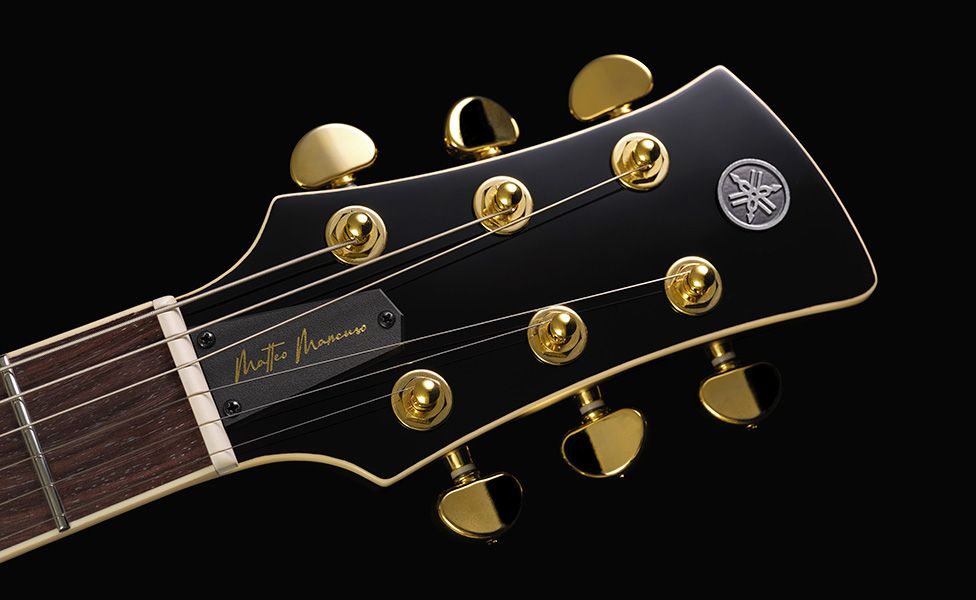
The heart of the conversation was Mancuso’s new signature Yamaha Revstar. Despite the remarkable technique that has made him one of the most closely watched guitarists of his generation, his approach to designing the instrument was refreshingly straightforward. He and Yamaha set forth to make it a comfortable sonic chameleon that gets all the fundamentals right at an accessible price. DiMarzio 36th Anniversary humbuckers with split-coil options lend themselves beautifully to clean and overdriven tones alike, while a slightly fuller neck profile, locking tuners and gold hardware reflect his own preferences without a ginormous “Matteo Mancuso” signature adorning the fingerboard.
In this Guitar Center-exclusive interview, Mancuso gave us insight into developing his guitar with Yamaha, what made the Revstar such a natural fit and what he hopes other players discover when they plug one in and play it.
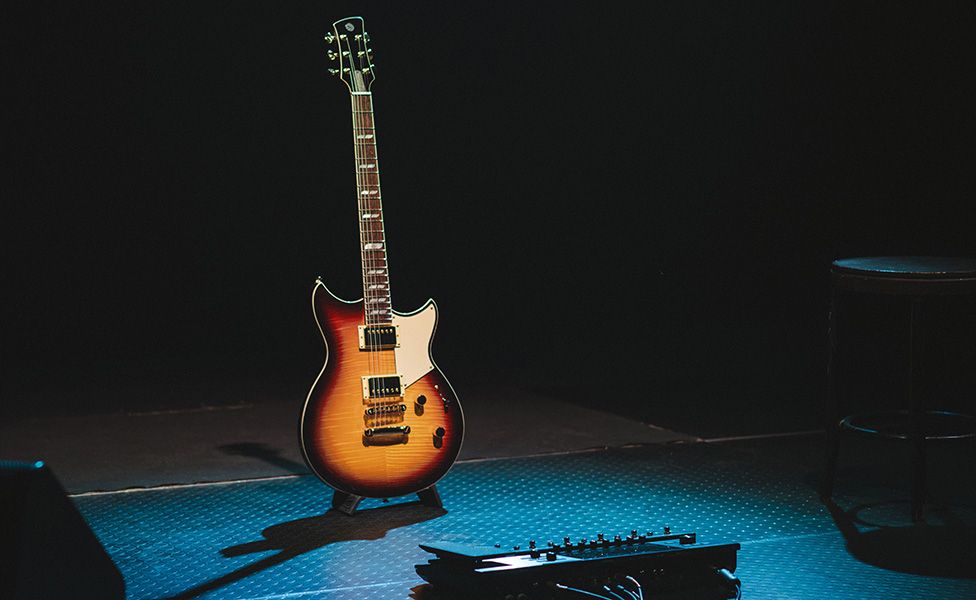
Pictured: Yamaha Matteo Mancuso Signature Revstar and Line 6 Helix Stadium XL
What was the development process for getting the guitar together?
Matteo Mancuso: I don't quite remember when we started, but we worked on this guitar for a long period of time.
First of all, I wanted to know the price tag for the signature model. With the price tag, I can know what to do and what not to do. And for me, there are a lot of things on the guitar that should be present, even if we are talking about a not-so-high price tag.
The second step was to have a rough idea of the aesthetic part of the guitar. As you can see, I'm a fan of the gold hardware—probably my favorite hardware in the world. I'm not too fancy about the aesthetic part. I'm very old school about it.
Then, the third part was the sound: the pickups, the woods that we are using and all the specs that I will tell you about.
Speaking of the pickups, can you tell us why you chose the 36th Anniversary DiMarzio?
Mancuso: I wanted to have a great balance between having a pickup that’s aggressive enough for the rock stuff, but at the same time not have too much output. I play a lot of clean stuff during my concerts.
And these DiMarzios were the perfect match, especially for this guitar. I didn't really experiment that much with the height of the pickups—I left them pretty much stock. Their sound is amazing.
I also have the split options here. So, you can have a lot of tonal options, even with two humbuckers, and that was really important to me. But that's it. Really simple.
What specs were non-negotiable?
Mancuso: One of the most important things to me was the shape of the neck. I wanted to have a shape of the neck that was a little bit different from the stock Revstars, and this feels a tiny bit bigger. But it's comfortable, just like the stock Revstars.
I feel like if you have a bigger neck, you have way more sustain compared to a thinner-neck guitar. And also, I like to have some wood between my hands, you know? It feels great, and it's easy to play. That was, to me, the right balance.
Another important thing for me is the locking tuners, because I'm a lazy guy [laughs]—I don't want to do all the tuning tricks. I just want to be fast when I change my strings, you know?

How did your relationship with Yamaha begin?
Mancuso: Well, they first contacted me in 2017, so it's quite a long time that we’ve collaborated together. At first, it was just an exchange of emails. We met the first time with the Italian team down in Sicily, where I live, and I tried some of their guitars. If I remember correctly, the first one was the Revstar 820, the standard one, I think.
And that was the guitar I used for a while. I was also using my main guitar, my first professional guitar, a Gibson SG. So, at that period of time, I was looking for a guitar that was similar to the SG, but it was a little bit more versatile, let’s say, and still a solidbody.
Because I'm a fan of the semi-hollow stuff, and even hollow stuff, I'm a big fan of the 175, of course. But I was searching for a guitar that was also versatile for rock and jazz. The Revstar was the perfect match because I found it the right balance, immediately from the start.
What’s it like working with Yamaha to design your signature model?
Mancuso: First of all, they have a policy about the endorsers that I agree with. They don't have one hundred-plus guitar players in their arsenal, you know? They have just few guitar players, but they concentrate a lot on us.
In Europe, for example, it’s just me and Chris Buck currently with a signature model out. So, they have more time to make you happy. Their attention to detail is second to none. And that's what I prefer. I want to make sure that the end result is what I want.
Plus, they are really good people, especially the Italian team, and I’ve known them for a long time. The human part is a huge part of these collaborations. It's not only about the guitars and the quality of the guitars—it's also about the way you interact with them.
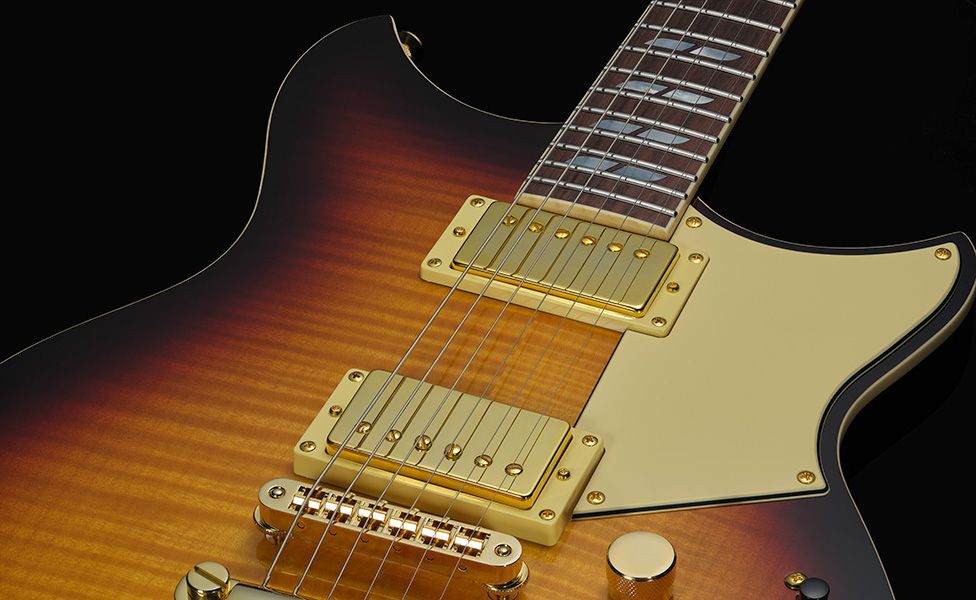
Pictured: Yamaha Revstar RS20MM Matteo Mancuso
What do you hope players will get out of your guitar?
Mancuso: Well, the idea behind this guitar is to have an instrument that lets you play anything you want. Versatility was the number one priority when I was thinking about a signature model.
And I didn't want to have a super big signature on the body or fretboard because I don't want it to be too personalized. I want people to just have a good guitar, and not to be too intimidated about a big name. A hundred guitar players could be here in this room, play this guitar and sound completely different from one another, even if it is the same pickups, same woods and everything. That's the beauty of this instrument.
Everyone has their own way to play, and I wanted to have an instrument to offer that has all the important things down, like the intonation, the quality of wood, the way the guitar interacts with the pickups and everything. All of the important things are done.
If you sound bad with this guitar, it's your fault [laughs]. It's not the guitar's fault—and I'm sure of it.
Written By: Drew Beaupré
Drew Beaupré is a multi-instrumentalist, audio engineer and writer. With a bachelor’s in psychology from Purdue and background as a gigging guitarist and drummer, he began his audio career at the world-famous Westlake Recording Studios, before venturing into live sound engineering for clients such as KCRW, Santa Monica College, CSULA and Nyjah Huston—eventually becoming studio manager at Guordan Banks’ Bank On It Studios in downtown L.A. He also has worked extensively with the industrial band Ministry, as an engineer at Al Jourgensen’s studio, as well as domestic and international touring stage tech for DJ Swamp and Joey Jordison. Prior to writing with Guitar Center, Drew has written for Fender and various music blogs.
Be the first to know about exclusive offers, tips and more.

866-498-7882 English
877-687-5402 Español