
.jpeg)

Pro Gear Advisers
•866-498-7882
Top 5 Yamaha Acoustic Guitars
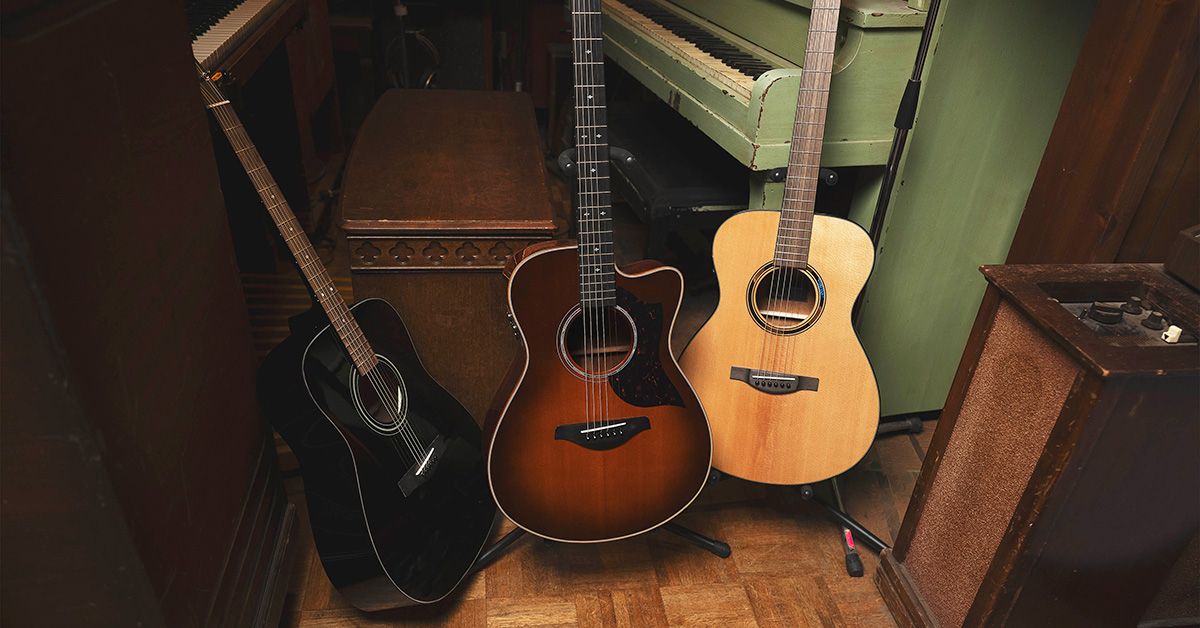

Yamaha acoustic guitars have a reputation that took decades to build and shows no sign of fading. Since the 1960s, the company has been making innovative acoustic guitars that consistently combine player-oriented features and aesthetic appeal. The result is a lineup that appears in living rooms, coffeehouses, concert halls and studios—and in the hands of players who want a workhorse they can trust.
The five guitars in this guide span dreadnought and concert body shapes, laminated and solid spruce tops, purely acoustic designs and two different approaches to plugging in. What connects them is the design philosophy: Each one is built around a clear idea of what players actually need, rather than a list of features assembled to fill a spec sheet.
How We Picked These Guitars
These five of the Yamaha acoustic guitars Guitar Center players reach for most. The models here were selected because they represent completely different instruments rather than five takes on one theme. Variations in body size, construction and electronics make it easy to find the right instrument for your playing style.
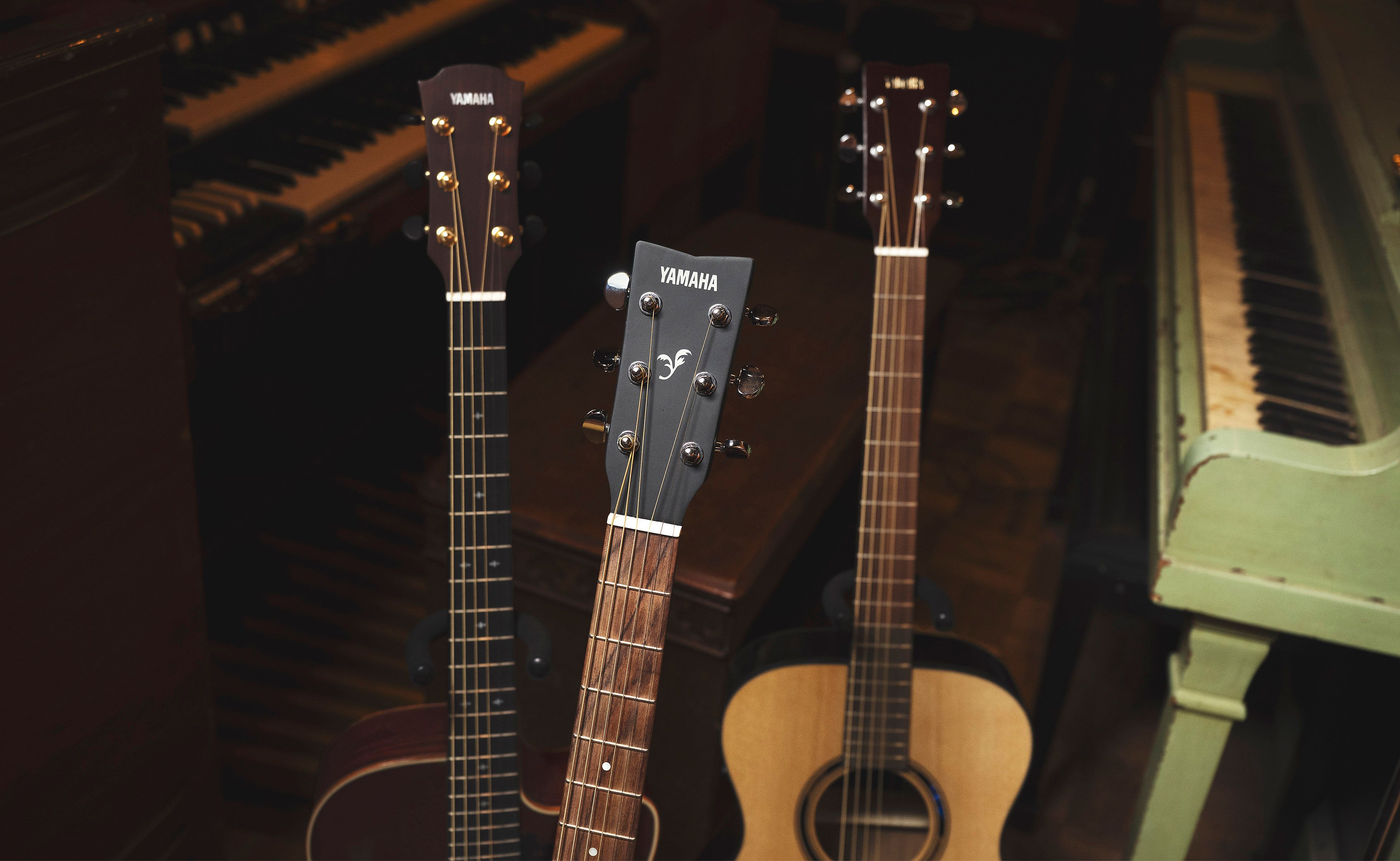
Pictured: Yamaha Acoustic Guitar Headstocks
The Top Five Yamaha Acoustic Guitars
Yamaha F335
What to Know:
-
A Guitar Center exclusive and one of the most accessible entrances into Yamaha acoustic guitars
-
Laminated spruce top resists humidity swings and everyday handling
-
Slim nato neck and 25" scale

The most affordable guitar in this guide, and a Guitar Center exclusive, the Yamaha F335 dreadnought would make a great first acoustic guitar—or a good-sounding spare for players who want something they can grab without a second thought.
Stronger and more resistant to environmental changes, the laminated spruce top is crack-resistant—key for a guitar that lives in a dorm room, rides in a car to countless jams or gets handed to whoever picks it up at a party. Yamaha matches the spruce top with meranti back and sides, adding warmth and a rounded low end to balance the top's brightness.
The easy-playing nato neck offers a slim profile with a rosewood fingerboard and 15-3/4" radius, while the 25" scale length keeps string tension moderate. Barre chords and stretches take less effort here, which matters enormously when you’re building technique.
Appointments are traditional—a rosewood bridge, die-cast tuning machines, gloss finish and a soundhole rosette. The F335 is designed to be picked up daily, and it holds up to exactly that.
Yamaha AC3M DLX A Series
What to Know:
-
Concert cutaway body with all-solid mahogany back and sides
-
Sitka spruce top features Yamaha A.R.E. wood torrefaction for a broken-in, vintage-style tone
-
Premium SRT2 preamp/pickup system

The Guitar Center exclusive Yamaha AC3M DLX A Series acoustic guitar offers some exceptional features to enhance your playing experience. For example, comfort is always a huge factor for many acoustic guitarists, and the AC3M DLX A Series struts a concert shape, which has a more petite body length and a slim waist compared to a dreadnought. As a result, the AC3M DLX is easier to hold and play (the reach across the body is more humane than that of bulkier models), especially if you like to perform standing up with the guitar on a strap.
The Yamaha AC3M DLX A Series also sounds like a well-played old soul right out of the box. Yamaha’s A.R.E. wood-torrefaction technology deploys temperature, humidity and pressure to artificially “age” the AC3M DLX’s spruce top. What this means to the player is a guitar with warm, rich and vintage tones, increased resonance and sustain, and improved sonic stability (the instrument is less susceptible to environmental changes).
Finally, the Yamaha SRT2 preamp/pickup system is like taking your own studio engineer and their microphone cabinet with you everywhere you play. The SRT2 preamp combines a traditional piezo pickup and studio mic modeling to deliver a wonderfully organic miked sound, and you can blend the two voices to taste. The microphone models are pretty deluxe, as well—a Neumann small-diaphragm condenser and a Royer ribbon. It doesn’t end there. The SRT2 also offers automatic feedback reduction so your beautiful acoustic tone is sullied with screams, wails, yowls or other live-stage gremlins.
Yamaha FG830
What to Know:
-
Rosewood back and sides produce deeper lows and more shimmer
-
Yamaha's scalloped bracing pattern is engineered for resonance and dynamic response
-
Abalone rosette and binding

The Yamaha FG830 dreadnought shares a solid spruce top and dreadnought body with the FG800J, but the back and side tonewoods give it a distinctive voice.
Crafted from resonant, dense rosewood, the back and sides are paired to a spruce top for one of the most recognizable voices in acoustic guitar. The increased sustain, tight lows, warm mids and shimmering highs are what put rosewood dreadnoughts on so many great records.
For this model, Yamaha developed a scalloped bracing pattern using acoustic analysis, combining scalloped braces for a freely vibrating top with non-scalloped braces for durability. The result is a louder, stronger sound in the low end and midrange along with improved responsiveness to a light touch. Fingerstyle players who assume dreadnoughts are strictly for strumming should be pleasantly surprised by this guitar.
An abalone soundhole rosette and binding, satin-finished neck and 20 frets with rounded ends atop a rosewood fingerboard put the FG830 in different visual territory than its siblings.
Yamaha FSX800C
What to Know:
-
Concert body with a single cutaway offers easier upper-fret access and a slimmer depth
-
System 66 electronics include a 3-band EQ, midrange frequency selector and built-in tuner
-
The compact body helps resist feedback onstage

The Yamaha FSX800C acoustic-electric is derived from the acclaimed FS800.
The body’s slim, single-cutaway concert shape is comfortable for players of all sizes while easing the reach for players who venture above the 12th fret. Reduced air volume inside the body makes it less prone to the low-frequency feedback.
Yamaha’s System 66 electronics pair a proprietary undersaddle piezo pickup with a preamp offering bass, middle and treble controls, plus a midrange frequency selector. That selector is a most useful tool for taming a room that’s fighting you; parallel walls and ceilings create “boomy” standing waves in the midrange. If there’s no PA available, being able to adjust the midrange at the source with precision allows you to cut that buildup while leaving the rest of the guitar’s voice intact. The preamp runs on AA batteries for steady power gig after gig, and its onboard tuner makes it easy to check between songs.
Even unamplified, this guitar can command an audience’s attention. The solid Sitka spruce top with nato/okume back and sides and scalloped bracing produces clear, balanced tone with rich detail, and the smaller body gives it a focused, articulate midrange that reacts quickly to your playing dynamics. Chrome tuning machines, a rosewood fretboard and bridge, plus a soundhole rosette round out the traditional styling.
Yamaha TAS1E Element TransAcoustic
What to Know:
-
Built-in reverb and chorus resonate through the guitar body itself—no amp or pedals required
-
SYSTEM70 electronics use an internal actuator to vibrate the instrument
-
Concert body with a solid spruce top, mahogany back and sides and an included gig bag

The Yamaha TAS1E Element TransAcoustic features Yamaha's SYSTEM70 electronics, combining an under-saddle piezo pickup, digital preamp, built-in reverb and chorus, and an internal actuator that sends those effects resonating through the guitar's body. The result is an immersive playing experience that feels like you're performing in a lush, ambient room—even when you're unplugged.
The concert-size body is easy to live with—a solid spruce top over mahogany back and sides offers a warm, clear voice. The mahogany neck with walnut fingerboard has a shape that easily fits most hands. Articulate and responsive, it’s a natural partner for fingerstyle and dynamic playing.
Find the Yamaha That Fits Your Hands
An acoustic guitar should be held before the decision is made. Body depth, neck feel and the way an instrument responds to your particular touch are things only direct, personal experience can reveal, and the difference between a dreadnought and a concert body is something you'll understand as soon as you play each.
Visit your local Guitar Center store to try a few in the same room, ideally through the kind of amplification you’d use yourself. If a store visit isn’t practical, call and speak with a Gear Adviser, who can help you compare models and narrow the search to the Yamaha that suits your hands, your budget and the music you’re trying to make.
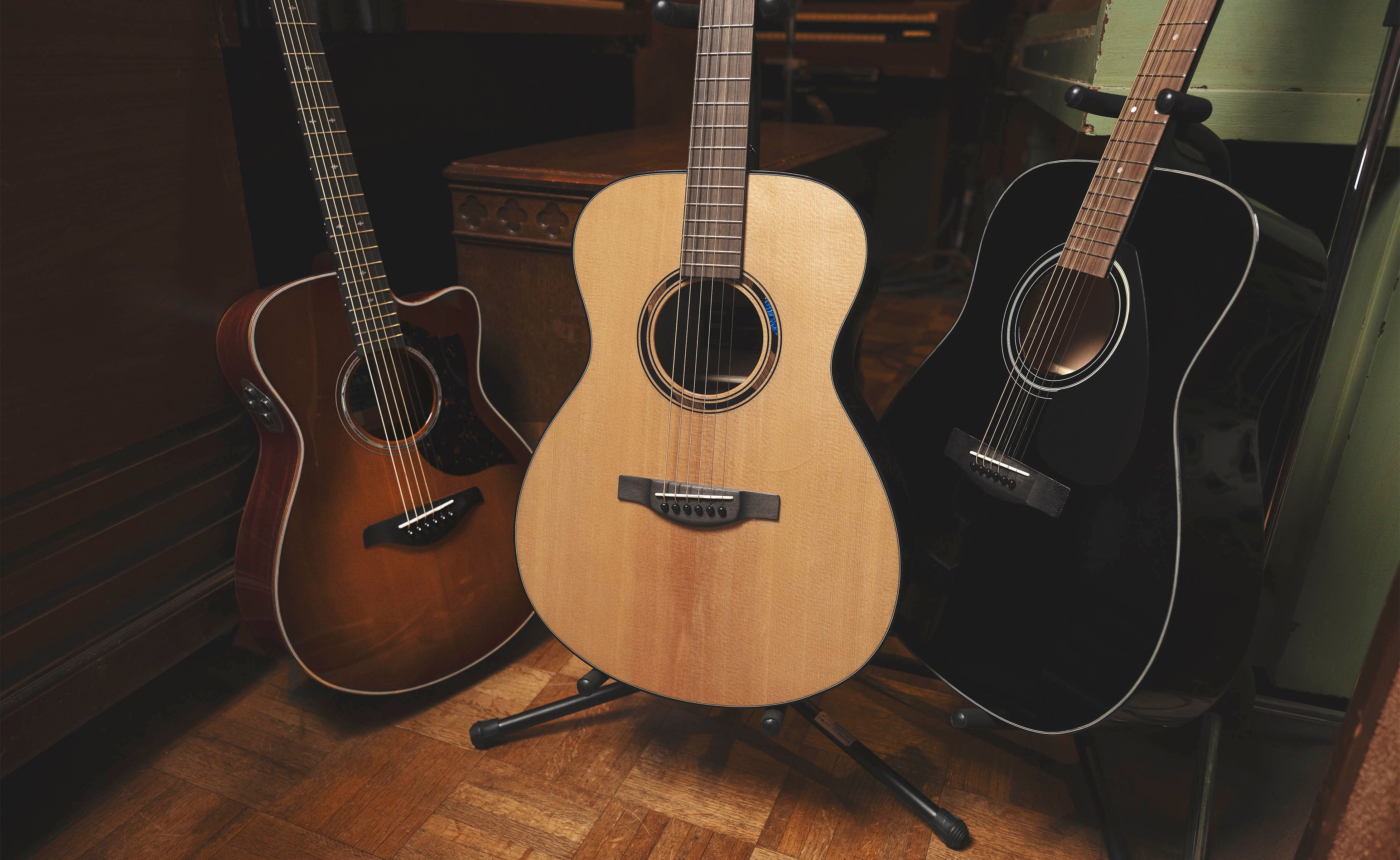
Left to Right: Yamaha AC3M DLX A Series, TAS1E TransAcoustic and F335 Dreadnought
FAQs About Yamaha Acoustic Guitars
What's the difference between a solid top and a laminated top?
A solid top is a single piece of wood that vibrates as one unit, sounding fuller and more responsive. A laminated top is built from bonded layers, making it stronger and more resistant to humidity swings and physical wear.
Should I choose a dreadnought or a concert body?
Dreadnoughts have larger bodies for more projection and volume when played with a pick. Concert bodies are smaller and shallower, which usually means better comfort, tighter articulation and less trouble with feedback if amplified.
Do I need an acoustic-electric guitar?
Only if you plan to amplify or record with a direct signal. A purely acoustic guitar can always be recorded with a microphone, but onboard electronics save an enormous amount of time and hassle.
What is Yamaha TransAcoustic technology?
TransAcoustic uses an actuator inside the guitar body to physically vibrate the instrument, producing reverb and chorus without an amplifier, pedals or any external gear. The effects come from the guitar itself rather than a speaker. It's designed for practicing, songwriting and unplugged playing.
What's the difference between Yamaha's FG and FS Series?
FG models use a traditional Western dreadnought body built for projection and volume. FS models use a smaller concert body with a slimmer depth, designed for comfort and articulation.
Are Yamaha acoustic guitars good for beginners?
Comfortable neck profiles, reliable tuning stability and consistent build quality make Yamaha acoustic guitars among the most frequently recommended beginner instruments.
Do these guitars come with a case?
The TAS1E Element TransAcoustic includes a gig bag. For the AC3M DLX A Series, FG830 and FSX800C, a padded gig bag is worth budgeting for—it protects the finish, helps tame humidity swings and makes the guitar much more likely to survive leaving the house.
Written By: Ted Jenkins
Ted Jenkins is a writer for Guitar Center and the founder of an audio software company, Recluse Studios. A copywriter, producer and creative technologist, he has over 30 years of experience in the musical instrument industry at companies like Fender, Sonic Foundry and Sony Creative Software, doing everything from writing about the latest advances in instrument technology to producing roughly 115 commercial loop libraries. He currently builds music software, focusing on ethical AI tools for creatives.
Recently Added to Buying Guides
Be the first to know about exclusive offers, tips and more.

866-498-7882 English
877-687-5402 Español