.jpeg)

Pro Gear Advisers
•866-498-7882
Top 5 Squier Classic Vibe Guitars
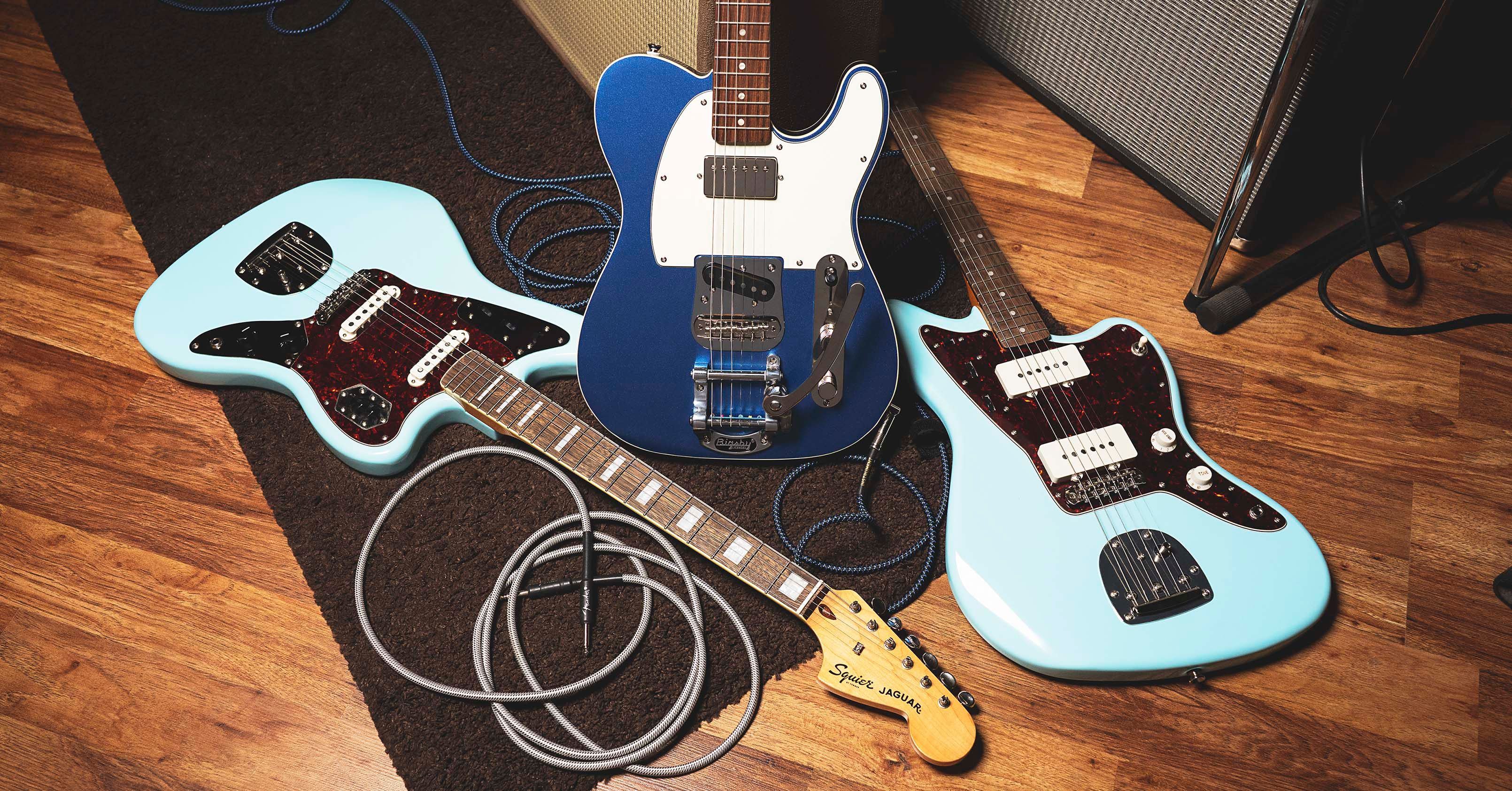

Squier Classic Vibe electric guitars occupy an interesting place in the Fender family. They’re affordable enough to serve as a first serious instrument, yet sufficiently faithful to the designs which inspired them to remain useful long after the beginner label no longer applies.
More importantly, the Classic Vibe series offers more than less expensive versions of familiar shapes. A Jazzmaster responds differently from a Jaguar. A semi-hollow Telecaster Thinline invites a different approach than a ’50s Stratocaster. Even the two Telecasters in this guide represent very different ideas about what a Tele can be.
That distinction matters. Choosing an electric guitar isn’t simply a matter of counting pickups or comparing finishes. Scale length affects how the strings respond beneath your fingers. Pickup design shapes the way an instrument speaks through an amplifier. Bridges, vibrato systems and control layouts can influence the musical vocabulary you instinctively reach for.
The five Squier Classic Vibe guitars here span several decades of Fender history and, more importantly, five distinct playing experiences.
How We Picked These Guitars
Rather than ranking these instruments, we looked for guitars that represent the breadth of the Classic Vibe series. The group includes traditional Fender designs, offset guitars, a semi-hollowbody and a Telecaster which blends single-coil and humbucking voices.
We also considered how each model serves a musician. Some players need an uncomplicated guitar that can cover an entire set. Others want an instrument with enough personality to lead them somewhere unexpected. Neither approach is inherently better.
Build, playability, pickups and hardware all matter, but specifications only tell part of the story.
Our selections ultimately came down to a more useful question: What does each guitar make possible for the player?
The Top Five Squier Classic Vibe Electric Guitars
Squier Classic Vibe ’60s Jazzmaster
What to Know
-
A natural fit for surf, indie, shoegaze and atmospheric guitar textures
-
Separate lead and rhythm circuits provide two distinct approaches to the pickups
-
The floating tremolo rewards players who treat vibrato as part of their phrasing

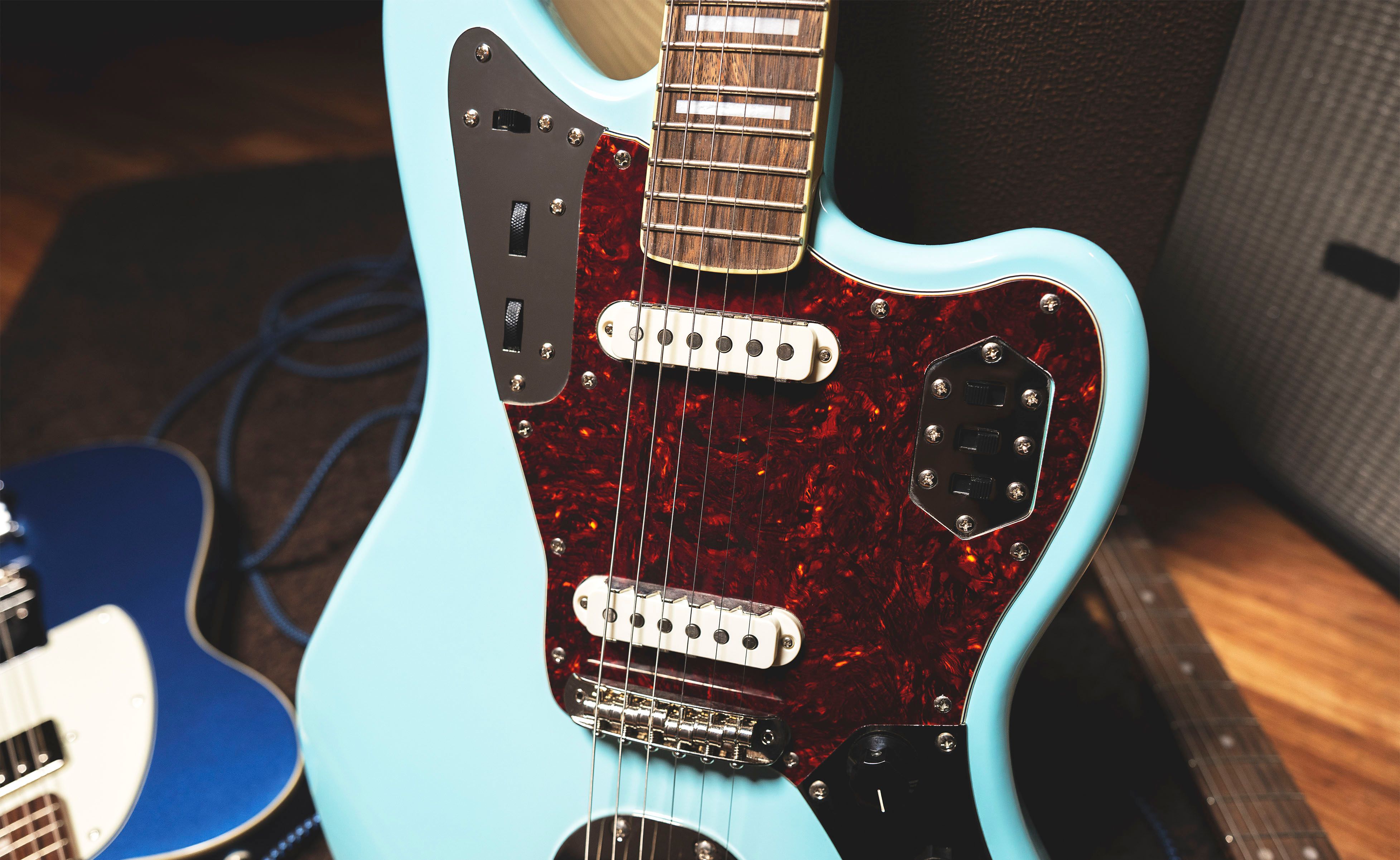
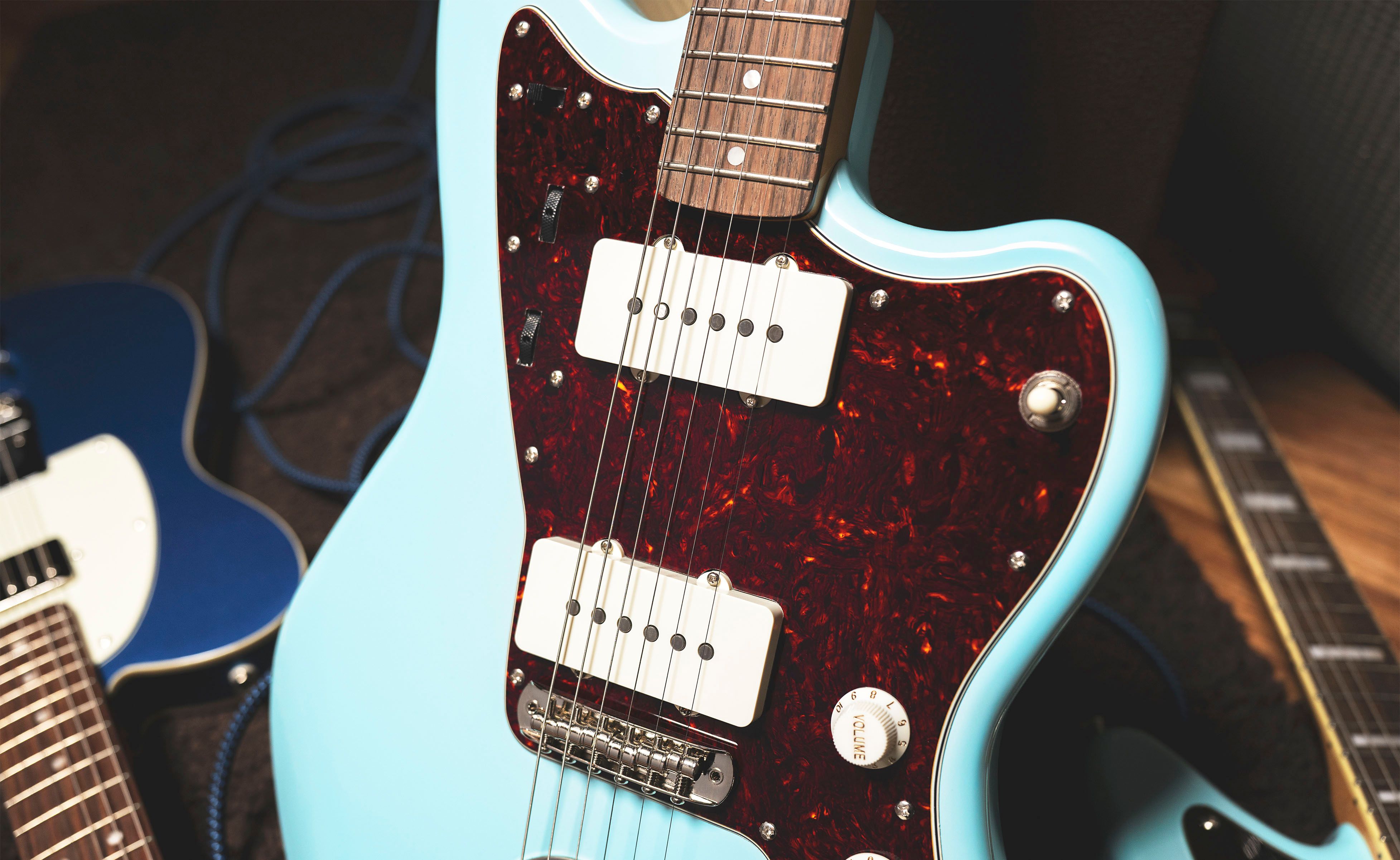
The Squier Classic Vibe ’60s Jazzmaster in Daphne Blue captures much of what makes Fender’s most famous offset such an enduring instrument. Its two Fender-designed alnico single-coils produce a broad, open sound with enough clarity for complex chords and enough body to keep single-note lines from feeling thin.
Despite its name, the original Jazzmaster never became the jazz-world staple Fender envisioned when it was introduced in 1958. Surf players discovered its pickups, string length behind the bridge and floating vibrato created a voice unlike anything else available.
Decades later, alternative and indie musicians rediscovered the same qualities—often because the Jazzmaster sounded nothing like the more conventional guitars surrounding it.
The rhythm circuit is sometimes misunderstood as a complicated pickup-switching system. In practice, it acts more like a second tonal preset. Engaging it routes the neck pickup through its own volume and tone controls for a darker voice, while the conventional controls handle the brighter lead circuit. That makes it possible to prepare two contrasting sounds and move between them with one switch.
The floating tremolo is equally central to the Jazzmaster’s personality. It excels at gently bending an entire chord in and out of tune, producing movement which feels closer to breathing than to the dramatic pitch dives associated with a locking tremolo. Players who use vibrato as punctuation rather than spectacle may find the Jazzmaster uniquely expressive.
Squier Classic Vibe ’70s Telecaster Thinline
What to Know:
-
Semi-hollow construction gives the familiar Telecaster shape a lively response
-
Dual Wide Range humbuckers favor warmth and power over traditional Tele twang
-
Well suited to rock, blues, funk and players who want a more open-sounding humbucker guitar

The Squier Classic Vibe ’70s Telecaster Thinline in Olympic White represents one of Fender’s earliest attempts to push the Telecaster beyond its original blueprint.
The first Telecaster Thinline appeared in 1968, when luthier Roger Rossmeisl developed a partially hollow version of the instrument. The design addressed a particular manufacturing problem—the prevalence of supplies of ash that were unusually heavy, making a solid ash instrument heavier than most players preferred.
Rossmeisl's solutions not only gave players a lighter Telecaster, but one with a more resonant character. In 1971, Fender redesigned the model around a pair of Seth Lover-designed Wide Range humbuckers. The revised Thinline became Fender’s first six-string guitar equipped with humbucking pickups.
That history explains why the Thinline doesn’t behave like a standard Tele with an f-hole added for decoration. Its semi-hollow body has a lively, slightly elastic response, while the dual Fender-designed Wide Range humbuckers deliver more output and midrange weight than traditional Telecaster single-coils. Chords retain useful definition, but there’s enough body for overdriven rhythm parts and sustained leads.
This is a particularly appealing guitar for players who like the clarity and physical familiarity of a Fender but find conventional humbucker guitars too dark or compressed. It won’t reproduce the sharpest Bakersfield-style Tele twang, nor is it meant to. The Thinline speaks with a broader accent—one that fits comfortably into rock, blues, soul and funk without losing the articulation which makes a Telecaster recognizable.
Squier Classic Vibe ’60s Custom Telecaster SH
What to Know:
-
Combines Telecaster bridge-pickup bite with the warmth of a neck humbucker
-
Bigsby vibrato adds subtle movement to chords and sustained notes
-
An unusually flexible choice for roots rock, blues, country and vintage pop

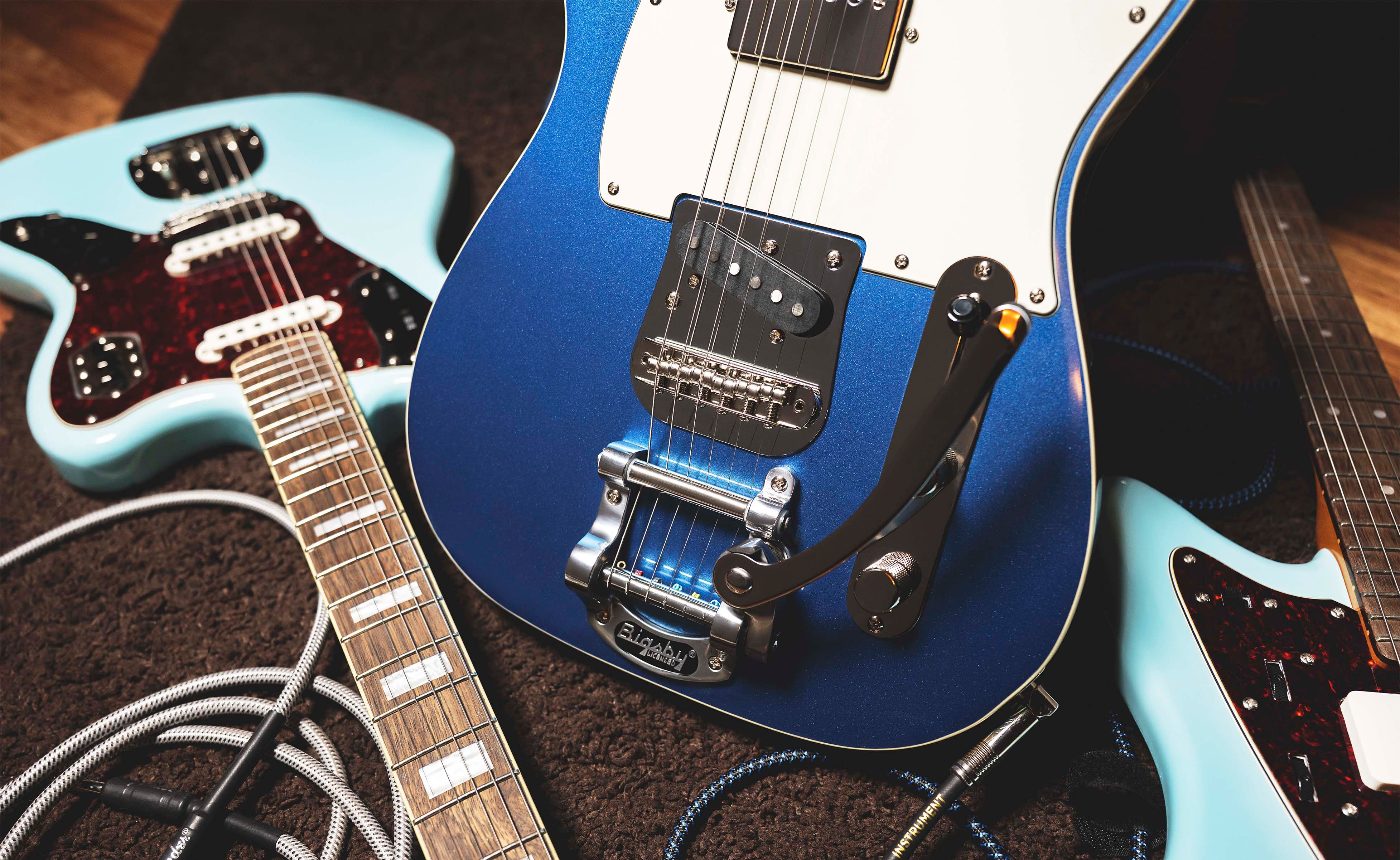
The Squier Classic Vibe ’60s Custom Telecaster SH in Lake Placid Blue begins with one of the oldest hot-rodded Telecaster recipes: keep the bridge single-coil and replace the neck pickup with a humbucker.
Players were making this modification long before Fender offered it as a factory configuration. The reasoning was simple: The Telecaster bridge pickup already had an unmistakable voice—bright, immediate and capable of cutting through a band. A neck humbucker added the warmth, output and sustain the original neck pickup couldn’t always provide. Keith Richards, Mike Bloomfield, Albert Lee and Andy Summers are among the players who helped demonstrate just how musically useful that combination could be.
This Classic Vibe interprets the idea with a Fender-designed alnico bridge single-coil and neck humbucker. The bridge position can handle country snap, lean blues rhythm and wiry rock-and-roll leads. Moving to the neck softens the attack and fills out the midrange, making it better suited to rounder lead tones, jazzier chords and thick rhythm work. The combined setting occupies the useful territory between them.
The Bigsby B50 changes the guitar’s personality further. A Bigsby isn’t designed for extreme pitch changes. Its strength is the slow shimmer it can add to a held chord, double-stop or sustained note. Used with restraint, it becomes part of the player’s touch.
The Bigsby also adds some complexity to string changes and setup, as anyone who's owned a Bigsby-equipped instrument knows. In fact, getting the string-end balls to stay on the Bigsby rods can be like practicing a circus act, So, this isn’t necessarily the Telecaster for someone who values maximum simplicity. For the player who wants one guitar to move between twang, warmth and subtle vibrato, however, that extra machinery earns its place.
Squier Classic Vibe ’70s Jaguar
What to Know:
-
The 24" scale creates a softer feel and brings the frets closer together
-
Bright single-coil pickups and extensive controls encourage tonal experimentation
-
Particularly well suited to surf, post-punk, indie and alternative styles

The Squier Classic Vibe ’70s Jaguar in Daphne Blue may resemble the Jazzmaster at a glance, but the two guitars feel and respond quite differently.
When Fender introduced the Jaguar in 1962, it was positioned as a new top-of-the-line model. Its 24" scale was partly intended to appeal to players accustomed to the softer feel of shorter-scale guitars. That reduced scale remains one of the Jaguar’s defining characteristics. Frets sit slightly closer together, bends require less effort and the strings feel more elastic than they do on a 25.5"-scale Jazzmaster, Stratocaster or Telecaster.
The Jaguar’s two Fender-designed alnico single-coils produce a focused, percussive sound that works particularly well with reverb, delay and fuzz. Its lead and rhythm circuits offer several ways to reshape the instrument's voice. What initially looks like an intimidating collection of chrome plates and switches soon reveals itself as a set of useful tonal choices.
That combination of short scale, bright pickups and floating vibrato gives the Jaguar a quick, almost spring-loaded personality. It responds beautifully to clipped rhythm parts, behind-the-beat chord work and melodic lines surrounded by effects.
Players with a heavier attack may prefer slightly heavier strings, which can add tension and help the floating bridge feel more settled. A careful setup is also especially valuable on a Jaguar. Once dialed in, though, the design’s peculiarities become part of its charm. This is an instrument which rewards curiosity rather than asking the player to conform to convention.
Squier Classic Vibe ’50s Stratocaster
What to Know:
-
Three single-coil pickups cover a remarkably broad range of familiar electric-guitar sounds
-
The straightforward controls make it approachable without limiting experienced players
-
A strong choice for blues, pop, funk, country and classic rock

The Squier Classic Vibe ’50s Stratocaster in 2-Color Sunburst is the most conventional guitar in this collection, but conventional shouldn’t be confused with limited.
The Stratocaster’s three Fender-designed alnico single-coils and five-position selector cover everything from the direct attack of the bridge pickup to the rounder neck sound and unmistakable hollow “in-between” positions. Those voices have appeared across so many records most players recognize them before they understand how they’re produced.
The maple fingerboard adds to the ’50s visual vocabulary, while the C-shaped neck, 9.5" radius and narrow-tall frets make this more accommodating than a strict vintage reproduction. Its six-saddle tremolo can provide anything from light chord movement to more pronounced bends, depending on how it’s set up.
What makes the Stratocaster such a useful first—or fifteenth—electric guitar is the way it reveals differences in touch. Picking closer to the bridge, rolling back a tone control or simply changing the force of the attack can transform the sound before a pedal enters the equation. It’s a guitar that teaches players to work with their hands and controls instead of expecting the signal chain to do everything.
Traditional single-coils can produce some hum, particularly with gain, and the bridge pickup may initially seem lean to players accustomed to humbuckers. Those aren’t necessarily defects to eliminate. The openness, dynamic response and sharp attack are part of the language that made the Stratocaster so adaptable in the first place.
Find Your Classic Vibe
Specifications can help narrow the field, but guitars ultimately have to be felt and heard. I own a Classic Vibe Jazzmaster myself, and it remains a joy to play—not because it won a comparison, but because its sound and response continue to invite ideas.
Your guitar may be the Jazzmaster, or it may be one of the Telecasters, the short-scale Jaguar or the endlessly adaptable Stratocaster. Visit your local Guitar Center to play a few through an amplifier similar to your own and see which one starts a conversation. If you can’t make it to a store, call and speak with your personal Gear Adviser, who can help you compare models and find the Classic Vibe that best suits your hands, your sound and the music you want to make.
People Also Ask
Are Squier Classic Vibe guitars only for beginners?
No. Their prices make them accessible to newer players, but price and ability level aren’t the same thing. An experienced guitarist may choose a Classic Vibe as a dependable stage instrument, a platform for modifications or an affordable way to explore a design outside their usual comfort zone.
What is the difference between a Jazzmaster and a Jaguar?
The most immediate difference is scale length. The Jazzmaster uses Fender’s standard 25.5" scale, while the Jaguar’s 24" scale feels softer and places the frets closer together. They also use different pickup designs and control systems. The Jazzmaster tends to sound broader and more open; the Jaguar is generally tighter and more percussive.
Are offset guitars difficult to set up?
They aren’t necessarily difficult, but their floating bridges and vibrato systems respond best when the neck angle, bridge height, string gauge and break angle work together. A setup from someone familiar with Jazzmasters and Jaguars can make a substantial difference. Once properly adjusted, an offset shouldn’t require constant attention.
Do I need a humbucker for rock music?
Not at all. Humbuckers typically provide greater output, a fuller midrange and reduced noise, but single-coils have powered countless rock recordings. The more useful question is whether you want thickness and compression or openness and attack. The Custom Telecaster SH provides both options, while the Thinline offers a distinctly Fender-influenced humbucker voice.
Which Classic Vibe guitar is best for smaller hands?
The Jaguar’s 24" scale reduces fret spacing and string tension, making it the most obvious place to start. Neck shape, shoulder position and playing technique matter too, however. A comfortable guitar is the one that fits the entire player, not merely the player’s hands.
Does the guitar matter more than the amplifier?
The two form a system. Pickups determine what leaves the guitar, but the amplifier shapes how a signal becomes sound in the room. A bright guitar through a dark amp may sound more balanced than either description suggests. Before replacing pickups, it’s worth learning what the guitar’s controls, amplifier EQ and playing technique can already accomplish.
Ultimately, the right Classic Vibe isn’t the one with the longest feature list. It’s the one whose feel and voice encourage you to play differently, listen more closely and make more music.
Written By: George Van Wagner
George Van Wagner is a writer and editor for Guitar Center, where he has worked since 2007. A multi-instrumentalist, freelance recording engineer, arranger, composer, writer and all-around tech geek, he has over 30 years of experience in the musical instrument industry at companies like Midiman/M-Audio and Line 6, doing everything from customer service and writing user manuals to working in product development. He is currently gigging around Los Angeles with Gruppo Subconscious and Bobby “Hurricane” Spencer.
Recently Added to Buying Guides
Be the first to know about exclusive offers, tips and more.

866-498-7882 English
877-687-5402 Español