



DigitalPianistSynths
.jpeg)

Pro Gear Advisers
•866-498-7882
Guitars
Guitars
Amps & Effects
Amps & Effects
Used & Vintage
Keyboards & MIDI
Keyboards & MIDI
Drums
Drums
DJ Equipment
DJ Equipment
Basses
Basses
Recording
Recording
Live Sound
Live Sound
Accessories
Accessories
Mics & Wireless
Mics & Wireless
Music Software
Music Software
Lighting
Lighting
- Popular Brands
Band & Orchestra
Band & Orchestra
Platinum Gear
Deals
Videos (8)
View All
GAIA SH-01 Synthesizer introduction (Part 2)

GAIA SH-01 Synthesizer introduction (Part 3)

GAIA Synthesizer Sound Designer Software for SH-01 Overview
View Video

Description
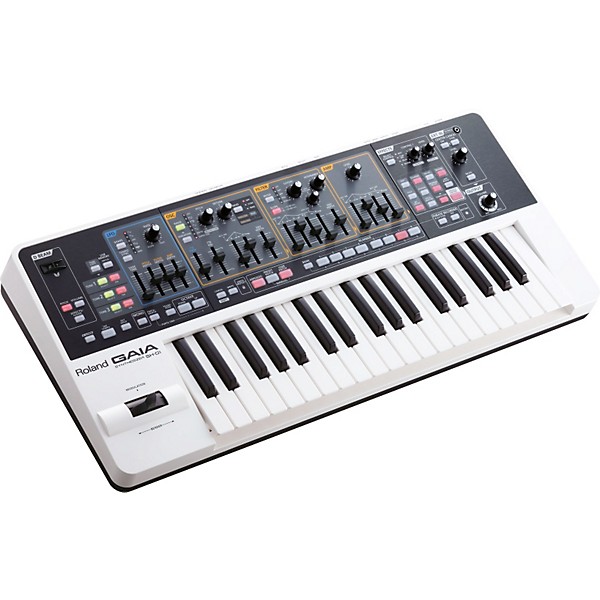
The Roland GAIA SH-01 synth offers high-performance value with old-school charm. The Roland SH-01 delivers massive sound, hands-on ease, and an affordable price. The synth's triple-stacked engine puts potent virtual analog synthesis under your fingertips, yet the control panel is so fun, friendly, and inviting, even first-timers can create great sounds.
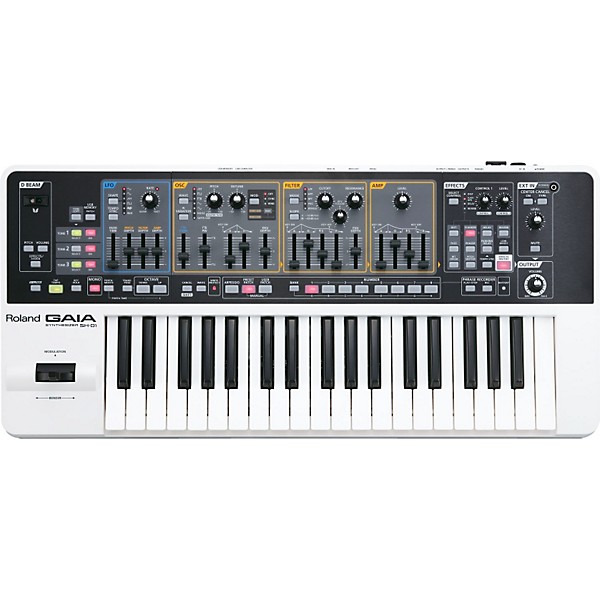
The Roland synth's signal flow is simple to grasp, with logically arranged knobs, sliders and buttons. Hands-on control and fat sound make the little Gaia SH-01 a powerhouse and a joy for music students, songwriters, session players and live performers of all styles and skill levels.
Triple-Fat Virtual Analog
Sink your teeth into the new triple-stacked virtual analog engine, comprising 3 complete synths for incredibly thick, powerful sound. Unleash the beef of three oscillators that drive a trio of multimode, resonant filters, multi-shape LFOs and amplifiers, plus 9 envelope generators. The Roland Gaia SH-01 is like having 3 synthesizers in 1! With 64 polyphonic voices onboard, the GAIA SH-01 makes it possible to play massive sounds without experiencing note drop-out.
Stackable Effects
From the silkiest reverb to the grittiest growl, the Roland SH-01's instantly selectable multi-effects catapult your sounds into another spatial dimension. You can layer up to 5 simultaneous effects for dozens of variations. Onboard Roland effects include reverb, distortion, fuzz, bit crash, flanger, phaser, pitch shifter, low boost, and delay with panning and tempo sync. Roland equips the Gaia SH-01 with dedicated control knobs for tweaking the effects in real time.
Portable Power
At less than 10 pounds, the Roland GAIA SH-01 is lightweight, compact, and great for musicians on the go. The 37-note keyboard is full-size, however, so performers can play naturally and comfortably. The synth can be powered via AC or batteries* for the ultimate in portable convenience. A battery-life indicator on the front panel ensures that you won't lose power unexpectedly. When used in conjunction with a battery-powered amp such as Roland's CUBE Street, MOBILE CUBE, BA-330 or KC-110, the GAIA SH-01 can be played and heard anywhere.
Instant Control
The front panel puts every control directly under your fingertips. There are no hidden menus, no nonsense. Just play and move the knobs and sliders, or wave your hands over the invisible D Beam for dramatic effects. The logically designed front panel shows the signal path from left to right. It helps beginners understand synthesis, while experienced players will love the instant gratification of hands-on control during performance.
Phrase Recorder and Arpeggiator
Hold a note or chord and let the arpeggiator create musical magic automatically for you. The tempo can be set via tap tempo. In addition, the onboard Phrase Recorder lets you record what you play on the keyboard as well as the movements of the knobs and sliders. The controller data can also be played back independently to complement the notes you play in real time.
USB and EXT IN
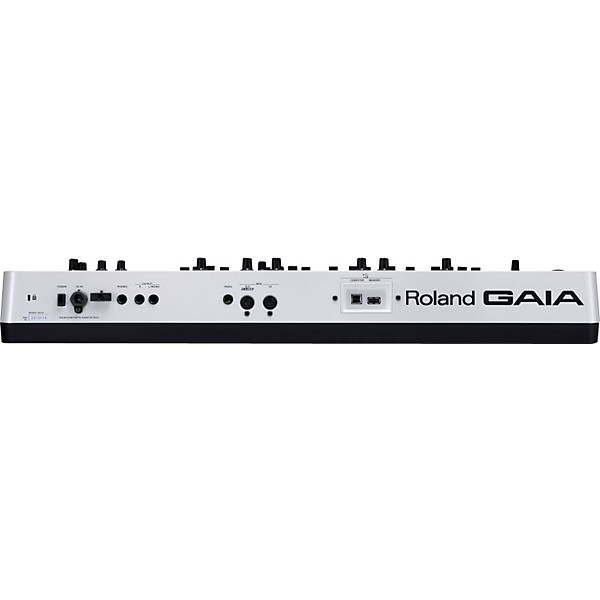
Connect directly to a computer (Mac or PC) with one simple USB cable, and stream audio directly to the software of your choice. The SH-01's USB ports can also be used to transmit and receive MIDI data, and to store your patches and phrases (recorded with the Phrase Recorder) to a USB memory stick. For integrating with external devices, the SH-01's EXT input lets you connect external audio sources such as an MP3-player and play along with your favorite songs or backing tracks-great for practice and live performance. Manipulate the incoming audio with three Center Cancel modes, which let you eliminate pre-recorded vocals, guitars or bass.
*Can be powered by 8 rechargeable Ni-MH AA batteries.
The Roland synth's signal flow is simple to grasp, with logically arranged knobs, sliders and buttons. Hands-on control and fat sound make the little Gaia SH-01 a powerhouse and a joy for music students, songwriters, session players and live performers of all styles and skill levels.
Triple-Fat Virtual Analog
Sink your teeth into the new triple-stacked virtual analog engine, comprising 3 complete synths for incredibly thick, powerful sound. Unleash the beef of three oscillators that drive a trio of multimode, resonant filters, multi-shape LFOs and amplifiers, plus 9 envelope generators. The Roland Gaia SH-01 is like having 3 synthesizers in 1! With 64 polyphonic voices onboard, the GAIA SH-01 makes it possible to play massive sounds without experiencing note drop-out.
Stackable Effects
From the silkiest reverb to the grittiest growl, the Roland SH-01's instantly selectable multi-effects catapult your sounds into another spatial dimension. You can layer up to 5 simultaneous effects for dozens of variations. Onboard Roland effects include reverb, distortion, fuzz, bit crash, flanger, phaser, pitch shifter, low boost, and delay with panning and tempo sync. Roland equips the Gaia SH-01 with dedicated control knobs for tweaking the effects in real time.
Portable Power
At less than 10 pounds, the Roland GAIA SH-01 is lightweight, compact, and great for musicians on the go. The 37-note keyboard is full-size, however, so performers can play naturally and comfortably. The synth can be powered via AC or batteries* for the ultimate in portable convenience. A battery-life indicator on the front panel ensures that you won't lose power unexpectedly. When used in conjunction with a battery-powered amp such as Roland's CUBE Street, MOBILE CUBE, BA-330 or KC-110, the GAIA SH-01 can be played and heard anywhere.
Instant Control
The front panel puts every control directly under your fingertips. There are no hidden menus, no nonsense. Just play and move the knobs and sliders, or wave your hands over the invisible D Beam for dramatic effects. The logically designed front panel shows the signal path from left to right. It helps beginners understand synthesis, while experienced players will love the instant gratification of hands-on control during performance.
Phrase Recorder and Arpeggiator
Hold a note or chord and let the arpeggiator create musical magic automatically for you. The tempo can be set via tap tempo. In addition, the onboard Phrase Recorder lets you record what you play on the keyboard as well as the movements of the knobs and sliders. The controller data can also be played back independently to complement the notes you play in real time.
USB and EXT IN
Connect directly to a computer (Mac or PC) with one simple USB cable, and stream audio directly to the software of your choice. The SH-01's USB ports can also be used to transmit and receive MIDI data, and to store your patches and phrases (recorded with the Phrase Recorder) to a USB memory stick. For integrating with external devices, the SH-01's EXT input lets you connect external audio sources such as an MP3-player and play along with your favorite songs or backing tracks-great for practice and live performance. Manipulate the incoming audio with three Center Cancel modes, which let you eliminate pre-recorded vocals, guitars or bass.
*Can be powered by 8 rechargeable Ni-MH AA batteries.
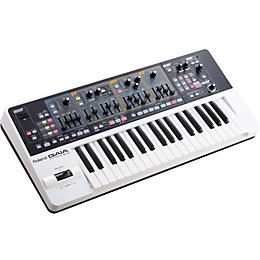
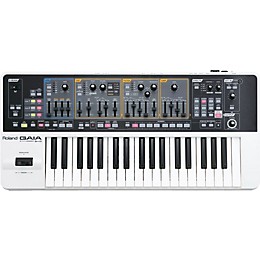
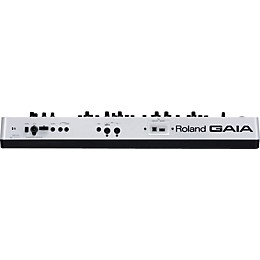
Features
- Huge sound with three virtual analog engines onboard, each with a dedicated oscillator, filter, amplifier, envelope and LF0
- Layer up to five simultaneous effects, including distortion, flanger, delay, reverb, low boost and more
- 64-voice polyphony for massive sounds without note drop-out
- Fun, hands-on control panel that's great for instant gratification, and for learning synthesis
- Lightweight, compact body with 37 full-size keys
- Runs on AC or battery power for portable convenience
- D Beam, arpeggiator, and Phrase Recorder onboard
- USB ports for saving user patches to USB flash drives, and for audio/MIDI connection to computers
Specs
- Virtual analog synthesizer sound generator (Number of part: 1)
- (Oscillator + Filter + Amp + Envelopes + LFO) x 3
- PCM sound generation (Number of parts: 15)
- Preset: 64
- User: 64
- Oscillator waveform: Saw, Square, Pulse/PWM, Triangle, Sine, Noise, Super Saw
- Knobs/Sliders: Pitch, Detune, Pulse Width, Pulse Width Modulation
- Envelope: Attack, Decay, Envelope Depth
- Oscillator Sync, Ring Modulation
- (Tone 2's OSC 2 is applied as modulation to Tone 1's OSC 1.)
- Filter Type: LPF, HPF, BPF, PKG (-12 dB/-24 dB)
- Knobs: Cutoff, Resonance, Key Follow
- Envelope: Attack, Decay, Sustain, Release, Envelope Depth
- Knobs: Level
- Envelope: Attack, Decay, Sustain, Release
- LFO Shape: Triangle, Sine, Saw, Square, Sample
- Knobs/Sliders: Rate, Fade Time, Pitch Depth, Filter Depth, Amp Depth
- Tempo Sync: On/Off
- DIST: Distortion, Fuzz, Bit Crash
- FLANGER: Flanger, Phaser, Pitch Shifter
- DELAY: Delay, Panning Delay (with tempo sync function)
- REVERB: Reverb
- LOW BOOST: Low Boost
- Knobs: Control 1, Level
- Pitch Bend/Modulation lever
- D BEAM Controller
- Arpeggiator: Preset pattern: 64
- User: 8
- Number of Track: 1
- OUTPUT jacks (L/MONO, R) (1/4 inch phone type)
- Headphone jack (Stereo 1/4 inch phone type)
- PEDAL jack (TRS phone type)
- MIDI Connectors (IN, OUT)
- USB COMPUTER (supports USB Hi-Speed Audio/MIDI)
- USB MEMORY (supports USB 2.0 Hi-Speed flash memory)
- EXT IN jack (Stereo miniature phone type)
- DC IN jack
- Power Supply: DC 9 V (AC Adaptor or rechargeable nickel-metal hydride AA batteries x 8 ) Batteries sold separately - Note: Zinc-carbon batteries or alkaline batteries cannot be used.
- Current Draw: 600 mA
- Battery life for continuous use: Approximately 5 hours
- Using rechargeable nickel metal hydride batteries
- Approximately 4 hours if USB memory is connected
- Differs depending on the conditions of use
- Accessories: Owner's Manual, Guide Book, CD-ROM (USB DRIVER), DVD Video, AC Adaptor (PSB-1U), Power Cord
- Options (sold separately): Keyboard Stand: KS-18Z(*), Pedal Switch: DP series, Expression Pedal: EV-5, USB Memory: M-UF2G
- *Make sure that this instrument is mounted at a height that is no higher than 1 meter.
- Width: 27-3/16" (689 mm)
- Height: 3-15/16" (100 mm)
- Depth: 12-1/2" (317 mm)
- Weight: 9 lb. 5 oz. (4.2 kg)
Reviews
4.6
10 Reviews
100%
of respondents would recommend this to a friend
Most Liked Positive Review
5
Amazingly Powerful little synth
I recently got the opportunity to try out this little beast, and I was blown away. I own a sh-101 and was very skeptical of this because I love the sound of a warm fat analog. The gaia is absolutely amazing. with the 3x osc and all of the real time control, it's perfect for live performers. Although it isn't a true analog, the sounds that this monster can produce could fool the common listener. Roland really nailed this one on the head. It's about time (especially after the extremely disappointing sh-201) Unfortunately I didn't get to keep the gaia but I have already pre-ordered one and can't wait until it becomes mine.
VS
Most Liked Negative Review
2
Out of Sync
I�ۡ���ve owned the Roland Gaia for about two months now. I learned to program synth on a Korg MS2000 first and later on the microkorg using the midi based sound editor, which I find quite strait forward. I�ۡ���m throwing this in there because most of this review is going to be a direct comparison of the Gaia to the MS2000/microkorg. The first thing I did when I got the Gaia was to try and recreate all my favorite patches from the microkorg/MS2000 on the Gaia. So, here the Gaia has one really big problem: when you use the sync mode it puts the filter into bypass mode!! This really bugged me, I have this cheesy patch on my microkorg that I just can�ۡ���t duplicate without the oscillator sync. So practically speaking the Gaia doesn�ۡ���t �ۡ��̏really�ۡ�ݕ�_ have the sync feature because you can�ۡ���t shape the sound you get from the oscillator. It�ۡ���s kind of like advertizing a new car that has a great stereo, only when you take it off the lot you realize that the stereo only works when the car is in neutral; not very useful! The ring modulator doesn�ۡ���t have this problem and works as expected. The next difference (advantage or disadvantage depending on taste) are the options you have with routing the envelopes and LFOs. I happen to respect how the Gaia was designed with simplicity in mind, however there are a quite a few patches on the MS2000 that you won�ۡ���t be able to get on the Gaia because you can�ۡ���t route the envelops (e.g. the �ۡ��̏GoldenSynth�ۡ�ݕ�_ patch on the MS2000). I do like a few things about the Gaia and it would be unfair not to mention them. First off, I love the 80s look of the Gaia, which goes along with the great layout (easy to use sliders and knobs, OSC->Filter->FX). I like the feel of the Gaia, both the microkorg and the MS2000 have these really spongy keys that just don�ۡ���t satisfy, the Gaia has some snap which I appreciate. Like the microkorg, the battery use feature is great; a real life saver if you�ۡ���re touring. Also, I haven�ۡ���t really experimented yet with the capabilities of having three oscillators with three independent filters and envelopes. The microkorg has two oscillators that route into the same filter and envelope. So, it�ۡ���s fair to assume that there are some patches on the Gaia that are going to be impossible to make on the microkorg. Overall, I would be satisfied with the Gaia if it didn�ۡ���t have the problem with the oscillator sync; that kills it for me. If you own �ۡ��̏Welsh�ۡ���s synthesizer cookbook�ۡ�ݕ�_, check out how many of the patches use the oscillator sync�ۡ��_.lots. I feel cheated in general by my purchase of the Gaia; its borderline false advertizing in regards to the sync function. If you�ۡ���re deciding between the Gaia and a Korg, get the Korg, it is much more versatile and a better value. Finally, I don�ۡ���t buy the sales guys rebuttal that at this price point you can�ۡ���t expect the chips to handle too many features. A few months back I bought a laptop computer for less than I paid for the Gaia! At this price point they could use Intel chips and my Gaia could run Windows 7!
Filters
Best Uses
- Concerts2
- Electronic Music2
- MIDI2
- Travel2
- Accompaniment1
Cons
- Limited Sound Selection1
Describe Yourself
- Experienced1
- Professional Musician1
Pros
- Easy to Use2
- Good Audio2
- Portable2
- Responsive / Good Action2
- Touch Sensitive Keys2
Reviewed by 10 customers
Great synth for live show half the space.
Verified Buyer
submitted8 years ago
byRob
fromPSL
Great product
Great for beginners or on the stage.
Verified Buyer
submitted9 years ago
byPaul
fromundisclosed
Great little synth. Lots of features at a great price.
I'M IN LOVE!!!
Verified Buyer
submitted9 years ago
byJosh / WadsyJr
fromFlint, MI
My original instrument is bass guitar. I've always wanted to get into key bass but wasn't sure which board to go with. This was the most suggested board from bass players. I was nervous because I know with authentic synthesizers you have to create your sounds and I'm totally new to this area of LFO, FILTER, OSC, etc! I was also nervous because there is no display...I never realized the comfort I found in a display until I found myself heavily considering the Roland Gaia. But I found sooooooo many tutorials on YouTube that made me feel like I knew the Gaia inside and out before I even received the shipment! It is so easy and fun seeing how endless your creativity can be! The first time I used it for key bass along with my actual bass guitar, I didn't even pick up my bass guitar! It's AMAZING! The Roland Gaia has opened me up to the world of authentic synthesis and I'm growing an interest in creating more than just bass sounds!!! Even if you're a beginner...THIS IS FOR YOU!!!
One of the best digital synths out there.
submitted13 years ago
byJonah Day
fromSalt Lake City, Utah
I bought the Gaia a couple months back for the fact it is a portable, powerful synth, with all the charm of old school Moog's, and the power of modern digital VSTi's. First, I have a Minimoog voyager, and the Gaia is quite comparable to it. Both have 3 oscillator's, the Moog has 2 filters and LFO'S. The Gaia has 3 of each. The are similar in size (The Gaia is however somewhat smaller than the Moog.) The Gaia is also lighter. The control layout is also similar. However The Gaia uses mostly Linear Pots, which reminds me a lot of older ARP synths(The Odyssey, Axxe, Quadra)Nor does the Gaia use a flip up panel like the Moog, so I would classify it somewhere between a Voyager, An ARP Odyssey, and maybe a VSTi like NI Massive. This thing has incredible power, and the effects are insane(The Bitcrusher is great for dubstep type wobbles)But no matter how modern it really is, you can still riff and solo on it like Keith Emerson. Its my favorite synth, every synthesist out there should have one.
Out of Sync
submitted15 years ago
byJohn
fromSanta Monica, CA
I�ۡ���ve owned the Roland Gaia for about two months now. I learned to program synth on a Korg MS2000 first and later on the microkorg using the midi based sound editor, which I find quite strait forward. I�ۡ���m throwing this in there because most of this review is going to be a direct comparison of the Gaia to the MS2000/microkorg. The first thing I did when I got the Gaia was to try and recreate all my favorite patches from the microkorg/MS2000 on the Gaia. So, here the Gaia has one really big problem: when you use the sync mode it puts the filter into bypass mode!! This really bugged me, I have this cheesy patch on my microkorg that I just can�ۡ���t duplicate without the oscillator sync. So practically speaking the Gaia doesn�ۡ���t �ۡ��̏really�ۡ�ݕ�_ have the sync feature because you can�ۡ���t shape the sound you get from the oscillator. It�ۡ���s kind of like advertizing a new car that has a great stereo, only when you take it off the lot you realize that the stereo only works when the car is in neutral; not very useful! The ring modulator doesn�ۡ���t have this problem and works as expected. The next difference (advantage or disadvantage depending on taste) are the options you have with routing the envelopes and LFOs. I happen to respect how the Gaia was designed with simplicity in mind, however there are a quite a few patches on the MS2000 that you won�ۡ���t be able to get on the Gaia because you can�ۡ���t route the envelops (e.g. the �ۡ��̏GoldenSynth�ۡ�ݕ�_ patch on the MS2000). I do like a few things about the Gaia and it would be unfair not to mention them. First off, I love the 80s look of the Gaia, which goes along with the great layout (easy to use sliders and knobs, OSC->Filter->FX). I like the feel of the Gaia, both the microkorg and the MS2000 have these really spongy keys that just don�ۡ���t satisfy, the Gaia has some snap which I appreciate. Like the microkorg, the battery use feature is great; a real life saver if you�ۡ���re touring. Also, I haven�ۡ���t really experimented yet with the capabilities of having three oscillators with three independent filters and envelopes. The microkorg has two oscillators that route into the same filter and envelope. So, it�ۡ���s fair to assume that there are some patches on the Gaia that are going to be impossible to make on the microkorg. Overall, I would be satisfied with the Gaia if it didn�ۡ���t have the problem with the oscillator sync; that kills it for me. If you own �ۡ��̏Welsh�ۡ���s synthesizer cookbook�ۡ�ݕ�_, check out how many of the patches use the oscillator sync�ۡ��_.lots. I feel cheated in general by my purchase of the Gaia; its borderline false advertizing in regards to the sync function. If you�ۡ���re deciding between the Gaia and a Korg, get the Korg, it is much more versatile and a better value. Finally, I don�ۡ���t buy the sales guys rebuttal that at this price point you can�ۡ���t expect the chips to handle too many features. A few months back I bought a laptop computer for less than I paid for the Gaia! At this price point they could use Intel chips and my Gaia could run Windows 7!
Sounds good Looks good!
submitted15 years ago
byTimothy
fromCleveland, Ohio
Love the look, NASA meets TRON. Very cool patches that you can alter to your tastes. Controls are smooth and responsive. This synth looks amazing and sounds the same. Very happy with this synth all around. It's very light but has a solid build. Get it at Guitar Center! They ship fast and are very nice people! Thanks Roland.
Q&A
Have a question about this product? Our expert Gear Advisers have the answers.
submitted4 years ago
asked byRoberto
fromHouston, Texas
I need to put this on lay away from Houston, Texas ,how can I do this ? I can make payments here at our Yale store location , to have them send you payments through your system
Please give us a call to discuss financing 855-770-3373
Be the first to know about exclusive offers, tips and more.

866-498-7882 English
877-687-5402 Español