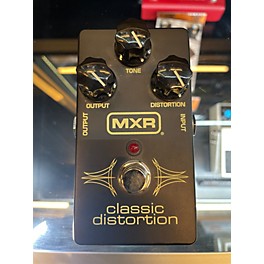
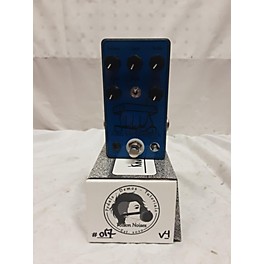
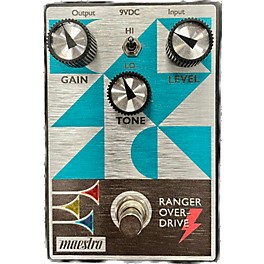
Unleash powerful rock tones with Distortion Pedals, the essential stompboxes for adding grit, sustain, and harmonic richness to your guitar signal. Born from early experiments like intentionally overloading amps or even slashing speaker cones, the quest for saturated guitar distortion led to dedicated pedal circuits. These gain pedals work by clipping your signal, ranging from smooth overdrive pedals that push your amp gently, to full-bore distortion that transforms your sound entirely. Whether you seek classic crunch or modern high-gain mayhem, it all starts here.
Crank It Up: Shaping Aggressive Tones & Sustain
Distortion Pedals aren't all the same! Some offer hard-clipping saturation perfect for heavy rhythm and leads, like the legendary BOSS DS-1. Others, technically overdrive pedals like the iconic Ibanez TS9 Tube Screamer or boutique Klon-inspired circuits like the Wampler Tumnus Deluxe, provide smoother, amp-like breakup or boost your signal into natural tube distortion. Pedals like the MXR M75 Super Badass Distortion offer powerful EQ for precise sculpting. Understanding the common controls – Gain/Distortion (saturation), Tone (EQ shape), and Level (output volume) – helps you dial in everything from subtle bluesy bite to searing metal tones.
Key Recognizable Distortion/Drive Pedal Features:
Gain/Drive/Distortion Control: Adjusts the amount of signal clipping/saturation.
Tone/Filter Control(s): Shapes the equalization (simple knob or multi-band EQ like MXR M75).
Level/Volume Control: Sets the output volume of the pedal.
Circuit Types: Overdrive (soft clipping), Distortion (hard clipping), Fuzz (extreme clipping), Boost. Specific types like Tube Screamer, Klon Centaur circuits.
Bypass Switching: True Bypass (signal passes through untouched when off) or Buffered Bypass (conditions signal when off).
Power: Typically 9V DC (battery or external supply).
Analog vs. Digital: Most classic drive pedals are analog.
What are the pros and cons of using Distortion/Drive Pedals (vs. Amp Gain)?
Pros: Achieve desired gain at any volume level; Portable distortion solution; Consistent tone across different amps; Huge variety of flavors available; Can stack pedals for complex sounds; Often more affordable than high-gain amps.
Cons: Can sound less "organic" than true tube amp distortion to some ears; Requires power supply/battery; Adds another stage to signal chain; Can be noisy if not used carefully (gain staging); Finding the "right" pedal(s) takes experimentation.
Forging Heavy Tones: Pioneers of Distortion
The sound of rock and roll was forged with guitar distortion. Early pioneers like Link Wray and Dave Davies experimented with raw, fuzzy tones. Jimi Hendrix took fuzz to psychedelic heights. Later, players like Eddie Van Halen revolutionized rock guitar, pushing amps and pedals into searing high-gain territory, defining a new era of aggressive sound. Whether you want vintage crunch, '80s shred tones, or modern metal gain, the right distortion pedals are key. Explore our selection – from iconic BOSS and Ibanez pedals to versatile MXR units and boutique Wampler circuits – and find the gain stage to shape your signature roar.
Since the early days of the electric guitar, blues musicians searched for different ways to overdrive their amplifier's signal. Of course, when rock ‘n’ roll took off, the process of "distorting" a guitar tone became a lot easier thanks to new amp and pickup designs. Soon, musicians such as Link Wray were making a name for themselves with the use of distortion. By the mid ’60s, fuzz pedals were being used by teenage garage rockers around the world while Dave Davies, Pete Townshend and other rock legends made distortion and overdrive a part of their signature sound. Today, distortion and overdrive effects pedals are a dime a dozen, and a quick glance at this section will make that obvious.
If you're new to distortion and overdrive pedals, you might be wondering what the difference is between them. For the most part, they do the same thing and are both often referred to as gain pedals. How they differ is that distortion pedals usually provide a harsher, grittier tone with increased sustain. When it comes to distortion, think of grunge and death metal. On the other hand, overdrive pedals are designed to emulate the sound of a tube amp when you increase their volume. The result is a warm yet crunchy sound that's ideal for playing blues and classic rock. Of course, one is not better than the other, and the right distortion or overdrive pedal for you will be a matter of personal preference.
For an overdrive pedal, turn your attention to the TS9 Tube Screamer. Compact yet versatile, this pedal is great for anyone who likes a raw vintage-like overdrive, and it even makes a great boost pedal. Now, if it's a distortion pedal that you're after, take a closer look at the Electro-Harmonix Classics USA Big Muff Pi Distortion/Sustainer. The Big Muff Pi is a legendary pedal in itself, and this reissue has three controls that let you dial in the finest harmonic distortion/sustain ever produced. From warm bass to crisp treble, you'll be blown away by what this distortion pedal can do for your hard-rocking guitar performance.
Along with the options mentioned, be sure to check out other overdrive and distortion pedals, including the BOSS Super OverDrive SD-1, TC Electronic Dark Matter distortion pedal or MXR M75 Super Badass pedals. Whether you're going for a heavy Sabbath-like snarl, the cutting buzzsaw tone of Johnny Ramone or Cobain's feedback-drenched squeals, the right distortion and overdrive effects pedal for you is waiting in our inventory. Get yourself something new or try a tried-and-true classic from our Used & Vintage collection.
.jpeg)