



StudioMonitorsMixing
.jpeg)

Pro Gear Advisers
•866-498-7882
Guitars
Guitars
Amps & Effects
Amps & Effects
Used & Vintage
Keyboards & MIDI
Keyboards & MIDI
Drums
Drums
DJ Equipment
DJ Equipment
Basses
Basses
Recording
Recording
Live Sound
Live Sound
Accessories
Accessories
Mics & Wireless
Mics & Wireless
Music Software
Music Software
Lighting
Lighting
- Popular Brands
Band & Orchestra
Band & Orchestra
Platinum Gear
Deals
Videos (1)
View All
MICRO BR® BR-80 Overview
Description
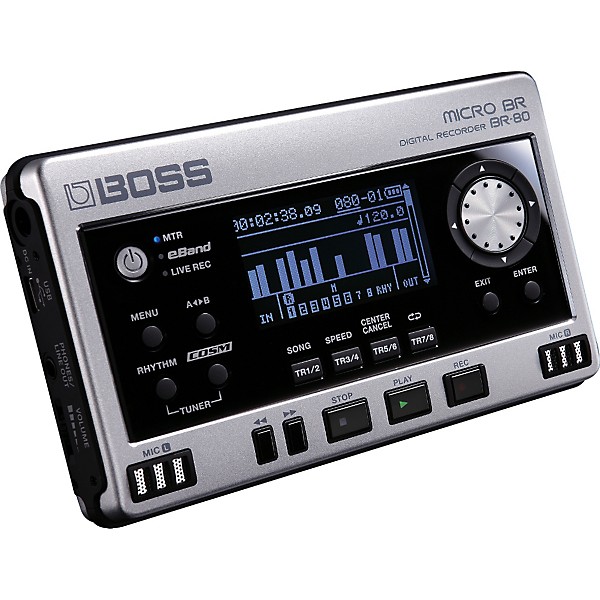
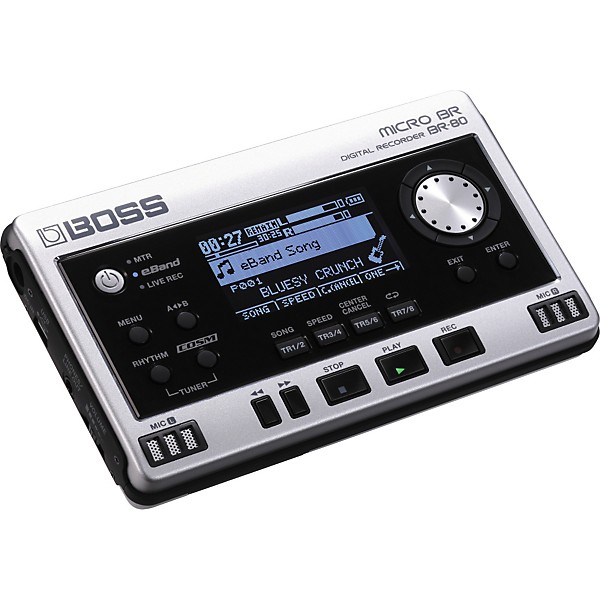
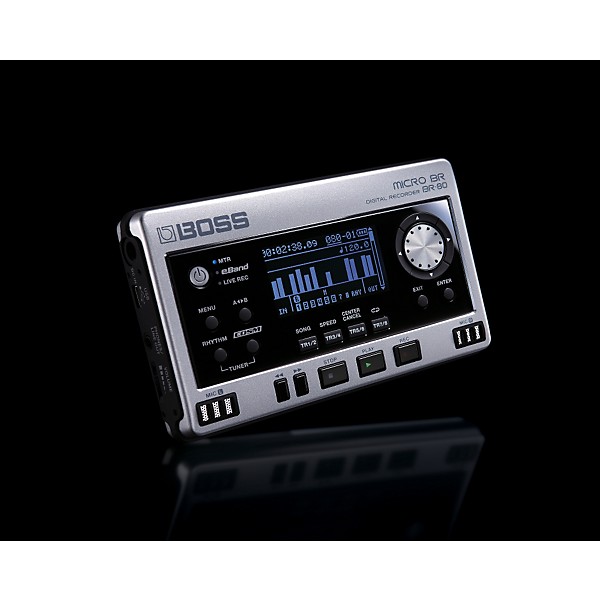
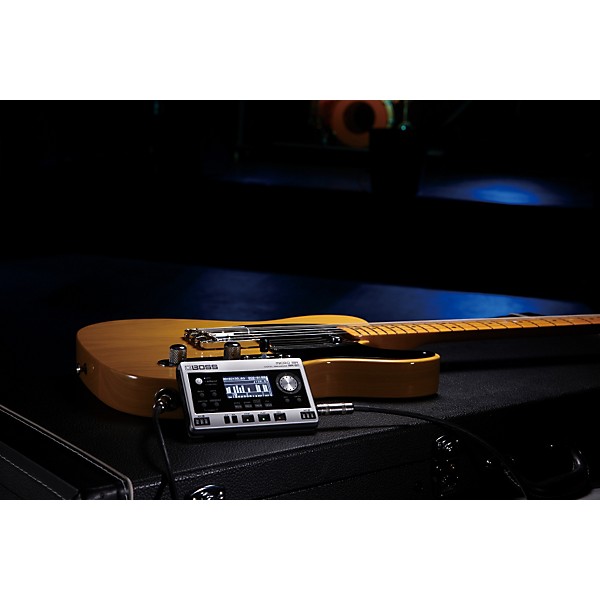
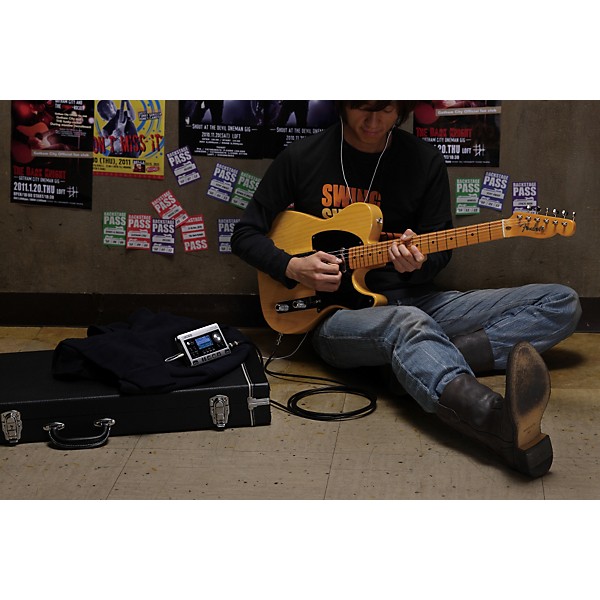
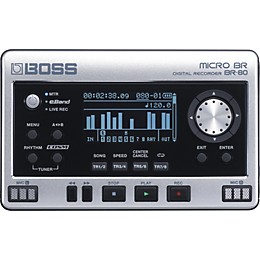
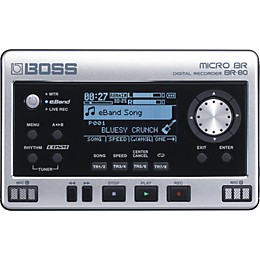
Small enough to fit in your pocket, the BOSS MICRO BR BR-80 is the ultimate new portable recording and jam-along tool for guitarists and other musicians. It's equipped with three modes to create, record, and perform your music: an eight-track MTR (Multi-Track Recorder) mode; an eBand mode for onstage backing tracks and phrase training; and a Live Rec mode for instantly capturing high-quality stereo recordings. You can even combine the three modes seamlessly. Record your phrase ideas using Live Rec mode, for example, and then import the recordings into MTR mode to use as foundations for song production. Once you've added tracks, import your finished songs into eBand mode for backing-track accompaniment at the gig. The MICRO BR BR-80 is truly a must-have for all musicians.
The Complete Studio To Go
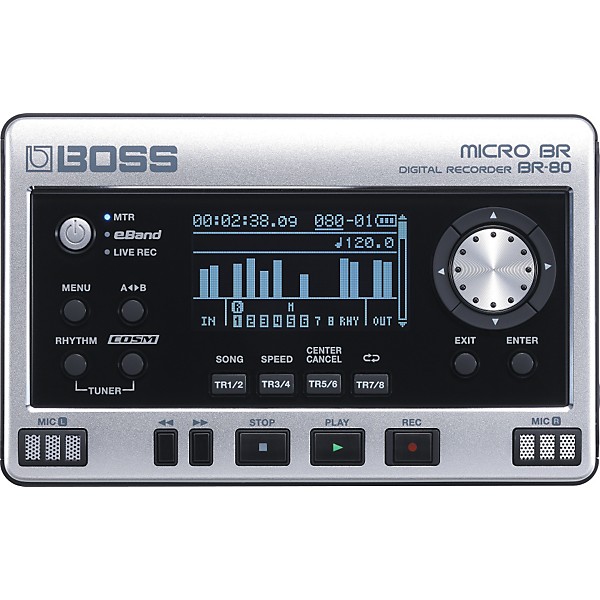
Don't be fooled by its size - this little studio is loaded. The MTR (Multi-Track Recorder) mode offers 64 V-Tracks with eight simultaneous playback tracks. In addition, a dedicated stereo rhythm track is provided, as well as an onboard library of great grooves to choose from. The intuitive user-interface continues the simple-to-use tradition of BOSS' acclaimed BR series, with a graphical design that follows the layout of a conventional recording console. With EQ, reverb, and mastering tools plus, world-class COSM amps and effects for guitar, bass, and vocals the MICRO BR BR-80 is ready to deliver complete, pro-quality recordings with ease.
Virtual Jam Band
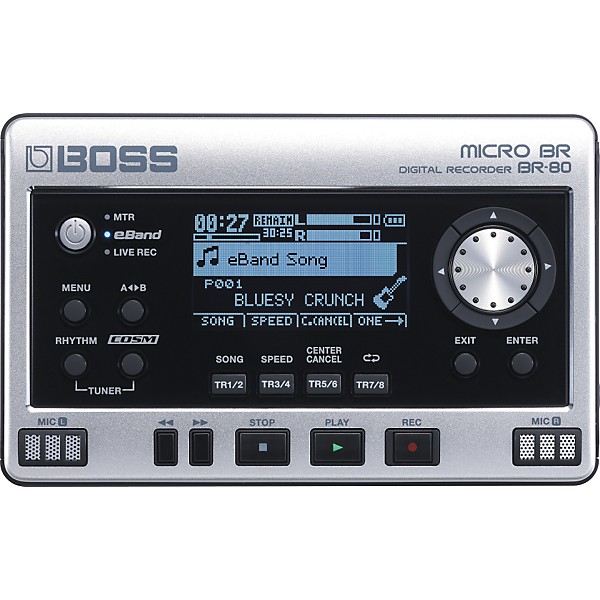
The MICRO BR BR-80's eBand mode offers musicians a fun way to play along with their favorite songs. With the bundled eBand Song List Editor software, you can import CD, MP3, and WAV audio files from a computer via USB. The Center Cancel function can be used to minimize the volume of pre-recorded vocals and solos for play- and sing-along enjoyment. eBand mode is also an excellent partner for musical training, as it lets you record your performance adjust playback speed and/or pitch as desired.
Built-In Stereo Mic
In combination with the onboard high-grade stereo condenser microphones, the MICRO BR BR-80's Live Rec mode lets you capture pristine stereo recordings instantly. Record vocals, guitar parts, and song ideas the moment inspiration strikes. Your recorded audio files can be easily imported into the MICRO BR BR-80's MTR mode to use as a basis for multi-track song production.
High-Quality Multi-FX
The MICRO BR BR-80 is packed with professional multi-effects powered by a newly developed custom DSP chip. Over 40 types of COSM amp models give you instant access to a wide range of powerful guitar and bass sounds. The preset patches allow first-timers and pros alike to enjoy high-quality sounds immediately, while power users can tweak parameters in micro detail for the ultimate tonal control. The dedicated vocal effects, comparable with BOSS's popular VE-20, include doubling, harmony effects, pitch correction, and more.
The Complete Studio To Go
Don't be fooled by its size - this little studio is loaded. The MTR (Multi-Track Recorder) mode offers 64 V-Tracks with eight simultaneous playback tracks. In addition, a dedicated stereo rhythm track is provided, as well as an onboard library of great grooves to choose from. The intuitive user-interface continues the simple-to-use tradition of BOSS' acclaimed BR series, with a graphical design that follows the layout of a conventional recording console. With EQ, reverb, and mastering tools plus, world-class COSM amps and effects for guitar, bass, and vocals the MICRO BR BR-80 is ready to deliver complete, pro-quality recordings with ease.
Virtual Jam Band
The MICRO BR BR-80's eBand mode offers musicians a fun way to play along with their favorite songs. With the bundled eBand Song List Editor software, you can import CD, MP3, and WAV audio files from a computer via USB. The Center Cancel function can be used to minimize the volume of pre-recorded vocals and solos for play- and sing-along enjoyment. eBand mode is also an excellent partner for musical training, as it lets you record your performance adjust playback speed and/or pitch as desired.
Built-In Stereo Mic
In combination with the onboard high-grade stereo condenser microphones, the MICRO BR BR-80's Live Rec mode lets you capture pristine stereo recordings instantly. Record vocals, guitar parts, and song ideas the moment inspiration strikes. Your recorded audio files can be easily imported into the MICRO BR BR-80's MTR mode to use as a basis for multi-track song production.
High-Quality Multi-FX
The MICRO BR BR-80 is packed with professional multi-effects powered by a newly developed custom DSP chip. Over 40 types of COSM amp models give you instant access to a wide range of powerful guitar and bass sounds. The preset patches allow first-timers and pros alike to enjoy high-quality sounds immediately, while power users can tweak parameters in micro detail for the ultimate tonal control. The dedicated vocal effects, comparable with BOSS's popular VE-20, include doubling, harmony effects, pitch correction, and more.
Features
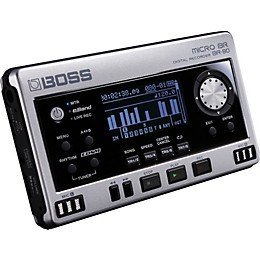
- Three modes: MTR (multi-track recorder), eBand, and Live Rec
- Records directly to SD/SDHC memory card (up to 32 GB)
- High-quality stereo condenser microphone built in for instant audio capture
- 64 V-Tracks and eight simultaneous playback tracks
- eBand function for phrase training and play-along tracks
- Huge library of built-in backing and rhythm patterns
- World-class COSM amps and effects onboard
- Use as a USB audio interface with built-in effects
Specs
TracksMTR Mode
- Tracks: 8
- Simultaneously recording track: 2
- V-Track: 64 (8 V-Tracks per each Track)
- Tracks: 2 (stereo)
- Simultaneously recording track: 2 (stereo)
- Tracks: 2 (stereo)
- Simultaneously recording track: 2
- *Either the playback or the recording
- SDHC Memory Card (4 GB to 32 GB)
- SD Memory Card (1 GB to 2 GB)
- Linear (Bit Depth: 16 bits)
- eBand Songs (Recording/Playback)
- WAV (Bit Depth: 16 bits, Playback only)
- MP3 (Bit Rates: 64 kbps to 320 kbps, Playback only)
- WAV (Bit Depth: 16 bits, Recording/Playback)
- MP3 (Bit Rates: 64 kbps to 320 kbps, Recording/Playback)
- 24 bits
- 24 bits
- 44.1 kHz
- 3 hours (1 GB), 100 hours (32 GB)
- eBand Song: 4 hours (1 GB), 130 hours (32 GB)
- WAV 16-bit, stereo: 1.5 hours (1 GB), 50 hours (32 GB)
- MP3 128 kbps, stereo: 16 hours(1 GB), 550 hours (32 GB)
- WAV 16-bit, stereo: 1.5 hours (1 GB), 50 hours (32 GB)
- MP3 128 kbps, stereo: 16 hours (1 GB), 550 hours (32 GB)
- * The above-listed recording times are approximate. Times may be slightly shorter depending on the number of songs that were created.
- * The above number of the MTR mode is the total for all the tracks that are used. If each of the eight tracks contain an equal amount of data, the length of the resulting song will be approximately 1/8 of the above.
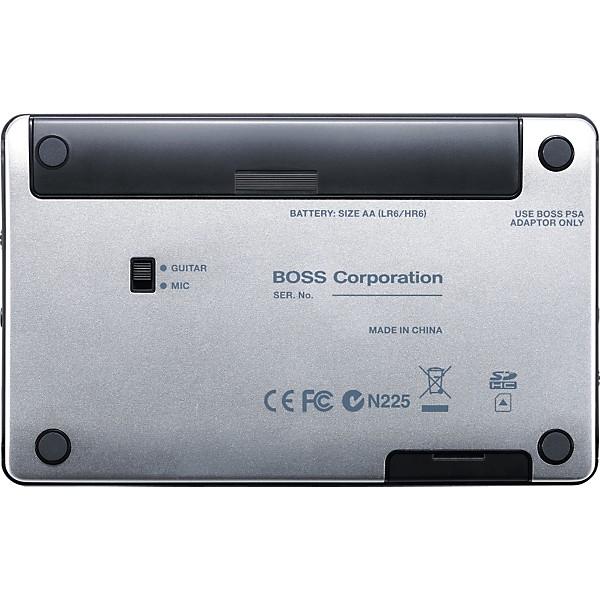
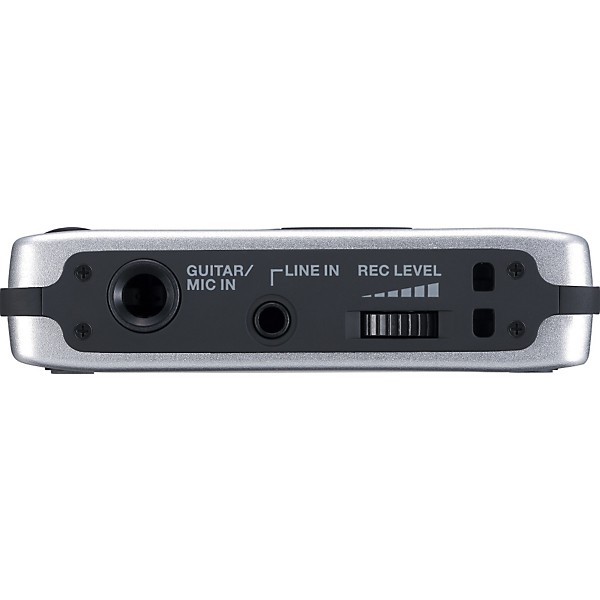
- GUITAR/MIC IN jack: -20 dBu (GUITAR/MIC SW = GUITAR), -40 dBu (GUITAR/MIC SW = MIC)
- LINE IN jack:-10 dBu
- GUITAR/MIC IN jack: 1M ohm (GUITAR/MIC SW = GUITAR), 6k ohms (GUITAR/MIC SW = MIC)
- LINE IN jack: 10k ohms
- PHONES/LINE OUT jack: -14 dBu
- PHONES/LINE OUT jack: 22 ohms
- Graphic LCD 128 x 64 dots (with backlit)
- 24-bit/44.1 kHz USB-AUDIO (Hi-Speed USB)
- USB Mass Storage Class (Hi-Speed USB)
- BUS Power operation
- GUITAR/MIC IN jack (1/4" phone type)
- LINE IN jack (Stereo miniature phone type)
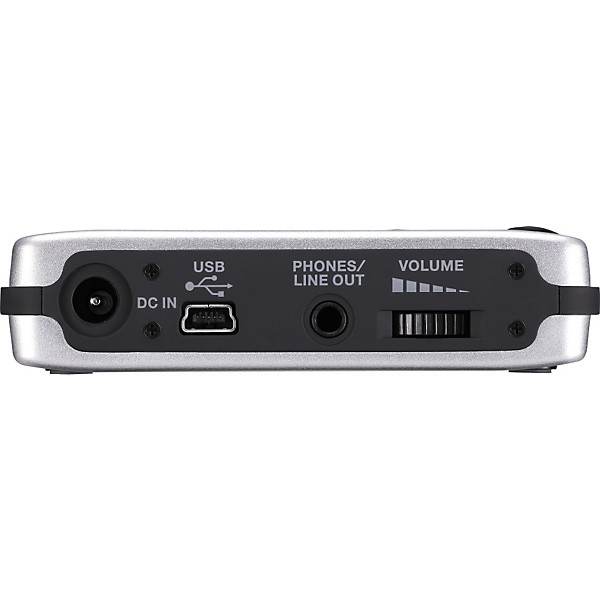
- PHONES/LINE OUT jack (Stereo miniature phone type)
- USB connector (mini-B type)
- DC IN jack
- DC 9V: AC Adaptor (sold separately)
- Alkaline battery (AA, LR6) x 2
- Rechargeable Ni-MH battery (AA, HR6) x 2
- USB Bus Power
- Expected battery life: Approximately 6 hours (Alkaline dry cell batteries/with continuous playback of 8 tracks, power save function)
- * May vary according to usage conditions, batteries used, and type of SD card used.
- 130 mA (DC IN)
- SD Memory Card, USB Cable (mini-B type), Alkaline battery (AA, LR6) x 2, Owner's Manual
- AC Adaptor (PSA series), Silicone Rubber Case and Carrying Pouch: BA-BR80S
- 138 mm
- 5-7/16 inches
- 86 mm
- 3-7/16 inches
- 22 mm
- 0-7/8 inches
- 140 g0 lbs. 5 oz.
Reviews
3.25
4 Reviews
100%
of respondents would recommend this to a friend
Filters
Best Uses
- Home Studio1
- Performances1
- Professional Recording1
- songwriting1
- Amateur Recording1
Cons
- has a learning curve - takes time 2 learn1
Describe Yourself
- Experienced1
- Novice1
Pros
- Compact2
- Easy To Use2
- Excellent Sound1
- Good Power Output1
- Low Distortion1
Reviewed by 4 customers
the Jumbo Shrimp of Audio Recording
submitted9 years ago
bysixstrings no waiting
fromatlanta,GA
Very versatile unit. I use it frequently to record a backing track and then play over it by plugging it into a Microcube Amp. Very small, fits in guitar case or pocket. Sound quality is very good, and its a great way to practice with headphones if you don't want to disturb others. Guitar FX are only available in MTS mode, not live record mode. If space is at a premium this device is the best at what it does. If you have more room the Zoom R8 is easier to use because it has physical knobs and less menus to get things done. I use both and sometimes together. The Boss BR-80 has a metal case which is nice, and the condensor mics sound good. Its easy to use once you understand how it works. Youtube videos are helpful, the book is also good for reference. I used mine for about a year, every day, and I mostly used the live recording mode, but finally got around to learning the MTS mode (multitrack system) and that is quite fun as well. Love the COSM effects. Battery life is kinda short, 2 or 3 hours, if you leave the LCD on for long periods, but it only takes 2 AA batteries so, it easy to carry spares. I usually use it with a power supply . For me, I wouldn't own it as my only recorder, as it is too difficult to mix down tracks and there is no way to do insert effects, external compression etc. - but its is great for songwriting, and practicing. You can copy your work off the sd card or plug the entire device into a computer and copy it off that way. Its best used as tracking recorder, or a practice and songwriting device, mixing and mastering is possible but limited, compared to what you can do on a computer or a full size recording desk.
New user
submitted10 years ago
bySean
fromSacramento
I have only had it a short time, I hope that I will get better with it as time goes on. I tried some recording of live performances. They came out kind of muddy sounding, not very clear. It was recorded from my seat in the audience so that may not be the best way to do things. The on board microphones sounded very good with my acoustic guitar at close range. Probably just need to learn how to position the unit to get the best out of it. The other thing I noticed is that there is not much difference when you change pickups or playing position, it all sounds the same. I bought it mostly as a practice tool so I like it so far, maybe I can update as I get better at using it.
Disappointed
submitted12 years ago
byWilliam
fromMars Colony 3
The first thing I tried to do with this unit was to record myself while playing along with the pre-recorded music that comes with it, which sounded great. First problem: the pre-recorded tunes have no beginning or end, so you can't create a complete song. Next problem: when I tried to move the recording to my computer I couldn't; the recorder kept saying that the song was "protected." No problem I thought, I'll just move a few songs from my computer to the BR-80 and play along with them. This ended up requiring a couple of days of uploading software, updating the firmware on the BR-80 (it came with version 1.2 and the Boss website is already up to 1.6), etc.. Once I was good to go I tried to move the songs; a few hours later I had managed to move 2 out of 10 songs, and have no idea why some moved and some didn't. Moving songs from the BR-80 to the computer? Kinda sorta worked. Very, very confusing interface. Then I tried to use the unit for what it's mainly designed for, recording a song idea in "live record" mode and then moving the recording to "Multi Track Recording" mode so I could add more tracks to it. Despite a couple of hours of effort I never succeeded in moving the Live Recording track to MTR. Then I tried just recording in the MTR mode to begin with. It works, but I could never get any of the effects to kick in, including reverb. And it kept playing an annoying rhythm track in the background. I was able to switch the rhythm track off, but doing so seems to switch off all the effects (if they were ever on in the first place?). As near as I can figure the Live Record mode requires that you use the built-in microphones (which sound great by the way) and doesn't allow you to add in any effects. Probably the best way to record with this thing is to just switch off all the effects and use it to mike an amp that has whatever effects you normally use. My plan now is to use the BR-80 and it's built-in mikes in Live Record mode to record song ideas and then try to move that recording to Garage Band on my computer and add on tracks that way, assuming that I can figure out how to reliably move songs from the BR-80 to my computer. I'm going to guess that this thing might work better with a PC; I don't think the interface was designed with Apple in mind. By the way I was using the BR-80 to record harmonica, using both the built-in mikes and a Shure 545 external mike.
Botched "upgrade" that drops key features
submitted14 years ago
byMichael Katz
fromBerkeley, CA
Botched "upgrade" of original Micro BR removes 2 useful features: (1) You can no longer set auto punch-in/punch-out points on the fly, by tapping the A/B button. Instead, you must navigate menus, then key in specific time points or measure numbers -- insane. (2) No more onboard track export or mixdown to MP3. You can only mix down to .WAV -- also crazy. Many people will find the original Micro BR (which is now discounted) more usable. It's a good multi-track recorder, and an outstanding practice tool for guitar (etc.) Also consider the Zoom H4n: Similar onboard amp models and guitar/bass effects, but with higher sampling rates, better specs across the board, better onboard mics, and XLR inputs. This BR-80 adds several new features/models that the original Micro BR lacked, but they don't offset the removed features. Odd anachronisms and limitations remain: No 96 kHz/24-bit recording or modeling. Only two delay models, each limited to 1 sec. New auto-tune and auto harmonizer can't be chained to amp models or guitar effects. What's new? You get 8-track mixing and 64 tracks per project, instead of 4 and 32. Stereo onboard mics, instead of mono mic. Support for SD cards up to 32 GB, instead of 1 GB. Limiter and 4-band EQ are now chainable to the guitar amp/FX bank. Several new amp models for guitar and bass -- but they aren't that well-differentiated, and their 44.1 kHz sampling leaves them sounding a generation behind Zoom's 96 kHz models. Several new FX models: distortion boxes, Uni-Vibe phaser, rotary speaker, octaver, guitar-to-bass (fun), and "acoustic simulator" (poorly rendered). MP3 playback no longer locks out reverb bank. Meh.
- Previous
- 1
- Next
Q&A
Have a question about this product? Our expert Gear Advisers have the answers.
No results but…
You can be the first to ask a new question.
It may be Answered within 48 hours.
Be the first to know about exclusive offers, tips and more.

866-498-7882 English
877-687-5402 Español