.jpeg)

Pro Gear Advisers
•866-498-7882
A Trusted Reference Monitor Refined | Inside Neumann's Design Philosophy for the KH 310 II
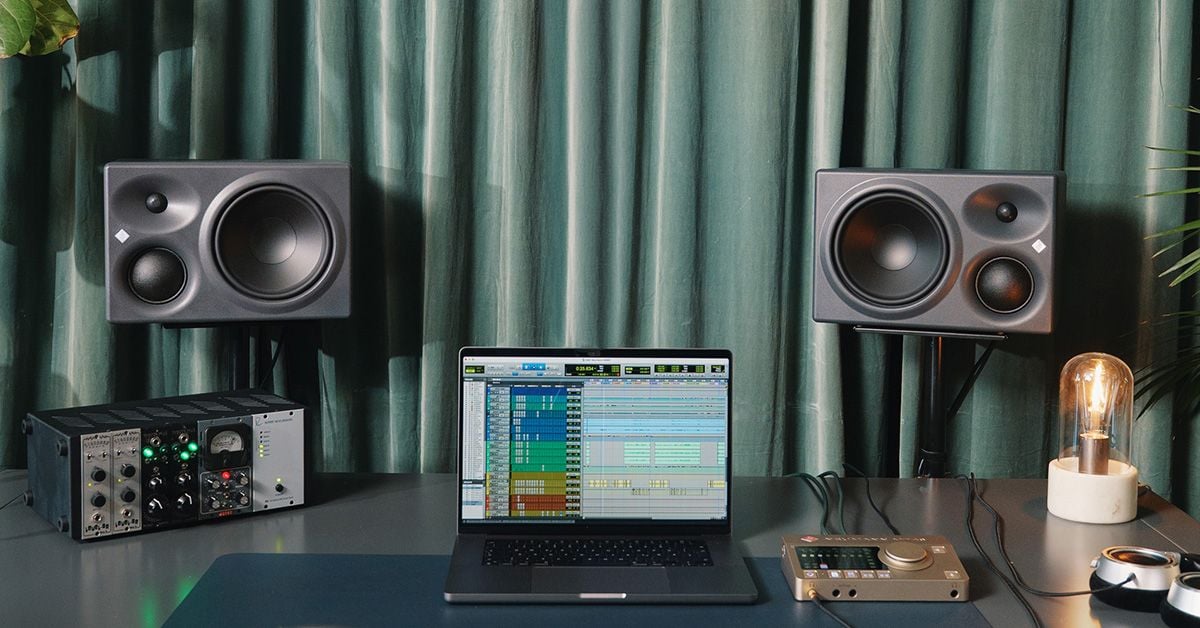

Neumann's KH 310 has earned a reputation as one of the industry's most trusted nearfield monitors. So, evolving the KH 310 to better accommodate how creators work today probably had an element of “don’t mess up a good thing.”
Therefore, Neumann’s engineering team opted to forego a complete redesign, choosing instead to preserve the characteristics audio professionals already relied upon while developing refinements often demanded in current production environments.
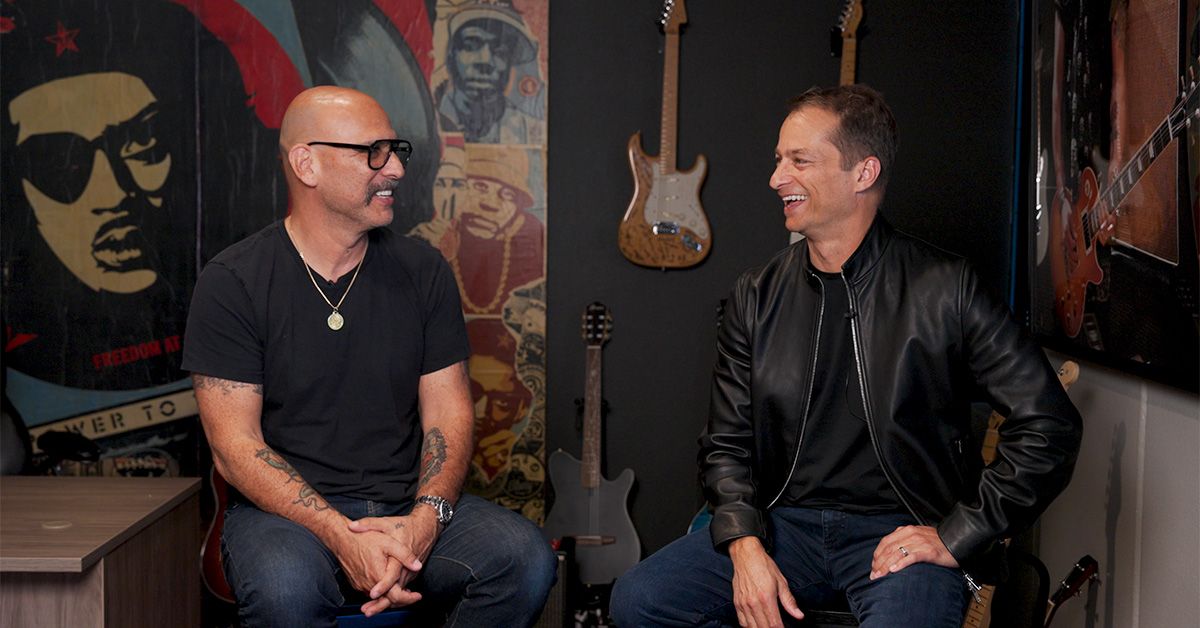
To share the details of that audio-quality balancing act, we interviewed Neumann Product Manager Monitoring Roman Kramer, who discussed how customer feedback drove the design strategy, as well as the role onboard DSP played in crafting the KH 310 II system which helps creators work faster and with greater confidence.
As Neumann certainly could have designed an entirely new monitor system, why did you and your team instead dig into evolving the KH 310 into the KH 310 II?
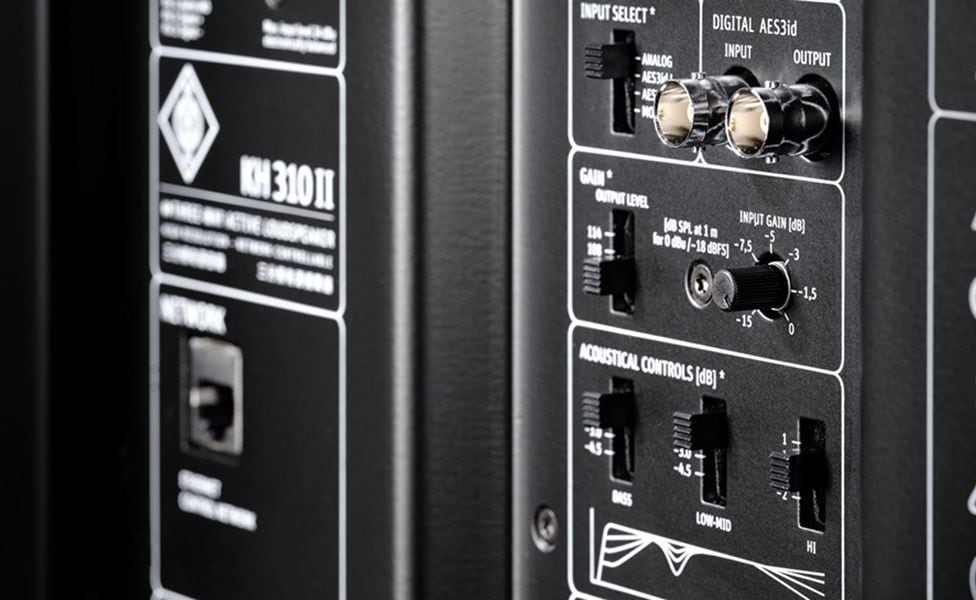
Roman Kramer: It all started with a very clear philosophy. We wanted to respect everything professionals already loved about the original KH 310. We didn't want to start over with a completely new design because, for many engineers, the KH 310 had already become a trusted reference monitor. Instead, our goal was to refine it and bring it into today's production workflows which increasingly involve digital connectivity. Users want to connect speakers digitally, integrate them into networks and take advantage of room-alignment software. So, we asked ourselves, “How can we preserve what made the KH 310 successful while giving users the tools they expect today?” That became the foundation of the KH 310 II.
What were some of the technical improvements the engineering team was looking to achieve for the upgrade?
One major goal was improving maximum output. The KH 310 II delivers approximately 5dB more maximum SPL than the previous version while simultaneously reducing distortion. That means, even when you're monitoring at higher playback levels, you still hear a very consistent sonic picture. You're not losing accuracy simply because you've turned the monitors up. We also wanted to improve overall linearity—not just the frequency response itself, but the consistency from one speaker to another as they leave the production line.
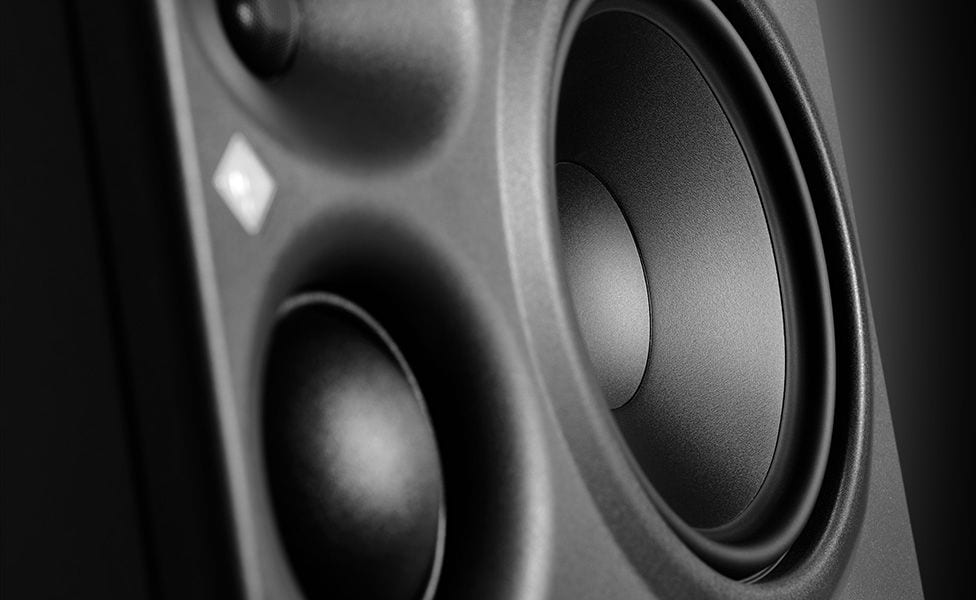
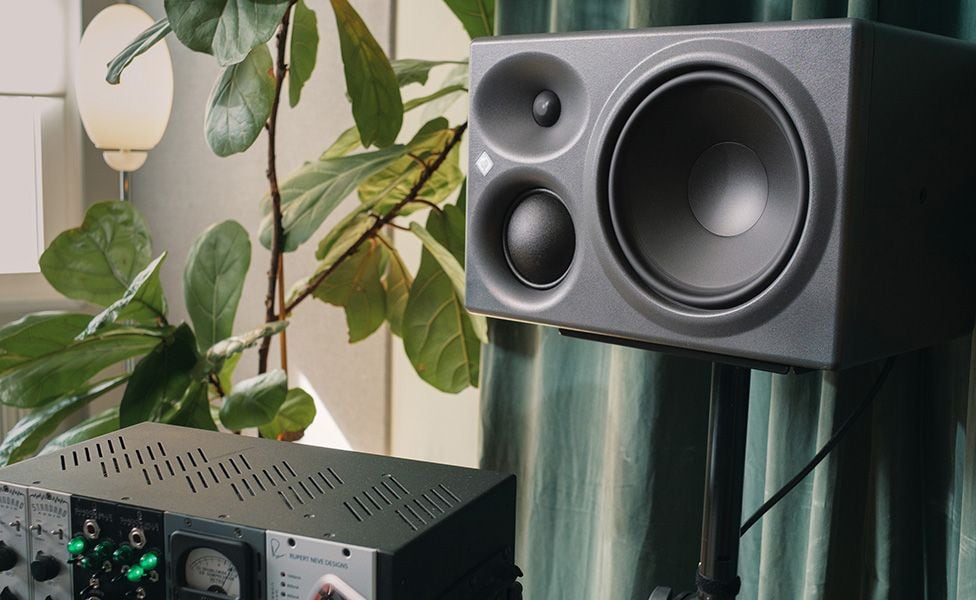
At the same time, we deliberately retained several key characteristics of the original speaker. We kept the compact three-way format, closed-cabinet design and dedicated left and right versions. Perhaps most importantly, we left the midrange driver untouched. Our R&D team actually modeled alternatives, but concluded the existing midrange driver was already exceptionally well designed. There simply wasn't a good reason to change something that was already performing at such a high level.
I assume changing too much could alienate and/or disappoint longtime KH 310 users?
Absolutely. There are thousands of these monitors already in professional studios around the world, and those users have developed a great deal of trust in them. When engineers know a monitor inside and out, they immediately notice if something fundamental changes—especially in the midrange. That's why we were careful to preserve the characteristics professionals already depended on while improving the overall system around those characteristics.
Given that, did customer feedback play a significant role in the development of the KH 310 II? I’m also curious what features or improvement users told you they wanted most?
Customer feedback was actually the primary reason this project began. The overwhelming message we heard was, "We love these speakers, but we'd like onboard DSP so they can integrate with Neumann’s MA 1 room-alignment system."
The second major request was digital connectivity. More and more, studios have digital signal paths throughout their production environments. Users wanted the monitors to fit naturally into those workflows.

Why was it important to increase maximum SPL for the KH 310 II monitors?
I would say most professionals monitor somewhere around 75dB to 80dB during the majority of a mixing session. But that's only part of the story. Throughout the day, they'll often check mixes at very low levels, and then there are moments when they need to turn everything up. Perhaps a client has arrived, or they simply want to experience the full impact of the mix. In those situations, you still want the monitor to maintain its accuracy. So, increasing maximum SPL wasn't about encouraging people to mix louder. It was about ensuring that whenever higher playback levels are needed, the monitor continues to present the same accurate sonic picture with lower distortion.
Beyond the incorporation of DSP, what do you feel makes the KH 310 II platform different from other 3-way studio monitors?
I would start with the physical design. First, it’s an extremely compact 3-way monitor that allows users to place it much closer than many competing 3-way speakers. That is especially important in smaller rooms. Second, it uses a closed-cabinet design that gives you a very well-controlled low end and extremely accurate transient response. Those two physical characteristics make the KH 310 II surprisingly flexible. Even in relatively small control rooms or home studios, you can position the speakers correctly while still benefiting from the performance advantages of a true 3-way monitor.
Why has room correction become such an important part of monitoring these days?
I think it comes down to making the monitor work in the real world. Even the most accurate loudspeaker is ultimately placed in a room, and every room affects what you hear. That's why onboard DSP and our MA 1 room-alignment system became such an important part of the KH 310 II. The original KH 310 earned the trust of professionals because of its accuracy. What users wanted was a way to preserve that accuracy after the speaker was placed in their own room. That’s exactly what MA 1 does. It allows you to optimize an already excellent loudspeaker for your specific acoustic environment rather than forcing you to adapt to the room.
Professional studios typically have carefully designed control rooms that ensure accurate listening, so room-alignment software should already have a reasonable space to work in. But can it also benefit home-studio musicians who may set up their “control room” in acoustically challenging environments?
It's absolutely fair to say that room alignment benefits home studio users just as much as professionals—sometimes even more. I'm speaking from my own experience. I have several listening setups, including one in my bedroom, which is a completely untreated room. Neumann’s MA 1 really helps transform that bedroom into a workable mixing environment.
At the end of the day, it's about efficiency. Whether you're producing records in a commercial studio or mixing music at home after work, you want to reach reliable decisions more quickly. You don't want to spend your time second-guessing what you're hearing or constantly comparing your mix on different playback systems. You want confidence that what you're hearing is actually what's in the music, and when you can trust your monitoring environment, the entire creative process becomes faster.
That’s a good point to discuss. For decades, one of the biggest challenges for engineers has been translating mixes to myriad playback systems, from automobiles to portable music devices to homes and now, of course, smartphones, laptops and immersive audio. How does the KH 310 II make this process easier and more accurate?
Translation has always been one of the biggest goals of monitor design. Years ago, it was common practice to finish a mix, burn a CD or cassette, listen in the car, check it on a boombox and then go back into the studio to make adjustments. Today, the playback systems are different, but the challenge is the same. What you really want is confidence that what leaves your studio will translate to the outside world. That's something I hear repeatedly from producers, musicians and mixing engineers. When they can trust the monitoring system, they're much less dependent on listening to the mix on countless different systems. Instead of constantly wondering whether something will translate, they can focus on making creative decisions. That's a huge improvement in efficiency.
To that end, Neumann and most other speaker manufacturers talk about “precision.” How is Neumann's approach different, as well as more authentic than good marketing copy?
For us, precision isn't simply a marketing term. One example is production consistency. The KH 310 II leaves the factory with an extremely tight frequency-response tolerance of approximately ±0.6dB across the audible spectrum. That means the speakers are remarkably consistent from one production unit to another. Then, MA 1 takes that already linear speaker and optimizes it for the room where it's actually being used. Those two things work together. First, we build an extremely accurate loudspeaker, and then we adapt it to the listening environment. That's how we think about precision.
Neumann monitors also have a reputation for sounding consistent whether an engineer is working with desktop-sized models or bigger “party speakers” in a studio.
One important part of our philosophy is consistency across the entire product portfolio. Our goal is for them all to sound fundamentally the same. As you move from smaller models to larger ones, the differences should mainly be greater output capability and deeper low-frequency extension, but the tonal balance and overall linearity should remain very consistent. That means an engineer who works in one studio with smaller Neumann monitors should feel immediately comfortable walking into another room with larger Neumann monitors. The reference remains familiar—only the scale changes.
Who do you see as the ideal user for the KH 310 II ?
I actually don't define the target user by whether they're working in a commercial facility or a bedroom studio. I define them by what they're trying to accomplish. If someone wants a monitoring system they can genuinely trust—one that allows them to make accurate decisions—that's the audience. Whether they're recording, mixing, mastering and producing for broadcast; working in post-production or creating music at home doesn't really matter. The common denominator is they want confidence in what they're hearing. I think that's something every serious creator shares.
I think home-studio musicians often wonder whether they should choose active or passive monitors. What advantages do active monitors offer?
Active monitors simplify the entire system because everything has already been optimized. The amplifiers, drivers, crossovers, DSP and protection systems are all designed to work together. As a user, you don't have to wonder whether you've chosen the right amplifier or whether different components are limiting the speaker's performance. That work has already been done. Everything is engineered as one integrated system. There's also a cost advantage because you don't need to purchase an external amplifier.
What's the best way to position KH 310 II monitors for optimal performance?
The starting point is still the classic equilateral triangle. We recommend roughly a 60-degree listening angle, with the listener and the two monitors forming an equal-sided triangle. The advantage of the KH 310 II is its compact 3-way design. Because the cabinet is relatively small, you can reduce the listening distance if your room requires it. In smaller control rooms, you can create a tighter listening triangle while still benefiting from a true 3-way monitor. Another advantage is the dedicated left and right cabinet design. Depending on your setup, you can even reverse the speakers, so the tweeters and midrange drivers are positioned closer together, allowing the monitors to sit closer to your computer display while maintaining proper imaging.
Of course, speaker placement is always about more than geometry. Room symmetry is extremely important. Ideally, each monitor should be the same distance from the side walls, positioned at ear height, and angled—or toed in—toward the listening position. You also want to minimize early reflections as much as possible.
If an engineer loves their original KH 310 monitors, do they have to give them up to take advantage of the KH 310 II’s digital workflow?
No. If someone owns the original analog KH 310, they can still expand into the MA 1 ecosystem by adding one of our DSP-controlled subwoofers, such as the KH 750 DSP. The subwoofer becomes the hub for bass management and room alignment, so existing KH 310 owners don't have to replace perfectly good monitors simply because they want room correction or a more advanced monitoring system.
Let’s talk a little more about what the Neumann MA 1 contributes to a KH 310 II system.
Well, frequency response is only one part of the picture. The MA 1 also aligns speaker levels throughout the monitoring system, which becomes increasingly important as you move into surround or immersive audio. Perhaps even more importantly, it aligns timing. When multiple loudspeakers are reproducing different parts of a mix, you want all of those signals to arrive at the listening position at precisely the right moment. Time alignment and phase optimization become critical in multichannel systems. It's one of the reasons MA 1 becomes even more valuable as monitoring systems become larger and more sophisticated.
Speaking of immersive audio, how do you see monitoring evolving over the next few years?
I wish I knew the definitive answer. What I can say is we're clearly seeing strong momentum toward immersive audio across several industries. Film production continues to adopt immersive workflows, and broadcast is increasingly embracing immersive audio—especially for sports and large live events. We're also seeing more music production studios investing in immersive monitoring for commercial projects. In addition, more automotive manufacturers are working with audio companies to create immersive listening experiences inside vehicles. That's opening an entirely new application for immersive production. So, the trend is definitely there, but whether immersive audio eventually becomes the dominant production format remains to be seen. It's a fascinating time to be working in audio.
If there's one message you'd like creators to remember about the KH 310 II, what would it be?
I would come back to trust. Everything we've done with the KH 310 II was intended to help creators trust what they're hearing. We wanted to preserve everything professionals already appreciated about the original KH 310, while adding the digital tools that today’s production demands. When you can trust your monitoring system, you spend less time questioning technical decisions and more time focusing on creativity. Ultimately, that's what every monitor should do.
Precision Play
I’ve co-owned four professional recording studios in the San Francisco Bay Area and throughout the years, I’ve been one of those creators who perhaps worries too much about mixes translating to every possible playback system embraced by the greater public. That makes me an automatic fan of what the Neumann KH 310 II has to offer.
But I’ve never run a huge commercial studio, so to address the baby elephant in the control room, it would be a “gulp moment” for me to consider purchasing a premium KH 310 II system. I’m sure the concern would be the same for other small production houses and studio musicians dealing with limited equipment budgets.
That said, something even more worrying is having mixes rejected or criticized for sounding less than awesome outside of your recording space. Building a substantial client base and/or a reputation for excellence is challenging if customers are unhappy with your work.
A trustworthy monitor system that helps you audition recorded tracks with meticulous accuracy and deliver fabulous mixes should be a business—and creative—necessity. The Neumann KH 310 II also offers no B.S. workflow advantages that save time, optimize listening and minimize production worries. In audio production careers sometimes bedeviled by subjectivity and second-guessing, I’m a fan of anything that inspires confidence. So, to paraphrase the tagline of a credit card provider, “What’s in your studio?”
Written By: Michael Molenda
Michael Molenda is a content strategist, editor and writer for Guitar Center, where he has worked since 2022. He is the longest-serving Editor in Chief of Guitar Player (1997-2018), and former Editorial Director of Bass Player, EQ, Keyboard, Electronic Musician, Gig and Modern Drummer. A guitarist, drummer, bassist and producer, Mike co-owned three pro recording studios in San Francisco, and performs with Surf Monster and The Trouble With Monkeys.


Be the first to know about exclusive offers, tips and more.

866-498-7882 English
877-687-5402 Español