

Pro Gear Advisers
•866-498-7882
Allen & Heath Qu-3 and Qu-3D Digital Mixers: Maximum Power in a Compact Format
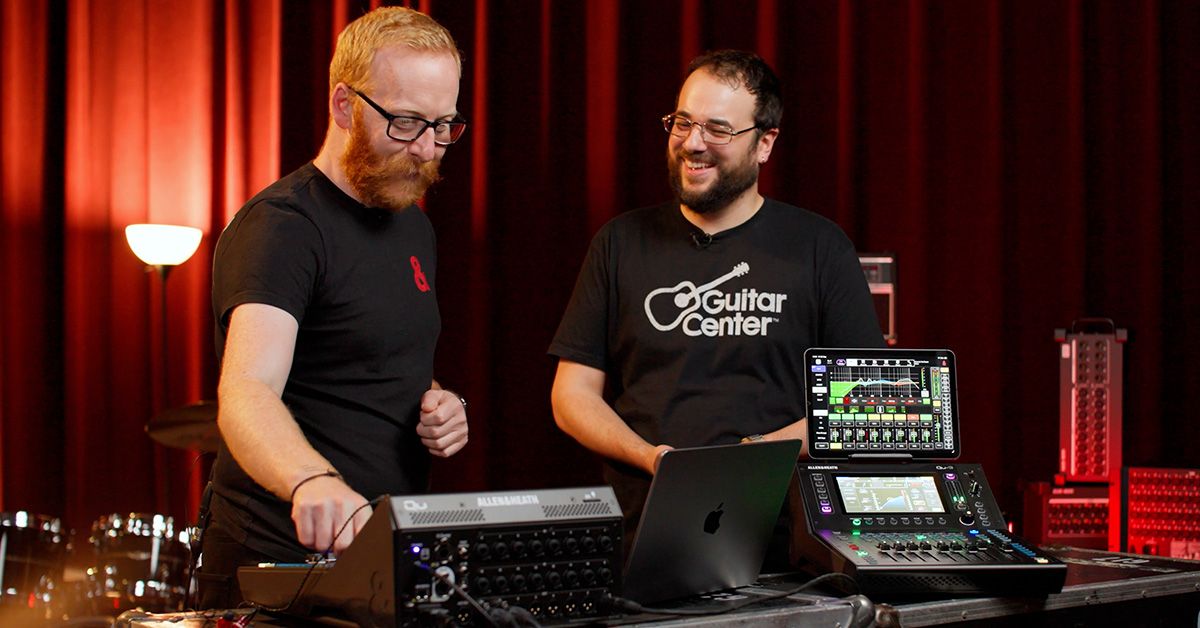
The Allen & Heath Qu-3 and Qu-3D digital mixers bring 32-channel processing, extensive connectivity, onboard effects and multitrack recording to a compact, desktop-friendly format.
But can they deliver the power of larger digital consoles without overwhelming users with complicated menus?
In this exclusive demo, Guitar Center’s Dustin Hackworth joins Allen & Heath's Keith Johnson for a hands-on exploration of the Qu-3 and Qu-3D, including their touchscreen controls, motorized faders, signal processing and automated mixing tools.
Qu-3 Versus Qu-3D: What's the Difference?
“They are basically the same units—the Dante port on the back of the Qu-3D is the only difference,” says Johnson. “With the Qu-3D, you can connect to a Dante network [a pro audio networking technology that allows compatible devices to transmit multiple channels of digital audio over standard Ethernet networks], so if you’re looking to slot into an existing system, the Qu-3D is probably for you. However, both the Qu-3D and Qu-3 include Allen & Heath’s proprietary SLink networking protocol. You can use Dante in a huge infrastructure, so there’s a bit more setup, as well as a learning curve. There are some similarities between Dante and Slink—they are both transmitting audio over a network—but Dante is more about intricate setups while SLink is all about plug and play. You don’t have to think about it.”

Professional Mixing Without the Intimidation
“The most important thing is that it's not intimidating,” says Johnson of the Qu-3 platform. “It's not a scary mixer to work with. It's very easy, and you'll pick it up very quickly. You can get sound out of it in a couple of minutes, and then you can dive in later and get more in depth, because there are plenty of features in there to get into.”
Gain Assistant: Easier Soundchecks
“Auto Set will set the gain for you,” explains Johnson. “It listens to the input signal and raises the gain up to its optimal level. The next part is Auto Gain, which constantly monitors that signal, and if it gets too hot, it automatically pulls back the gain to stop clipping and unwanted distortion from happening. For example, if a guitarist turns up part way through the first song, or a drummer gets excited and really starts hitting the snare drum harder. You’re not constantly having to hover over gain knobs and account for variances in stage volume. That’s some serious peace of mind.”
Feedback Assistant: Taming Unwanted Feedback
“Feedback Assistant automatically detects feedback and notches out those feedback frequencies,” says Johnson. “You can use this with very little interaction. It does it all for you. The only decision is, ‘Do you want fixed filters or live filters?’ The difference is the fixed filters will stay active until you delete them, while the live filters will gradually recover over time. The idea is to use the fixed filters during setup for the environment, the system, the microphone and monitors you’re using. And then, the live filters can be running throughout the show. It's as easy as turning detection on and allowing it to do its thing. You don’t have to spend a lot of time chasing around on a board thinking, ‘How do I get this feedback out? Where is it coming from?’ To have that [solved] with the press of a button is pretty powerful.”
Features Designed to Make Mixing More Enjoyable
“The Qu-3 and Qu-3D are all about allowing you to concentrate more on the mix,” says Johnson. “Mixing is about science and art coming together. And the fun part is the art bit.”
Shop the Allen & Heath Qu-3 and Qu-3D at Guitar Center
Whether you're mixing a live band, recording multitrack sessions or building a flexible streaming setup, the Allen & Heath Qu-3 and Qu-3D offer professional digital-mixing capabilities in a compact format.
Written By: Michael Molenda
Michael Molenda is a content strategist, editor and writer for Guitar Center, where he has worked since 2022. He is the longest-serving Editor in Chief of Guitar Player (1997-2018), and former Editorial Director of Bass Player, EQ, Keyboard, Electronic Musician, Gig and Modern Drummer. A guitarist, drummer, bassist and producer, Mike co-owned three pro recording studios in San Francisco, and performs with Surf Monster and The Trouble With Monkeys.
Be the first to know about exclusive offers, tips and more.

866-498-7882 English
877-687-5402 Español