


StudioMonitorsMixing


Pro Gear Advisers
•866-498-7882
Guitars
Guitars
Amps & Effects
Amps & Effects
Used & Vintage
Keyboards & MIDI
Keyboards & MIDI
Drums
Drums
DJ Equipment
DJ Equipment
Basses
Basses
Recording
Recording
Live Sound
Live Sound
Accessories
Accessories
Mics & Wireless
Mics & Wireless
Music Software
Music Software
Lighting
Lighting
- Popular Brands
Band & Orchestra
Band & Orchestra
Platinum Gear
Deals
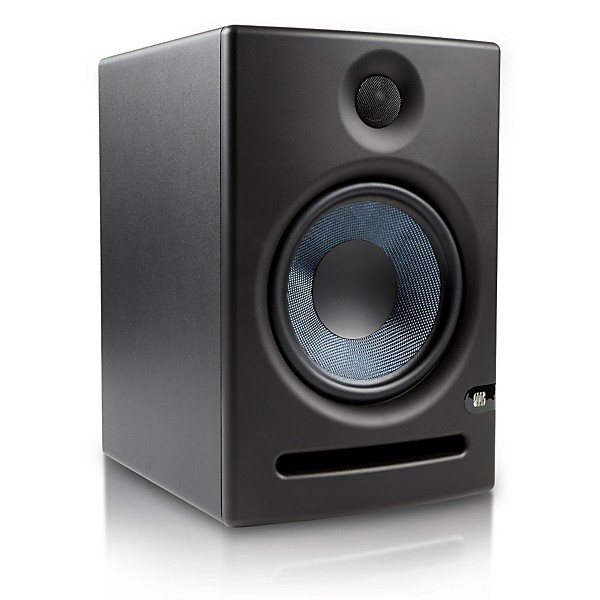
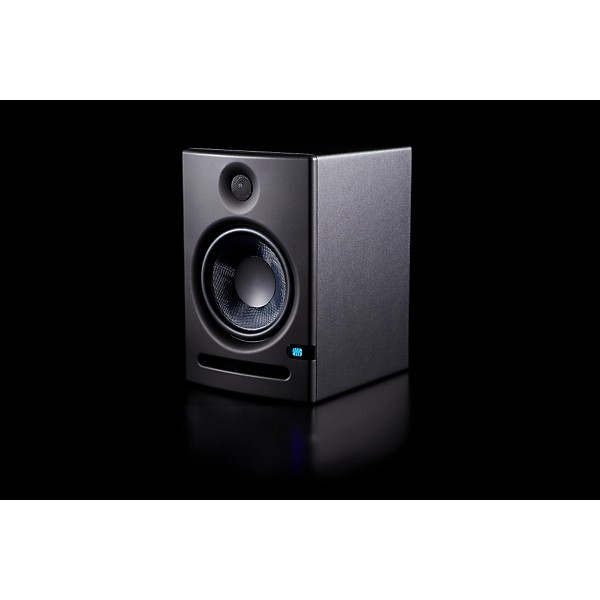
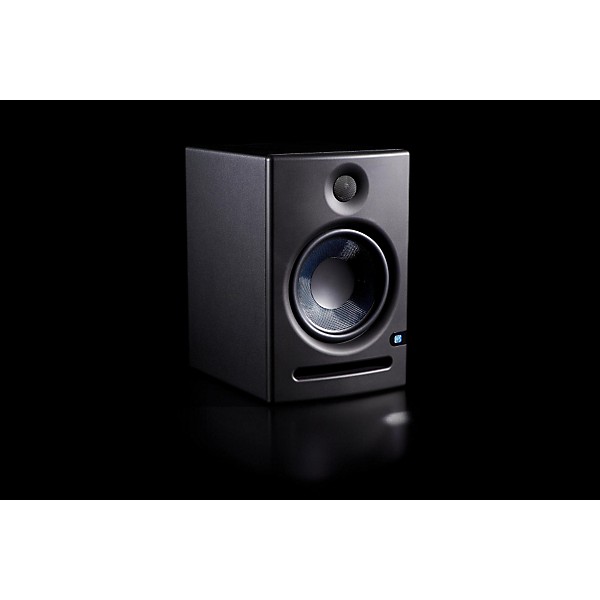
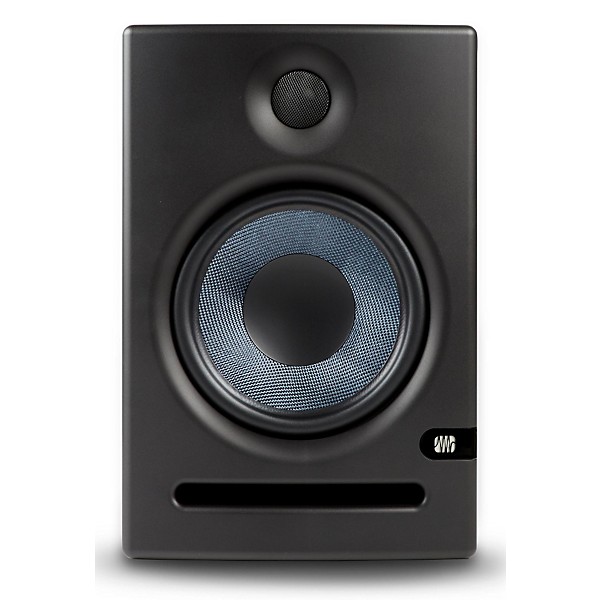
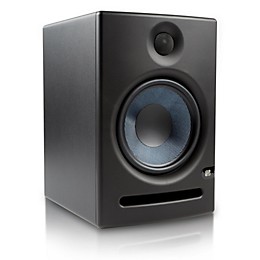
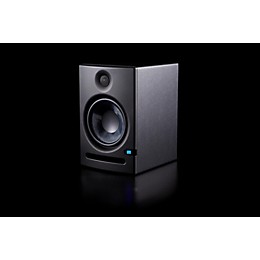
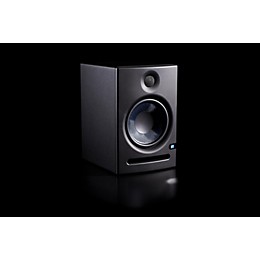
PreSonus Eris E8 High-Definition 2-way 8" Nearfield Studio Monitor
$249.95

Need Help?
Videos (1)
View All
PreSonus—Eris Studio Monitors

Description
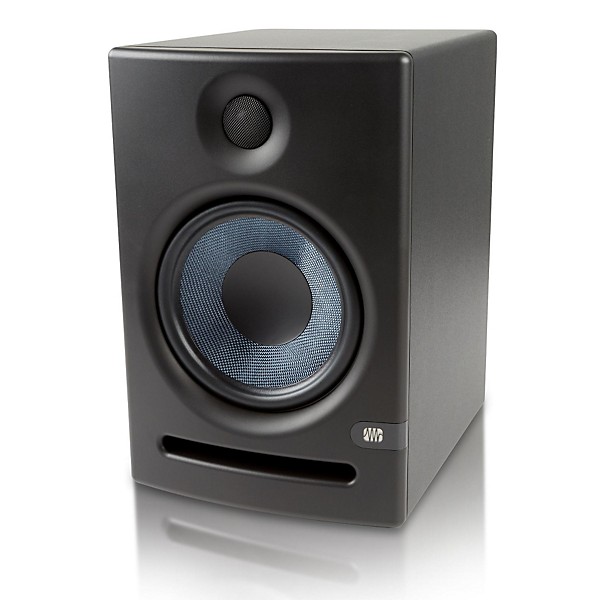
When mixing music you want a pair of studio monitors that will accurately reveal the truth about what you're listening to, and the Eris series from PreSonus are designed to do just that. With its 8" Kevlar low-frequency transducer, the Eris E8 provides an extended low-end all the way down to 35Hz, and performs with a bit more muscle than the smaller E5. Eris speakers are real studio monitors, delivering a very accurate response with a tight bass and very clear upper end. That's what you need in a home studio. Thanks to well-designed Kevlar low frequency transducers, low-mass silk-dome tweeters, responsive Class AB amplification, and professional acoustic-adjustment controls, Eris delivers the goods.
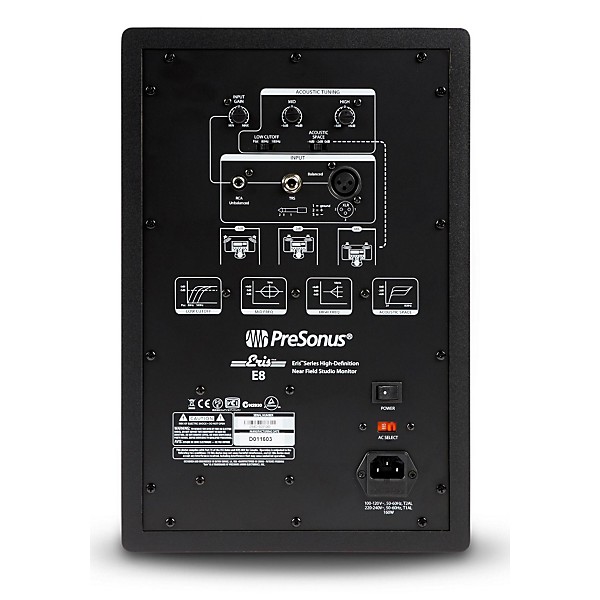
Both Eris models provide balanced XLR, balanced ¼" TRS, and unbalanced RCA line-level inputs. When both balanced connections are in use, the TRS input will supersede the XLR input. The RCA input is summed into the signal path. With this selection, you'll have no problem hooking your Eris speakers up with virtually any line-level source. (If your signal source has unbalanced, ¼" TS outputs, simply use a ¼"-to-RCA adapter or adapter cable.)
You're in control!
Today's music producers deal with a wide variety of musical genres and often work in more than one location. It's easy to take your Eris speakers with you when you want to work in a different space. It's almost as easy to customize their sound for your room and type of music.
The most basic control is the Input Gain, which determines the signal level before it reaches the power amp. This is part of gain-staging your overall system-that is, setting the levels for every part of the recording chain in order to get the optimal level of clean audio all the way through. Once you've gain-staged your system, you can leave this control alone.
The Eris E5/E8 provides three EQ controls in its Acoustic Tuning section: High, Mid, and Low Cutoff. These controls enable you to fine-tune the monitors and even to broadly approximate the sounds of different types of speakers so you can hear what your mix might sound like, for instance, on a car stereo or portable radio. The Low control also is useful when using the E5 or E8 with a subwoofer.
Safety Matters
Any loudspeaker is subject to an assortment of environmental and performance problems, and Eris monitors offer protection from most common of these. RF shielding protects against radio frequencies that could be induced into the signal and become audible. (If you've ever heard a radio broadcast unexpectedly coming out of a guitar amp, that's the result of RF interference.)
Eris monitors also provide over-temperature protection to avoid heat-related issues, current-output limiting (to prevent damage should there be a short circuit on the speaker terminals), and subsonic protection to filter out extremely low-frequency vibrations that could interfere with the woofer's performance.
Finally, Eris' power amplifiers have a "soft startup" so that you don't get damaging pops in the speakers when you power them up.
Both Eris models provide balanced XLR, balanced ¼" TRS, and unbalanced RCA line-level inputs. When both balanced connections are in use, the TRS input will supersede the XLR input. The RCA input is summed into the signal path. With this selection, you'll have no problem hooking your Eris speakers up with virtually any line-level source. (If your signal source has unbalanced, ¼" TS outputs, simply use a ¼"-to-RCA adapter or adapter cable.)
You're in control!
Today's music producers deal with a wide variety of musical genres and often work in more than one location. It's easy to take your Eris speakers with you when you want to work in a different space. It's almost as easy to customize their sound for your room and type of music.
The most basic control is the Input Gain, which determines the signal level before it reaches the power amp. This is part of gain-staging your overall system-that is, setting the levels for every part of the recording chain in order to get the optimal level of clean audio all the way through. Once you've gain-staged your system, you can leave this control alone.
The Eris E5/E8 provides three EQ controls in its Acoustic Tuning section: High, Mid, and Low Cutoff. These controls enable you to fine-tune the monitors and even to broadly approximate the sounds of different types of speakers so you can hear what your mix might sound like, for instance, on a car stereo or portable radio. The Low control also is useful when using the E5 or E8 with a subwoofer.
Safety Matters
Any loudspeaker is subject to an assortment of environmental and performance problems, and Eris monitors offer protection from most common of these. RF shielding protects against radio frequencies that could be induced into the signal and become audible. (If you've ever heard a radio broadcast unexpectedly coming out of a guitar amp, that's the result of RF interference.)
Eris monitors also provide over-temperature protection to avoid heat-related issues, current-output limiting (to prevent damage should there be a short circuit on the speaker terminals), and subsonic protection to filter out extremely low-frequency vibrations that could interfere with the woofer's performance.
Finally, Eris' power amplifiers have a "soft startup" so that you don't get damaging pops in the speakers when you power them up.
Features
- 8-inch Kevlar low-frequency transducer
- 1-inch (25 mm), ultra-low-mass, silk-dome, high-frequency transducer
- 130 watt Class AB biamplification
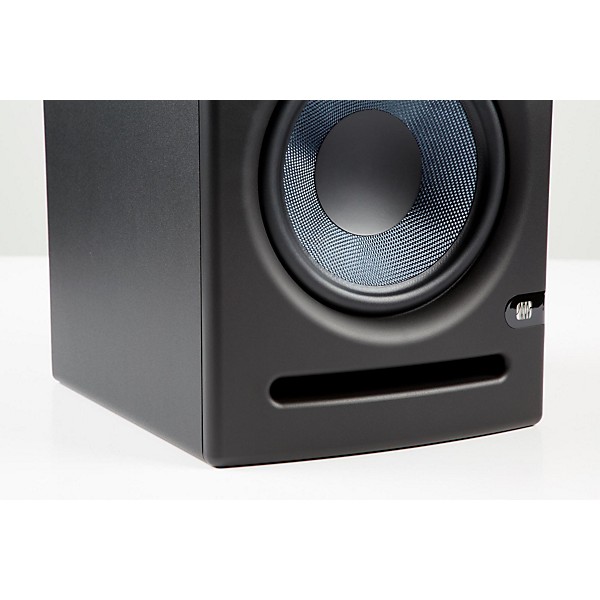
- Front-firing acoustic port for superior bass-frequency reproduction
- Midrange (±6 dB, continuously variable), HF (±6 dB, continuously variable), High-Pass (Off, 80 Hz, 100 Hz) and Acoustic Space settings (flat, -2, -4 dB) for accurate mixing contour
- RF interference, output current limiting, over-temperature, transient, and subsonic protection
- Optimized, resonance-suppressing internal bracing
- Balanced XLR/¼-inch and unbalanced RCA inputs
- 105 dB maximum continuous SPL
Specs
Inputs
- 1- Balanced XLR
- 1- Balanced ¼" TRS
- 1- Unbalanced RCA
- Frequency Response 35 Hz - 22 kHz
- Crossover Frequency 2.2 kHz
- LF Amplifier Power 75W
- HF Amplifier Power 65W
- Peak SPL (@ 1 meter) 105 dB
- LF Driver 8" Kevlar
- HF Driver 1.25" silk dome
- Input Impedance 10 k?
- Volume Range A-type taper
- MF Control -6, 0, +6 dB
- HF Control -6, 0, +6 dB
- Low Cut Flat, 80 Hz, 100 Hz
- Acoustic Space Flat, -2 dB, -4 dB
- RF interference
- Output-current limiting
- Over-temperature
- Turn-on/off transient
- Subsonic filter
- External mains fuse
- 100-120V 50/60 Hz or 220-240V 50/60 Hz
- Vinyl-laminated, medium-density fiberboard
- Width 9.84" (250 mm)
- Depth 11.77" (299 mm)
- Height 15.12" (384 mm)
- Weight 22.2 lbs (10.07 kg)
Reviews
4.8
10 Reviews
100%
of respondents would recommend this to a friend
Filters
Best Uses
- Home Studio2
- Amateur Recording1
- Professional Recording1
Describe Yourself
- Experienced1
- Professional Musician1
Pros
- Good Audio2
- Durable1
- Easy To Use1
- Versatile1
Reviewed by 10 customers
Monitors kick you know what.
Verified Buyer
submitted8 years ago
byMichael
fromundisclosed
Great speakers. Plenty of power to get a great mix from! Love the db selectors and compact size.
I would recommend the speaker, but buy a subwoofer also
Verified Buyer
submitted8 years ago
bybrian
fromundisclosed
These speaker sounds great, but found that I need a subwoofer to get that deep base punch.
Great sound...high quality product...fairly easy setup.
Verified Buyer
submitted8 years ago
byMartin
fromundisclosed
Great monitor speakers...lot's of sonic clarity.
very nice monitors, perfect so far
Verified Buyer
submitted9 years ago
bymk
frommpls
nice sound
Great sounding and very affordable
Verified Buyer
submitted9 years ago
byBassmodsman
fromOakland
I was surprised at the beautiful uncolored sound these monitors have. Plenty of bass and the ability to adjust it to your room conditions. There are +\- 6db of treble and mid control as well. Great sound at this price point makes these monitors a no brainer for those looking for excellent sound reproduction. I heartily recommend them.
Incredible detail, very accurate!!
submitted11 years ago
bySergio
fromTyngsboro
I give the Eris 8's five stars on every level. These were the best sounding, most accurate, and had better detail than everything I compared them to. Compare for yourself in the store. This set hits every mark too. You'll also find flexible input options and extra adjustments that are normally available on more expensive sets (I really like the adjustment for speaker placement). But most important is the detail; The mid's and high's are super clean and extremely accurate. The detail is crisp and just amazing. Do your homework, most manufacturers will boost certain frequencies to give a perceived boost in detail. DON'T BE FOOLED. KRK's boost low end, Yamaha's boost mids & highs. Everyone's taste is different of course. But for me, I need accurate monitors in order get the best results. I also ended up getting the matching Tremblor T10 sub (which has a great bypass foot switch so I can A/b with or without the sub). Because the sub is also very accurate, I was able to set the lowcut on the monitors at 100hz and it gave me the warmth and punch of the low end I needed. You're never going get that warmth from monitors alone (trust me, I've tried). Simply amazing! My studio has never sounded so great. BOTTOM LINE: These look amazing, sound amazing, they're powerful, and out perform even more expensive sets.
Q&A
Have a question about this product? Our expert Gear Advisers have the answers.
No results but…
You can be the first to ask a new question.
It may be Answered within 48 hours.
Be the first to know about exclusive offers, tips and more.

866-498-7882 English
877-687-5402 Español